Two weeks of earthquakes, Internet routes and fridges
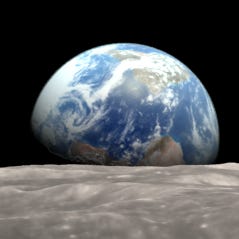
“I’ve always thought about my relationships with people as finding two people that hadn’t met before and plugging them together like a tinker toy and wondering, you know, what will happen if we do that?”— Vint Cerf, talking to me this week for Future Stories - OurFutureStories.eu
That last part, “wondering what will happen” while being curious, is the job description I’d give myself if anyone asked. The last two weeks were a good example.
It started in Panama, at IPinfo’s team offsite. On Friday, my colleague Ross and I visited a data center, talked about how the company sees the Internet, and were surprised by how hot it was outside and how cold it was indoors. Panama is hot, wet and green in a way that Lisbon isn’t. It reminded me of Malaysia when I visited, as both countries are places where, when it rains, it really pours.
On Friday, October 9, a magnitude 7.7 earthquake hit the Azuero Peninsula, southwest of where we were. You don’t forget the moment a building starts moving under you. In my case, it was particularly strange because I was in a movie theatre at the Panama Canal’s Miraflores Visitor Center, where people can watch ships passing through the canal.
I was wearing 3D glasses, sitting in a huge IMAX theatre and listening to what sounded like an AI-generated version of Morgan Freeman’s voice (I don’t think it was actually Morgan Freeman). The documentary was quite good, and I was sitting next to Ross and Pablo, one of the directors of the local Internet exchange.
Near the end of the film, our seats and the floor started shaking. At first, we all thought it was part of the experience. Perhaps it was a 4D movie after all, with hydraulic systems underneath the seats making everything move. But then parts of the ceiling started falling, and the enormous screen began shaking too. It quickly became clear that this was an earthquake. People started shouting and making their way towards the exits in the dark.
The floor was shaking violently, even as we made our way outside into the bright sunshine. People were pouring out of buildings, including those around the canal. One person became unwell, apparently with a heart-related problem.
When we reached the main road with Pablo, we found traffic jams everywhere. People were trying to get home to check whether everything was intact or to pick up their children. Crowds had gathered outside buildings, including universities, shops, skyscrapers and hotels. You could even see water spilling from swimming pools on the upper floors of some buildings.
We eventually made it back to Casco Viejo, the historic part of Panama City where our hotel was, but had to walk much of the way because several streets were closed. Our plans to watch ships passing through the canal were obviously over. The canal itself continued operating, but public visitor areas were closed, and the airport also closed several times because of the strongest aftershocks.
A few hours later, I was live on CNN Portugal, explaining what it felt like. Some journalist friends had noticed I was in Panama and passed along my contact details. Early on Saturday morning, Panama time, I also recorded a piece for the Portuguese national radio stations M80 and Rádio Comercial.
The aftershocks kept coming that night and the following day, including some strong ones. My flight home was cancelled, which meant a longer journey back to Lisbon. I finally arrived late on Sunday.
First, the scare, but then curiosity was always around. Back at the laptop, we checked what IPinfo’s data showed. In the provinces closest to the epicentre, the share of IP addresses responding to our checks fell to 63% of normal in the first hour, while Panama City was mostly back to normal within an hour (at least one of the local operators was briefly impacted — it was much worse 400 km from there, where the earthquake epicenter was).
I also got to see parts of the Panama Canal (and ships lining up to go through) during those strange days, and it’s hard not to think about Internet plumbing when you’re there. About 80 kilometres separate the Pacific from the Atlantic, and the same narrow strip of land that carries ships between oceans is also an important corridor for Internet cables — five come through the Pacific. The jungle around it matters just as much: the canal depends on rainwater from the surrounding watershed. I’ll write more about Panama, the cables and that earthquake in the coming weeks.
Internet routes and Hacker News
Then came the RPKI post, my second for IPinfo. RPKI is one of those pieces of Internet infrastructure that almost nobody outside networking has heard of, yet it matters to everyone. It helps networks check whether another network is allowed to announce a particular block of IP addresses, making it harder to misdirect Internet traffic.
RPKI now protects about 70% of Internet routes, up from 54% a year ago. But it’s far from bulletproof. In August, a hijacked route passed as valid because the network’s own authorisation record permitted it, and about one in six protected IPv4 routes has a similar weakness.
The post reached the Hacker News front page, which is always great, given that I truly value that audience :D. Much of the discussion was about who controls the Internet’s trust anchors, whether governments could interfere with them, and why China’s RPKI adoption increased so dramatically in a single year.
French supermarket fridges
Next came some investigation about the French supermarket fridges (the story that broke on Tuesday). After a cyberattack reportedly forced refrigeration systems into defrost mode in French supermarkets on October 11 and 12, we looked at IPinfo’s scan from five days earlier.
We found 2,528 Danfoss refrigeration dashboards reachable from the public Internet, with 1,331 of them in France, more than in the rest of the world combined. That doesn’t mean those particular systems were compromised, but it shows how much equipment of this kind can be exposed online. We shared the findings on social media already, and the full post is coming soon.
From Carl Sagan to Vint Cerf
In the middle of all this, Neil deGrasse Tyson was in Lisbon for a Startalk podcast recording.
He’s one of those people who makes science feel like an invitation, the way Carl Sagan did before him. Both have spent much of their careers trying to make people want to know more about the universe. I relate to that.
I even got to bring Sagan into my conversation with Vint Cerf. Sagan once warned:
“We’ve arranged a global civilization in which most crucial elements profoundly depend on science and technology. We’ve also arranged things so that almost no one understands science and technology.”
The Internet is a good example of both parts of that sentence.
Which brings me back to Vint. This week I spoke with him for Future Stories (a bucket list event to be honest), my new independent project, about how the Internet came to be, the decisions behind it, and where it goes next (spoiler: considerably further than Earth). There’s a short teaser on the site already. The full conversation is coming soon, and I’ll keep the rest for then.
Not bad for “just” a curious guy (to hear with the tone of the John Lennon song, “I’m just a jealous guy”). Stay tuned, geek out.
emot | Random Stories is a reader-supported publication. To receive new posts and support my work, consider becoming a free or paid subscriber.

 点赞
点赞 收藏
收藏 点踩
点踩 分享
分享