People With Narcolepsy Have Surprisingly Youthful Brains, But Scientists Don't Know Why


It's clear dementia and sleep disturbances are intertwined, but the relationship remains murky.
While poor sleep can increase the risk of cognitive decline, dementia may also raise the risk of sleep problems. Many of the mechanisms involved are still not fully understood.
In a new research review, scientists investigated this association using insights gleaned from another, seemingly unrelated condition: narcolepsy.
Narcolepsy is a chronic neurological disorder that impairs the brain's ability to regulate sleep-wake cycles. People with narcolepsy often experience fragmented sleep at night as well as excessive sleepiness during the day, among other sleep-related symptoms.
Despite potentially severe sleep problems, however, the brains of narcolepsy patients generally don't exhibit the premature aging otherwise associated with chronic sleep disruption, the review authors write.
Could narcolepsy somehow help slow the brain's biological aging?
There are two major forms of narcolepsy, known as type 1 and type 2. Both involve excessive daytime sleepiness, but type 2 tends to feature milder symptoms. Unlike type 1, it doesn't include cataplexy, or sudden episodes of muscle weakness triggered by strong emotions.
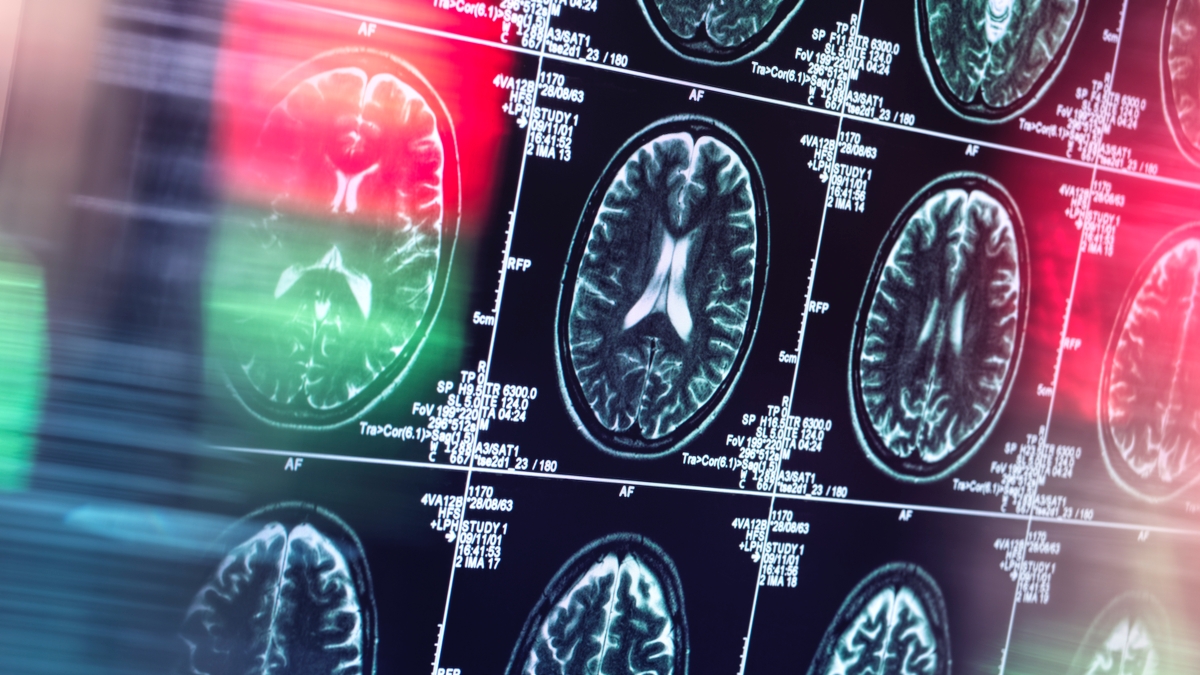
Narcolepsy type 1 (NT1) involves severe sleep-wake disruption along with loss of hypocretin (also known as orexin), a neuropeptide that helps regulate a variety of important physiological processes, including arousal and wakefulness, which is also associated with age-related changes in the brain.
Given the established link between sleep disruption and dementia, NT1 "would therefore be expected to predispose individuals to premature brain aging," the authors write.
"Yet available biomarker and neuroimaging findings do not consistently support this possibility," they add, "raising questions about the role of hypocretin in mechanisms linking sleep to neurodegeneration."
In addition to regulating arousal and wakefulness, hypocretin is also involved with several other key determinants of neural resilience, the authors explain, including inflammatory circuits, metabolic regulation, synaptic plasticity, and circadian timing.
Some evidence suggests the loss of hypocretin might change how sleep disturbances affect a person's brain.
"The selective hypocretin loss in NT1 may alter how age-related stressors are integrated within neural systems especially susceptible to pathological processes," the authors write.
More research will be needed to investigate this possibility, but the review identifies a few ideas of how it might work.
In animal models, for example, experiments have indicated that hypocretin signaling influences the production and buildup of beta-amyloid – the main component of amyloid plaques in Alzheimer's disease – and that inhibiting hypocretin reduces the amyloid burden.
In another study featuring transgenic mice that lacked the gene for hypocretin, researchers reported a drop in beta-amyloid pathology as sleep time increased.
"These findings suggest that the relationship between orexin and β-amyloid may be mediated, at least in part, through changes in sleep-wake state rather than through a direct effect of orexin, although the underlying mechanisms remain unclear," the review authors write.
It's also important to consider the "structure of wakefulness," they add, and to distinguish the total amount of wake time from the ability to sustain it. Many narcolepsy patients may not spend less time awake overall, they note, due to fragmented night sleep offsetting daytime sleep.
Total wake time was similar for hypocretin-deficient mice and wild-type controls, as one study found, yet the findings suggested hypocretin was key for the rodents' ability to maintain prolonged wakefulness.
In humans with NT1, disrupted wakefulness "could therefore limit cumulative activity-dependent β-amyloid production and tau release, even when total wake time is preserved," the authors write, noting this could be a valuable topic for future studies to investigate.
If patients with narcolepsy have younger-looking brains, at least compared with the premature aging that commonly accompanies sleep disturbances in other contexts, what can that teach us about sleep and dementia?
"We are not suggesting that narcolepsy confers protection against dementia," they write. "Cases of Alzheimer's disease, although rare, have been described in narcoleptic patients."
Instead, the researchers explain, they suggest that our burgeoning knowledge about narcolepsy should be more integrated into modern studies of neural integrity, or the brain's structural and functional health.
"Perhaps the most important question is not whether narcolepsy increases or decreases dementia risk, but what this apparent paradox can reveal about how hypocretin and the organization of sleep and wakefulness influence brain aging," they write.
The research has been published in Ageing Research Reviews.

 点赞
点赞 收藏
收藏 点踩
点踩 分享
分享