Unbruised Prosperity Makes You Weak
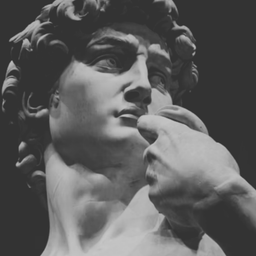
Around 64 AD, Seneca wrote a short essay for his friend Lucilius, who asked a question people have asked ever since:
if the universe is ordered and good, why do good people suffer?
Seneca’s answer was blunt: suffering is training. The gods treat good people the way a strict father treats his sons, and they save the hardest tests for the ones who can take them, the same way a general sends his best soldiers on the most dangerous missions. Marcet sine adversario virtus, he wrote. Virtue withers without an adversary; unbruised prosperity can’t withstand a single blow.
He was right.
He’s more right now than when he wrote it.
The tree that fell over
In Biosphere 2, the sealed glass ecosystem built in the Arizona desert in the early 1990s, the trees inside grew quickly, faster than their counterparts outside; but they started to lean and topple before reaching maturity. The researchers eventually traced part of the problem to something missing from the environment: wind.
Trees exposed to wind develop what botanists call reaction wood or stress wood. The constant flexing tells the tree to build denser, stronger tissue. Without it, a tree grows tall and soft. It looks healthy - right up until the moment its own weight becomes too much for it to bear.
I’ve met plenty of people and companies that grew in Biosphere 2.
I imagine you have, as well.
The cheap money generation
In 2020 and 2021, interest rates were near zero, and capital was looking for somewhere - almost anywhere - to go. Founders who had never had to defend a unit economic model raised Series B rounds on the strength of a growth chart and an average deck. Many were smart, hardworking people, and some built real products.
Then rates rose in 2022, and a large share of those companies discovered that being funded and being tested are different experiences. A company that has survived a near-death moment knows things about itself that a company with eighteen months of runway and a sympathetic board does not. It knows which customers will stay when the product breaks. It knows which costs are real. It knows which of its people will show up on a Sunday when payroll is at risk, and which of them were only there for the vibe.
Founders who had bootstrapped through a bad year, or lived through a previous downturn, generally handled 2022 better. They had bruises, and the bruises had taught them where the bones were.
Prosperity that has never been tested tells you almost nothing.
Comfort is a quiet atrophy
Astronauts on the International Space Station can lose bone density at a rate of around one to two percent a month in the hip and spine.
Why?
Their bodies are responding sensibly to an environment that no longer wants or needs anything from them. Why maintain heavy, metabolically expensive bone when there’s no gravity to push against? The body is an astonishingly efficient piece of technology; it doesn’t keep capacity it isn’t asked to use.
Your judgment works the same way. So does your nerve. So does your ability to sit with uncertainty, hear criticism without collapsing, make a decision without perfect information, be wrong in public, and keep going.
If you spend years in a role where nobody challenges you, where the clients are easy, and revenue keeps growing on a predicted curve, and your opinions are celebrated by default, those capacities shrink. You won’t feel it happening; you’ll feel good, in fact, because comfort feels like competence from the inside. The atrophy only makes itself known when gravity rears its ugly and inevitable head.
What the bruises actually teach
A bruise is information. It tells you where you’re exposed.
The first time someone tore a piece of writing I cared about to shreds in public, it hurt far more than it should have. It hurt out of proportion, in fact. A few strangers on the internet said unkind things about an essay, and eventually I shrugged it off; but it rearranged something. I learned which criticisms I could survive, which I could ignore, and which pointed to an actual weakness in my thinking. I learned that being publicly wrong was survivable. I learned that the fear of condemnation had been far heavier than condemnation itself.
You can’t learn any of that from the outside. You can read every book on resilience ever written and still fold the first time someone hits you, because reading about weight isn’t the same as lifting it.
The dose matters
The cheap version says whatever doesn’t kill you makes you stronger, full stop. It’s usually deployed by people who’ve had it easy to explain why others should keep having it hard.
And it’s wrong.
Plenty of hardship just breaks people.
Seneca wasn’t arguing for that. His soldiers were chosen for the hard missions because they could survive them. The test matches the person.
Biologists have a name for this: hormesis. Small amounts of stress trigger adaptation, while large amounts cause damage. A bit of wind makes the tree stronger. A hurricane just knocks it down. Exercise is a controlled injury that your body repairs into something more capable. A car crash is not exercise.
So what matters is whether you’re getting enough small, survivable stress to keep your capacities alive, or whether you’ve arranged your life so carefully that nothing ever pushes back.
Choosing your bruises
If you’re in a stretch of prosperity right now, good. Enjoy it. Nobody should apologize for things going well.
But.
…When did you last do something that could have gone badly?
When did you last put work in front of people who might hate it?
When did you last ask for feedback from someone you knew wouldn’t flatter you?
When did you last try something where you were the least experienced person in the room?
The people I admire most deliberately keep a little wind blowing through their lives even when they could seal the dome.
A few practices I’ve seen:
- Ship before you’re ready. Publish the essay, launch the product, give the talk. Let real contact with the world tell you what’s wrong.
- Keep one thing you’re bad at. A language, an instrument, a sport, a craft. Regular, low-stakes humiliation keeps your ego from calcifying.
- Seek out the hard critic. Every field has someone whose feedback stings. Find them and ask. Then do the harder part: actually listen.
- Run the pre-mortem. Imagine your current good fortune ending abruptly. What would break first? Fix that while it’s cheap.
- Say no to easy money. Easy clients and comfortable gigs can fill the space where your harder, riskier work should go.
Above all: let the breeze through the greenhouse. The point is to stay in contact with resistance at a dose you can handle, so that when the bigger blow comes - and it will - you’re not meeting it for the first time.
The blow is coming
Seneca knew both sides of this firsthand. Claudius exiled him to Corsica for eight years. He came back, became Nero’s tutor and advisor, and grew enormously rich. Then, in 65 AD, Nero ordered him to kill himself. By the accounts we have, he did it calmly, talking philosophy with his friends while he died.
He had been bruised before the final blow.
Every run of good fortune ends. Markets turn. Clients leave. Platforms change their algorithms. Bodies get older. The people we love get sick.
Call it weather.
Two people can look identical in good times: same title, same income, same confident posture on a TED stage. You won’t be able to tell them apart until something hits them both.
That’s what Seneca saw.
Take the small bruises while you can choose them. Take them on purpose, at a dose that teaches without breaking. Grow some stress wood.
It’ll do you good.
🍕 I’m JA Westenberg. I write essays about technology, philosophy, productivity, and what it means to be human. If you like ideas that take their time, you’re in the right place. You can read my AI disclosure here.
A reminder: if you sign up as a paid annual member, you get a free digital copy of my book Unsanctioned.
If you become a paid Founding member, you also get:
- A digital copy of my book Permissionless
- One free year of Post Through It
- One free year of Kerouac
Upgrade your subscription, claim your perks, and support independent work for the long haul.

 点赞
点赞 收藏
收藏 点踩
点踩 分享
分享