A Toy Port for My Daughter

A small experiment in tidying education and task management.
Last night my daughter broke a large toy beetle, and its wings and head came off.
I meant to fix it myself, but then it occurred to me that she could watch how I approach a problem. I picked up the beetle body and the wing and said, this wing came off, but I did not pay attention to how it was before, so I do not know how to put it back. What should I do? Hey, its two wings are the same, so let me look at how the other wing is attached.
Hearing this, my daughter understood right away, said she would fix it, and took the toy beetle to study. But it has a rather delicate spring mechanism: the two ends of a wire must be inserted into two holes before the insect wings will flap and spring back with the wind-up. I guessed she would not notice or understand this, but I still let her try first.
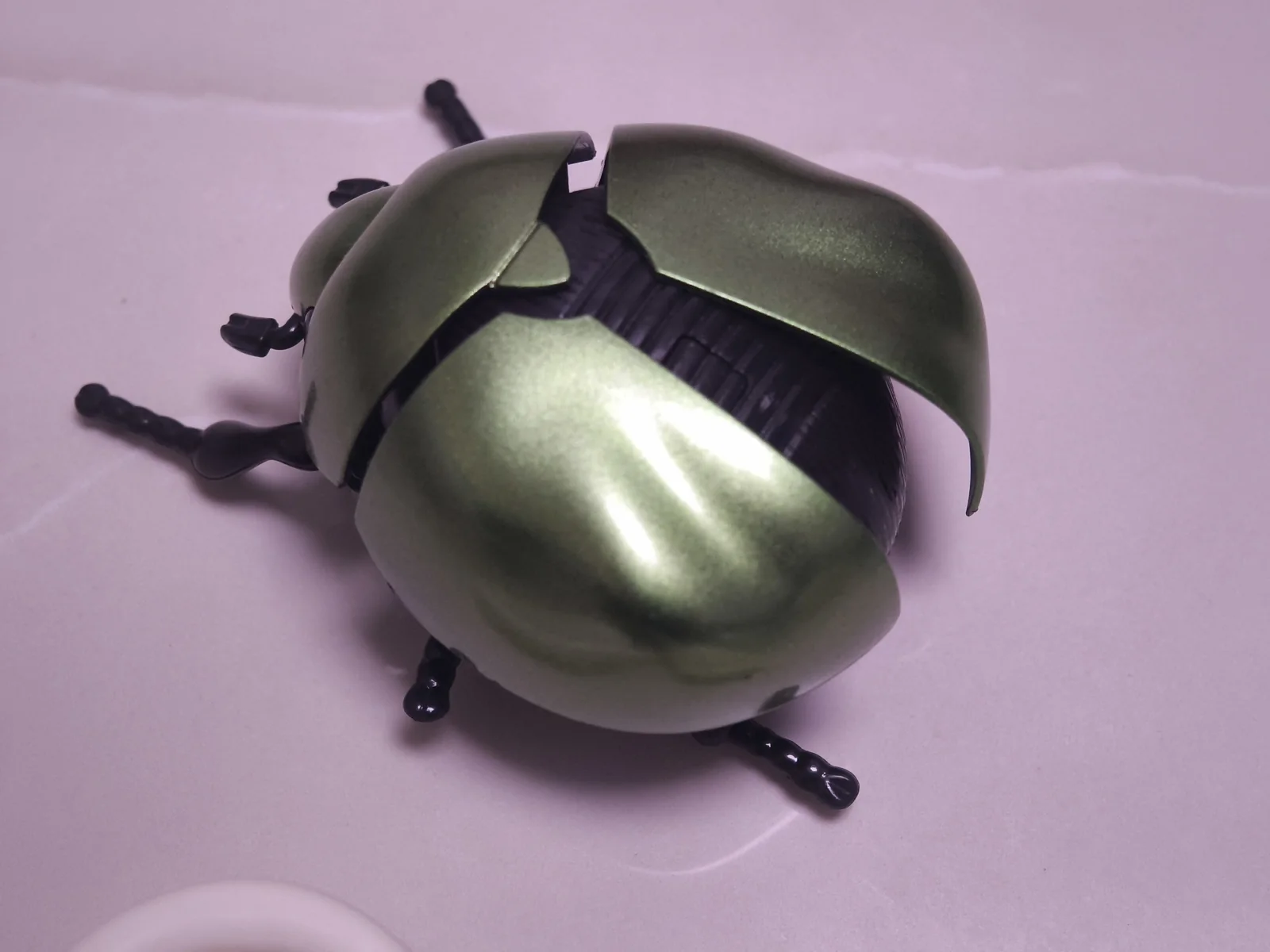
In the end my daughter put the insect back together so that it looked whole, but the wings lost their ability to flap. Just then the alarm rang; it was time to wash up. I said, let us find a place, a very obvious place, and leave today’s unfinished thing there, so that when you see it tomorrow you will remember and continue. That way your brain can remember one less thing.
Usually my daughter is very stubborn about finishing one thing at a time, but this time she happily agreed. She put the not-fully-fixed insect on the corner of the desk and went off to brush her teeth with me.
Because Mom did not know about this, she helped put the beetle away in the toy basket. The next morning, when my daughter saw it, she threw a big tantrum, saying the insect was not fixed yet! Mom also did very well and did not answer violence with violence. In the end it was settled peacefully by putting the beetle back on the corner of the desk.
I thought, my daughter probably needs a toy port too, that is, a staging area. This concept comes from my article Port Mindset, which says that people are busy handling all kinds of things every day, and finished things have a clear home, but few people actively open up a physical and psychological staging area for half-finished things. These in-progress tasks have nowhere to land, so they must be remembered in a person’s head, and the more of these things a person holds in their head, the more anxious they become. But the port mindset and a to-do list are not the same solution; I will not expand on that here.
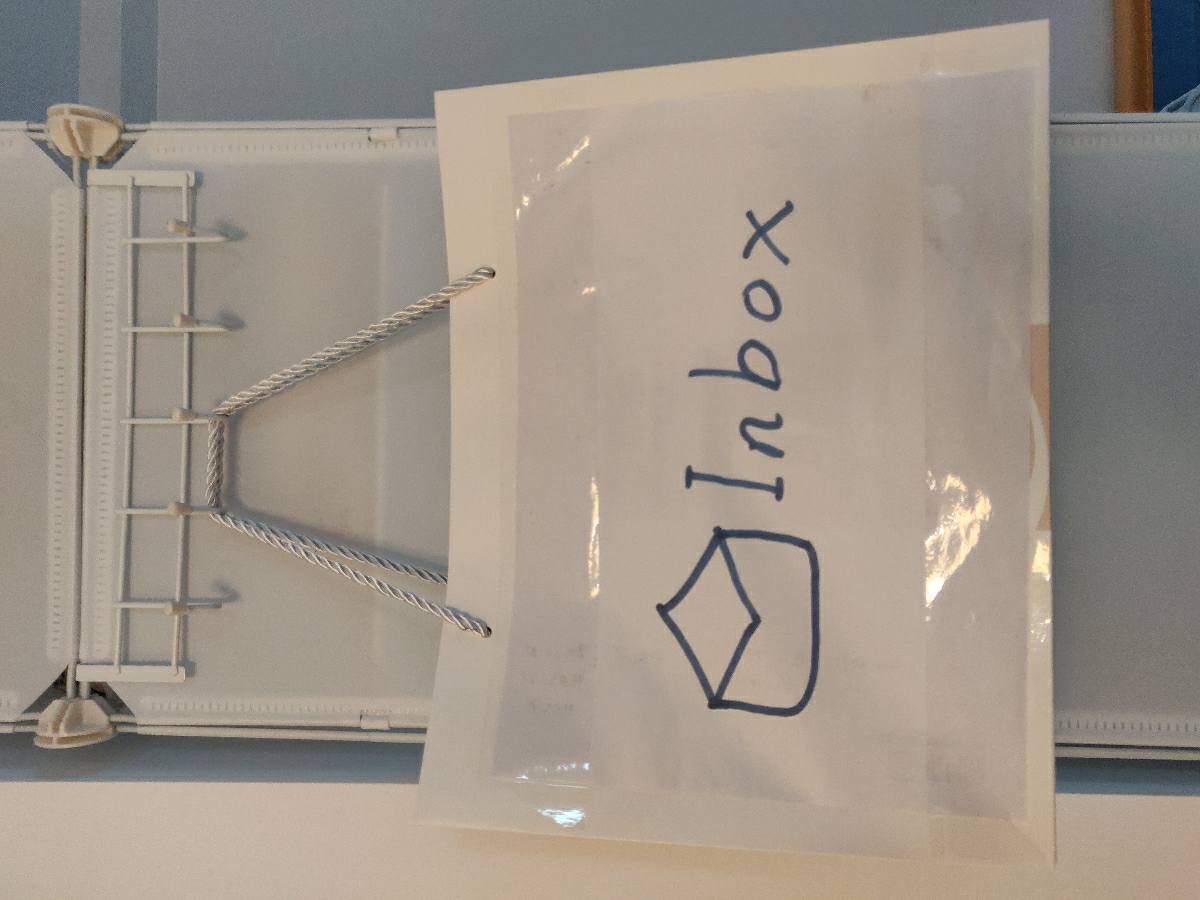
In our home, we adults have a paper bag labeled Inbox, used to hold car insurance contracts, vaccination records, paper receipts, and similar items. These things may sit there for a year, but in the end they all become waste paper, with no need for long-term storage.
My daughter’s toy basket is the place for long-term storage, while toys she is currently playing with she scatters all over the floor. If we had not done a living room redesign this year, we would not even have had room to walk. Last night’s observation made me realize that when we call her she does not move, because she very much wants to finish the game in her hands, or to finish reading the book. No one likes their flow state interrupted. We had never left a formal space for her half-finished things and protected it. If she also has her own port, and we acknowledge and protect her work in progress, that would actually help her form the habit of returning things to their places, and might even give her a composed state of mind. Whether or not she is willing to put down what she is doing to eat, wash up, or use the toilet, the existence of this port can, more or less, let her feel more at ease and more secure.
With the precedent of the AI-drawn bath-step chart, I found that printing a picture is a very effective means.
I discussed it with my wife, saying that today at the office I would print a pattern full of diagonal stripes on two sheets of A4 paper, spread it over that space in the corner of the desk, and formally open it up as my daughter’s toy port, and there was hope it would also solve the problem of her not moving when called to wash up.
I discussed the whole backstory with AI, which produced more collisions of inspiration about how exactly the details of this port should be decided.
The original idea was to rely purely on two sheets of A4 paper, covered with diagonal stripes, to indicate a protected area. On reflection I found it would not work; things could be piled up endlessly, and the staging area could turn into a dump. AI, perhaps inspired by the two sheets of A4 paper, said let us set a quantity limit, allowing at most two unfinished tasks. But relying on a number remembered in the head alone would not do either; the rule could not be guaranteed to be made explicit, and my daughter might drift from it as she used it.
The final conclusion of the discussion was to combine these two approaches, with one sheet representing one staging area. Marking the boundary clearly on the sheet and writing the number in large characters might reinforce the rule of one thing per sheet, preventing the toy port from being used by my daughter as a dump. In fact, as long as she takes this agreement seriously, it will not become a dump.
The above is the interaction design part. Exactly what this sheet looks like enters the realm of visual design.
A young child certainly needs a metaphor; it is easier to understand and remember than dry geometric shapes. Although it comes from the port mindset, asking a small child to imagine a port’s container stacking area might mean nothing to her. What we want is a way of handling things, not really this outer skin.
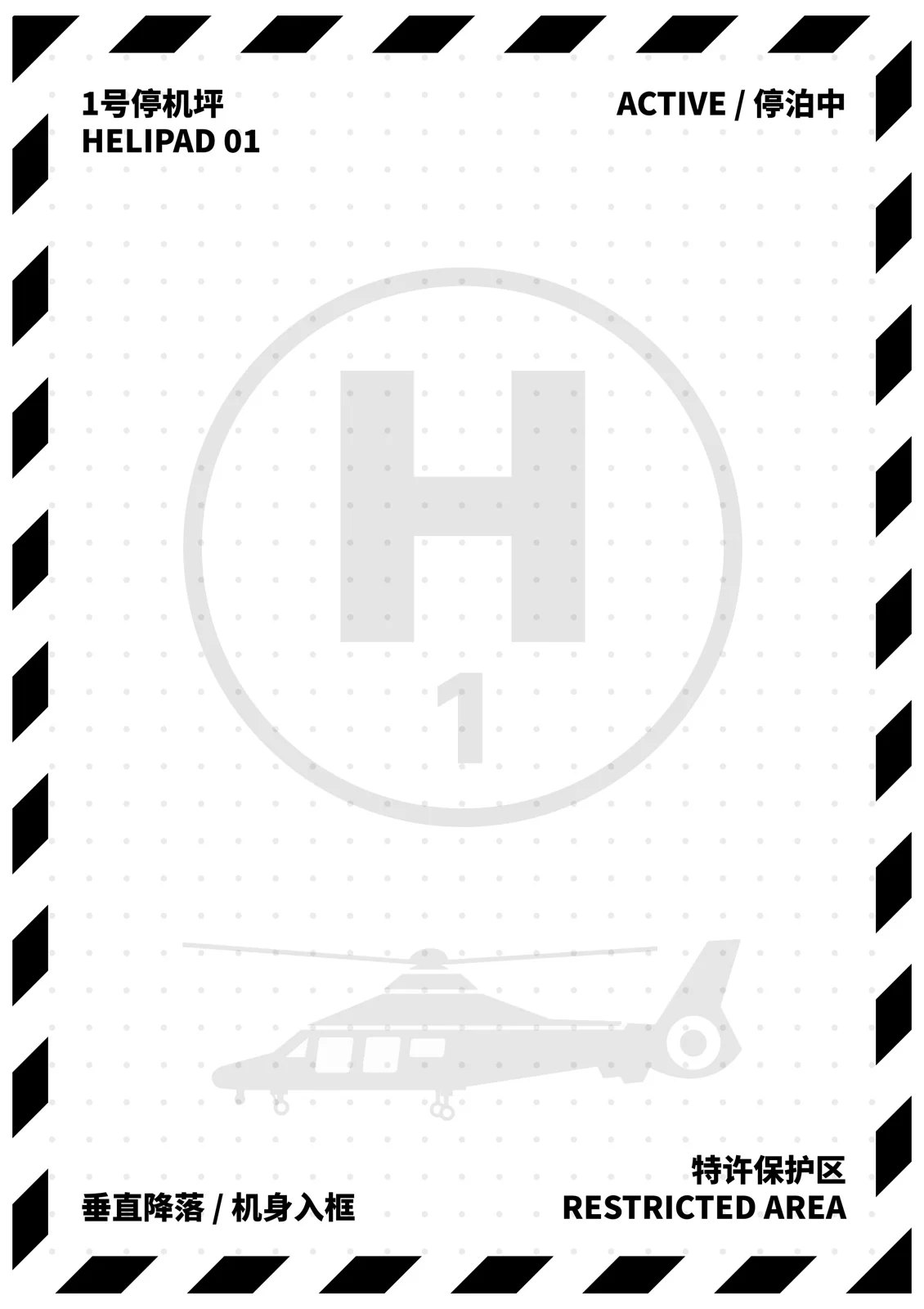
During the discussion we hit on a more workable metaphor: a helicopter landing pad, where two sheets happen to park exactly two helicopters. What is the helicopter? It is my daughter’s little hand. I can teach her this ritual: when she wants to stage an item, one little hand faces palm up with the five fingers spread out, imitating a rotor, and the other little hand becomes a helicopter that picks up the item, carries it to the staging area, lands vertically, and sets down its cargo.
Then the little pilot can go wash up and go to sleep with peace of mind. Her cargo is safe in the protected area, and no one will touch it.
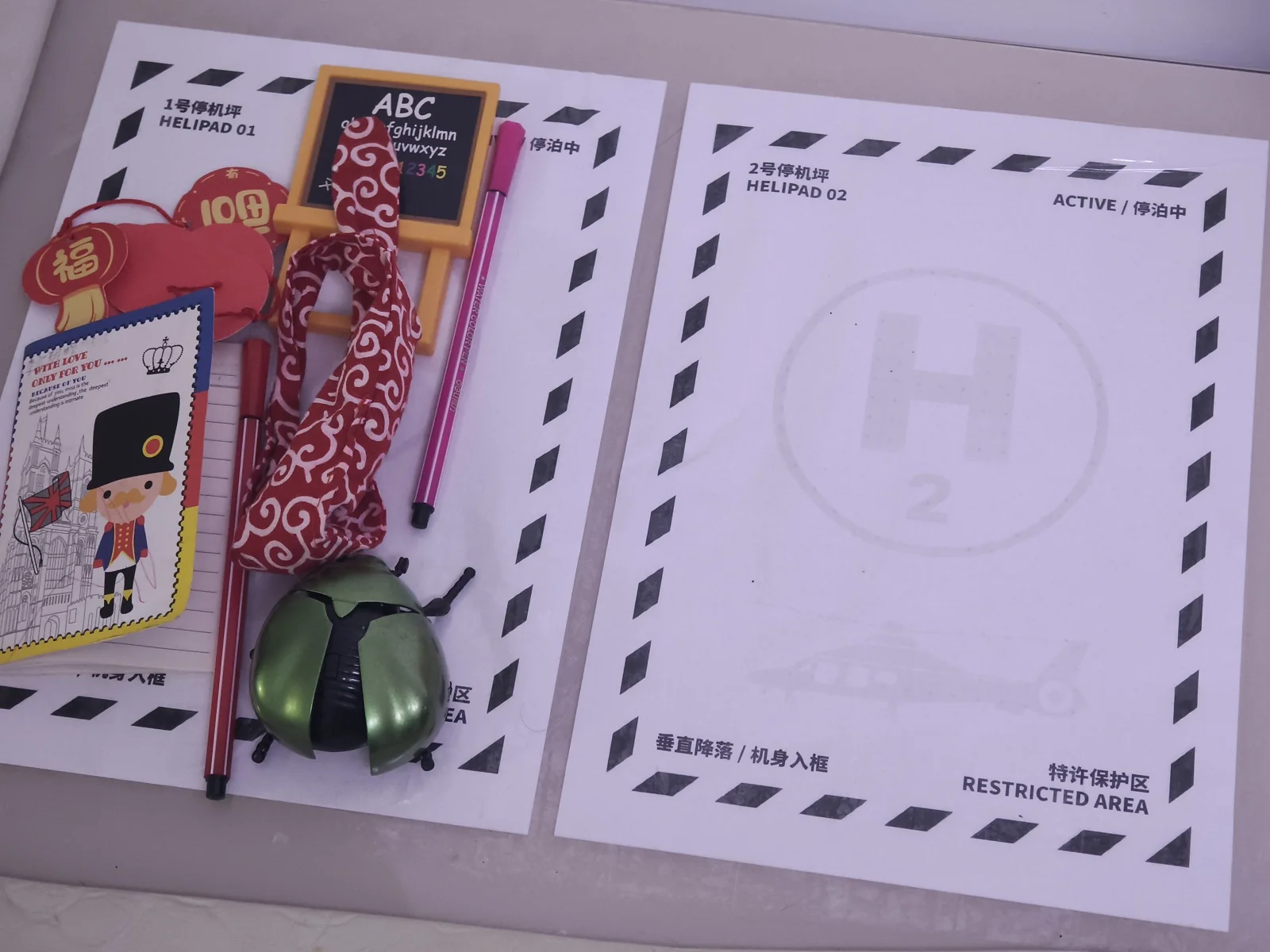
I printed two sheets and taped them up at home. After I explained how to use them to my daughter, she was very happy and began gathering all kinds of things to fill up this landing pad, saying she would play again tomorrow. Very cute; only that little notebook was something she had genuinely stopped mid-play, the other things she clearly was not playing with, yet she grabbed them over anyway.
This filled up landing pad No. 1 all at once. Ha, so users will never use a product the way you imagine.
But it does not matter; let us observe for a few days first, after all this is an experiment. Today I only taught half of it: putting things in. I want to teach her to clear it out when she is about to use this place as a dump.
In any case, at least she knows she has a small patch of space where toys she has half-played with are absolutely safe. And today, after the little helicopter finished unloading, she went off to wash up with Dad, which is worth praising.

 点赞
点赞 收藏
收藏 点踩
点踩 分享
分享