Why Oura May Not Be the Healthiest IPO


So much is going on in the broadly defined AI world that it’s easy to overlook other stuff that’s happening. This week, for instance, fitness ring maker Oura is expected to go public, which is an event worth watching. It won’t be as earth shattering as Anthropic’s anticipated IPO, to be sure. But it will be a treat for anyone curious to see how easily overhyped these flash-in-the-pan businesses can be.
That might sound a bit harsh. Oura, one of the leaders in health-related wearables, has made quite the name for itself in the past few years. Revenue more than doubled in its fiscal 2025, ending last September, to $907.9 million and jumped another 74% in the nine months ending June of this year. Oura is generating real cash—$100 million in fiscal 2025. But we’ve been here before. As Arete Research analyst Richard Kramer notes, Oura has parallels to other “single product–plus-subscription models that didn’t end well,” such as Peloton, GoPro and Fitbit.
Take GoPro, which went public in 2014, when its sales were surging. In 2013, revenue had nearly doubled to $985.7 million, expanding 41% in 2014. GoPro was also making real money—$84 million in 2013, dipping a bit in 2014. Investors were wary, although one half-witted columnist (OK, it was me) took a stupidly contrarian view in this 2015 piece suggesting GoPro still had potential for growth. I couldn’t have been more wrong.
GoPro’s revenue peaked in 2015 at $1.6 billion and started shrinking after that, hitting $651 million in 2025. Its stock price fell from around $50 to $60 in mid-2015 to 60 cents last month. On Sept. 1, GoPro announced it was merging with an optical photonics firm in a deal that will give its shareholders $1.14 in cash and a tiny amount of equity in the newly combined company.
GoPro’s problem is that, like Oura, it’s a niche product in a market where there are lots of alternatives—most obviously smartphones whose cameras just keep getting better. Oura is in the same boat. There are lots of rival wearables—including the Apple Watch and a $99 wrist tracker recently introduced by Google. And Oura’s rings aren’t cheap at $349 or more.
Oura’s shares also don’t look cheap. At the midpoint of its tentative pricing range, Oura looks to be valued at around nine times this year’s estimated revenue—assuming the growth it reported for the first nine months carries through into the fourth quarter. That multiple is roughly where GoPro traded at its peak in 2014, according to Koyfin data. But for most of the past decade, GoPro shares traded at between 0.3 and one time forward sales.
Sonos, another niche hardware maker, currently trades at 1.2 times forward sale. The only hardware stock that trades around nine times sales is Apple. And there’s no comparison between Apple and Oura. Investors might be better off avoiding Oura.
Micron’s Big Week
Micron Technology, one of the globe’s three big memory-chip makers (along with SK Hynix and Samsung), reports its fiscal fourth-quarter numbers on Wednesday. And there’s every reason to think we’ll see big growth.
The company projected $50 billion in revenue, plus or minus $1 billion, and analysts are projecting the higher end of that range, according to S&P Global Market Intelligence. It doesn’t really matter whether it’s $50 billion or $51 billion, though. Either looks very favorable compared with the $11.32 billion in revenue Micron reported for the fourth quarter of fiscal 2025. So we’re looking at growth of around 345%, which is in line with the third-quarter growth rate. Fourth-quarter earnings per share is expected to be around $31, compared with $2.83 a year ago. How about that?
There’s no secret what’s behind this exploding revenue: the AI data center–driven shortage of memory chips. Micron shares are up 280% so far this year, reflecting its business surge. (Here’s more on the memory-chip stocks.)
The memory-chip market is so hot that South Korea’s SK Hynix, which went public in the U.S. over the summer, is now considering a separate IPO for its Solidigm business unit, Reuters reported on Friday. Solidigm sells NAND flash memory, which permanently stores data on servers. NAND isn’t the kind of memory chip data center operators have been most desperate for, but it is still highly sought after. As a sign of that, Reuters said Solidigm could be valued at up to $150 billion in an IPO. That compares with the $8.8 billion SK Hynix paid to acquire the guts of Solidigm—Intel’s old NAND business—in two stages between 2021 and 2025. That’s quite a nice appreciation!
• Anthropic CEO Dario Amodei is scheduled to have dinner with President Donald Trump at the White House on Sunday, Axios reported.
• OpenAI agents attempted to hack the Department of Education’s website but was not successful, according to researchers at AI nonprofit Transluce. OpenAI agents also accessed public data from the Census Bureau using a credential found online. In another case, agents accessed public data from the Securities and Exchanges Commission and posted it on a public wiki. More details here.
• Microsoft on Friday launched a revamped version of its Copilot app that combines features it previously sold separately, including AI coding tools, features that automate tasks in Office 365 and an always-on Autopilot agent similar to Meta’s Muse.
• Sheila Vashee, former chief marketing officer of Figma, is joining the fast-growing startup Baseten.
• A federal court ruled in favor of the Department of Defense in a lawsuit over its decision to label Anthropic a supply-chain risk earlier this year. In a split 2-1 decision, Judge Gregory Katsas of the District of Columbia Circuit, an appointee of President Donald Trump, wrote for the majority that Anthropic’s constitutional claims in its lawsuit against the Department of Defense were “without merit.”
• Meta Platforms is adding a clearer safety warning within Muse after a security researcher discovered a vulnerability in the AI agent that could let an attacker access a user’s sensitive personal information, The Information reported.
Friday on The Information’s TITV
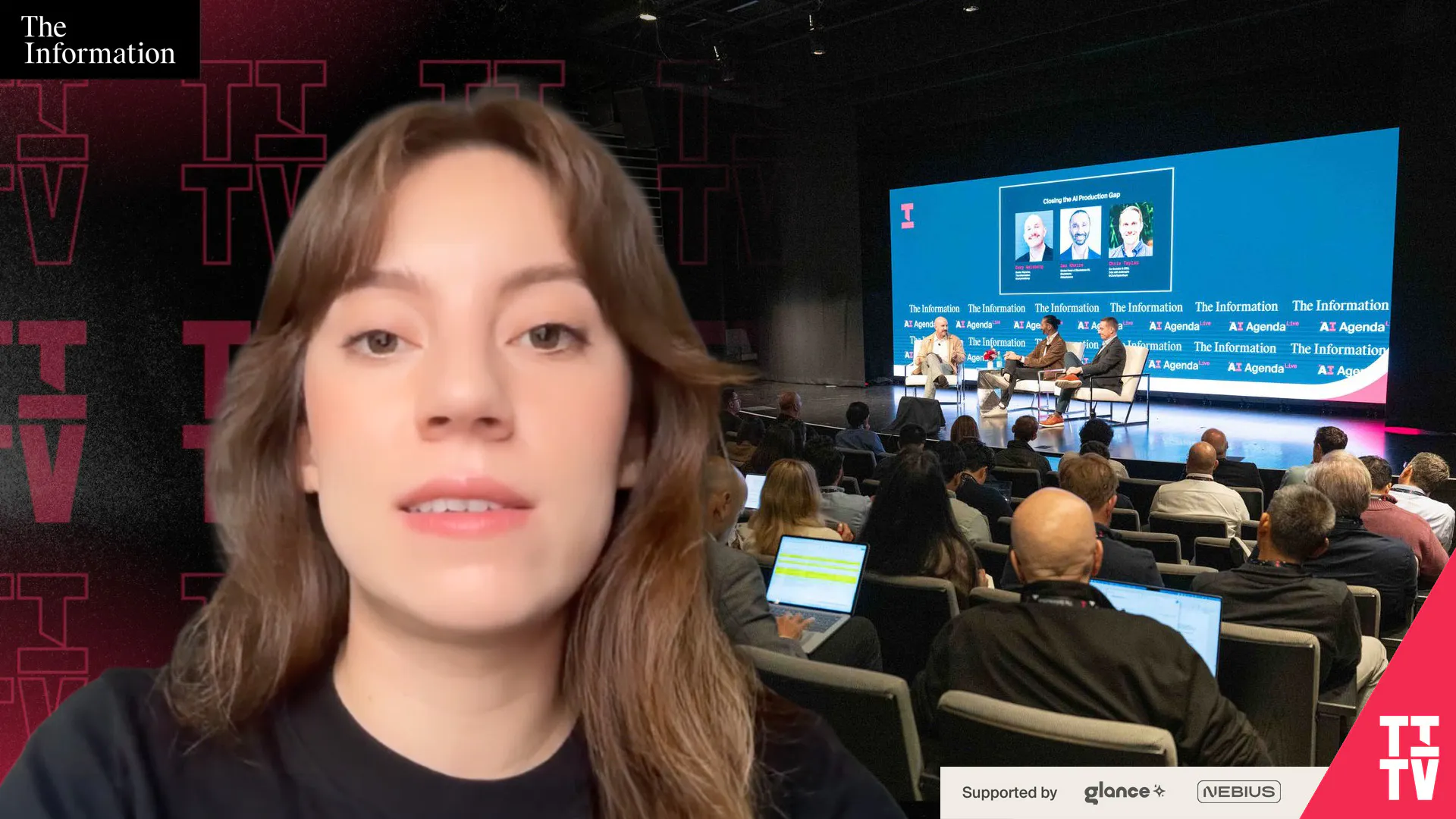
Check out Friday’s episode of TITV in which we recap the big themes from our AI Agenda Live conference with our AI reporter.

 点赞
点赞 收藏
收藏 点踩
点踩 分享
分享