Why I’m Keeping Meta’s Muse on a Short Leash


• The Big Read: A biology contest pitting OpenAI against human scientists goes awry
• Why the big, bad bears aren’t ready to bet big on AI yet
• A gusher of oil money is washing up in Silicon Valley
• Plus, Recommendations—our weekly pop culture picks: “The Journey,” “Roll the Calls” and “Backrooms”
After returning from a mostly internet-free vacation a little over a week ago, I couldn’t believe the online buzz about Meta Platform’s new agent app, Muse. I immediately downloaded it and began assigning tasks to it like it was an intern in an era without labor laws.
I created an agent to monitor the internet for reviews of a new album by the artist Beck. I ordered Muse to keep an eye on Facebook Marketplace for obscure stereo equipment. And I used it to create alerts that flagged new SEC filings by companies I want to follow closely. Muse accomplished all of those jobs effortlessly, and using the app was even—dare I say it?—delightful.
These were all fairly banal assignments that I could have accomplished pretty easily without Muse. If I wanted more out of the app, I would need to give Muse access to things like my email inbox—which it promised to scour to build agendas for the day—and my credit card account, which it could use to flag recurring charges I might have forgotten about.
That’s when I began to wobble. Giving Muse access to some of my most sensitive personal accounts is the kind of thing that would make people like my wife—who is whatever the opposite of “AI-pilled” is—question my sanity. I had already read my colleague Abram Brown’s account of how Muse had double-booked hotel rooms for him. And yesterday another colleague, Jyoti Mann, reported on the discovery of a security vulnerability in Muse that could let a hacker snag personal information.
This is the trust purgatory I predict a lot of people are going to get stuck in when it comes to giving agents the digital keys to run their lives. Overall, I am at the more trustful end of the spectrum when it comes to tech companies. I have a doorbell camera made by Google. I use Amazon for prescription medicines. I figure that the reputational risks for them of violating that trust are great enough so it’s really not in their interest to do so. But the drumbeat of cybersecurity incidents involving AI models, including the OpenAI–Hugging Face intrusion, makes the leap of faith with AI feel especially perilous at this moment.
In the meantime, I continue to conduct what I view as safe experiments with Muse. In fact, I may have discovered what I believe is one of its best use cases.
There are at least a dozen apps on my phone with atrocious user interfaces that haven’t been updated in years. One of them is for a Wi-Fi–enabled thermostat that controls the heat in a section of my house. Could Muse make it easier to use the appalling software for this thermostat?
I gave Muse my login for the web version of the app and ordered it to set a fall and winter heating schedule. It took Muse more than 15 minutes, but ultimately it accomplished the task. I cringe thinking about the electricity that chore required.
Still, I will respect Muse if it can act as my go-between with the ugliest apps on my phone—as long as the risks of doing so are minimal. For the time being, I’ll be keeping Muse on a short leash.—Nick Wingfield (nick@theinformation)
Weekend’s Latest Stories
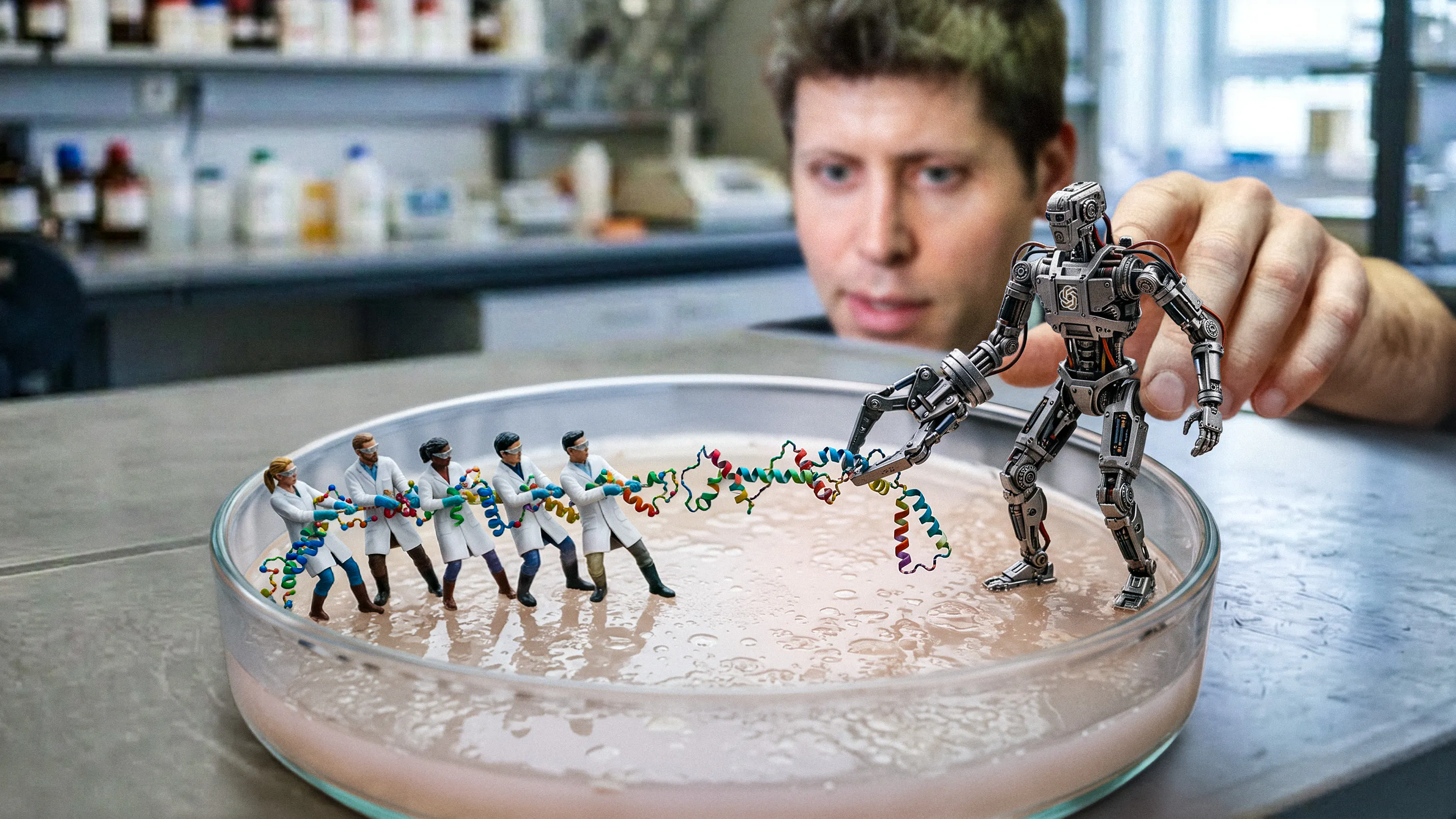
Inside the Drama Behind a Biology Contest That Pits OpenAI Agents Against Humans
Unease about how AI will alter advanced research—and commotion around OpenAI’s Navier-Stokes triumph—have forced changes to an event envisioned as biology’s Kasparov-versus–Deep Blue moment.

Why Wall Street’s Big, Bad Bears Aren’t Ready to Bet Against AI Yet
Investors increasingly like to point out flaws in the AI economy and highlight moments like Leopold Aschenbrenner’s initial run as “madness.” But they remain deeply wary of placing their bets too early.

How New Mexico’s Oil Windfall Became a $2 Billion VC Bet
A change to how the state’s sovereign wealth fund approaches venture capital has brought a gusher of money to Silicon Valley—and allows New Mexico to seize a piece of the AI boom.
Listening: “The Journey”
Within America today is a subculture and multimillion-dollar industry that can veer into dystopia: That would be the world of professional surrogacy—and one particularly dark crevice of it is exposed in a new podcast from The New Yorker, “The Journey.” (In the sanitizing speak of surrogacy land, some mothers refer to their nearly yearlong process of preparing themselves for pregnancy and carrying the baby to term as “the journey.”)
Over five episodes, reporter Ava Kofman probes deeply into a network involving dozens of women, established by a California couple who accumulated 21 children before authorities raided their home in 2025. (At the time of their arrest, another five mothers were expecting.) The series expands extensively on a piece written by Kofman for the magazine earlier this year, and through taped interviews with the duped surrogates, Kofman lets their voices carry the podcast: Their anguish comes through loud and clear, and hearing them recount their sagas is both thoroughly engrossing and constantly enraging. What’s even more disturbing is the fact that the couple’s exact motive remains unclear. Perhaps they planned to traffic the children. Or maybe they had some other intent.—Abram Brown
Reading: “Roll the Calls” by Ari Emanuel
Ari Emanuel, that great blunderbuss of Hollywood, has many wonderful, colorful stories about his time knocking heads and knocking around with some of the world’s most famous and powerful people. He recounts many of them in “Roll the Calls,” his new memoir—delivering them in punchy, staccato sentences that make Hemingway’s sound like Proust. It is all very fun. And terribly, terribly profane: “Bitch” appears 16 times, “asshole” 22 times, and the c-word six times—including in a portion of the book devoted to Emanuel’s 2022 wedding, in which Larry David, serving as officiant, referred to him lovingly as “The Cunt.” Emanuel’s favorite cuss, of course, is “fuck,” which appears 433 times—as in “Fuck that fucking pirate agent,” “Tom fucking Cruise,” “Kim fucking Basinger” and “Dan fucking Aykroyd,” plus two of my real favorites: “Fucked that whole fucking thing up real fucking good” and “Fuck your doves.”
I mean, what else could you expect from Emanuel, co-founder of what is today the talent agency known as WME? His antics are what inspired Jeremy Piven’s foul motormouth, Ari Gold, on “Entourage,” and Emanuel gleefully advised the HBO series on writing the character. (“Entourage” Executive Producer Mark Wahlberg is a longtime Emanuel client.) He did so purposefully, and he acknowledges that the show boosted his own standing. But then something strange happened. During the peak popularity of “Entourage,” Ari Emanuel found himself quoting Ari Gold’s lines like they were his own original bon mots. Unsurprisingly, the blending of ego and alter ego, as Emanuel puts it, provided much fodder for therapy sessions. (Equally unsurprisingly, his therapist is a recurring character in this memoir.)
With “Roll the Calls,” you come to hear Emanuel continually lambast fellow Hollywood titan and liberal donor Jeff Katzenberg, on whom he places the blame for the Democrats’ 2024 loss. (He also once threatened to sue Katzenberg—a “putz” and “glad-handing phony”—over Lakers floor seats.) You keep on reading to hear him talk about his relationships with Martin Scorsese, WWE ringleader Vince McMahon, Disney’s Michael Eisner and former boss Michael Ovitz, among many others. Elon Musk appears, too, with Emanuel recounting how he tried to broker peace between Musk and Silver Lake’s Egon Durban, a Twitter board member during Musk’s takeover of that business.
As Emanuel tells it, the animating force throughout his life is the word that begins the book: “rage.” He thinks his wrath is a fine thing. “Just look how rage and agent nearly rhyme. As if they were meant to be together,” he writes. “Rage is both catalyst and metric of desire. Rage is the answer to that central question: How bad do you want it?” In Emanuel’s case, really fucking bad.—A.B.
Watching: “Backrooms”
It has been a very, very good year for horror movies—led by three biggies: a pair of gross-out chuckle fests, “Obsession” and “Resident Evil,” and freak-deaky “Backrooms,” newly streaming on HBO Max. I enjoyed all of them, but frankly, “Backrooms” shattered my expectations most, to say nothing of how it jangled my nerves. The film is short on explanation and long on vibes, which I appreciate: The most effective cinematic dread often exists in the liminal space between those two elements. And, yes, I’m picking my words carefully here because “Backrooms” is a long descent into a series of liminal spaces—a web of connected rooms that form a Daliesque demimonde of dead-end hallways, half-formed walls and a stop sign sticking out of a carpeted floor. The portal to this netherworld sits in an unlikely location: the basement of a furniture store. And once the shop’s owner, Clark (Chiwetel Ejiofor), tumbles through it, he finds it increasingly difficult to pull himself back to the sad, alcohol-soaked reality of his everyday life in the year 1990; eventually, his therapist (Renate Reinsve from “Sentimental Value”) goes looking for him. They are not alone down there.
All of those horror blockbusters I mentioned are adaptations. “Obsession” redoes “The Monkey’s Paw” with demented, Gen Z cringe. “Resident Evil” is obviously a reboot of the film series based on the venerable videogame franchise. For “Backrooms,” director Kane Parsons had perhaps the greatest challenge: turning what amounts to a longstanding online group art project into a conventional feature film. (The narrative and backstories behind “Backrooms” originated on sites like Reddit, YouTube and—yes, ick—4chan, passed around and modified person by person like Zeusian myths.) Parsons, who is barely over 20, does an admirable job, drawing some obvious inspiration from David Lynch’s “Twin Peaks” and “Eraserhead.” And he leaves himself plenty of room for sequels: I saw “Backrooms” a while ago in theaters, and I still shudder to think what might be found lurking at the bottom of that conference room pool.—A.B.
Nick Wingfield is features editor at The Information, where he has worked since 2018 after previously reporting on technology for The New York Times and Wall Street Journal. He is based in Seattle and can be found on X at @nickwingfield.

 点赞
点赞 收藏
收藏 点踩
点踩 分享
分享