Why Wall Street’s Big, Bad Bears Aren’t Ready to Bet Against AI Yet

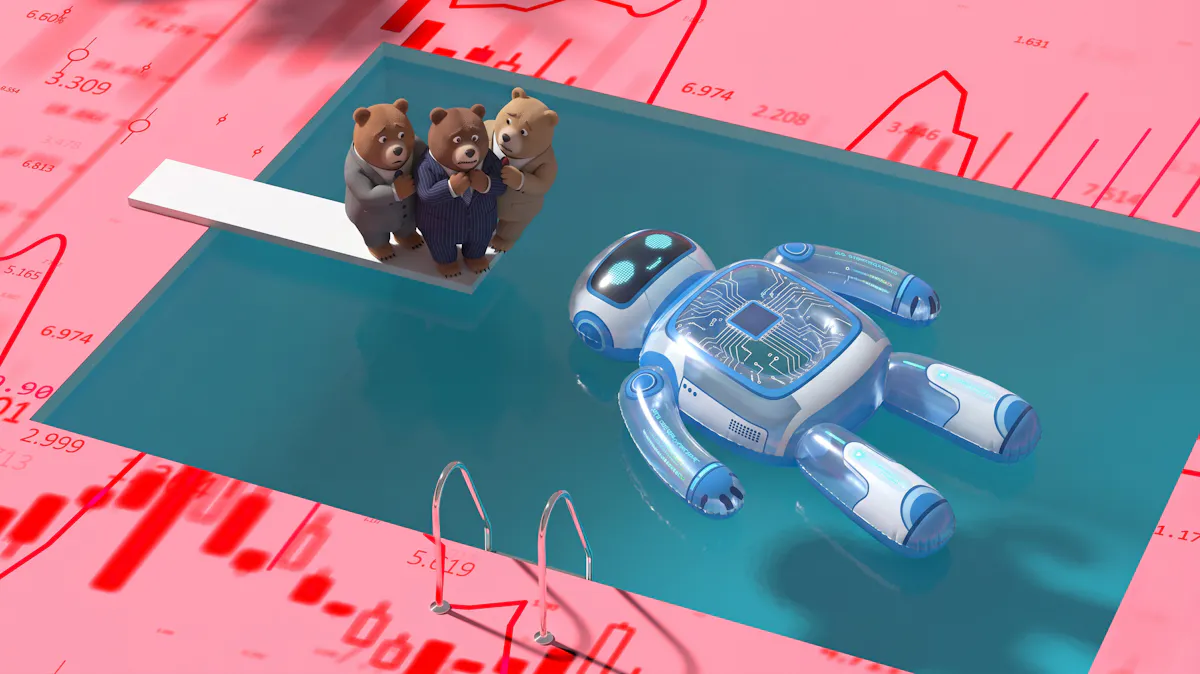
Steve Eisman, former hedge fund manager and short seller, has become one of the more prominent critics of the AI phenomenon that is sweeping the markets and, according to some, endangering the world.
Yet Eisman, who initially shot to fame for his trades in the 2008 financial crisis and his subsequent portrayal in Michael Lewis’ “The Big Short,” is hesitant to commit capital to his AI criticism. “I am not ready to make a big short call here,” he told me.
For now, he’s paying a lot of attention to Nvidia, the mother of the AI trade, and its relationship supplying chips to Anthropic and OpenAI. “It’s like the entire chain is dependent upon two companies that lose a ton of money,” he said. He’s waiting to see if OpenAI does actually go public anytime soon: “When you’re a company that bleeds cash—like these companies bleed cash—narrative is very important because you’ve got to raise money all the time.” So if OpenAI keeps delaying its IPO, that might be the catalyst for him to make a short call on AI, Eisman said.
In the meantime, AI mania is still at an all-time high, with bubble talk a constant refrain in Silicon Valley and Wall Street. The conversation typically hinges on insanely high valuations, circular financing, off-balance sheet loans, lack of profits and the piles of debt surrounding the AI trade.
A market boom based on such a shaky structure typically invites financiers willing to take advantage of what they see as impending doom. So I went out expecting to find a ravenous contingent of bears eagerly piling millions of dollars into bets against AI. But I was surprised to find a more complicated picture of the Wall Street action.
A few short sellers have made such bets, with Michael Burry, another “Big Short” character, leading the charge. Others are cautiously poking their heads up and trying to figure out how to play the short trade on AI. But the AI bears aren’t out in full force, in part because over the past two decades they’ve been chastened—and burned—by a bull market that just won’t quit. With trillions of dollars pushing the stock market higher, many argue it’s too early and too costly to put money on the line.
One hedge fund manager who has a “thematic short”—finance speak for shorting an entire sector—on AI knows he is early. He has been shorting AI-related stocks cautiously since 2023. This year things turned around for him. “We’ve had a good year,” said this short seller, who asked not to be identified, fearing that the companies he’s shorting will retaliate against him. The turnaround happened after the collapse of Leopold Aschenbrenner’s Situational Awareness hedge fund, which was a godsend for his short book. “The trade worked well after that,” he said. Aschenbrenner was long on a slew of AI stocks, with the top holdings including such names as Nvidia, Oracle, Sandisk, Micron Technology, CoreWeave and Nebius Group.
“It might have been peak madness that people were funneling money into a 24-year-old kid with no finance experience,” the short seller said.
One of the most talked-about AI shorts has been neocloud CoreWeave, and it turns out to be the closest thing to a meme stock in the AI conversation. Short interest in CoreWeave has declined from the 2026 peak of 26%, but it is still relatively high at 15% of the float. And given that significant short interest, retail traders on Reddit are talking up its squeeze potential—the situation when short sellers are forced to scramble to find shares to buy if the stock starts to rise. The battleground stock is down by a third over the past year, but it has recovered some of that in 2026 as the bears have apparently pulled back. Short sellers have lost an estimated $460 million this year on CoreWeave, according to Matthew Unterman, head of research at S3 Partners, which tracks short selling.
Last September, short activist Kerrisdale Capital put out a short research report on CoreWeave, which had gained 200% since its IPO five months earlier. The short seller called it a “debt-fueled GPU rental business with no moat, dressed up as innovation.”
But the report came out the same day CoreWeave announced a partnership with Nvidia, and the stock jumped. Many activist short sellers cover a short as soon as their reports are released, and Kerrisdale Capital founder Sahm Adrangi was reluctant to discuss the trade. He told me that he doesn’t know whether the short was profitable or not and that Kerrisdale is no longer shorting CoreWeave. (Some bears are now eyeing its rival, Nebius, whose stock is on a tear this year.)
Alternatively, Oracle has been a big winner for the shorts. Former Fidelity fund manager George Noble, who profited from the dot-com bust, has touted—on both X and Substack—his short call on Oracle, which has fallen 50% this year. Short sellers have made an estimated $2.3 billion this year on Oracle, according to Unterman. He said shares sold short are up 70% year to date. But the shorts are still only 2.6% of the float.
And while Eisman hasn’t shorted any of the AI stocks, he said he sold his Oracle shares earlier this year, believing that the company’s dependence on OpenAI has put it in a precarious position. With Oracle’s huge debt load, short sellers point to the fact that its credit rating was recently downgraded to one level above junk status.
Another way into the short trade is by looking at private credit. Short seller Lakshmi Ganapath, who just launched a short-biased fund, Minerva Investment Management, said she is “on the sidelines” and is in the process of “mapping out” private credit’s exposure to AI, thinking that may show where some of the weakest links are.
“There is so much money from private credit chasing this thing,” she said. She noted that data centers have borrowed heavily in the private credit market, and she is looking at each company for the structure of its loans, when it is hitting the maturity wall, and whether the loans are deteriorating.
Shorting AI eventually traces back to Nvidia, whoseshares have spiked more than 2,000% since the company’s GPUs helped launch OpenAI’s ChatGPT in 2022. Nvidia’s revenue growth has also been nothing short of stupendous.
Eisman is closely watching Nvidia’s revenues to see if they have peaked. In the most recent quarter, its revenues more than doubled, which was higher than the 85% growth in the prior quarter, though 70% of the revenues came from only five hyperscalers.
“It is a pretty astonishing thing,” he said, describing Nvidia’s growth as “essentially the bull case for AI.”
But shorting Nvidia so far has been a massive bleed for the shorts. Nvidia short sellers have been the biggest losers this year, down an estimated $8 billion on the name, which is the top single-name equity short globally, with more than $62 billion of short exposure, according to S3 Partners. That’s still only 1.3% of the float, a number that has hardly budged this year.
And although Burry has been loudly trumpeting his short on Nvidia, not everyone is simply following him into the trade. The huge volume of Nvidia shorts “includes a hedge component—and not just outright bearish positioning,” said Unterman. In other words, some traders are shorting Nvidia to hedge their long positions in other tech stocks.
Short sellers by and large appear to be waiting for the right moment to pounce. “Is AI a bubble? Absolutely,” said short seller Marc Cohodes. “You’d have to be in a straitjacket to not realize it’s a bubble, and it’s a bubble that will one day burst. But the football field is littered with players who’ve been too early to the trade.”

 点赞
点赞 收藏
收藏 点踩
点踩 分享
分享