Lumentum: "The Second Act"
Introduction
Lumentum is the poster child of this whole optical boom. It feels like every photonics newsletter, every sell-side note, every X thread on AI infrastructure has already written the Lumentum piece the sold-out lasers, the Nvidia stake, the stock chart that looks like a hockey stick. I'm not going to write that piece again. Instead, I want to look at how Lumentum actually got to this position, because once you see the path, the current numbers make a lot more sense than they do as a standalone headline.
And the numbers, to be clear, are extraordinary. Just this week, Lumentum reported fiscal Q4 2026 revenue of $1.01 billion, the first time the company has crossed a billion dollars in quarterly net sales, up 109% year-over-year, with non-GAAP gross margin crossing 50% a full quarter ahead of management's own timeline. There is no serious debate left about whether Lumentum is delivering on the expectations that have been piled onto it. It clearly is. That's exactly why it's the natural, obvious #1 holding in the $LAZR ETF, not because it's the most exciting story to tell, but because the numbers have simply earned the position. What I'm more interested in, is how a company gets to be this unambiguously the leader in a market this hot. It's a 45-year-old photonics lineage that has already been through one spectacular boom and bust on a single giant customer, an insatiable order book, and then the whiplash when that customer's needs shifted. Understanding that first act is what makes the second one, the one playing out right now, making more sense.
This Substack is reader-supported. To receive new posts and support my work, consider becoming a free or paid subscriber.
Act One: Two lens grinders and a laser company
Lumentum's lineage traces back to two separate pioneering photonics businesses: Uniphase Corp, founded in 1979, and JDS Fitel, founded in 1981 in Canada. Uniphase built its name in commercial lasers and optical transmission equipment; JDS Fitel pioneered components for fiber-optic networking. The two merged in 1999 to form JDS Uniphase JDSU, under founder Jozef Straus, who built an engineering-first culture around what the company called a "design-in" strategy: get your components embedded deep into a customer's own engineering roadmap, and you become very hard to displace (sounds familiar?).
By 2014, JDSU's Communications and Commercial Optical Products division CCOP, was doing roughly $800 million a year, sitting inside a larger company that also ran a test-and-measurement business and a specialty pigments and holographic-labels unit. In August 2015, JDSU split itself in two. The test-and-measurement and specialty-materials businesses kept the JDSU name, later rebranding as Viavi Solutions. CCOP, plus JDSU's WaveReady product line, became a new standalone public company: Lumentum Holdings, trading on NASDAQ under LITE, led by Alan Lowe.
Act Two: The iPhone that made Lumentum famous
Lumentum's first real taste of hypergrowth had nothing to do with data centers. In November 2017, Apple launched the iPhone X with Face ID and the vertical-cavity surface-emitting lasers (VCSELs) powering the TrueDepth camera system. The company became Apple's dominant VCSEL supplier, at one point commanding roughly 68% of that market, with Apple alone accounting for something like a quarter of Lumentum's total revenue. Over five years, Lumentum sold more than $1.5 billion worth of these tiny laser arrays. The stock, which had traded in the twenties post-spinoff, rocketed into the mid-eighties.
Then, in November 2018, it broke the other way just as fast. Lumentum disclosed that one of its largest customers unnamed, but unmistakably Apple had asked to materially cut back shipments of laser diodes that had already been ordered for that quarter. The stock fell 28% in a single morning, and dragged down every other name in the VCSEL supply chain with it, including Apple itself.
That episode is worth sitting with, because it's the exact structural risk that might shows up again in the bear case AI story.
Act Two-and-a-Half: Buying the laser moat
Here's the part of the story that rarely gets told alongside the Apple drama, even though it's arguably more important to where Lumentum sits today. In 2018, the same year the Face ID cycle was peaking and then breaking, Lumentum quietly closed a $1.8 billion acquisition of Oclaro, a photonics company with more than three decades of laser innovation behind it. Industry commentary at the time, called it close to a merger of equals on the telecom and datacom side, because Oclaro actually had the stronger position in 400G indium phosphide technology at that moment, not Lumentum.
That deal is the real foundation of the laser business pepole are writing about. It's what gave Lumentum dominant InP wafer growth, EML fabrication, and photonic integration capability, the "Laser Moat," as one investor write-up bluntly calls it, rather than something Lumentum built organically inside JDSU. Every subsequent deal (NeoPhotonics for coherent tunable lasers, CloudLight for transceiver assembly) was built on top of the InP foundation Oclaro provided.
Oclaro itself traced back further still, to a UK company called Bookham Technology, founded by physicist and entrepreneur Dr. Andrew Rickman, reportedly Britain's first internet billionaire and company named after his hometown of Bookham, Surrey. Bookham merged with Avanex in 2009 to form Oclaro, which Lumentum then bought a decade later.
A fun, small-world fact: I actually met Dr. Rickman in person, in London around 2017 in a long meeting, in a Sivers/Rockley after our aquestion of CST Global early 2017. Probebly right around the time Lumentum was closing the Oclaro deal that would go on to define its laser business for the next decade. At the time, Rickman was running his next venture, Rockley Photonics, pursuing silicon photonics for data communications. Rockley later pivoted hard into wearable health sensors, went public via a SPAC in 2021 at a valuation north of $1 billion (with partnerships alongside Apple and Medtronic), and then collapsed just as fast, the stock fell from over $15 to under $0.20 a share, and the company filed for Chapter 11 bankruptcy in January 2023.
There's a lesson in there worth sitting with, and it isn't really about Rockley's healthcare pivot going wrong. Rockley's original idea, highly integrated silicon photonics for data communications was directionally correct. It just arrived roughly a decade before the market needed it. In 2013, when Rickman founded the company, there was no AI infrastructure buildout demanding hundreds of millions of laser chips a year. There wasn't a Nvidia writing $2 billion checks to secure laser supply. The demand curve that would have justified Rockley's original bet simply didn't exist yet, and a photonics company burning venture capital in search of a market that's still ten years out eventually has to pivot toward something that pays the bills here ans now. Healthcare wearables in Rockley's case, whether or not that pivot ever worked out.
That's the part of this story that should stay with you longer than the Oclaro deal itself: Lumentum did not create the AI infrastructure boom. It didn't invent the demand for hundreds of millions of laser chips, and it didn't drive the hyperscalers into needing optical interconnects at unprecedented scale. It simply happened to already be standing in exactly the right spot, with exactly the right decade-old acquisition already digested, when a demand wave arrived that nobody in 2207-18, not Lumentum, not Rickman, not anyone else in the industry had fully priced. The same underlying technology, the same photonics expertise, sat in two different companies. One was too early and ran out of runway waiting for its market. The other was, through some mix of luck and a decade of unglamorous integration work, still standing when the market finally showed up. Being right about the technology was necessary for both companies. It was nowhere near sufficient. Timing did the rest.
Act Three: A failed acquisition that quietly shaped today's competitive map
Here's a detail most people miss entirely. In January 2021, Lumentum agreed to acquire the laser company Coherent, Inc. for $5.7 billion in cash and stock, a deal meant to diversify Lumentum beyond telecom and consumer optics into industrial and scientific lasers. It didn't stay uncontested for long. A three-way bidding war broke out between Lumentum, II-VI Incorporated, and MKS Instruments, and by late March 2021 the price had been bid up past $7 billion. Lumentum made a final offer of $230 in cash plus 0.67 shares of Lumentum stock per Coherent share. Coherent's board chose II-VI instead, a decision Lumentum publicly called inferior on pure value terms and Lumentum collected a $217.6 million termination fee for its trouble.
II-VI completed that acquisition later in 2021 and then did something clever with the spoils: it renamed the combined company Coherent Corp, adopting the more recognizable brand of the business it had just bought. The Coherent that sits in LAZR's portfolio today, and that I will write about later, the one Lumentum tried and failed to buy.
Having lost Coherent, Lumentum pivoted to a smaller, more targeted deal: it acquired NeoPhotonics, a photonics component maker focused specifically on cloud computing and optical networking, for roughly $900 million, completing in 2022. Rather than diversifying broadly into industrial lasers the way the Coherent deal would have, Lumentum doubled down on exactly the optical networking and coherent transmission technology that now sits at the center of the AI data center buildout. In hindsight, losing Coherent may have forced Lumentum onto the more focused path that positioned it well for what came next.
Act Four: New leadership, right as the AI wave arrived
Alan Lowe, who had run the CCOP business since before the spinoff and then led Lumentum as an independent company for its first decade, stepped down as CEO in February 2025. His successor, Michael Hurlston, came in with a resume built almost entirely inside the optical components world: CEO of Finisar (another major optical/VCSEL player, later acquired by II-VI) through 2019, then CEO of Synaptics, before returning to photonics to lead Lumentum. The timing of that handoff early 2025, just as hyperscaler AI infrastructure spending was accelerating into the current supercycle, turned out to be close to perfect.
Act Five: The current claim to fame
Which brings us to now. Lumentum's fiscal Q4 2026 revenue hit $1.01 billion — the first billion-dollar quarter in the company's history — up 109% year-over-year, with non-GAAP EPS of $3.23 against a $2.97 consensus, and non-GAAP gross margin at 50.4%, a threshold management hadn't expected to hit until a $2 billion quarterly run rate. This was the eighth consecutive quarter of sequential growth, the third straight quarter with sequential growth above 20%. Guidance for the current quarter (fiscal Q1 2027) sits at $1.225-1.275 billion, implying year-over-year growth above 130%. Management says the company is sold out of key components through 2028.
The demand driving that isn't diversified consumer electronics anymore — it's concentrated, structural, and coming from the handful of companies building AI infrastructure. Hurlston himself has framed the scale shift bluntly: telecom customers used to order lasers in the hundreds; hyperscalers are now asking for hundreds of millions. He's called the resulting indium phosphide shortage potentially worse than the memory crunch that's rattled the rest of the semiconductor industry this year.
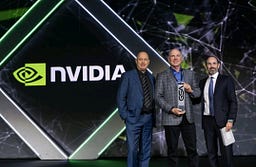
Unlike the Apple VCSEL episode, where Lumentum was a supplier at the mercy of one customer's changing order pattern, this time the largest customer has taken a direct stake in solving the supply problem: Nvidia has invested $2 billion in Lumentum equity, the same playbook it used with TSMC, specifically to help fund and de-risk the capacity expansion. That's a structurally different relationship than "we hope Apple keeps ordering."
By independent market-share data (Nomura, sourcing Yuanjie Technology's own public offering document), Lumentum is now the largest laser chip supplier globally, at roughly 17% share, ahead of Broadcom, and ahead of longtime Japanese photonics incumbents Mitsubishi Electric and Sumitomo Electric. The company runs five InP fabs and is still shipping more than 30% below what customers want; its next US facility, in Greensboro, isn't expected online until early 2028.
The stock reflects all of this: up dramatically over the trailing year, with market cap surging past $75 billion in the days following the Q4 print — now a member of both the S&P 500 and the Nasdaq-100 — a company that spent much of 2022 and 2023 as a mid-cap photonics name now sitting among the more valuable companies in the US market. Worth flagging plainly: a stock moving this fast means any specific market cap figure is stale within days, if not hours — treat the number as a snapshot of momentum, not a fixed data point.
Why the history actually matters for the thesis
The bear case on Lumentum today is almost entirely a valuation argument, how much of the next several years of growth is already priced into a stock up more than sixfold in a year. Nobody serious argues the underlying demand isn't real.
But the company's own history is what should calibrate how you think about the risk that matters most: customer concentration. Lumentum has been here before, at smaller scale, with Apple. The difference this time is structural, not just larger. Apple never took an equity stake in Lumentum to keep VCSEL supply flowing — it just placed orders, and then un-placed them. Nvidia, by contrast, has put $2 billion of its own balance sheet directly into ensuring this supply chain doesn't break. That's a meaningfully different arrangement than the one that ended in a 28% single-day drop in 2018, even though the surface-level pattern — one customer category driving an enormous share of growth — looks similar on paper.
The company that lived through the first version of this story is now running the second one with a lot more institutional memory, a much larger and more diversified customer base within AI infrastructure itself, and a customer who's financially committed to the outcome. That's not a guarantee. But it's a genuinely different setup than the one that preceded it.
Worth remembering, too, that none of this makes Lumentum a visionary in the way the stock chart might suggest. It didn't foresee the AI buildout any better than Rockley Photonics did when it made almost the identical technology bet a decade too early. Lumentum's real achievement was more modest and, in some ways, more valuable: it kept its InP capability alive and integrated through years when nobody was paying up for it, so that when the demand curve finally arrived, it was already standing in the right place. That's not nothing. But it's a different story than "Lumentum built the AI boom." Lumentum is a supplier that happened to be positioned exactly right when someone else's boom needed exactly what it had spent a decade quietly building.
How long does this actually run?
That question, how long is really the only one that matters from here, and it's worth answering with something more durable than a stock chart. BloombergNEF's own data center demand forecast puts US data center power demand at roughly 194 gigawatts by 2035, up from a small fraction of that today, with the growth curve only steepening past 2025 rather than leveling off. That's not a photonics forecast or a Lumentum forecast. It's a physical infrastructure build-out, measured in power plants and grid interconnects, on a timeline that stretches a full decade out.
I read the chart as the actual duration of this cycle, more than any single quarter's guidance. We're in an AI supercycle, and the data center buildout underneath it looks like at least a five-year growth runway from here, arguably longer given where that curve is still headed by 2035. That doesn't mean a straight line, there will be air pockets, digestion quarters, and probably several sharp drawdown along the way, the same way there was in late July of this year when AI infrastructure sentiment wobbled hard for a few weeks. Lumentum's own history, the Apple cycle in particular, is a reminder that concentrated demand curves don't move in a straight line even when the underlying trend is real.
But the mechanism that matters here is simple: as long as AI infrastructure keeps delivering on its own promises, as long as hyperscalers keep needing more compute, more bandwidth, more optical interconnect to tie it all together, Lumentum sits in almost exactly the spot it needs to sit in to keep benefiting from it. That's the whole bet, stated as plainly as I can state it. Not that Lumentum is a visionary, not that the stock can't have a bad quarter or a bad year along the way. Just that the multi-year infrastructure build-out underneath this entire thesis is still, by the best available forecasts, in its early-to-middle innings and Lumentum, for reasons that go back to a $1.8 billion acquisition in 2018 and a decade of unglamorous integration work before that, is one of the best-positioned companies to keep riding it.
*Positions and disclosures: [insert your standard disclosure language here]. This is not investment advice.*
Introduction
Lumentum is the poster child of this whole optical boom. It feels like every photonics newsletter, every sell-side note, every X thread on AI infrastructure has already written the Lumentum piece the sold-out lasers, the Nvidia stake, the stock chart that looks like a hockey stick. I'm not going to write that piece again. Instead, I want to look at how Lumentum actually got to this position, because once you see the path, the current numbers make a lot more sense than they do as a standalone headline.
And the numbers, to be clear, are extraordinary. Just last week, Lumentum reported fiscal Q4 2026 revenue of $1.01 billion, the first time the company has crossed a billion dollars in quarterly net sales, up 109% year-over-year, with non-GAAP gross margin crossing 50% a full quarter ahead of management's own timeline. There is no serious debate left about whether Lumentum is delivering on the expectations that have been piled onto it. It clearly is. That's exactly why it's the natural, obvious #1 holding in the LAZR ETF, not because it's the most exciting story to tell, but because the numbers have simply earned the position. What I'm more interested in is how a company gets to be this unambiguously the leader in a market this hot. It's a 45-year-old photonics lineage that has already been through one spectacular boom and bust on almost exactly this pattern a single giant customer, an insatiable order book, and then the whiplash when that customer's needs shifted. Understanding that first act is what makes the second one the one playing out right now make sense.
Act One: Two lens grinders and a laser company
Lumentum's lineage traces back to two separate pioneering photonics businesses: Uniphase Corp, founded in 1979, and JDS Fitel, founded in 1981 in Canada. Uniphase built its name in commercial lasers and optical transmission equipment; JDS Fitel pioneered components for fiber-optic networking. The two merged in 1999 to form JDS Uniphase JDSU, under founder Jozef Straus, who built an engineering-first culture around what the company called a "design-in" strategy: get your components embedded deep into a customer's own engineering roadmap, and you become very hard to displace.
By 2014, JDSU's Communications and Commercial Optical Products division CCOP, was doing roughly $800 million a year, sitting inside a larger company that also ran a test-and-measurement business and a specialty pigments and holographic-labels unit. In August 2015, JDSU split itself in two. The test-and-measurement and specialty-materials businesses kept the JDSU name, later rebranding as Viavi Solutions. CCOP, plus JDSU's WaveReady product line, became a new standalone public company: Lumentum Holdings, trading on NASDAQ under LITE, led by Alan Lowe.
Act Two: The iPhone that made Lumentum famous
Lumentum's first real taste of hypergrowth had nothing to do with data centers. In November 2017, Apple launched the iPhone X with Face ID — and the vertical-cavity surface-emitting lasers (VCSELs) powering that TrueDepth camera system came overwhelmingly from Lumentum. The company became Apple's dominant VCSEL supplier, at one point commanding roughly 68% of that market, with Apple alone accounting for something like a quarter of Lumentum's total revenue. Over five years, Lumentum sold more than $1.5 billion worth of these tiny laser arrays. The stock, which had traded in the twenties post-spinoff, rocketed into the mid-eighties.
Then, in November 2018, it broke the other way just as fast. Lumentum disclosed that one of its largest customers unnamed, but unmistakably Apple had asked to materially cut back shipments of laser diodes that had already been ordered for that quarter. The stock fell 28% in a single morning, and dragged down every other name in the VCSEL supply chain with it, including Apple itself.
That episode is worth sitting with, because it's the exact structural risk that shows up again in the AI story: a single category of customer demand growing so fast that a component supplier reorganizes its whole cost structure around it and then finding out how fast that can reverse when the customer's own product cycle shifts.
Act Two-and-a-Half: Buying the laser moat
Here's the part of the story that rarely gets told alongside the Apple drama, even though it's arguably more important to where Lumentum sits today. In 2018, the same year the Face ID cycle was peaking and then breaking, Lumentum quietly closed a $1.8 billion acquisition of Oclaro, a photonics company with more than three decades of laser innovation behind it. Industry commentary at the time called it close to a merger of equals on the telecom and datacom side, because Oclaro actually had the stronger position in 400G indium phosphide technology at that moment, not Lumentum.
That deal is the real foundation of the laser business we've been writing about. It's what gave Lumentum dominant InP wafer growth, EML fabrication, and photonic integration capability, the "Laser Moat," as one investor write-up bluntly calls it, rather than something Lumentum built organically inside JDSU. Every subsequent deal (NeoPhotonics for coherent tunable lasers, CloudLight for transceiver assembly) was built on top of the InP foundation Oclaro provided.
Oclaro itself traced back further still, to a UK company called Bookham Technology, founded by physicist and entrepreneur Dr. Andrew Rickman, reportedly Britain's first internet billionaire and named after his hometown of Bookham, Surrey. Bookham merged with Avanex in 2009 to form Oclaro, which Lumentum then bought a decade later.
A fun, small-world fact: I actually met Dr. Rickman in person, in London around 2017, in a Sivers/Rockley meeting after our aquestion of CST Global early 2017. Probebly right around the time Lumentum was closing the Oclaro deal that would go on to define its laser business for the next decade. At the time, Rickman was running his next venture, Rockley Photonics, pursuing silicon photonics for data communications. Rockley later pivoted hard into wearable health sensors, went public via a SPAC in 2021 at a valuation north of $1 billion (with partnerships alongside Apple and Medtronic), and then collapsed just as fast, the stock fell from over $15 to under $0.20 a share, and the company filed for Chapter 11 bankruptcy in January 2023.
There's a lesson in there worth sitting with, and it isn't really about Rockley's healthcare pivot going wrong. Rockley's original idea, highly integrated silicon photonics for data communications was directionally correct. It just arrived roughly a decade before the market needed it. In 2013, when Rickman founded the company, there was no AI infrastructure buildout demanding hundreds of millions of laser chips a year. There wasn't a Nvidia writing $2 billion checks to secure laser supply. The demand curve that would have justified Rockley's original bet simply didn't exist yet, and a photonics company burning venture capital in search of a market that's still ten years out eventually has to pivot toward something that pays the bills here ans now. Healthcare wearables in Rockley's case, whether or not that pivot ever worked out.
That's the part of this story that should stay with you longer than the Oclaro deal itself: Lumentum did not create the AI infrastructure boom. It didn't invent the demand for hundreds of millions of laser chips, and it didn't drive the hyperscalers into needing optical interconnects at unprecedented scale. It simply happened to already be standing in exactly the right spot, with exactly the right decade-old acquisition already digested, when a demand wave arrived that nobody in 2207-18, not Lumentum, not Rickman, not anyone else in the industry had fully priced. The same underlying technology, the same photonics expertise, sat in two different companies. One was too early and ran out of runway waiting for its market. The other was, through some mix of luck and a decade of unglamorous integration work, still standing when the market finally showed up. Being right about the technology was necessary for both companies. It was nowhere near sufficient. Timing did the rest.
Act Three: A failed acquisition that quietly shaped today's competitive map
Here's a detail most people miss entirely. In January 2021, Lumentum agreed to acquire the laser company Coherent, Inc. for $5.7 billion in cash and stock, a deal meant to diversify Lumentum beyond telecom and consumer optics into industrial and scientific lasers. It didn't stay uncontested for long. A three-way bidding war broke out between Lumentum, II-VI Incorporated, and MKS Instruments, and by late March 2021 the price had been bid up past $7 billion. Lumentum made a final offer of $230 in cash plus 0.67 shares of Lumentum stock per Coherent share. Coherent's board chose II-VI instead, a decision Lumentum publicly called inferior on pure value terms and Lumentum collected a $217.6 million termination fee for its trouble.
II-VI completed that acquisition later in 2021 and then did something clever with the spoils: it renamed the combined company Coherent Corp, adopting the more recognizable brand of the business it had just bought. The Coherent that sits in LAZR's portfolio today, and that I will write about later, the one Lumentum tried and failed to buy.
Having lost Coherent, Lumentum pivoted to a smaller, more targeted deal: it acquired NeoPhotonics, a photonics component maker focused specifically on cloud computing and optical networking, for roughly $900 million, completing in 2022. Rather than diversifying broadly into industrial lasers the way the Coherent deal would have, Lumentum doubled down on exactly the optical networking and coherent transmission technology that now sits at the center of the AI data center buildout. In hindsight, losing Coherent may have forced Lumentum onto the more focused path that positioned it well for what came next.
Act Four: New leadership, right as the AI wave arrived
Alan Lowe, who had run the CCOP business since before the spinoff and then led Lumentum as an independent company for its first decade, stepped down as CEO in February 2025. His successor, Michael Hurlston, came in with a resume built almost entirely inside the optical components world: CEO of Finisar (another major optical/VCSEL player, later acquired by II-VI) through 2019, then CEO of Synaptics, before returning to photonics to lead Lumentum. The timing of that handoff early 2025, just as hyperscaler AI infrastructure spending was accelerating into the current supercycle, turned out to be close to perfect.
Act Five: The current claim to fame
Which brings us to now. Lumentum's fiscal Q4 2026 revenue hit $1.01 billion — the first billion-dollar quarter in the company's history — up 109% year-over-year, with non-GAAP EPS of $3.23 against a $2.97 consensus, and non-GAAP gross margin at 50.4%, a threshold management hadn't expected to hit until a $2 billion quarterly run rate. This was the eighth consecutive quarter of sequential growth, the third straight quarter with sequential growth above 20%. Guidance for the current quarter (fiscal Q1 2027) sits at $1.225-1.275 billion, implying year-over-year growth above 130%. Management says the company is sold out of key components through 2028.
The demand driving that isn't diversified consumer electronics anymore — it's concentrated, structural, and coming from the handful of companies building AI infrastructure. Hurlston himself has framed the scale shift bluntly: telecom customers used to order lasers in the hundreds; hyperscalers are now asking for hundreds of millions. He's called the resulting indium phosphide shortage potentially worse than the memory crunch that's rattled the rest of the semiconductor industry this year.
Unlike the Apple VCSEL episode, where Lumentum was a supplier at the mercy of one customer's changing order pattern, this time the largest customer has taken a direct stake in solving the supply problem: Nvidia has invested $2 billion in Lumentum equity, the same playbook it used with TSMC, specifically to help fund and de-risk the capacity expansion. That's a structurally different relationship than "we hope Apple keeps ordering."
By independent market-share data (Nomura, sourcing Yuanjie Technology's own public offering document), Lumentum is now the largest laser chip supplier globally, at roughly 17% share, ahead of Broadcom, and ahead of longtime Japanese photonics incumbents Mitsubishi Electric and Sumitomo Electric. The company runs five InP fabs and is still shipping more than 30% below what customers want; its next US facility, in Greensboro, isn't expected online until early 2028.
The stock reflects all of this: up dramatically over the trailing year, with market cap surging past $75 billion in the days following the Q4 print — now a member of both the S&P 500 and the Nasdaq-100 — a company that spent much of 2022 and 2023 as a mid-cap photonics name now sitting among the more valuable companies in the US market. Worth flagging plainly: a stock moving this fast means any specific market cap figure is stale within days, if not hours — treat the number as a snapshot of momentum, not a fixed data point.
Why the history actually matters for the thesis
The bear case on Lumentum today is almost entirely a valuation argument, how much of the next several years of growth is already priced into a stock up more than sixfold in a year. Nobody serious argues the underlying demand isn't real.
But the company's own history is what should calibrate how you think about the risk that matters most: customer concentration. Lumentum has been here before, at smaller scale, with Apple. The difference this time is structural, not just larger. Apple never took an equity stake in Lumentum to keep VCSEL supply flowing — it just placed orders, and then un-placed them. Nvidia, by contrast, has put $2 billion of its own balance sheet directly into ensuring this supply chain doesn't break. That's a meaningfully different arrangement than the one that ended in a 28% single-day drop in 2018, even though the surface-level pattern — one customer category driving an enormous share of growth — looks similar on paper.
The company that lived through the first version of this story is now running the second one with a lot more institutional memory, a much larger and more diversified customer base within AI infrastructure itself, and a customer who's financially committed to the outcome. That's not a guarantee. But it's a genuinely different setup than the one that preceded it.
Worth remembering, too, that none of this makes Lumentum a visionary in the way the stock chart might suggest. It didn't foresee the AI buildout any better than Rockley Photonics did when it made almost the identical technology bet a decade too early. Lumentum's real achievement was more modest and, in some ways, more valuable: it kept its InP capability alive and integrated through years when nobody was paying up for it, so that when the demand curve finally arrived, it was already standing in the right place. That's not nothing. But it's a different story than "Lumentum built the AI boom." Lumentum is a supplier that happened to be positioned exactly right when someone else's boom needed exactly what it had spent a decade quietly building.
How long does this actually run?
That question, how long is really the only one that matters from here, and it's worth answering with something more durable than a stock chart. BloombergNEF's own data center demand forecast puts US data center power demand at roughly 194 gigawatts by 2035, up from a small fraction of that today, with the growth curve only steepening past 2025 rather than leveling off. That's not a photonics forecast or a Lumentum forecast. It's a physical infrastructure build-out, measured in power plants and grid interconnects, on a timeline that stretches a full decade out.
I read the chart as the actual duration of this cycle, more than any single quarter's guidance. We're in an AI supercycle, and the data center buildout underneath it looks like at least a five-year growth runway from here, arguably longer given where that curve is still headed by 2035. That doesn't mean a straight line, there will be air pockets, digestion quarters, and probably several sharp drawdown along the way, the same way there was in late July of this year when AI infrastructure sentiment wobbled hard for a few weeks. Lumentum's own history, the Apple cycle in particular, is a reminder that concentrated demand curves don't move in a straight line even when the underlying trend is real.
But the mechanism that matters here is simple: as long as AI infrastructure keeps delivering on its own promises, as long as hyperscalers keep needing more compute, more bandwidth, more optical interconnect to tie it all together, Lumentum sits in almost exactly the spot it needs to sit in to keep benefiting from it. That's the whole bet, stated as plainly as I can state it. Not that Lumentum is a visionary, not that the stock can't have a bad quarter or a bad year along the way. Just that the multi-year infrastructure build-out underneath this entire thesis is still, by the best available forecasts, in its early-to-middle innings and Lumentum, for reasons that go back to a $1.8 billion acquisition in 2018 and a decade of unglamorous integration work before that, is one of the best-positioned companies to keep riding it.
Anders Storm
Disclosure: The author is Advisor to Tema ETFs $LAZR Photonics and Optical EFT and holds positions in stocks discussed in this publication, including Lumentum. Position sizes and timing are not disclosed. This analysis is for informational purposes only and does not constitute investment advice. Readers should conduct their own due diligence and consult licensed advisors for personal investment decisions.
This Substack is reader-supported. To receive new posts and support my work, consider becoming a free or paid subscriber.

 点赞
点赞 收藏
收藏 点踩
点踩 分享
分享