The Pulse: Quitting Spotify Podcasts over reliability

Hi, this is Gergely with a bonus, free issue of the Pragmatic Engineer Newsletter. In every issue, I cover Big Tech and startups through the lens of senior engineers and engineering leaders. Today, we cover one out of four topics of last week's The Pulse issue. Full subscribers received the article below seven days ago. If you’ve been forwarded this email, you can subscribe here.
You can no longer watch The Pragmatic Engineer Podcast as video in the Spotify app (only as audio) because I have quit publishing video on that streaming platform. This comes after I decided that reliability takes a back seat within that team – and across much of Spotify. Unlike on other platforms such as YouTube, Apple Podcasts, and Substack, I’ve recently encountered a series of reliability issues around Spotify being unable to process video episodes. Even though I enjoyed a direct link with the Podcasts team there, things haven’t improved.
So from now, I will no longer be publishing video episodes on Spotify. You can find videos of my in-depth chats with guests only on YouTube. Apologies for any inconvenience this change causes! Audio episodes of the podcast can still be found on Spotify via the RSS podcast feed hosted on Substack.
Honestly, the decision to quit the streaming giant wasn’t hard, and I reckon there’s a point here about the risk of deprioritizing reliable operations at major companies in order to push on things like AI adoption, as Spotify seems to be doing.
Some context: for the first two years of The Pragmatic Engineer Podcast, it was published on three podcast platforms:
- Substack’s podcast platform (audio): this is where the “master” RSS feed is served to the likes of Apple Podcasts, the web, Overcast, Pocket Casts, etc
- YouTube (video): video episodes uploaded individually
- Spotify (video + audio): every video episode was uploaded individually and then served as video or audio episodes from the platform.
As someone hosting a podcast, there are good reasons to bother doing three separate uploads:
- Most podcast platforms don’t support video. There will always be a need for a platform that serves the master RSS feed for audio versions while the video ones are elsewhere.
- YouTube doesn’t integrate with anything. YouTube is the leader in video podcast distribution, and uploading there directly makes sense.
- I had a direct line to the Spotify team, which was a big plus. Starting out the podcast, I had the unusual privilege of contact with the podcasts team, thanks to the newsletter gaining a decently-size audience. I was persuaded to take the plunge with them.
For eighteen months, nothing major went wrong. The admin portal for podcast publishers (called ‘Spotify Creators’) was pretty wonky; it gave intermittent errors, and was unable to remember me when I signed in, so, each Wednesday, I’d have to sign in with a code sent to my email to publish an episode.
But overall, things worked, until it all went suddenly downhill…
Unable to publish Spotify podcast episodes 3 out of 5 weeks
From late May, I did not include links to Spotify on new episode announcements because their podcasts product or platform seemingly had outages every time one published on Wednesdays at around 9am PST / 12pm EST / 6pm EU time.
Outage #1 (20 May): podcast publishing broke, my episode would not process on Spotify for 2+ hours. When uploading a video file to Spotify, there’s a processing pipeline that runs to create chunks of the podcast in different video and audio formats. This pipeline appeared to stop running, meaning new episodes were not published.
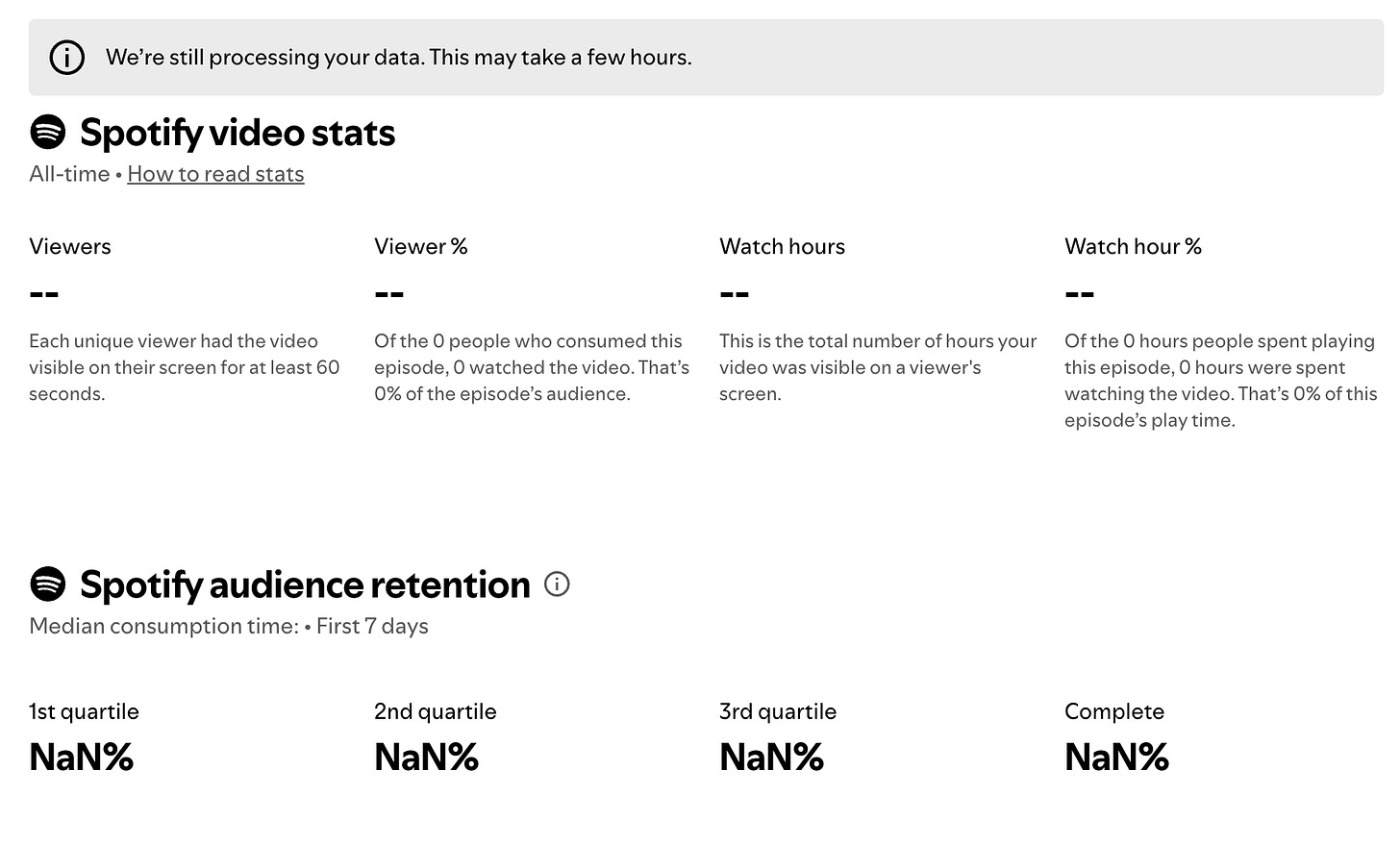
It was not just the publishing that broke: the Creator portal looked absurd, with NaN% values everywhere, during the outage:
During outage #1
I emailed the Spotify team to alert them about the outage and also complained online. I got a response, confirming the outage and pledging to do better:
“The issue was in one of our podcast publishing metadata pipelines. A small subset of episodes completed normal media processing but then missed a downstream publish update because a newly introduced validation signal was not correctly wired into the logic that wakes up the publishing path. In simpler terms: the episode could become eligible to publish, but the final propagation step was not reliably triggered for that class of episodes.
We identified the root cause, deployed a fix, and reprocessed the affected episodes with all-clear called early this morning. We’re also tightening the system so that fields used for publishing eligibility cannot be added without also triggering the relevant downstream updates.
Separately, we’re reviewing how partial creator-impacting publishing delays are surfaced, because even when this is not a broad platform outage, it is still a bad experience for publishers like yourself.
Apologies again that you hit this. It was a real bug, not a wide outage, but it hit some of our most relevant creators.”
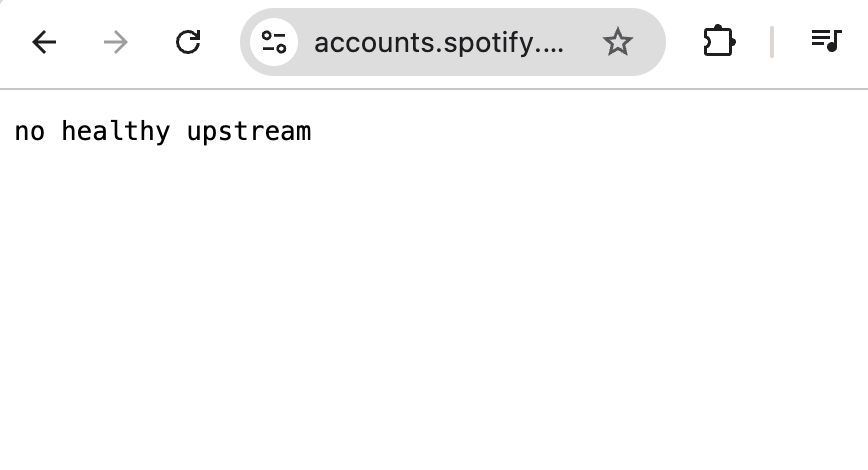
Outage #2 (17 June): Spotify down. Four weeks later, when attempting to publish a video episode, all of Spotify went down for many users, including myself.
Spotify’s web player on 17 June
Spotify does not maintain a status page, so it’s impossible to tell how widespread the outage was. I didn’t include a Spotify link in that week’s announcement either.
Outage #3 (24 June): podcast publishing broke – again. Outage #3 in five weeks; deja vu. This time, it was episode publishing not working, yet again. After waiting two hours for the episode to publish on Spotify, I yet again sent out the announcement with no Spotify link.
I also emailed the Spotify Podcasts team, who confirmed the outage. I said I was considering stopping publishing video episodes, and to switch to audio-only publishing (which means pointing Spotify to my master RSS feed.) I said that an apology was appreciated but it wasn’t enough to make it worth publishing video episodes there.
I also asked for the incident review because I had the feeling that reliability was not all that important on this podcast product. For the first outage I got a vague description of what happened, and promises of improvements that were never done – e.g. during this second outage, there was no improved communications to creators, which I was told would happen, after outage #1.
Internally, Spotify’s team surely conducted an incident review as per usual, so I figured I’d hear back in about two weeks’ time, and assumed a reply would be forthcoming because I’d made clear I was ready to leave Spotify Podcasts if reliability didn’t improve.
No incident review three weeks later, so I quit Spotify
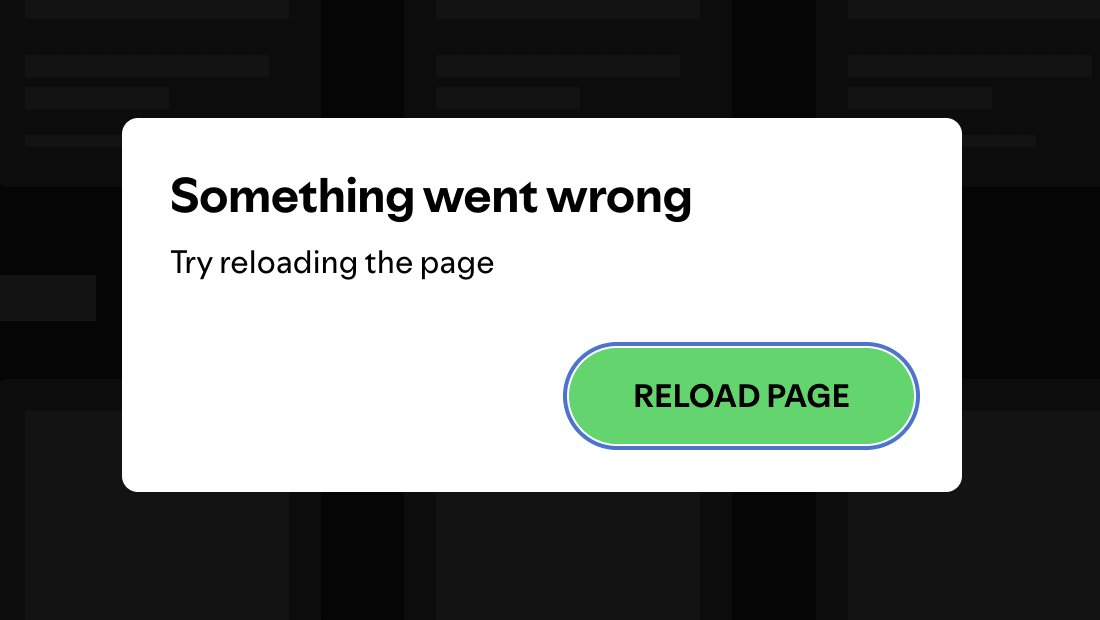
The incident review had never arrived as promised by three weeks later, even though there had been time for it to be completed. It was yet another sign of a platform that has become unreliable. Also, the creator portal occasionally threw up this error:
Spotify’s creator portal on 16 July
I checked my Spotify stats: stream plays had been trending downwards unsurprisingly, given the ongoing outages, while the other podcast platforms didn’t show the decline.It made me decide “enough is enough” and to move off Spotify.
Staying on their platform depended on seeing an incident review, but they didn’t prioritize transparency, still had no status page, and nobody had built a feature for episode-processing status like YouTube has had for years. So, I pulled the plug and left:
Offboarding from Spotify’s (video) podcasts product
After I made the switch away from Spotify, the platform’s creators portal became buggier than ever, as in these examples:
My Creators page after I changed the source of my podcasts to the master RSS feed
Comments disappeared:
My show had no comments, suddenly
… even though other parts of the UI showed dozens of comments:
Zero comments, yet episodes with comments
Episode links directed to 404 pages:
404 pages inside the Creator portal, when clicking links
A day or two later, these issues disappeared: I assume no one had tested the flow of moving away from Spotify Podcasts to an RSS feed, and it’s why the experience was so poor.

 点赞
点赞 收藏
收藏 点踩
点踩 分享
分享