The Bond Market Doesn’t Like Bullshit
CNBC
The Federal Open Market Committee of the Federal Reserve meets every eight weeks to set interest rates — specifically the federal funds rate, the overnight rate at which banks lend each other money. The Fed funds rate has little direct economic significance, since nobody making important investments relies on overnight money. But an upward or downward change in the Fed funds rate tends to drag longer-term rates up or down with it. Even more important, FOMC decisions, along with their public statements, affect the market’s expectations about future monetary policy.
Setting such expectations is one of the major roles of the Fed. So FOMC decision days are something of a theatrical performance. The committee doesn’t just announce its interest rate decision. It releases a statement explaining that decision; then the Fed chair holds a press conference, in which he or she tries to build credibility by answering reporters’ questions. Market traders closely analyze these statements in order to predict the future direction of inflation and monetary policy. As a result, FOMC decisions and statements have critical influence over current market rates.
On Wednesday Kevin Warsh, who Donald Trump selected as Fed chair, played the starring role. His job was to explain why the Fed didn’t raise rates in the face of inflation that is persistently well above its 2 percent target.
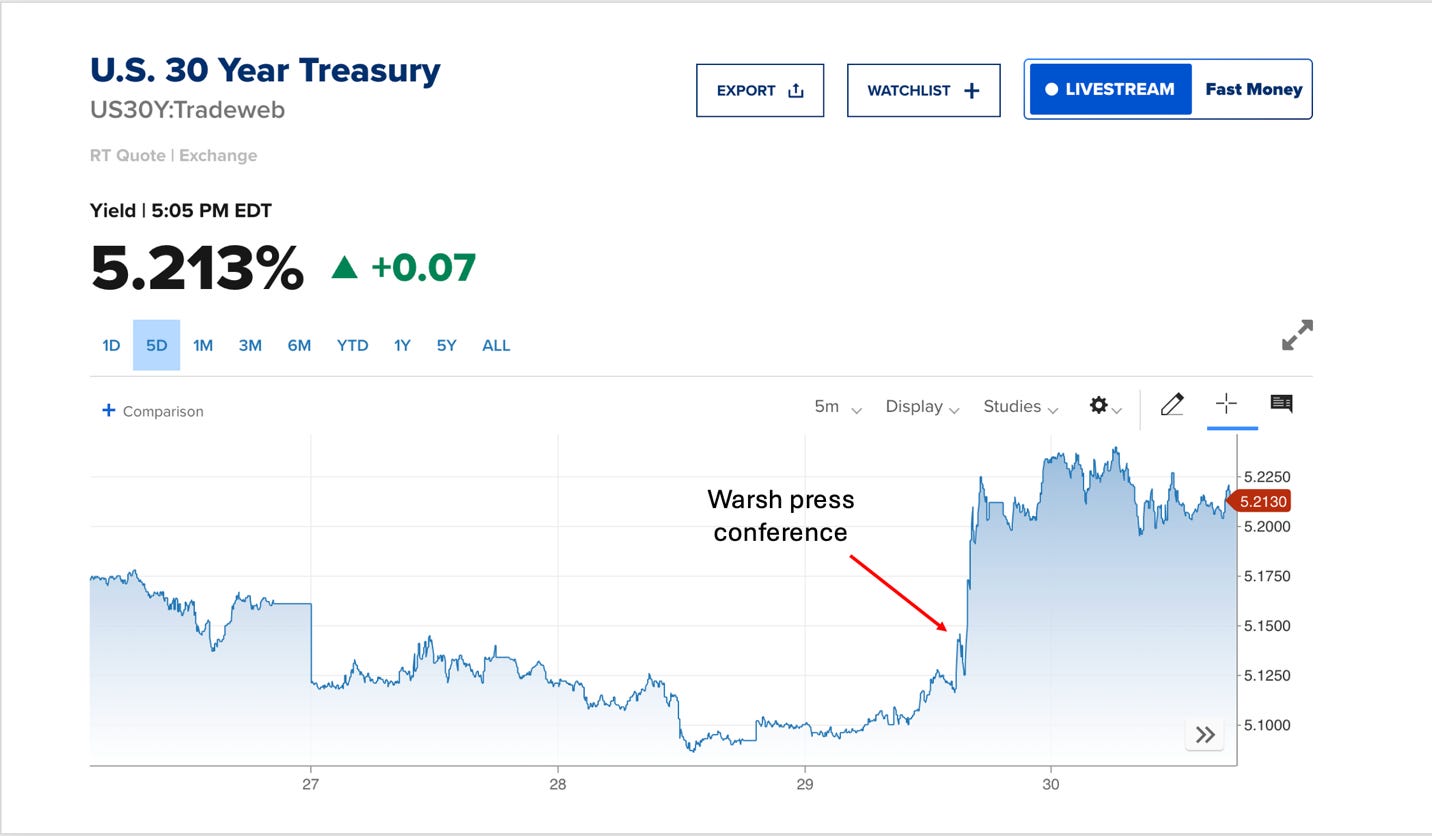
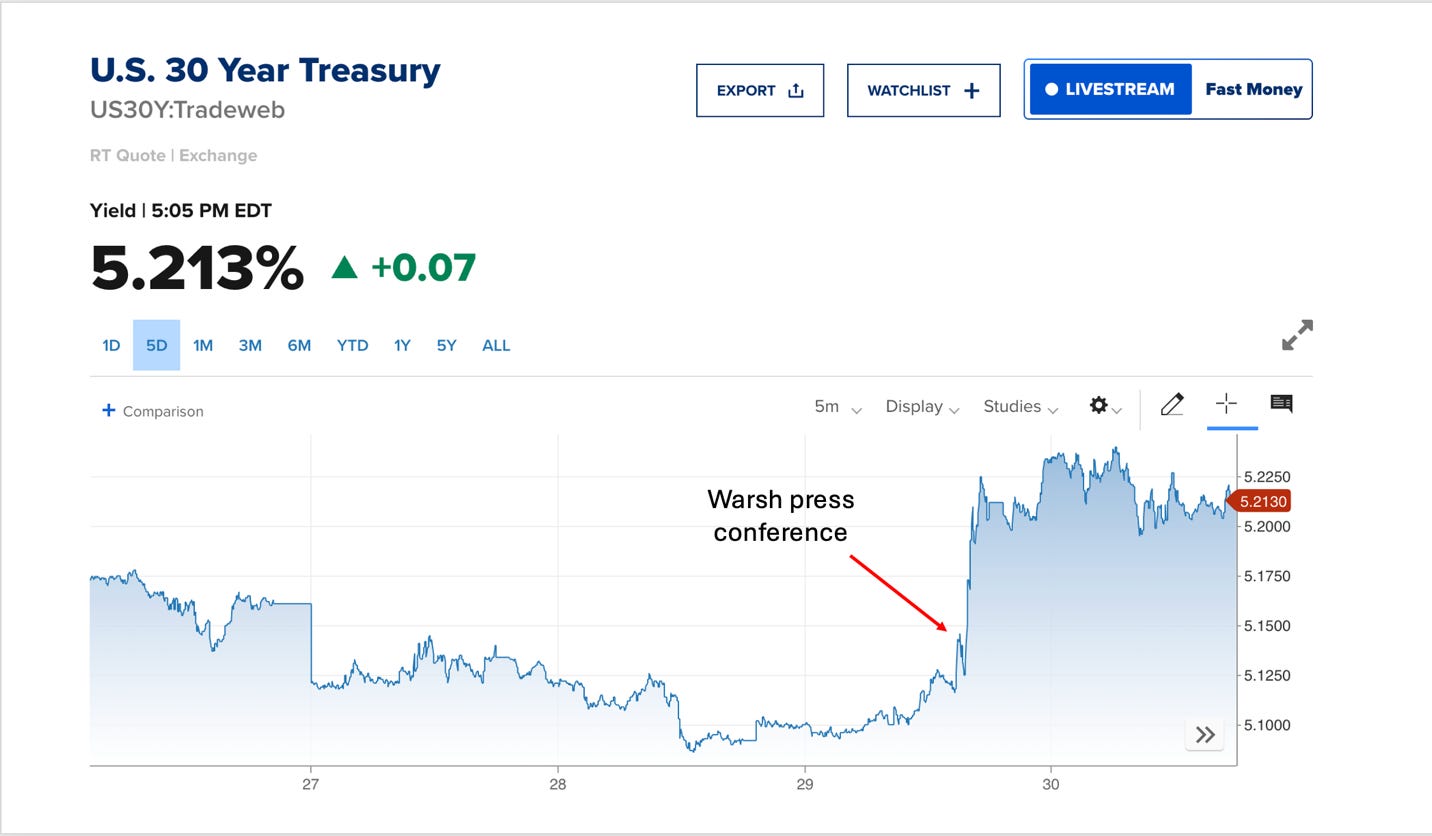
By all accounts he bombed. In particular, the bond market, the ultimate reviewer, really didn’t like Warsh’s performance. As the chart at the top of this post shows, the 30-year Treasury rate spiked and the dollar fell slightly. In plain English, this was the equivalent of bond market traders running for the exits.
A little background is in order to understand exactly what happened here. At 3.7%, inflation has been persistently well over the Fed’s 2% target rate — largely as a consequence of Trump’s tariffs, which have raised the prices of imports, and his Iran war, which has caused energy prices to soar. The…

 点赞
点赞 收藏
收藏 点踩
点踩 分享
分享