Astronomers have just spotted a new galaxy forming 1.2 billion years after the Big Bang

Astronomers studying the early universe have uncovered a massive new galaxy that dates back to 1.2 billion years after the Big Bang.
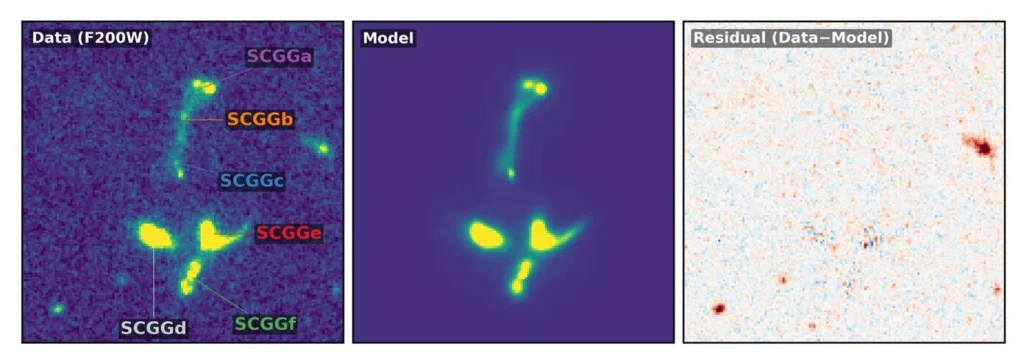
The remarkable discovery appears to capture six young galaxies in the process of merging into one enormous structure.
Scientists say it offers one of the clearest glimpses yet of how the universe’s largest galaxies may have formed.
The finding could help solve a long-standing mystery about how giant galaxies appeared so soon after the Big Bang.
New galaxy spotted 1.2 billion years after the Big Bang
The newly discovered system consists of six galaxies packed tightly together, all bound by gravity and believed to be on course to merge into a single giant galaxy in space.
Researchers think the object is an early example of a Brightest Cluster Galaxy, or BCG, and these colossal galaxies sit at the centers of galaxy clusters and rank among the most massive galaxies in the known universe.
Astronomers have long believed these unknown giants grow by absorbing and merging with smaller galaxies over billions of years.
NASA
However, actually catching that process in action has proven incredibly difficult because it represents a relatively brief stage in a galaxy’s lifetime.
How the team watched the formation of a new galaxy
The team used observations from several telescopes to study the distant system and found evidence that the six galaxies are interacting with each other as they slowly combine.
Because the light has taken more than 12 billion years to reach Earth, researchers are effectively looking back in time to witness an important chapter in the universe’s history.
The study has been published on the arXiv preprint server and is awaiting peer review.
Ronaldo Laishram et al., arXiv (2026)
Why this discovery from astronomers matters
The discovery could help explain one of the biggest surprises in modern astronomy.
Recent observations from the James Webb Space Telescope have revealed enormous galaxies that already existed much…
Unsplash

 点赞
点赞 收藏
收藏 点踩
点踩 分享
分享