How China's DRAM Maker CXMT Caught Up With Micron Without EUV
Hello everyone,
The biggest AI story this week has been Kimi K3, the latest model from Chinese AI startup Moonshot AI, which is disrupting the AI industry with top-tier performance at a fraction of the cost.
Many have called it the second “DeepSeek moment.”
Two years ago, CommonWealth Magazine profiled the company as part of a special report on China’s technology industry, when it had only just been founded.
Moonshot founder Yang Zhilin(楊植麟), now in his early thirties, has a reputation as a brilliant eccentric. One of his classmates at Tsinghua University once described him with a remark that has always stuck with me: “If what you’re saying isn’t intellectually interesting enough, he’ll simply act as if he didn’t hear you.”
His résumé certainly lives up to that reputation. Yang graduated from Tsinghua University’s Department of Computer Science, earned a Ph.D. in computer science from Carnegie Mellon University, worked in AI research at both Meta and Google, and after returning to China, participated in Huawei’s Pangu large language model project.
Kimi K3 has reignited a familiar debate. If open-source models can become this inexpensive and this capable, do we still need to invest so heavily in AI infrastructure?
Global semiconductor stocks briefly sold off over the weekend as a result.
When Jensen Huang(黃仁勳) was asked about the issue during the opening ceremony of Wistron’s new Texas plant, he said the market had gotten it wrong.
“People misunderstood DeepSeek the first time, and now they’re misunderstanding Kimi again.”
In his view, lower AI costs will accelerate AI adoption, which in turn will drive stronger demand for chips, data centers, and computing power. In that sense, Kimi K3 is actually good news.
Another question being raised is whether U.S. export controls on China are still effective. Why are Chinese AI startups continuing to advance despite being cut off from Nvidia GPUs? The performance gap with the best U.S. models, once thought to be around six months, now appears to have narrowed to just two or three months.
Some speculate that Kimi K3’s breakthrough performance came from distilling America’s most advanced AI models.
Others believe Moonshot obtained its computing power through loopholes in U.S. export controls, using GPUs located in overseas data centers to train its models.
According to White House Office of Science and Technology Policy Director Michael Kratsios, both claims are true.
Yesterday, he posted on social media that U.S. intelligence indicates Moonshot used model distillation to steal technology from Anthropic’s most advanced model, Fable, and trained its model on Nvidia’s latest GB300 servers in Thailand.
“This is unacceptable,” he wrote.
Back to this week’s newsletter.
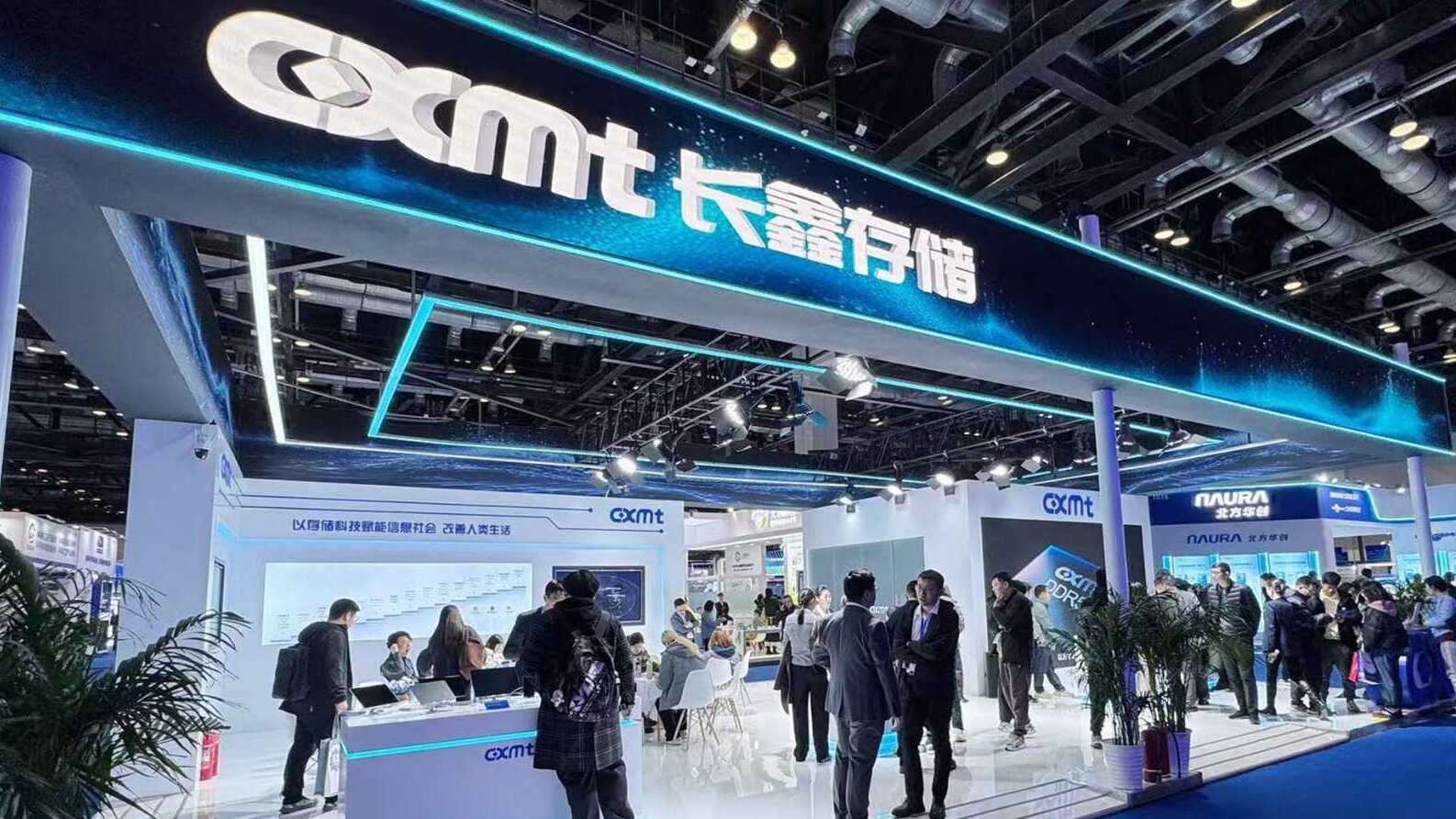
China’s fourth-largest DRAM maker, CXMT(長鑫存儲), is scheduled to list on the Shanghai Stock Exchange next Monday (July 27). Its IPO is expected to raise more than RMB 57.9 billion, surpassing the RMB 53.2 billion raised by SMIC when it returned to Shanghai’s STAR Market from the New York Stock Exchange in 2020.
Frankly, I had never paid much attention to CXMT.
Like much of the industry, I focused instead on YMTC(長江存儲), China’s state-backed NAND Flash champion.
Then, late last year, CXMT’s prospectus was released—and it stunned many foreign analysts.
What changed?
Let’s take a look.Subscribe nowRead more

 点赞
点赞 收藏
收藏 点踩
点踩 分享
分享