
Octopuses Can Squeeze Their Bodies Through Tiny Holes, And Scientists Are in Awe


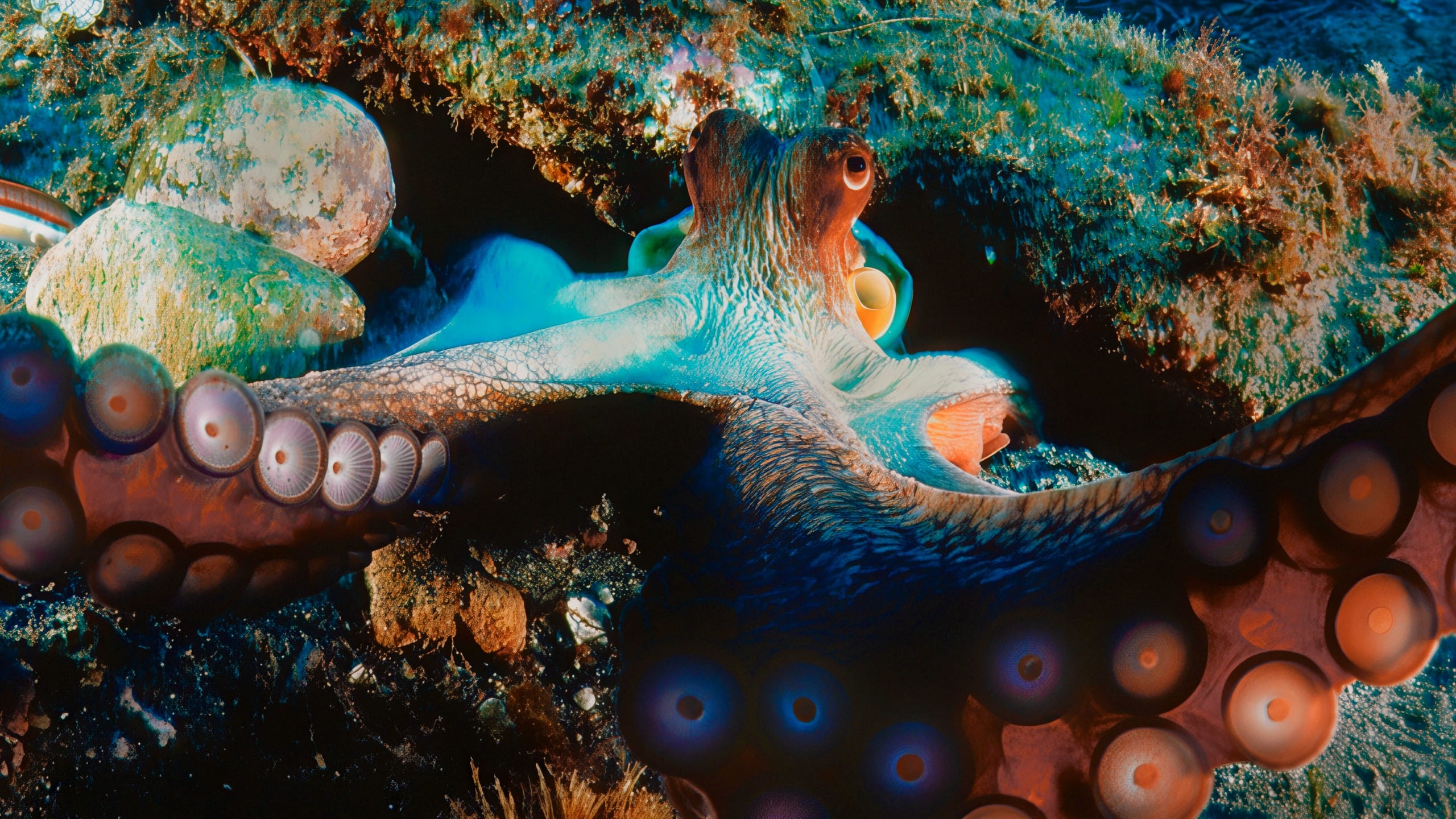
Octopuses are notorious shape-shifters.
They regularly escape their tanks by squeezing through narrow gaps, and they have an uncanny ability to find shelter in the pokiest of places.
The main limit on an octopus's ability to clear a bottleneck is its hard beak and how deftly it contorts its labile limbs and mantle.
Robotics engineers are in awe of this.
"With sophisticated behaviors, a flexible body and unique motor control, octopuses are compelling models for both biological and bio-inspired robotics," writes an international team in a new paper published in the Journal of Experimental Biology.
The research is a collaboration between cephalopod experts from Italy and Austria and engineers from the National University of Singapore's Advanced Robotics Centre.
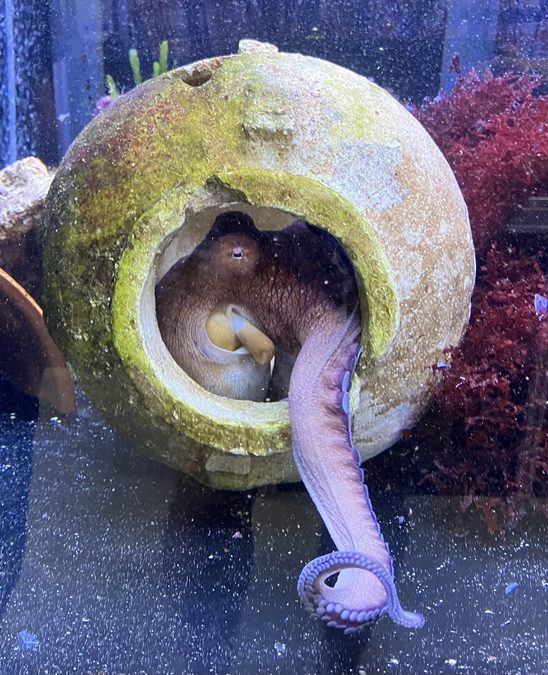
"Their lack of a rigid skeleton allows them to undergo extreme deformations, letting them navigate tight apertures and narrow geometries, offering a biological solution to one of the most persistent challenges in robotics," the authors write.
"However, how the animal organizes its arms and body to interact and adapt to environmental constraints remains unclear."
The team closely studied three sub-adult common octopuses (Octopus vulgaris) as they slid through differently sized holes.
They took videos, looking for ways to break down the octopuses' movements into 'motor primitives', which are the basic building blocks of movement controlled by the nervous system that can be recombined into various actions.
The term motor primitives actually originated in neuroscience, and has since been adopted in the field of robotics, too.
The motor primitives an octopus uses to squeeze through a hole seem to depend on the size of the gap compared to the octopus.
"When the opening was relatively large, octopuses used a consistent three-step sequence of probing–shifting arms–squeezing through," the authors write.
First, the octopus would explore the hole with its arms before passing through, with one arm first (usually one of the front two arms on its left), and then up to five of the remaining arms.
Then, using two of the arms that had already traversed the hole, they would sucker onto the partition surrounding the hole and push on it, carefully squeezing their mantle and the remaining arms through all at once.
"When the opening was smaller, the final squeezing stage was subdivided into two distinct steps: shifting the remaining arms and only then the mantle separately, thereby yielding a four-step strategy," the authors explain.
Getting the head and mantle through the hole appears to be a particularly delicate undertaking, which makes sense given they contain the octopus's vital organs, including its three hearts, its digestive system, and the central donut-shaped brain that encircles its esophagus.
The octopus's central nervous system is encased in a stiff cartilage sheath, which the researchers used as a yardstick for the size of the hole an octopus could pass through.
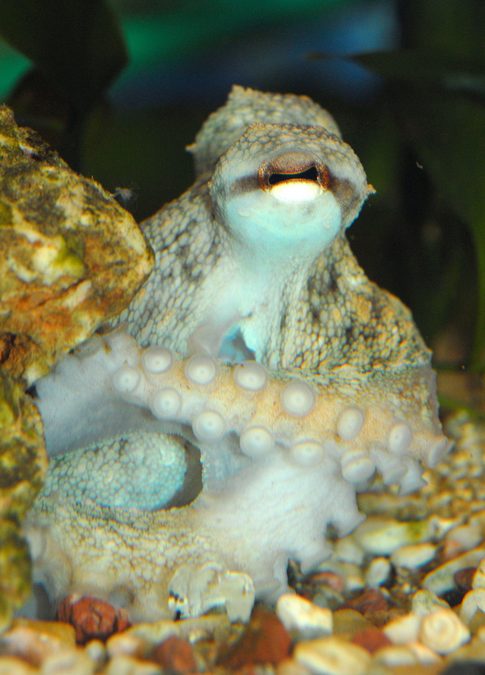
But the common octopuses were able to use the second, four-step strategy to pass through holes slightly smaller than the distance between their eyes.
The videos show the octopuses using their muscles to carefully deform their mantle as it squeezes through these seemingly impossible holes.
The team thinks that these movements could inspire a new design for soft robots used in search and rescue missions, which currently tend to have more of a snake-like design to allow them to move through narrow gaps.
An octopus-inspired design could allow more sensors and manipulators to be packed in, for better adaptability during missions.
"By identifying common strategies underlying this behavior, our study contributes a new potential combination of motor primitives and provides insights into the evolutionary intelligence that enables octopuses to adapt to environmental constraints," the team writes.
"Moreover, as octopuses continue to inspire advances in soft robotics, a deeper understanding of their squeezing strategies offers valuable principles for designing soft-bodied robots capable of exploiting embodied intelligence to navigate and overcome physical limitations in complex environments."
The research has been published in Journal of Experimental Biology.