
An Armored Amphibian That Lived Its Whole Life at Sea? It's a Fossil First


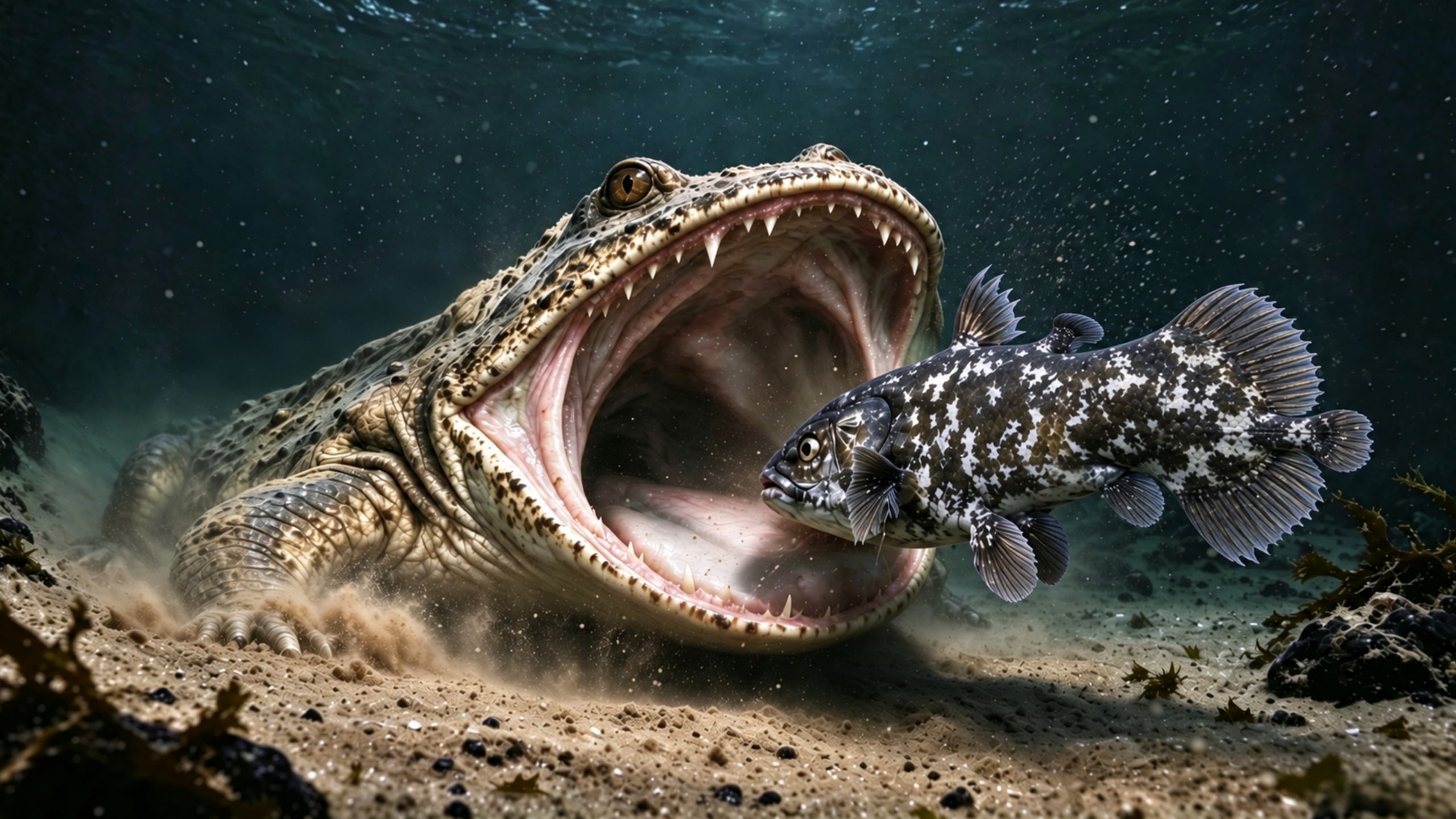
No amphibian on Earth lives in the ocean. Their porous skin – crucial for gas and water exchange – generally can't cope with the salt.
But two fossils unearthed from a Late Triassic deposit in China suggest an ancient amphibian species not only inhabited saltwater – it made a proper return to the ocean, living its whole life at sea.
Geologist Lipin Diao and colleagues present the strange new amphibian, Gerrothorax maritimus, in the journal Nature Ecology & Evolution.
The two fossils were discovered by local farmers in Guanling County, in a layer of rock about 237 million years old, right in the middle of the Guizhou Triassic Fossil Sites.
The place where these Gerrothorax were found was totally submerged by seas during the Late Triassic. In other words, they seem to have inhabited a marine ecosystem, alongside ichthyosaurs, crinoids, and turtles.
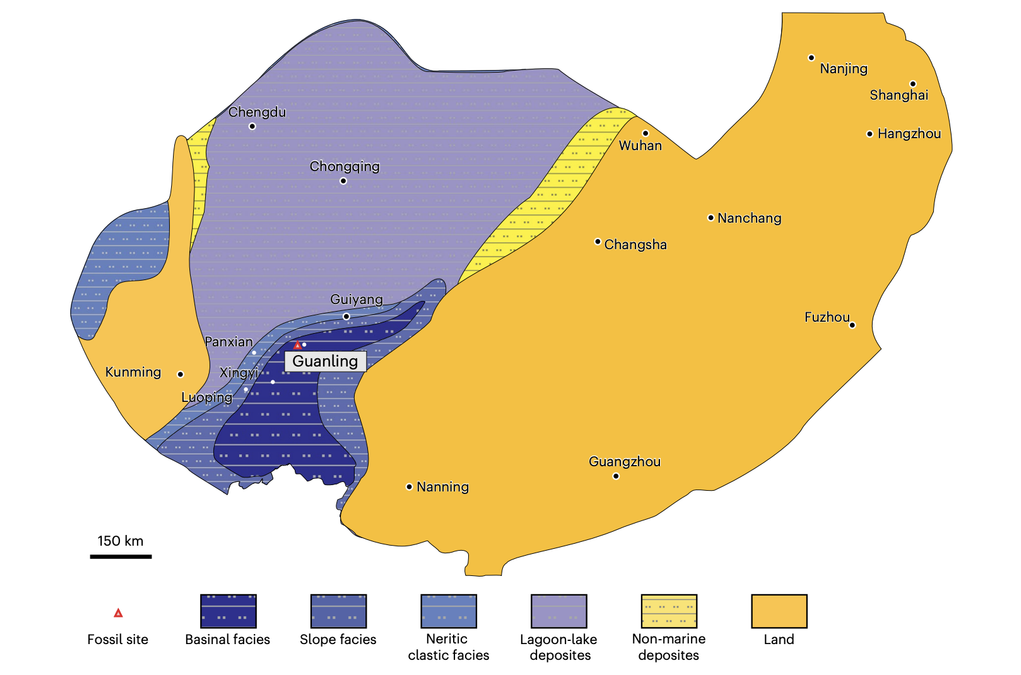
"We've been mostly studying marine reptiles and the fish from this place, but now we also have this amphibian and it's a sort of very unusual member of the lineage," says co-author and paleontologist Ryosuke Motani, of the University of California, Davis.
Both specimens were found more than 30 km [18.6 miles] from any possible nearby islands, which means it's possible they never even left the water. That's pretty wild, given that the ability to traverse land and water is what amphibians are best known for.
Unlike any living amphibian, Gerrothorax's flat body was covered in plates of hard armor, which are well preserved in the fossil specimens.
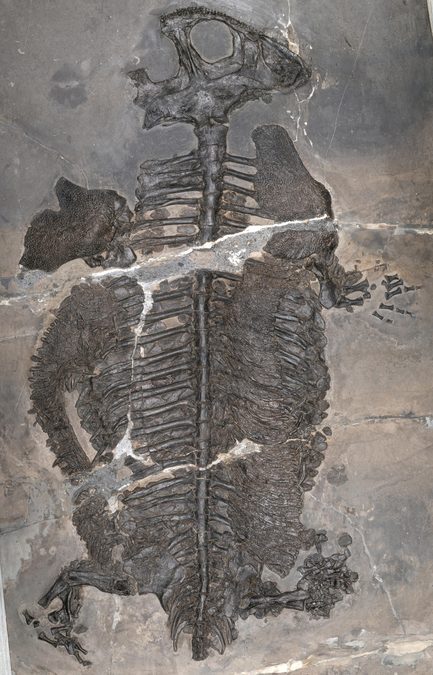
"It is unknown if stem amphibians all had permeable skin as in [modern amphibians], but even if they did, the body armor of Gerrothorax prevented water absorption through the skin, mandating water drinking and absorption from the digestive tract unlike in most extant amphibians," Diao and team write.
The researchers did consider whether these Gerrothorax specimens could have drifted out to sea after death, but with both skeletons almost fully intact, that seems doubtful.
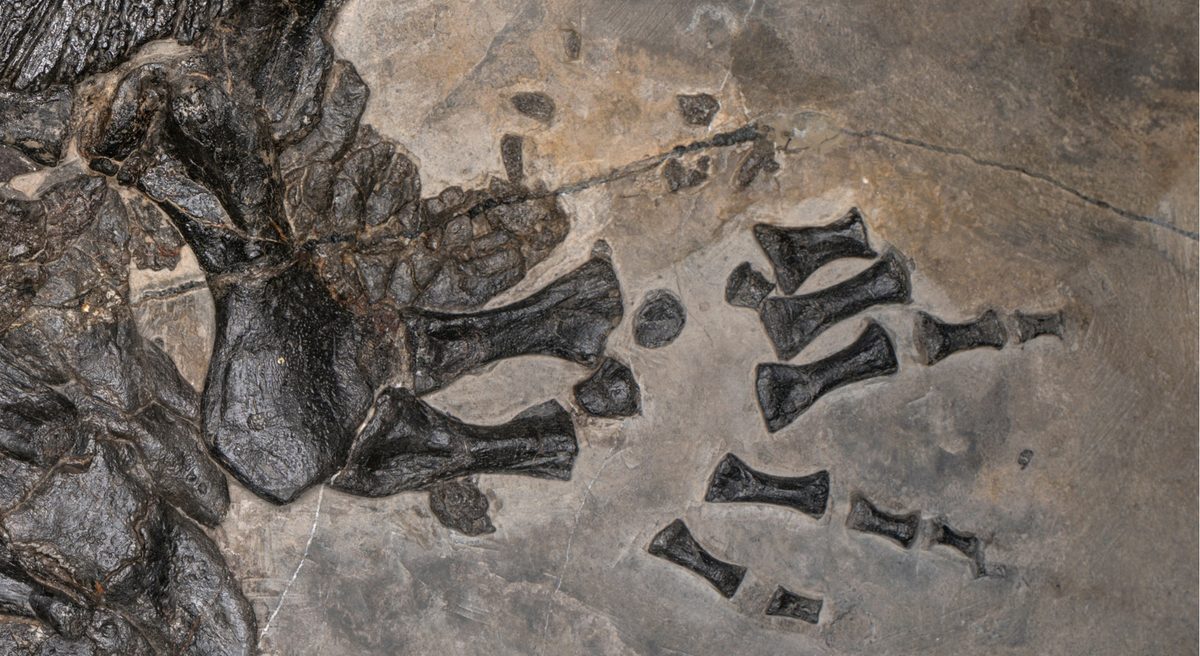
"It is very unlikely that the two individuals… were transported over 30 km and still retained nearly complete articulation down to the limb, whereas the limb is one of the first body parts to be lost from a tetrapod carcass in the sea," they write.
"Carcasses at sea, unless they sink to the bottom right away, tend to dry out and lose limbs prior to sinking to the bottom," Motani adds.
"But these animals had their fingers preserved, so that means they probably died near where they lived."
Further analysis of the strontium isotopes in their bones offered further evidence of their marine lifestyle.
Strontium is a trace element found all over Earth, and easily accumulates in the bones of animals.
The ratio of two strontium isotopes, 87Sr and 86Sr, varies by location on land depending on the local rock, while the ocean carries much the same value across the world. The strontium in these bones matched Triassic seawater, not the rock they were buried in.
"It is most likely that the two [Gerrothorax] individuals that gave rise to the type specimens grew up drinking the seawater, whose strontium ratios are reflected in their bones," Diao and team report.
The more complete specimen of the two fossils measures at least 73.7 cm (2.4 feet) along its preserved midline, though a handful of its tail bones are missing.
"It's probably, body mass-wise, about the same as the giant salamander, but what's different is that giant salamanders are elongated whereas this animal is really chunky," says Motani.
The flat, chunky shape of its body, weak limbs, and heavy body armor would've made it difficult for Gerrothorax to move around on land, if it ever made it back there at all.
The research has been published in Nature Ecology & Evolution.