
Something Strange Is Living in The Old Fuel Leaking From WWII Shipwrecks


More than 80 years ago, the world was exploding – literally and figuratively – during World War II.
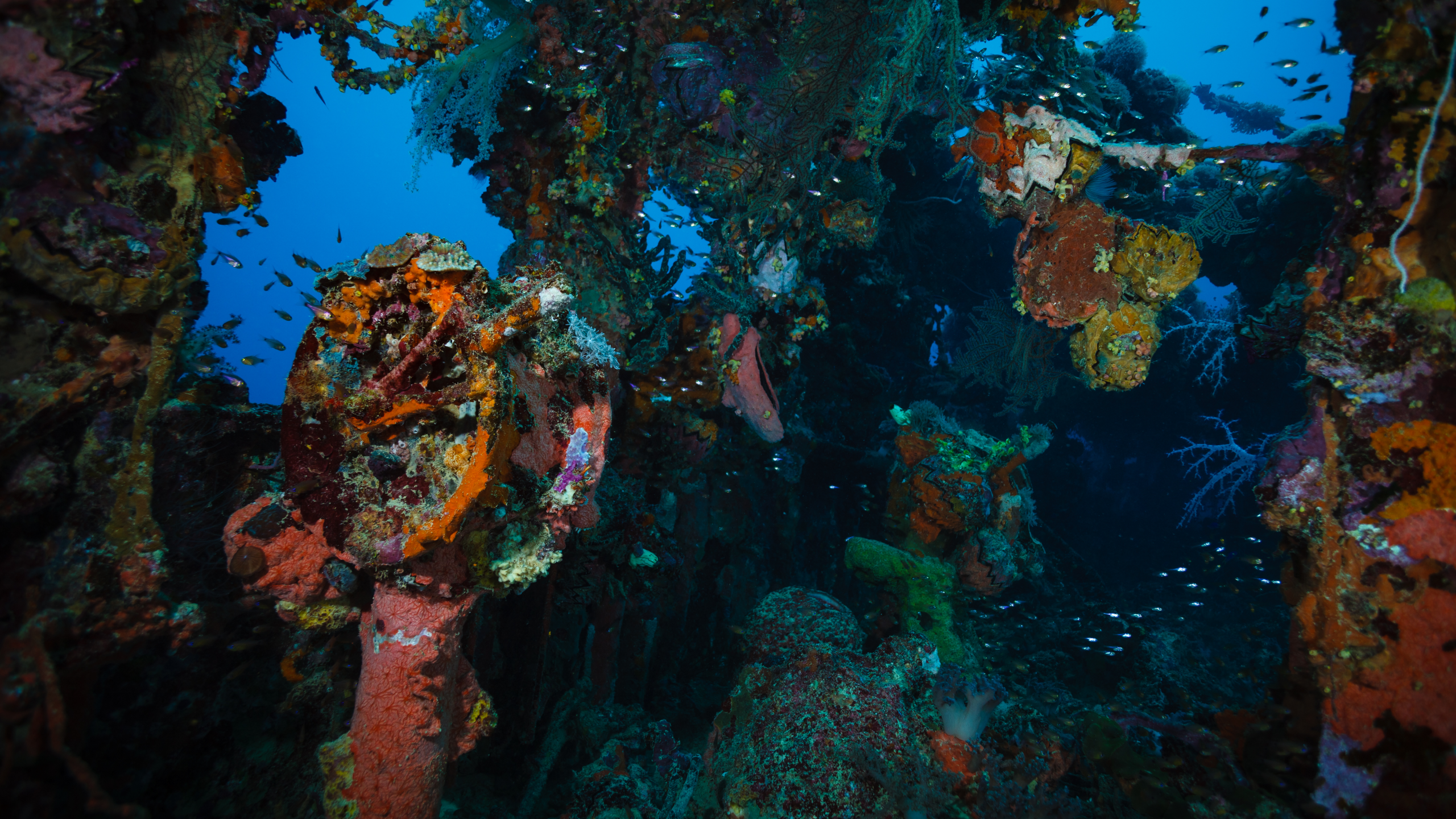
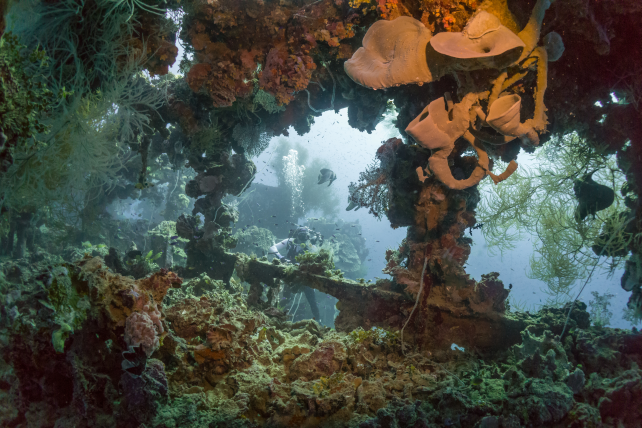
In the furious naval skirmishes that raged across the Pacific Ocean, many warships were lost, their steel carcasses plunging to the seafloor, where they have been gradually rusting and crusting with coral in the silence and the dark.
As their hulls split open, the fuel remaining in their tanks has been seeping into the surrounding environment.
You'd expect this normally toxic waste to be anathema to marine life… but now scientists have discovered something rather strange happening.
Scientists investigating fuel recovered from two Japanese shipwrecks in Micronesia have discovered a startlingly diverse community of bacteria, including microbes belonging to groups known to feed on the very hydrocarbons that make petroleum so environmentally hazardous.
Their discovery could offer a new way to tackle a pollution problem that has been lurking beneath the waves for eight decades.
"Despite the toxicity of these hydrocarbons to marine ecosystems and public health, both fuel oil and the seawater-oil interface supported a diverse bacterial community," write researchers in a paper led by microbiologist Awei Bainivalu of the University of the South Pacific in Fiji.
"The presence of known hydrocarbon-associated taxa highlights a community structured around long-term hydrocarbon exposure."
There is a lot of WWII detritus left on the floor of the Pacific Ocean. The vessel count includes some 330 oilers and tankers left to rot and spill their poisonous contents into the surrounding ocean.
Chuuk Lagoon in Micronesia is one of the Pacific's more densely packed shipwreck sites.
Known as Truk Atoll back then, it was the site of Japan's main naval base in the South Pacific Theater during World War II. The base was devastated by US air raids in 1944 as part of Operation Hailstone, leaving dozens of wrecks scattered across the lagoon.
Within its confines lies about 200,000 tons of sunken ship debris, known to have been leaking oil into the water for decades, impacting fisheries and marine habitats alike.
In particular, petroleum hydrocarbons form what are known as tar balls that can cause significant harm to delicate ecosystems.
Bainivalu and her colleagues wanted to find out exactly what was lurking in the decades-old fuel lingering in Chuuk Lagoon – both the toxic chemicals it contained and the microorganisms that might be capable of breaking them down.
The researchers focused on two Japanese vessels resting on the floor of Chuuk Lagoon: the oil tanker Shinkoku Maru and the Kiyosumi Maru, a former passenger-cargo ship converted for military service.
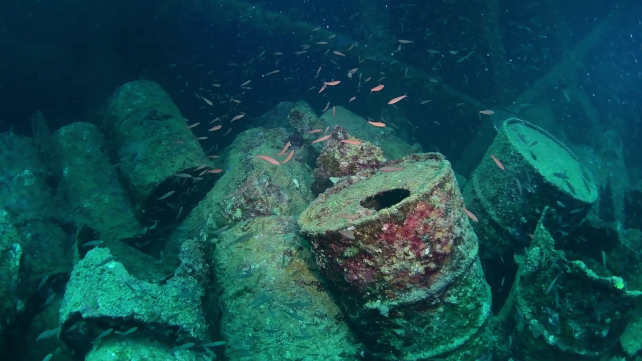
Both are leaking fuel of slightly different kinds into the lagoon – medium fuel oil from the Shinkoku Maru, and heavier fuel oil from the Kiyosumi Maru.
These are different petroleum products, with different mixtures of hydrocarbons, viscosities, and other properties that could influence which bacterial species can live in them.
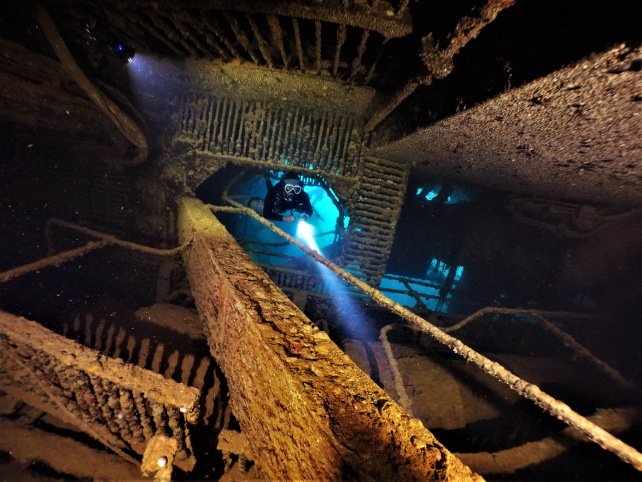
Although oil released into the ocean can disperse, some of the fuel aboard these ships has remained trapped in their tanks for decades. As the steel slowly corrodes, new openings allow the oil to escape, turning the wrecks into long-term sources of ongoing pollution.
The researchers collected samples from both shipwrecks, as well as from the boundary between the oil and the ocean water at the Shinkoku Maru.
These samples were taken back to the lab for analysis.
The researchers were looking at two things: the chemical composition of the fuel and the bacterial communities that had taken up residence.

The chemistry was more or less as expected. Both fuels contained a complex mixture of petroleum hydrocarbons, including compounds known to be toxic to marine life.
The lighter fuel from the Shinkoku Maru contained more volatile aromatic compounds, while the heavier fuel from the Kiyosumi Maru was particularly rich in more persistent hydrocarbons.
The bacterial communities, on the other hand, were kind of amazing.
Based on DNA sequencing, the researchers identified bacteria spanning 42 phyla, 107 classes, 249 orders, 432 families, 1,047 genera, and 1,505 species-level classifications across the samples – with Proteobacteria heavily dominating.
Among the bacteria identified were members of genera such as Ralstonia, Sphingomonas, and Corynebacterium – groups that include species known to break down petroleum hydrocarbons to use them as a source of carbon and energy.
This ability underpins a pollution-cleanup technique called bioremediation, which harnesses microorganisms to remove contaminants from the environment.
The researchers only identified the presence of these bacteria; they didn't investigate whether the microbes were actively breaking down the hydrocarbons.
But there's a clue that suggests the fuel is shaping its own microbiome.
The sample from the Shinkoku Maru's oil-water boundary had a different composition from the bacterial community inhabiting the oil alone.
That suggests that there are reasons specific microbes thrive in these different environments, although future research will need to determine whether hydrocarbon metabolism is one of those reasons.
If it is, it could illuminate a way to help clean up this historic mess, the researchers say.
"The results support WWII shipwreck fuel oils as natural reservoirs of hydrocarbon-degrading bacteria," they write, "providing a foundational baseline to inform future research into bioremediation applications in the Pacific region."
The research has been published in Marine Pollution Bulletin.