The Art of the Thousand Bloom Chrysanthemum

Visitors encountering the Thousand Bloom Chrysanthemum at Longwood Gardens in Pennsylvania often wonder what they are seeing.
From a distance, the plant appears to be an immense floral dome, composed of hundreds—if not a thousand—of carefully matched chrysanthemums. Each flower occupies its own place in a near-perfect pattern. The blossoms rise in concentric rows from the edge of the display toward its crown, creating an impression of abundance so extravagant that it seems possible only through multiplicity. If you linger to listen, you’ll hear many guests wondering if multitudes of plants have been assembled to produce this impressive form.
Then comes the revelation: every blossom belongs to a single chrysanthemum.
Beneath the dome, hundreds of branches converge toward a single stem and root system. What appears to be a multitude is actually one plant (Chrysanthemum x morifolium), cultivated over approximately eighteen months and guided through thousands of individual decisions. The finished plant is not simply a profusion of flowers. It is the record of time—of biological time, human time, and cultural time—made visible.
The work requires constant adjustment, yet the completed form must look effortless.
At Longwood, the annual creation of a Thousand Bloom begins not with one plant, but with ten vegetative cuttings started each June, more than a full year before the exhibition. Artificial light interrupts the long autumn nights, keeping the chrysanthemums vegetative as horticulturists pinch the growing tips, encouraging one stem to divide into two, then four, until reaching over one thousand stems. By November, the two strongest plants are selected and carried forward in parallel. As their root systems and branches expand, so do their specially constructed containers and supporting frameworks. Both plants are continually trained and tied to custom-made frames, which support the increasing weight of the stems while establishing the balance and form of the eventual dome. Shoots are selected or removed; light, water, nutrition, temperature, and growth are carefully balanced. If both plants survive, the stronger of the two is chosen for display only shortly before the exhibition.
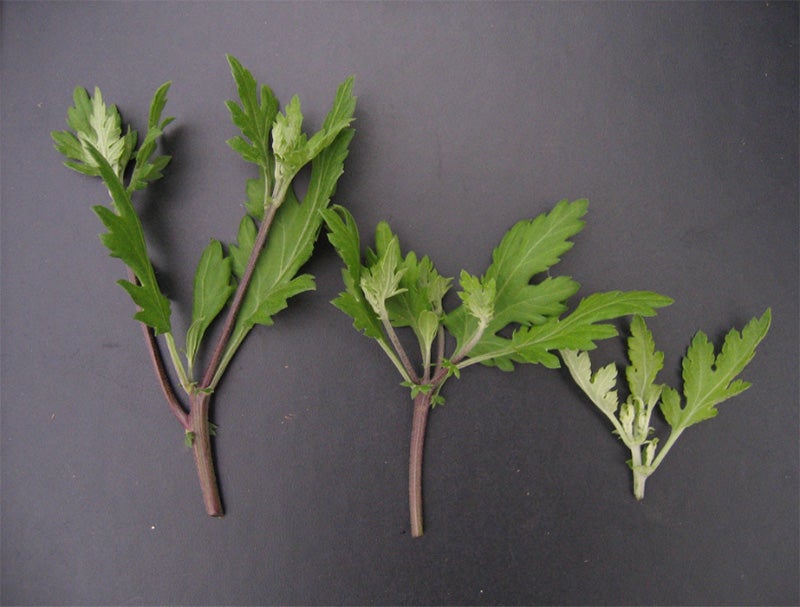
As more than one thousand stems begin to set buds, the horticultural focus shifts from increasing their number to perfecting the flowers they will bear. Through a process known as disbudding, competing lateral buds are removed from each stem, leaving a single terminal bud to develop. This concentrates the plant’s resources into one blossom per stem, helping to produce the large, uniform blooms characteristic of a finished Thousand Bloom. More than 4,000 ties may be used over the course of training, and stems may be temporarily allowed to wilt when greater flexibility is needed to position them without breaking.
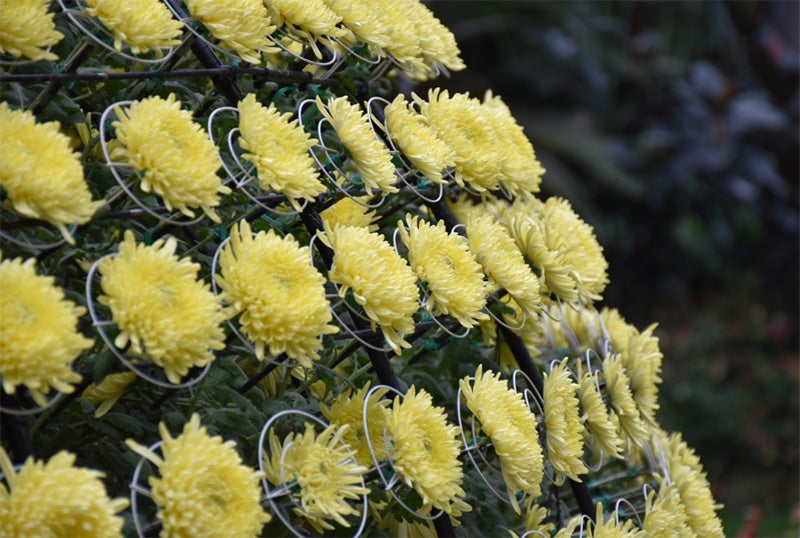
Once the final display plant is selected, about a month before exhibition, the work enters its last stage. Each developing flower is fitted with an individual wire support, called a rindai, which bears the weight of the bloom and allows horticulturists to orient it precisely within the dome. More than one thousand rindai may be individually attached, a process that alone can take horticulturists about ten days. The work requires constant adjustment, yet the completed form must look effortless.
For approximately eighteen months, time accumulates in the plant. Then, for only a few weeks each fall, time becomes visible when the Thousand Bloom is displayed.
Cultivating the Future
The Japanese name for the Thousand Bloom form is ōzukuri, commonly translated as “large cultivation.” Although the chrysanthemum originated in China and its cultivation traveled to Japan centuries ago, Japanese growers developed new systems for training the plant into distinctive formal shapes. This led chrysanthemums to acquire new layers of meaning in Japanese culture. In a poem composed for the ninth day of the ninth month—the traditional timing of Japan’s Chrysanthemum Festival—the Heian court poet Ki no Tsurayuki imagined the dew resting upon chrysanthemums as “jewels of a thousand years,” with the power to bestow eternal youth. This imagery from the tenth century captures the flower’s association with longevity while also suggesting its capacity to make the passage of time tangible. In Japan, chrysanthemums came to signify autumn, renewal, refined taste, and imperial authority, while exhibitions devoted to them became spaces in which horticulture, artistic composition, seasonal observance, and public spectacle converged.
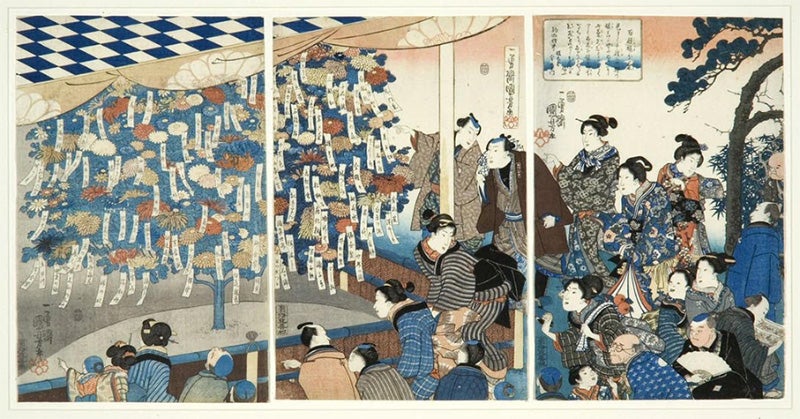
Originally, the annual chrysanthemum exhibition at Shinjuku Gyoen National Garden in Tokyo grew from an imperial tradition, and it remains one of the premier expressions of Japanese chrysanthemum culture, with horticulturists using extraordinarily refined systems for training the plant into distinctive formal shapes. Each November at Shinjuku Gyoen, formal plantings are still displayed in temporary wooden shelters, or uwaya, arranged along the paths of the traditional garden. Different forms are presented according to established conventions, their placement harmonizing with the garden and with the advancing autumn season.
The ōzukuri form was first created there in 1884. It established a model for the Thousand Bloom Chrysanthemum: hundreds of flowers, grown from a single plant, arranged into a broad and carefully proportioned dome.
The date is significant. The late nineteenth century was a period of rapid transformation in Japan, as the Meiji government pursued modernization while also identifying cultural forms through which the nation could represent itself to global audiences. The chrysanthemum, already connected with the imperial household, became especially prominent. In the Thousand Bloom, botanical growth was disciplined into a monumental living design.
Weekly Newsletter
"*" indicates required fields
Yet like any plant, the artform of a chrysanthemum is not static. Its perfection is both changing and ephemeral.
Unlike sculptures carved from stone, the Thousand Bloom is always becoming—or ceasing to be. Its living tissue continues to grow, transpire, respond, and age. The horticulturist who trains it is not imposing a finished image but negotiating with a living form whose future can be influenced but never completely controlled.
This makes the art of the Thousand Bloom the art of anticipation.
Every pinch is performed in expectation of growth that has not yet occurred. Every selected branch commits the horticulturist to a future arrangement. Every removed shoot or bud sacrifices one possibility so that another may flourish. The plant that visitors see in the autumn is composed not only of what was cultivated, but also of what was deliberately relinquished along the way.
The finished chrysanthemum makes those largely invisible choices momentarily legible.
A Plant That Records Labor
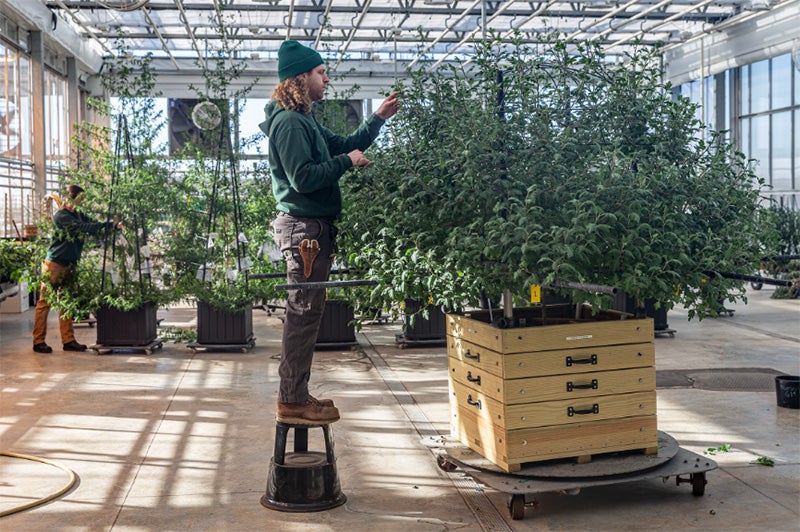
Modern audiences are often inclined to measure the Thousand Bloom by its most astonishing statistic: the number of flowers produced by a single plant. For its part, a botanical garden might concentrate on the investment of more than two thousand staff and volunteer hours training one plant. Yet numbers alone do not explain the phenomenon.
The deeper achievement is the synchrony.
The flowers must develop at approximately the same rate and open within the narrow window of time required for exhibition. One bloom opening too early or too late is more than an isolated horticultural event. It interrupts the visual unity of the whole.
Achieving this synchronicity requires horticulturists not merely to wait for the plant, but to manipulate the plant’s own perception of time. Chrysanthemums are short-day plants, initiating flowers as nights lengthen. For much of the Thousand Bloom’s development, Longwood interrupts those nights with artificial light, keeping the plant vegetative. Horticulturists carefully calculate how many weeks of short days the plant requires and then discontinue supplemental lighting at the appropriate moment. The naturally lengthening nights of late summer and early autumn then trigger the plant’s flowering, thereby bringing more than one thousand blossoms to flower together as one. Blackout curtains are sometimes used to manipulate the night to meet display timelines.
More to Explore
The Peacock Flower and Reproductive Resistance Under Slavery
Kari Traylor July 29, 2026 European naturalists documented the peacock flower's medicinal uses but left its most consequential history behind.
The Thousand Bloom therefore operates simultaneously on several scales of time. There is the daily time of horticultural labor: watering, pinching, tying, disbudding, inspecting, and adjusting. There is the developmental time of the plant, from cutting to branching form to bud to flower. There is seasonal time, as the chrysanthemum reaches its culmination in autumn. And there is generational time, through which specialized knowledge passes from one horticulturist to another.
By the time the plant is exhibited, these different forms of time have all converged. A support structure remains beneath the flowers, but the months of handling, judgment, and correction cannot be readily seen. The labor itself has seemingly disappeared. The plant appears complete and inevitable, almost as if it had naturally assumed its vast, symmetrical form.
Chrysanthemums at Longwood
Chrysanthemums have occupied a prominent place at Longwood Gardens for over a hundred years. Founders Pierre and Alice du Pont displayed chrysanthemums when the Conservatory opened in 1921, and the first large-scale exhibition followed in 1924. A pivotal chapter came when plant explorer John Creech traveled to Japan in 1956 on a collecting expedition co-sponsored by Longwood and the United States Department of Agriculture. More than 120 cultivars entered Longwood through that effort, expanding both the genetic breadth of the collection and the possibilities for exhibition. Yet Creech also recognized that importing plants alone was insufficient. In his report, he noted that Longwood would need “coaching on Japanese techniques” if the Gardens wanted to create a chrysanthemum display unlike any other previously seen outside Japan.
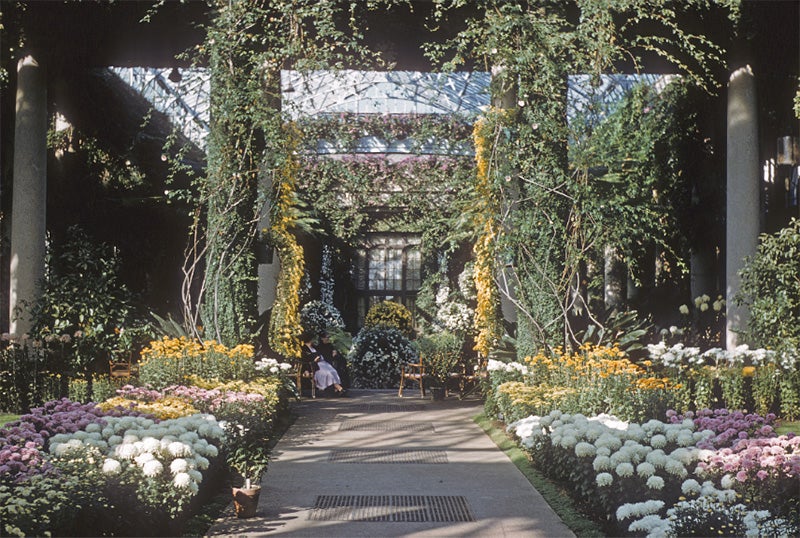
Today, the Gardens maintain one of North America’s largest and oldest chrysanthemum collections, including historic Asian cultivars—primarily Japanese—as well as representatives of all thirteen flower-form classifications recognized by the National Chrysanthemum Society. The collection preserves cultivars suited to specialized techniques such as cascades, bonsai, doll forms, and the Thousand Bloom.
This combination of plants and practices matters. As Creech had noted, horticultural collections are not sustained by cultivars alone. The knowledge and skill required to propagate, pinch, graft, train, disbud, and display the plants is also part of what must be carried forward.
Longwood began experimenting with the Thousand Bloom form in 1994, alternating between two cultivars: the golden-yellow ‘Susono-no-Hikari’ and the white ‘Susono-no-tsuki.’ During the early years, horticulturists succeeded in producing plants bearing approximately 150 to 250 flowers—impressive specimens, but still far from the scale and refinement achieved by Japan’s specialist horticulturists. The form depended on a body of accumulated knowledge: when to pinch, which branches to retain, how to distribute growth, how to regulate vigor, and how to anticipate the plant’s response months before flowering.
In 2007, Longwood set an ambitious goal: to grow what it described as the first true Thousand Bloom Chrysanthemum in the United States. Its horticulturists traveled to Japan to study with experts. There, Japanese masters Katsuo Ito, Minori Yusa, and Tadashi Imafuku shared knowledge and skills with Longwood, helping its horticulturists refine not only the Thousand Bloom but other classical chrysanthemum forms.
That exchange changed what was possible.
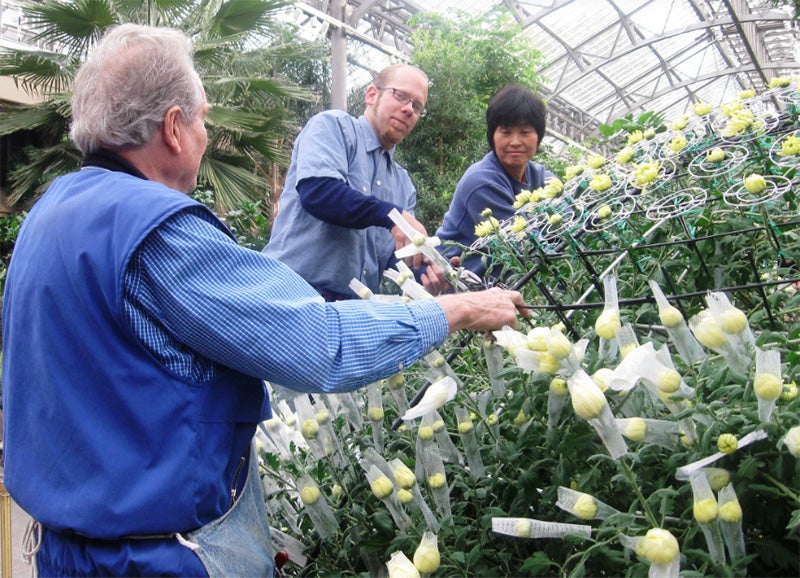
In 2009, through the leadership of Longwood horticulturist Yoko Arakawa, Longwood displayed a Thousand Bloom carrying 718 flowers and measuring more than eight feet across. Two years later, Longwood produced a plant with 1,167 blooms, crossing the symbolic threshold implied by the form’s English name. Later displays grew still larger. In 2019, Longwood produced a plant with 1,542 blooms—the largest it has grown and, according to the Gardens, the largest produced outside Japan. In 2025, the Thousand Bloom featured 1,363 perfectly spaced flowers growing from a single plant. Measuring 12 feet wide by 8 feet tall, it is still the largest single-stem Thousand Bloom grown outside of Asia.
These numbers document horticultural accomplishment. But they also document learning over time. The progression from 150 flowers to more than 1,500 reflects years of observation, experimentation, adaptation, and exchange. Each completed plant becomes the starting point for the next. Its performance reveals where the horticultural team succeeded, where growth was uneven, where timing could be improved, and what questions should guide the following cycle.
In this sense, Longwood’s history with the Thousand Bloom is not just a story of importing a technique. It is a story of apprenticeship, patience, and cultivation.
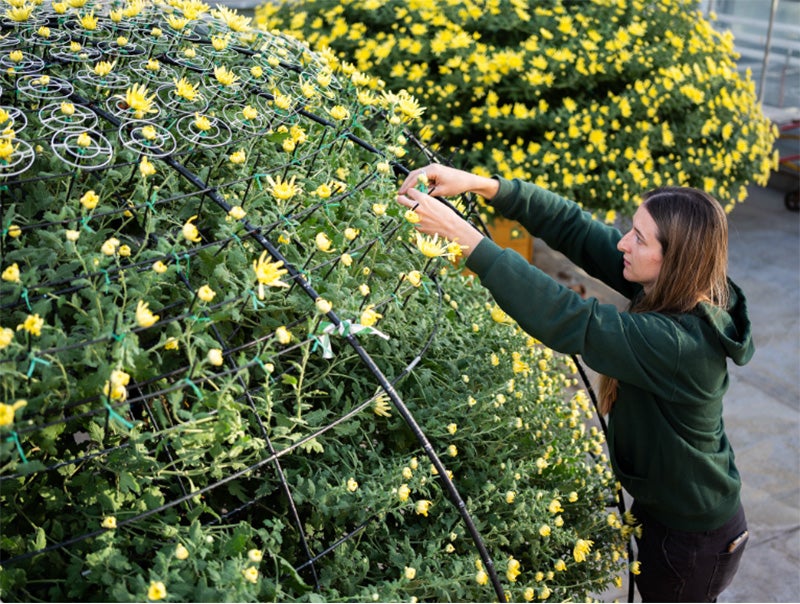
Each autumn during the annual Chrysanthemum Festival, guests may pause before the plant for only a few minutes. They may take a selfie in front of the flower dome, count some of the blossoms, or peer beneath the canopy to see the single stalk as they realize that this is a single monumental plant. Most will never witness the pinching, disbudding, tying, or patient adjustments through which it came into being. They are seeing all that work nonetheless.
For a few weeks, one plant bears over a thousand flowers and centuries of human knowledge. It becomes a living archive, a cultural inheritance, and a record of patient labor gathered into a single, astonishing form.
It is time made visible—and then released.
As revealed in this piece, plants and humans are intertwined across generations and cultures in ways that often go unnoticed. The Plant Humanities Initiative at Dumbarton Oaks reshapes what we think we know about the natural world by uncovering the entangled histories of plants and people.
With thanks to Kate Santos, Paula Butera-Kunkel, Cheryl Cordingly, and Gillian Hayward of Longwood Gardens for their contributions to this article.
The post appeared first on JSTOR Daily.

 点赞
 收藏
 点踩
 分享