The Forgotten Stories Behind Presidential Campaign Buttons
The race was on. It was the fall of 1960, and the candidates were on the presidential campaign trail. The polls gave Nixon the lead, and talk of a historic debate with Kennedy was in the headlines. Campaign buttons were everywhere: “Pat for First Lady,” they shouted in red, white, and blue.
The Pat pins are rare evidence of this often-forgotten face-off between Pat Nixon and Jacqueline Kennedy as their husbands vied for votes in the 1960 election, just one of the many unexpected stories that emerge from the Muhlenberg College Donald Poppe ’59 Presidential Campaign Button Collection, an archive of more than 1,200 pins shared via JSTOR.
Campaign buttons and other swag, former New York City mayor Ed Koch once said, “are the sparkle and glitter of which our campaigns are made.” Donald Poppe would likely agree. Poppe acquired his first campaign button, in support of Dwight D. Eisenhower, as a teenager in the 1950s. The most contemporary items Poppe added to his vast collection before donating it to his alma mater were from 2020: Trump and Pence promised to “keep America great” while Biden and Harris pledged to “build back better.” (Items from the 2024 campaign have since been included.)
Over the decades, Poppe obtained pins from every presidential election since inexpensive, mass-produced campaign buttons were introduced in the 1896 contest between William McKinley and William Jennings Bryan. The 1896 specimen in the collection represents the older, more formal era of campaign jewelry, with the names McKinley and Hobart embossed in metal alongside a raised elephant head motif, while the 1900 one would be right at home at today’s political rallies: a round, printed portrait of McKinley set under celluloid, produced by Whitehead & Hoag Co., the company that pioneered the style.
Many of the faces and names in the archive are familiar presidents, almost-presidents and frequent also-rans. The slogans are often familiar, too. Ronald Reagan and Donald Trump both told voters they would “make America great again” and, when running for a second term, that they would “keep America great.” Meanwhile, Joe Biden’s pins echoed John F. Kennedy and Lyndon Johnson, reading “We want / We need Biden-Harris.” Slogans were even reused in the same contest. Voters in ’68 could be forgiven for being confused about who, exactly, was the “winning team.” Some enterprising button maker produced nearly identical pins trumpeting the strength of the Democratic ticket, the Republican ticket and the far-right American Independent ticket.
"Reagan in '80/Let's Make America Great Again" red, white, and blue portrait button.
"Make America Great Again/Trump/Pence/2016" yellow, red, white, and blue jugate button.
"Keep America Great/Re-Elect Reagan-Bush in '84" red, white, and blue jugate button.
"Keep America Great!/President Donald Trump/Vice-President Mike Pence/Vote Republican" gold, red, white, and blue jugate button.
"We Want / We Need Kennedy" red, white, and blue portrait button.
"We Want / We Need Johnson" red, white, and blue portrait button.
"We Want/We Need/Biden/2020/Harris" green, blue, white, and red jugate button.
"A Winning Team / Humphrey - Muskie" red, white, and blue jugate button with stars.
"A Winning Team / Nixon - Agnew" red, white, and blue jugate button with stars motif.
"A Winning Team/Wallace-LeMay" red, white, and blue jugate button.
But the real fun of the archive is the glimpses of political moments that were as ephemeral as the buttons that memorialize them were meant to be.
What, for instance, was the platform of the “No Jelly” caucus, which had something to say about both Nixon and McGovern in 1972? Selling candy bars during a snack downturn, it seems. The bright yellow buttons advertised each candidate alongside a new peanut butter, puffed rice, and chocolate treat named “No Jelly.” (Of the moniker and the campaign stunt, The New York Times wrote, “the less you try to find some meaning for them, the better off you’ll be.”)
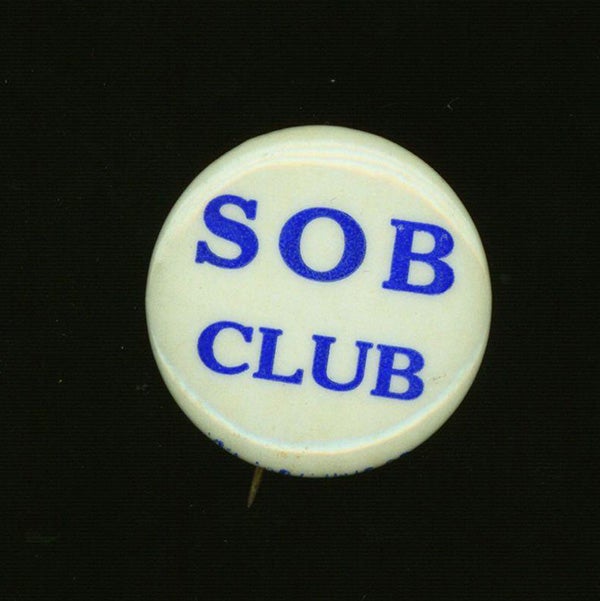
Why, exactly, would you advertise your membership in the SOB Club? It was the smart move in April of 1962, if you, like Barry Goldwater, were thought to be a likely rival to Kennedy in ’64. The New York Times had reported that the normally calm Kennedy, in the midst of a tense negotiation over steel prices, had groused bitterly to aides, “my father always told me that all business men were sons-of-bitches but I never believed it till now!” In response to the slight, Goldwater, speaking at a business luncheon, proposed the SOB Club, and soon Republican leaders around the country were sporting such pins.
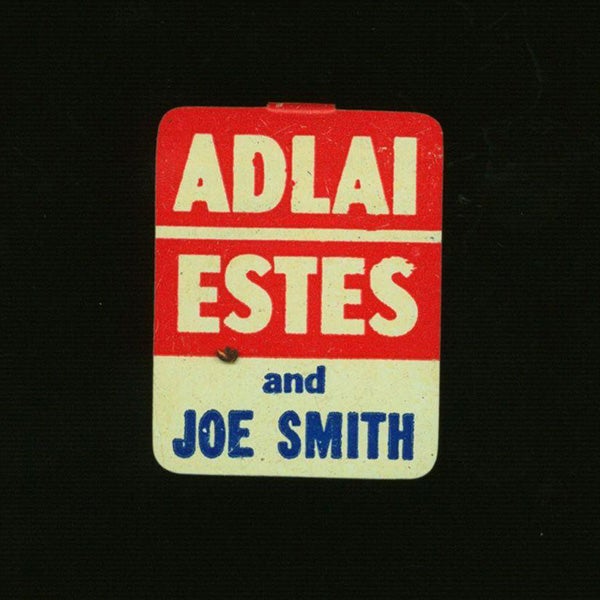
And who on earth was Joe Smith, listed as a third running mate on a 1956 Adlai Stevenson and Estes Kefauver button? Smith first made an appearance at the Republican National Convention that year when a Nebraska delegate named Terry Carpenter, who opposed Nixon’s renomination as vice president, named the fictional Joe Smith instead. “Joe Smith is a symbol. I was out to prove whether this was an open or closed convention,” Carpenter told the press after formally voting, along with the rest of the RNC, for the Eisenhower-Nixon ticket. Carpenter planned to retire the stunt—but Joe Smith caught on with Democrats, who cast him as an everyman forgotten by the Republican Party. “We want the Joe Smiths,” Adlai Stevenson said at a press conference. For a few weeks, Stevenson renamed his campaign plane the “Joe Smith Express,” fundraised with the Joe Smith name, and campaigned around the country with real Joe (and Josephine) Smiths.
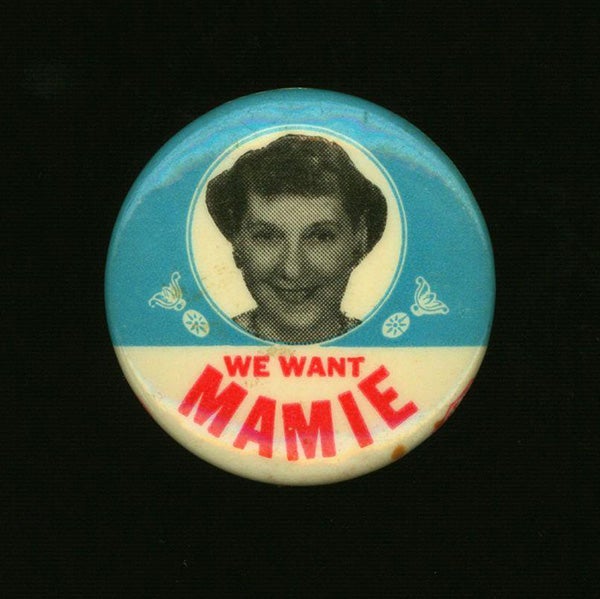
Sometimes, though, these ephemeral campaign stunts presaged a lasting shift in presidential politics, as with the “Pat for First Lady” campaign in 1960. Pat Nixon wasn’t the first candidate’s wife to appear in campaign swag—as evidenced by the “We want Mamie” button in support of Mrs. Eisenhower in the collection—but she found a then-unusual independence and prominence in the Nixon campaign. In addition to her own slogan, campaign swag and even a song, the Second Lady made her own speeches and was celebrated by supporters with “Pat Nixon Week” in October 1960.
Weekly Newsletter
"*" indicates required fields
The press loved the new angle, and the opportunity to portray her as running against the less-frequently-seen Jacqueline Kennedy, who was then pregnant with her son. (It’s unclear if the Jacqueline Kennedy button in the archive comes from this “race,” but it is unlikely, given the misspelling of “Jaqueline” that it came from the Kennedy campaign.) This more public role for candidates’ spouses would become the norm in subsequent elections.
Pat Nixon and Jacqueline Kennedy never did get to debate, though. The idea, seemingly proposed by an AP reporter in the aftermath of the influential televised debate between their husbands, was dismissed by Pat Nixon, who was certain the press would focus on the same trivial things they did in daily coverage of the women: “I would be willing to debate something of great value, but I do not think clothes are important and should be an issue.”
The post appeared first on JSTOR Daily.

 点赞
 收藏
 点踩
 分享