Embroidery vs screen printing: Which is right for your brand?

Embroidery vs screen printing comes down to design size and order volume. Embroidery stitches thread into fabric, so it suits small logos, fine detail, and anything needing high perceived value. Screen printing presses ink through a mesh screen, so it suits bold graphics and bold colors at volume.
This guide is for anyone deciding how to decorate custom apparel, whether that’s a first merch run or uniforms for a growing team. Below: a comparison table, how each method works, the real cost difference, and which to choose for your situation.
Embroidery vs screen printing at a glance
| Embroidery | Screen printing | |
| How it works | Design is digitized into embroidery stitches, then sewn into the fabric with thread | Each color gets its own screen, and ink is pressed through it onto the garment |
| Look and feel | Raised, textured, three-dimensional | Smooth, flat, crisp, and vibrant |
| Best designs | Small logos, monograms, lettering, simple shapes | Large logos, bold designs, illustrations, full-front graphics |
| Fine detail | Limited below roughly 0.25 inches (0.63cm) of letter height | Sharper on small type and intricate artwork |
| Color limits | Most providers cap thread colors per design | Each color requires a separate screen, so the cost climbs with complexity |
| Durability | Extremely durable, often lasts as long as the garment | Durable, though prints can crack or fade with repeated washing |
| Setup costs | Digitizing fee, charged once per design | Screen setup charged per color, before production begins |
| Cost for small orders | Workable at any quantity, including single pieces | Expensive, setup costs sit on few units |
| Cost for larger quantities | Scales modestly, driven by machine time | Highly cost-effective, setup spreads across the run |
| Best garment type | Caps, polos, jackets, bags, and thicker materials | T-shirts, lightweight fabrics, flat panels |
| Best for | Corporate uniforms, branded apparel, premium merch, caps, and outerwear | Event tees, promotional apparel, and high-volume orders |
What is embroidery?
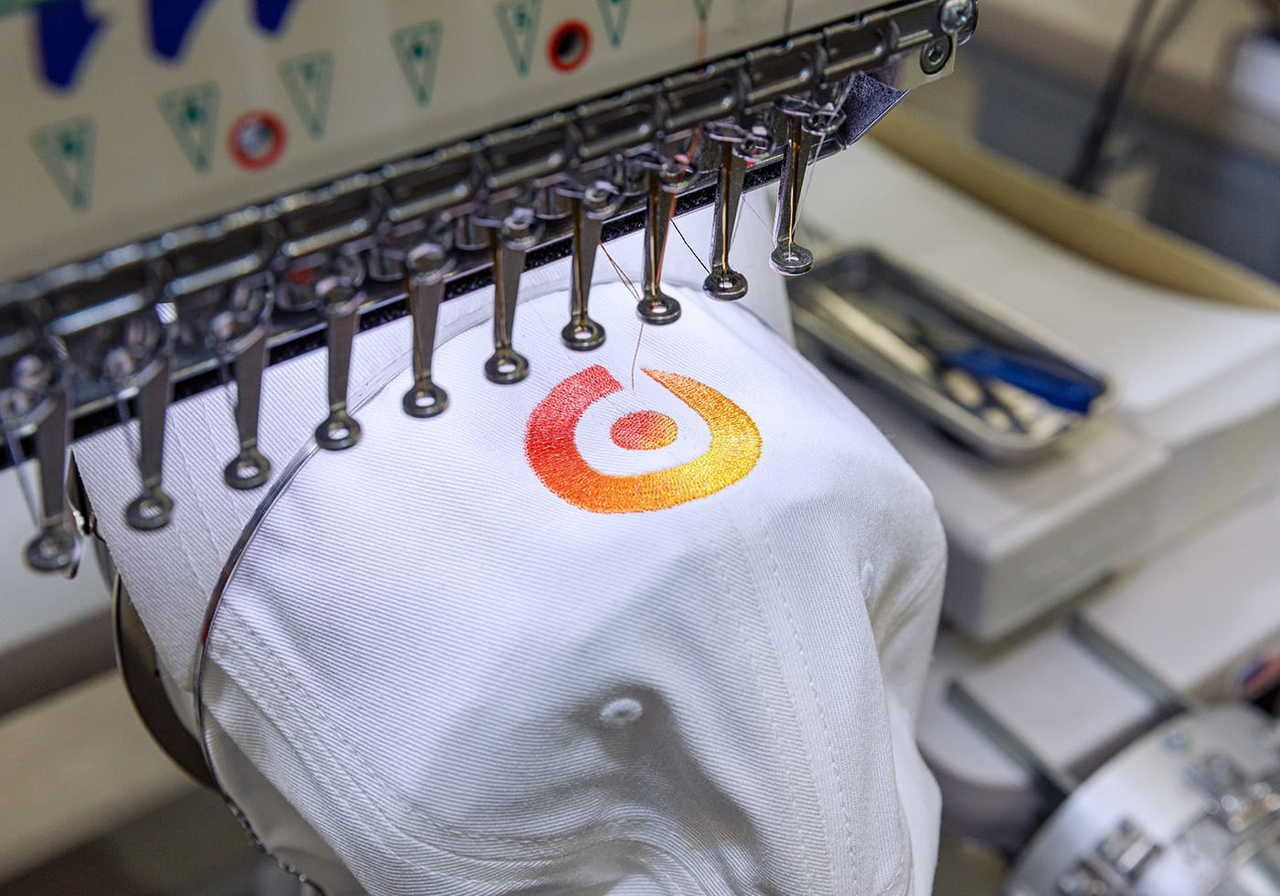
Embroidery stitches a design directly into fabric with thread, creating a raised, textured finish that’s part of the garment rather than a layer on top.
Here’s how the method works. Your logo is digitized into a stitch file telling the machine where each needle enters the fabric and which thread color to use. The garment is then hooped flat under the machine, and the needles run until the design is complete.
Price is driven by stitch count and machine time, not color count. A 10,000-stitch design costs roughly double a 5,000-stitch one, whether it uses two thread colors or eight.
Embroidery pros and cons
Pros
- Clean stitching and a textured, three-dimensional finish
- High perceived value that supports premium pricing and a polished brand image
- Extremely durable, resistant to fading, cracking, and peeling
- Holds up through frequent washing and heavy wear
- Works on thicker materials and structured pieces printing can’t handle
- Cost-effective for small runs and multiple placements
Cons
- Struggles with small text and intricate designs
- Unsuitable for large logos on lightweight fabrics, where dense stitching puckers
- Most providers limit thread colors, often to around 15 per design
- Threads can snag or fray, the main failure point
- Digitizing adds a setup step before the first piece
What is screen printing?
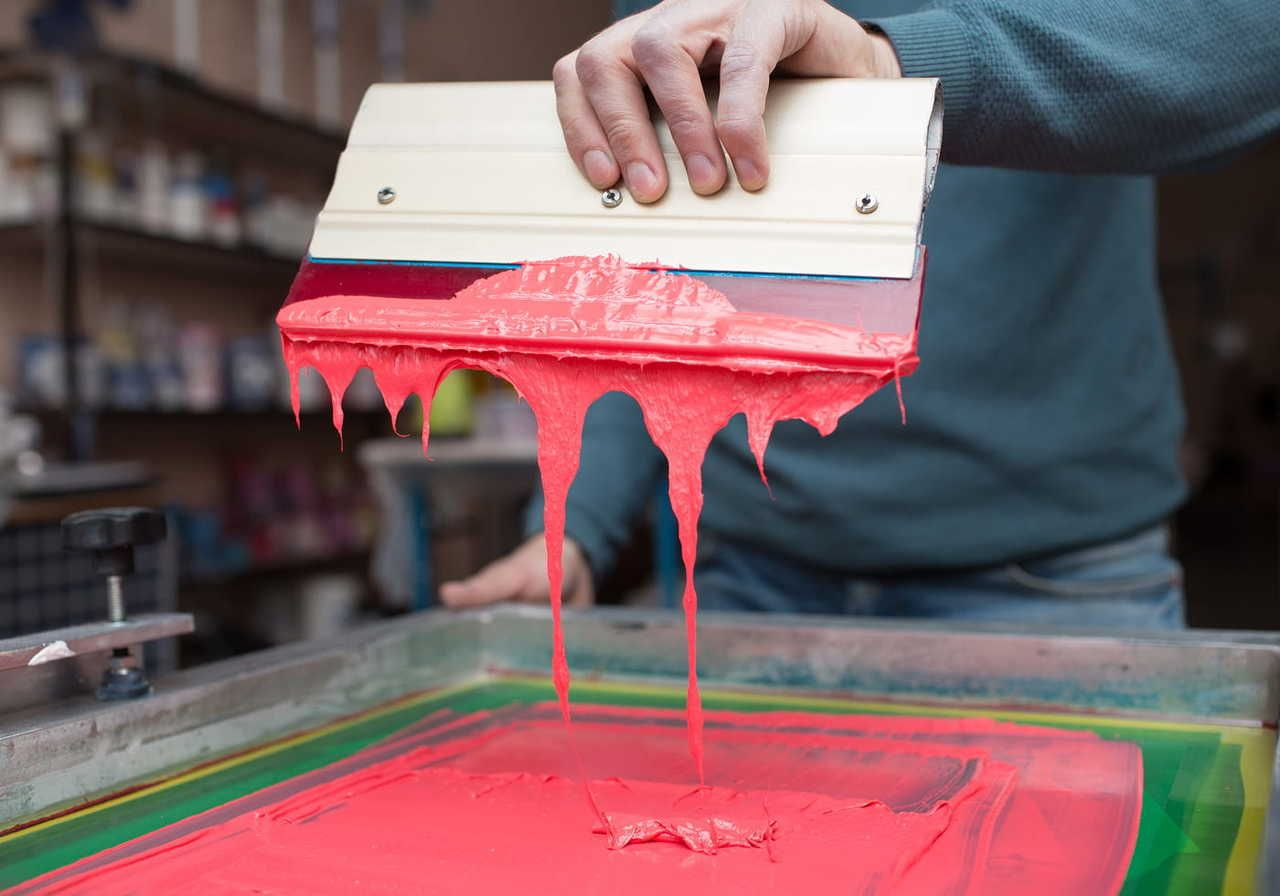
Screen printing presses ink through a mesh stencil onto fabric, producing a smooth, flat finish with crisp, vibrant color.
The work happens before production begins. Your design is separated into individual colors, and each color requires its own screen. Those screens are aligned on the press so the layers register correctly.
Once setup is done, production is fast. A squeegee pulls ink across each screen in sequence, and the garment moves through a dryer to cure. That split between slow setup and fast production is why the screen printing process gets dramatically cheaper the more you order.
Screen printing pros and cons
Pros
- Bold designs with vivid, opaque color on any garment shade
- Reproduces intricate artwork and small text more faithfully than thread
- Highly cost-effective for large bulk orders
- Handles large logos and full-front coverage comfortably
- Softer feel on lightweight fabrics than dense stitching
- Fast turnaround once screens are made
Cons
- Setup costs per color make small runs expensive
- Setup fees often reapply on repeat orders
- Struggles with gradients, which require halftone simulation
- Not suited to stretchy or heavily textured fabric
- Minimum order quantities at most print shops
Key differences between embroidery and screen printing
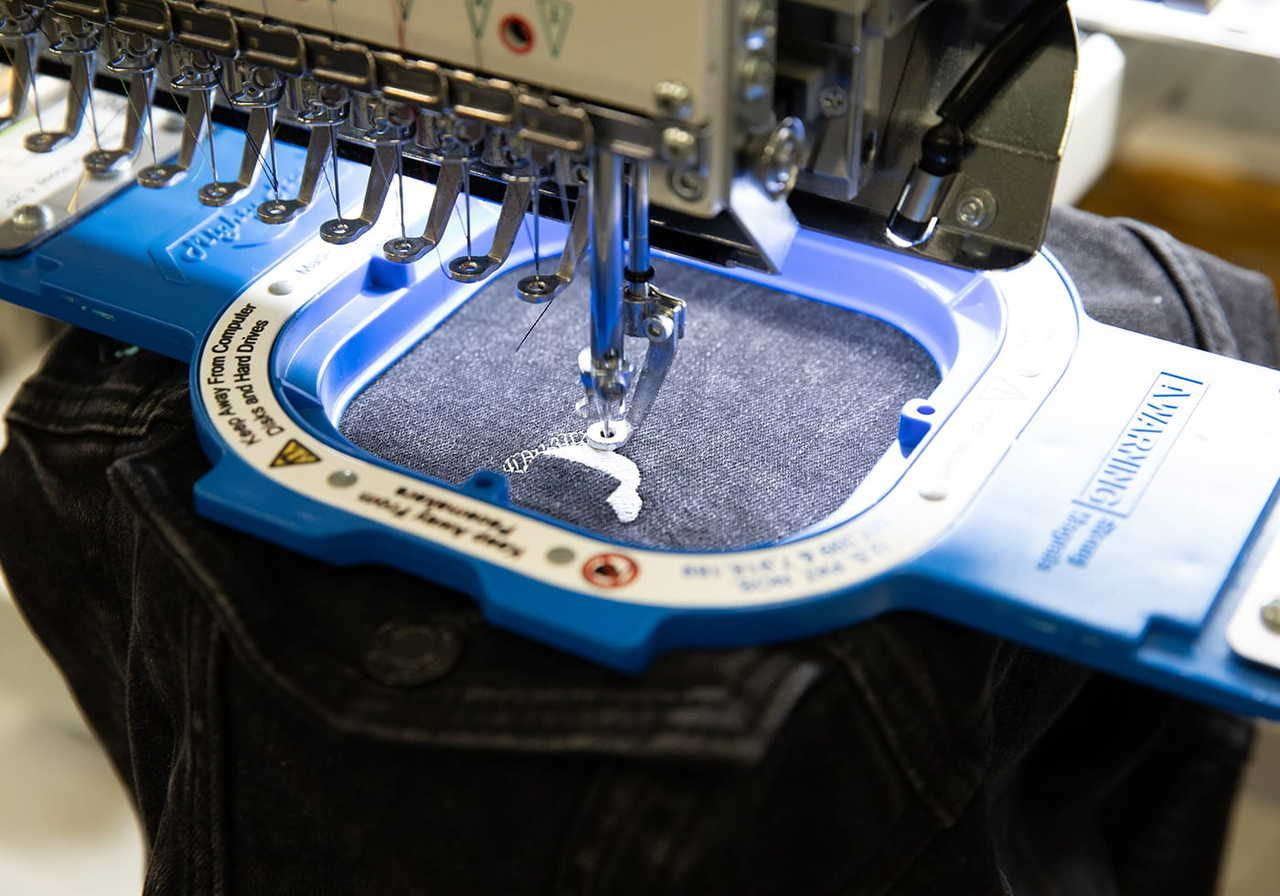
Look and feel: Embroidered logo vs printed
An embroidered logo has physical depth. You can feel the stitching and catch the light on the thread, which is why corporate uniforms, golf polos, and heritage brands reach for it. It reads as considered and established.
A printed design sits smooth and flat against the fabric. Large graphics read cleanly, the garment stays soft, and the look is current rather than formal.
Neither is more professional. Embroidery conveys a premium feel that print doesn’t, while screen printing delivers visual impact embroidery can’t match. Pick whichever matches how you want your brand read.
Design complexity and detail
Design complexity should drive this decision more than anything else. Embroidery handles solid shapes and simple forms well, but thread has physical width, so small text closes up and thin lines disappear. Intricate designs need simplifying before digitizing.
Screen printing reproduces detail far more faithfully, including fine type and complex illustration. The constraint is economic rather than physical: every color adds a screen, so a ten-color design becomes expensive before a single garment is printed.
So embroidery is limited by physics, screen printing by cost.
Durability
Embroidery is more durable. Thread stitched into fabric has nothing to crack, peel, or wash out, and a well-made embroidered logo can last as long as the garment itself. Its only real risk is snagging or fraying.
Screen printing holds up well with care, but ink sits on the surface. High washing temperatures fade prints, and heavily washed designs eventually crack at fold lines.
For anything washed frequently – uniforms, workwear, kit for local teams – embroidery is the safer choice.
Embroidery vs screen printing cost
The two methods price on completely different variables.
Embroidery cost depends on stitch count and design complexity. A small chest logo costs roughly the same per piece at five units or five hundred, because the machine runs identical stitches each time. One digitizing fee, then a largely flat rate.
Screen printing cost depends on setup. Each color needs a screen, and those screens cost the same regardless of run length. Order 20 shirts and setup divides across 20. Order 500 and it divides across 500.
Larger orders reduce per-piece cost for both methods, but screen printing benefits far more dramatically.
Garment type and fabric
Embroidery needs fabric with enough body to support stitching. Caps, polos, jackets, canvas bags, and heavier knits all work well. On thin or stretchy material, dense stitching pulls the garment out of shape.
Screen printing prefers flat, stable surfaces, which makes cotton t-shirts the ideal case. Textured fabric, heavy ribbing, and seams interfere with a clean pull, and structured pieces like caps are difficult to print at all.
Often, the garment type decides the method for you before any other factor does.
How to choose the right decoration method for your custom apparel
When to choose embroidery
Choose embroidery when you want the decoration to feel like part of the garment rather than something applied to it. Corporate uniforms, client-facing staff wear, hospitality and golf apparel, and branded merchandise carrying a premium price all suit it, because stitched thread signals quality in a way ink doesn’t.
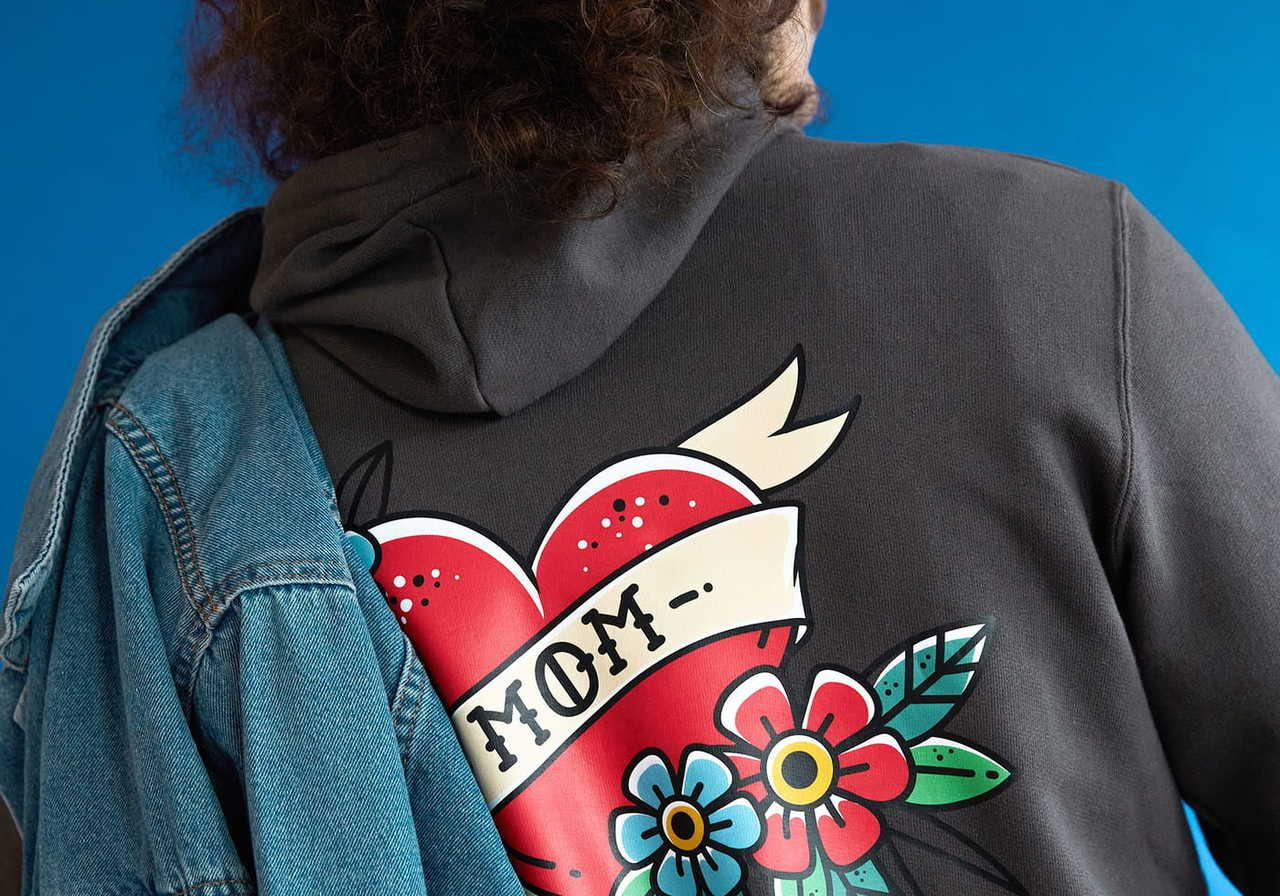
It’s also the only realistic option for caps, and the obvious pick for anything washed frequently. Don’t limit yourself to a small chest logo, though – heavier garments like hoodies, denim jackets, and canvas bags support large, elaborate embroidered designs that look genuinely striking. The constraint is fabric weight, not ambition.
When to choose screen printing
Choose screen printing for bold graphics on t-shirts at volume. Event apparel, merch drops, promotional apparel, and shirts for your next event all fit – large logos, strong colors, lots of units, low cost per piece.
If your design is one to four flat colors on smooth fabric and you’re ordering enough to absorb setup, this is your best bet.
When to use both embroidery and screen printing
Using both embroidery and screen printing on one garment often produces the strongest result. An embroidered chest logo paired with a screen-printed back graphic gives you the premium signal of stitching and the impact of a large print.
Staff uniforms use this constantly: a discreet embroidered logo for everyday wear, a bolder printed version for events.
Screen printing vs embroidery for sweatshirts
Sweatshirts and hoodies sit in the middle, and fabric weight favors embroidery. Heavier fleece supports dense stitching without puckering, so chest logos and sleeve details hold their shape.
Screen printing works too, though thicker, textured surfaces can soften print edges compared with a smooth tee. Flat-faced fleece prints better than brushed versions.
For a premium hoodie, embroidery justifies the price. For an event hoodie in volume, screen printing wins on cost.
What if you’re not ordering in bulk?
Screen printing only makes sense once setup costs spread across enough units. Selling one item at a time, or testing designs before committing, the math doesn’t work.
Print on Demand (POD) changes that. Printful’s embroidery has no minimums, so you can order a single embroidered cap or sell one at a time through your store. Digital methods like DTG and DTFlex cover printed designs the same way, handling full-color artwork and gradients screen printing struggles with, one garment at a time.
Printful also offers screen printing for merchants who’ve reached the volume where it pays off. Start with POD, find out which designs actually sell, then move proven winners into bulk – all under one roof, with future orders running through the same account.
Test small, scale what works.
Create and sell custom products online Start designing
Embroidery or screen printing: Choose the right method for your brand
There’s no single best method, only the right method for the job in front of you.
Choose embroidery for small logos, caps, uniforms, and anything needing a lasting premium finish. Choose screen printing for bold designs on t-shirts at volume. Use both when a garment deserves a considered front and a loud back.
Whichever way the embroidery vs screen printing decision falls, Printful handles custom embroidery and printing with no minimums. Upload your artwork and see how it looks on real products.
Screen printing vs embroidery: FAQ
Yes. Embroidery outlasts screen printing because thread is stitched into the fabric rather than layered on top, leaving nothing to crack, peel, or fade. A well-made embroidered logo often lasts as long as the garment. Screen prints stay durable for years, but soften with repeated washing.
Embroidery struggles with small text, intricate designs, gradients, and photographic images. It’s unsuitable for large designs on lightweight fabrics, where dense stitching causes puckering. Most providers cap thread colors, cost rises with stitch count, and threads can snag or fray over time.
It depends on quantity. For small orders, embroidery is usually cheaper because screen printing setup costs divide across few units. For large bulk orders, screen printing becomes significantly more cost-effective as those fixed costs spread across the whole run.
It can be, though machines and digitizing software require real upfront investment and a learning curve. Print-on-demand embroidery removes that barrier – you design, a provider stitches and ships, and you pay per order with no equipment to buy or machine time to manage.
Neither is better overall. Embroidery wins on durability, texture, and perceived value for small logos and structured garments. Screen printing wins on bold graphics, intricate artwork, and cost at volume. Match the method to your design and order size rather than looking for one answer.

 点赞
 收藏
 点踩
 分享