Vance Declines to Endorse Netanyahu for Re-Election, Breaking With Trump

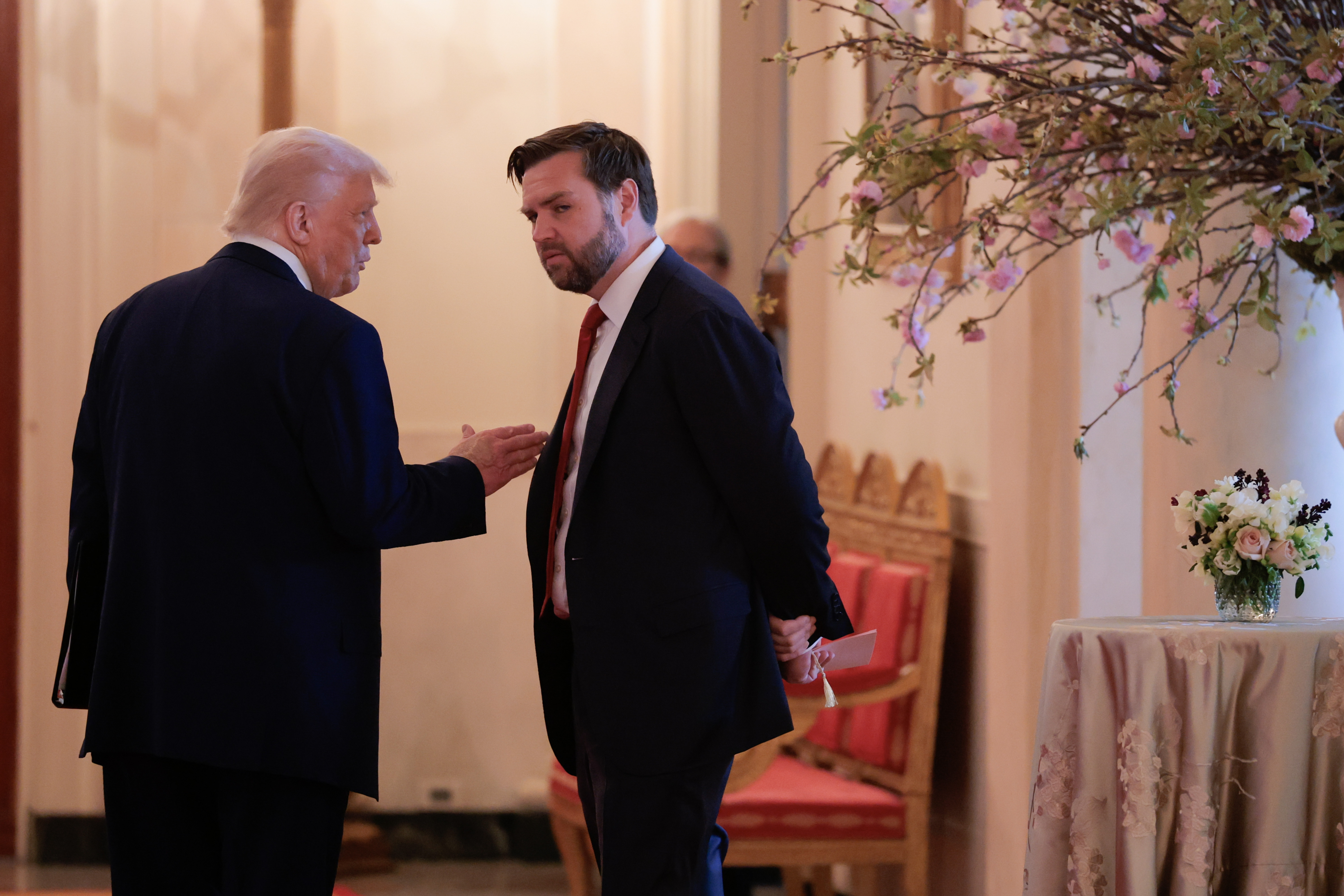
Vice President J.D. Vance on Monday declined to endorse Israeli Prime Minister Benjamin Netanyahu for re-election, a day after President Donald Trump publicly backed the embattled leader.
“The President has the most effective endorsement in American, or international, political history,” said Vance, when asked in an interview if he would also be extending an endorsement ahead of the election on Oct. 27. “I endorse American candidates and that’s where I'm focused on, is the midterms, so I'm not getting involved in the Israeli elections.”
When pushed for an answer, Vance added: “I'm not anti-endorsing [Netanyahu], I'm not pro-endorsing him.”
Vance’s response stood in stark contrast to Trump's endorsement, as he put his “complete and total” support behind the Israeli leader, while praising his endurance as a “great warrior” Prime Minister.
Referencing the Iran war, Trump said: “If Israel has the wrong leader, which would be anyone other than Bibi [Netanyahu], America will have to do this work ourselves, and I am not inclined to do so.” He went on to say that Netanyahu has been “strong, brave, and brilliant in the face of tremendous opposition, including that coming from even Israel” and “despite all of that, he has endured.”
Many are viewing the Israeli election as a referendum on Netanyahu, who has faced heavy criticism over his handling of the Hamas-led attack against Israel on Oct. 7, 2023. The subsequent Israel-Hamas war has led to a humanitarian crisis in Gaza. Netanyahu’s government has also been called to task over the reports of settler violence against Palestinian villages in the occupied West Bank.
Read More: How Oct. 7 Changed Israel
Ahead of the elections, Defense Secretary Pete Hegseth reportedly met with Netanyahu on Monday during an unannounced visit to Israel, Axios said, citing two sources with knowledge.
The Pentagon declined to comment when contacted. TIME has also reached out to the Israeli embassy and Netanyahu’s office for comment.
Vance, meanwhile, has previously issued warnings to Israel regarding its relationship with the U.S. In June, he chastised members of Bibi’s cabinet who had voiced disapproval over Washington negotiating with Tehran to end the Iran war, which started in February with joint U.S. and Israeli strikes.
“Donald J. Trump is the only head of state in the entire world who is sympathetic to the nation of Israel at this moment in time. And he happens to be the head of state of the world’s superpower,” Vance said as he led a White House press briefing. “If I was in the Cabinet of the Israeli government, I might not be attacking the only powerful ally that I have anywhere left in the entire world.”
While Vance has said his focus is on American candidates ahead of the U.S. midterms, he has previously campaigned avidly overseas.
Vance’s campaigning for international candidates
Vance traveled to Hungary in April ahead of parliamentary elections as the Trump Administration put its full support behind then-Prime Minister Viktor Orbán, who was up for re-election against opposition leader Péter Magyar. (Pro-European conservative Magyar went on to win the election, ending Orbán’s 16-year rule.)
“Together the President of the United States and the Prime Minister of Hungary have been able to do amazing things,” Vance told reporters at a press conference in Budapest. “We want to build upon those amazing things. And of course, I want to help as much as I possibly can, the Prime Minister, as he faces this election season.” Vance later delivered remarks at a rally for Orbán.
Vance also notably met with Alice Weidel, co-leader of the far-right Alternative for Germany (AfD) party, in February 2025, days before a German election.
During that trip, Vance spoke at the Munich Security Conference and used the platform to voice his concerns about Europe, claiming that free speech across the continent was “in retreat.”
He criticized what is known as the “firewall” approach in Germany—the agreement among other political parties that they will not work with the AfD. “Democracy rests on the sacred principle that the voice of the people matters. There is no room for firewalls,” he said.
President Trump’s complicated relationship with Netanyahu
Trump’s endorsement of Netanyahu comes after the pair have shared an, at times, contentious relationship in recent months.
Asked about possible endorsement last week, Trump told reporters “we haven’t even thought about it,” prompting many to wonder if he may stay silent ahead of the consequential Israeli election.
Trump and Netanyahu have clashed, particularly over Israel’s war against the Hezbollah militant group in Lebanon.
In June, Trump told reporters that Netanyahu has to be “more responsible with respect to Lebanon,” amid concerns the renewed fighting with Hezbollah could derail the U.S.-Iran peace agreement. (Which later collapsed in light of continued clashes over the Strait of Hormuz.)
“I'm not happy with the way Israel has handled themselves with Lebanon and with Hezbollah,” Trump told reporters at the G7 summit in France. “It just goes on forever,” he continued, seemingly referencing the exchanging of strikes between Israeli forces and the Hezbollah militant group. “When that happens, it throws a negative light on the big deal, the deal with Iran.”
Trump said he has an “unbelievable relationship” with Netanyahu, but claimed “Israel would have been blown up a long time ago, had I not gotten involved.”
Days before his public remarks, Trump reportedly called Netanyahu “f-cking crazy” during a fraught phone call after Netanyahu ordered an attack on a Hezbollah stronghold in Beirut in retaliation for alleged attacks on Israel by Hezbollah.

 点赞
 收藏
 点踩
 分享