Israeli Arabs Mobilize to Oust Netanyahu in Tightly Fought Vote

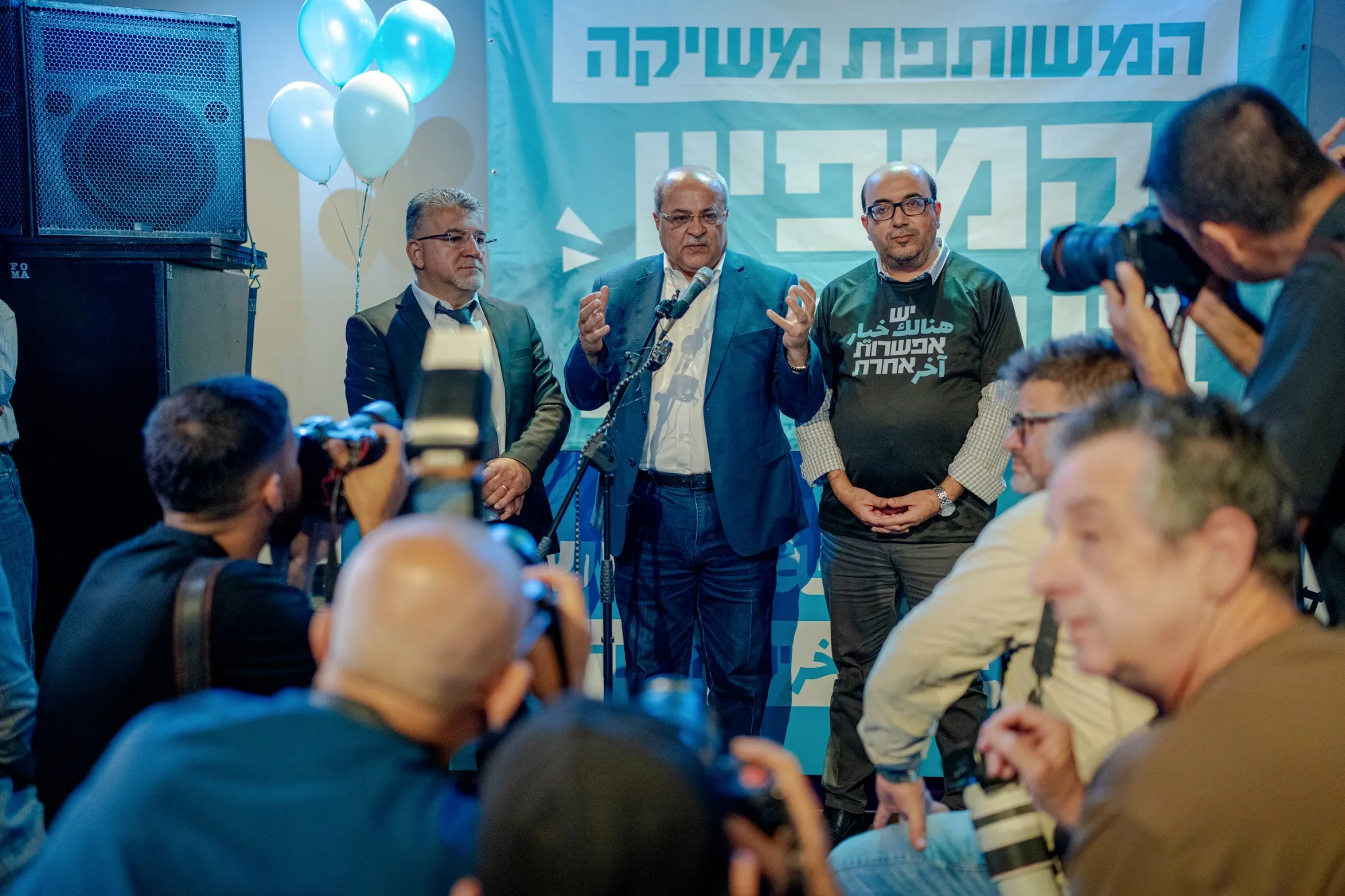
Israeli Arabs say the last four years under Prime Minister Benjamin Netanyahu’s far-right government have become so intolerable that they are looking to turn out in record numbers to unseat him.
It’s a shift for the demographic, who make up about 20% of the population, as they’ve often stayed at home on election day in opposition to a political system they say excludes them. The outcome could be to make two main Israeli Arab parties the kingmakers in what’s expected to be an extremely tight vote on Oct. 27.
“They ignore us, they attack us, they incite against us, but we’ll be the October surprise and we will send this evil government home,” Ahmad Tibi, the leader of the Ta’al party, told supporters at a packed rally in Tel Aviv earlier this month. “The situation is dangerous and unprecedented.”
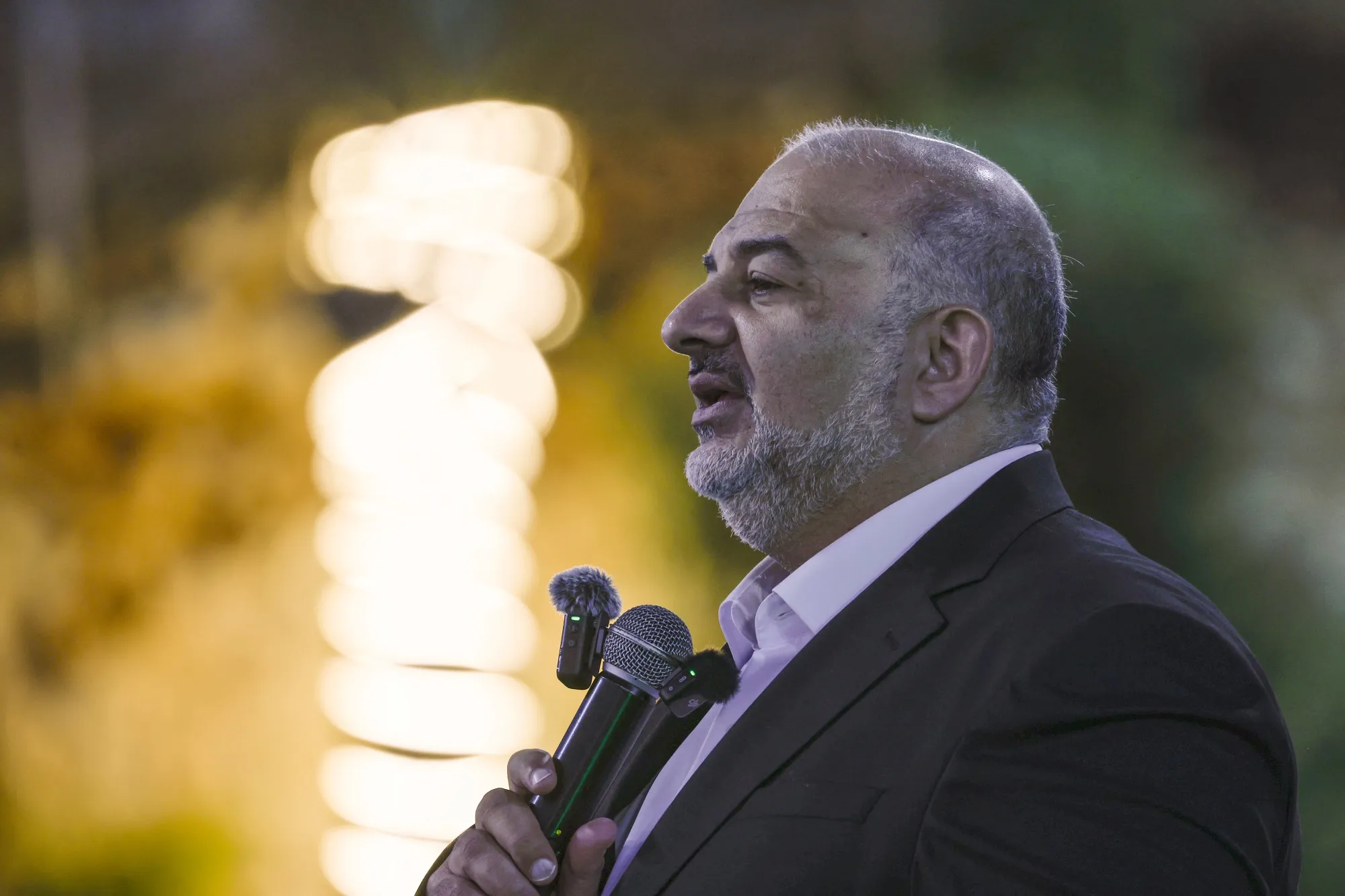
Party and community leaders including United Arab List head Mansour Abbas cite open discrimination by government officials as having got worse during Netanyahu’s latest term as leader. That includes a failed attempt to stop Arab parties from running in the election. Police neglect in the face of surging violent crime in Arab communities has also deteriorated, Abbas has said — especially since the October 2023 Hamas attacks that triggered the war in Gaza.
There were 252 homicides in Israeli Arab towns in 2025, the deadliest year on record, with 182 more in the year to date, according to Abraham Initiatives, a Jewish-Arab NGO.
“It’s an emergency we haven’t seen in the past, this extremist, messianic government,” Mahdi Kabaha, an Arab Israeli lawyer and voter from the north of the country, said by phone. “This government doesn’t want us Arabs as citizens.”
Turnout among Israeli Arabs, who are Israeli citizens as opposed to Palestinians in the West Bank and Gaza, could reach about 70%, Tibi predicted, compared with 53% at the 2022 election. That could deliver 13 seats in the 120-seat Knesset, according to an Oct. 10 poll by the public broadcaster Kan, up from 10 in the outgoing parliament.
Read More: Who’ll Lead Israel Next? Can Netanyahu Retain Power?: Explainer
Most mainstream Israeli parties have ruled out partnering with an Arab party in any future coalition government. But if neither Netanyahu’s right-wing bloc nor the opposition under Gadi Eisenkot’s Yashar is able to clinch a 61-seat majority — as polling suggests — discussions are likely to take place.
Eisenkot has said he’ll not accept a party that doesn’t acknowledge Israel as a Jewish state or won’t recognize Hamas as a terrorist organization that must be dismantled. That would exclude The Joint List, a three-party bloc of which Ta’al is part, although not The United Arab List, the second main option.
Netanyahu’s party, Likud, has used the possibility of Eisenkot partnering with Arabs as an attack line designed to play on fears of another Oct. 7-style attack, warning in a recent campaign video that the vote posed a choice between “the Right or Palestine.”
The Joint List is aiming for 10 seats — enough to edge out other small, right-wing parties and influence the nature of the next government. The group’s leader, Yousef Jabareen, said it could act as a “safety net” to a new government — giving support from outside the coalition.
The United Arab List has said it is willing to participate in government directly, as it did briefly in 2021. That party, led by Abbas, is also aiming for 10 seats. The combined 20 would, if the targets are met, outperform the polls.
A recent survey conducted by the Konrad Adenauer Program for Jewish-Arab Cooperation found that more than 77% of Israeli Arabs want to see an Arab party inside government. Their main priority is to address violent crime that has been sweeping Arab communities, according to 71% of respondents. Meanwhile, only 8% said their vote would hinge on resolving the longstanding issue of the establishment of a Palestinian state.
That polling suggests most Israeli Arabs want to pick up where they left off in 2021, when the United Arab List, also known as Ra’am, joined a short-lived governing coalition under Prime Minister Naftali Bennett – a historic first for an Arab party.
During that period, Abbas focused on directing government funding to Arab towns rather than advancing a peace deal for Palestinians, which was then — and even more so now – seen as unlikely. Abbas secured a multi-year, 30-billion-shekel ($9.8 billion) investment aimed at narrowing the gap in education, housing and healthcare between Arab and Jewish communities — an initiative halted by Netanyahu’s government when it took power in 2022.
With the help of then-deputy national security minister Yoav Segalovich, Abbas has said he slashed violent crime in Arab communities by 10%. Ahead of this year’s vote, Abbas has appointed Segalovich — a Jewish official — as his deputy. In a recent election campaign video set to a triumphant soundtrack, he appealed to voters to build on the achievements of his initial time in government, and “in three years, four years, completely end the violence and crime phenomenon.” He’s also accepted Israel as a Jewish state.
The desire for more influence comes as Israeli Arabs become more integrated in institutions such as hospitals — making up a quarter of all doctors in the country — and expand their presence in tech, finance and other sectors. In 2004, the first Israeli Arab permanently joined the Supreme Court; in 2019, the first Israeli Arab became the head of one of Israel’s largest banks.
Read More: Israeli Arab Founder Brings DoorDash-Like Delivery to New Areas
Yet as Israeli society has grown more right wing, even affluent Arabs have reported discrimination when buying apartments in Jewish majority neighborhoods, according to Adalah, a legal organization for Arab minority rights in Israel. They are sometimes barred by admission committees which under Israeli law are able to vet applicants based on their “compatibility with the socio-cultural fabric of the community,” said the group, which unsuccessfully petitioned the Supreme Court to overturn the law in 2011.
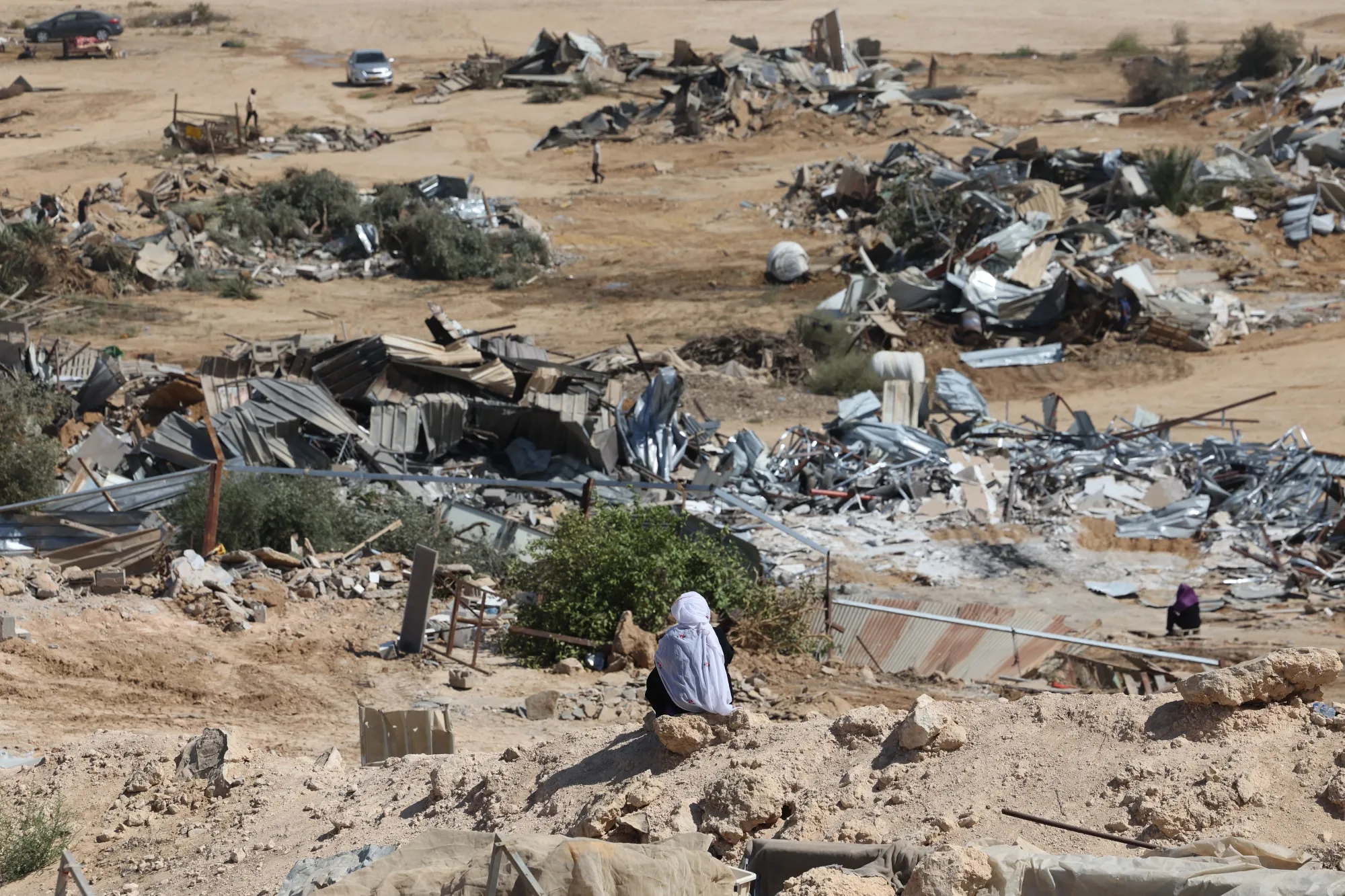
There’s also been a surge in the demolition of unauthorized structures in the Arab sector, with more than 14,000 homes and infrastructure razed since 2023 in the Negev, in southern Israel, driven by intensified government enforcement, according to Adalah. Many Arab villages and towns lack adequate sewage, transportation, schools and housing infrastructure — while being blighted by gang violence.
Israeli Arabs still want to see a Palestinian state, said Khalid Ghanaim, a lifelong Ra’am voter from Sakhnin, an Arab town in northern Israel that’s seen a spate of shootings.
“But there’s another view that’s becoming more popular, which is that a person needs to eat, to be safe, in order to stand up for their principles,” he said. “That political involvement is a question of survival.”
This election is the first since the Oct. 7 attacks, the deadliest in Israeli history, in which Hamas militants killed 1,200 people and abducted 250 more — including Israeli Arabs. At least 74,000 people have been killed in Israel’s war against Hamas in Gaza, according to the Hamas-run health ministry in the territory. That conflict has been in a state of tenuous ceasefire for about a year, and the territory has been largely destroyed by Israel’s bombardment.
“There’s a sense that this government is leading a total war against Palestinians, wherever they are,” said Raef Zreik, a legal expert at the Van Leer Institute, a research center in Jerusalem.

All Arab parties have said they will unite to remove ministers like Itamar Ben Gvir, a once-fringe politician who advocates for the annexation of Gaza and the West Bank.
Last month, Netanyahu and Ben Gvir sought to bar the participation of Arab parties, alleging they support terrorism against Israel. The parties denied the claims and the petitions were overturned by the Supreme Court.
Aida-Touma Suleiman, an Israeli Arab lawmaker from the Joint List, said the disqualification efforts sought to strip Arabs of their right to vote – but had instead encouraged her base.
“We hear it in the streets this time, that everyone needs to go out and vote,” said Touma-Suleiman. “This time, we are going to get rid of them.”

 点赞
点赞 收藏
收藏 点踩
点踩 分享
分享