Data Work Is White Collar Now

Welcome back to The Forecast from Bloomberg Weekend, where we help you think about the future — from next week to next decade.
This weekend:
Data work is white collar nowPredictions: Entry-level hiring is set for a comeback; so is clean energy; and live book readings are having a momentKeep an eye on: The AI boom is creating new demand for matchmakers
Data Work Is White Collar Now
A four-year-old data startup is betting on a future where everyone is a data worker, whether they sign up themselves or not.
Micro1 CEO Ali Ansari argues that companies should think of their employees as not only producing goods and services, but generating data with its own market value. “Every hour of work can simultaneously: Run the organization, train AI models, generate additional revenue for the organization,” Ansari said in January.
Meta, for example, has begun tracking employees’ clicks, keystrokes and mouse movements to help train its AI models. And last week, Micro1 announced plans to spend $1 billion buying operational data from other businesses over the next 12 months.
The growing value of data generated by white-collar workers is part of a wider shift in the AI industry. While publicly available information scraped from the internet formed the foundation of today’s AI models, companies are now racing to find bespoke, privately held data to distinguish future iterations from their rivals’. In a recent blog post, former OpenAI engineer Will DePue argued that data is just as important for the industry as computing power.
Intermediary data companies like Micro1 are not just trying to buy data wholesale from employers. They are also searching for “expert” data workers with specialist knowledge in subjects like radiology or law. Micro1 has already been paying CEOs to do data labeling related to their day-to-day jobs, sometimes at $1,000 per task.
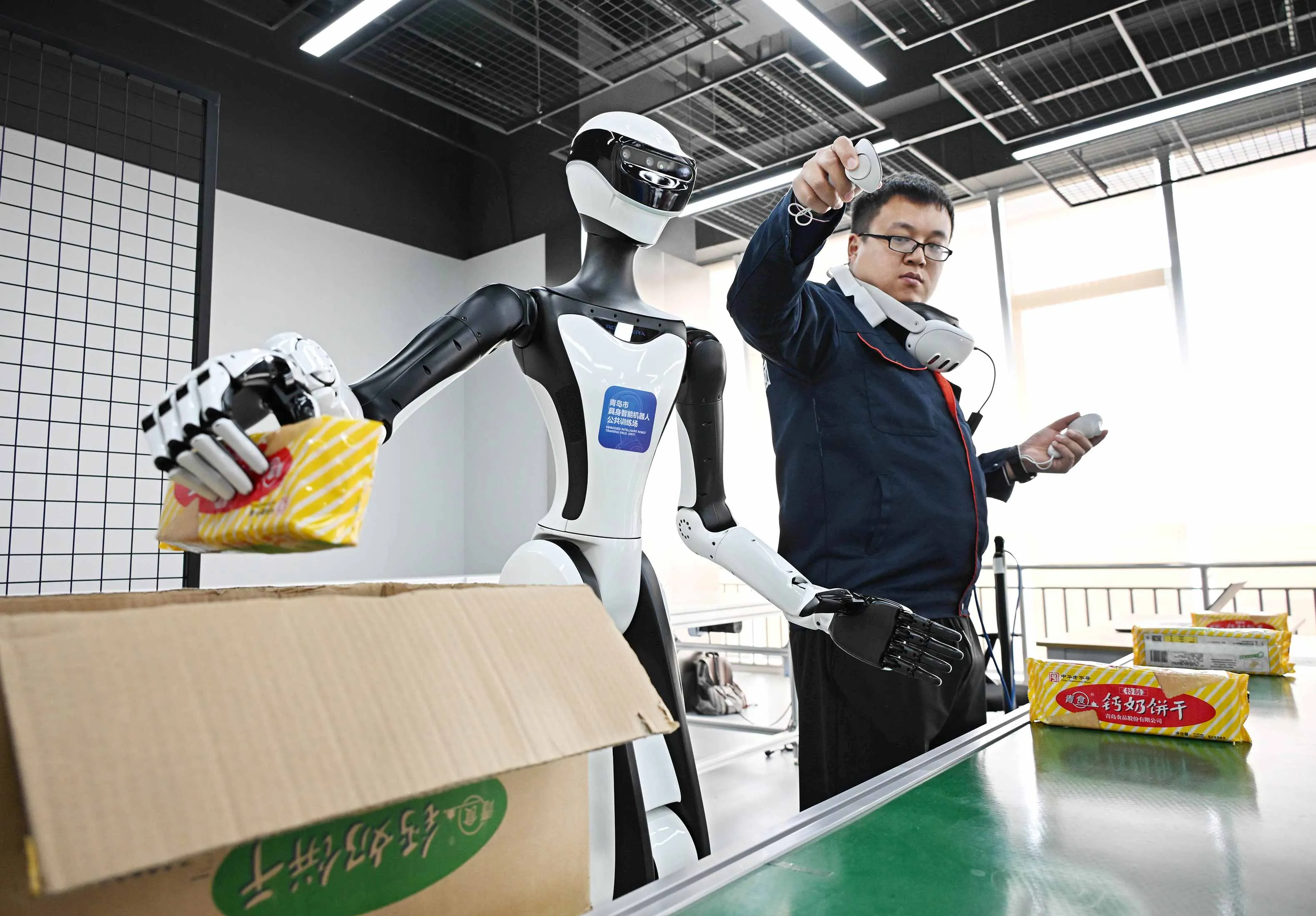
Data work has long been considered the digital equivalent of blue-collar labor, with workers’ rights groups complaining for years that it is precarious and underpaid. But now it’s attracting white-collar specialists who can command much higher sums. LinkedIn named data annotators as the fourth-fastest-growing job role in the US this year. Recruiters are searching for software engineers (pay: up to $120 per hour), condensed matter experts ($170 per hour) and civil rights attorneys ($400 per hour), all to “help train next-generation AI systems.”
Researchers who have studied data work’s evolution are skeptical of the scale of the shift to white-collar specialists. These experts “are just the cherry on top,” says Antonio Casilli, a professor at the Polytechnic Institute of Paris. Most data work, he says, is still done by low-wage workers.
Still, the influx of white-collar specialists is causing concerns that AI models are absorbing the expertise of doctors, mathematicians, accountants and scientists.
Labor — whether manual or intellectual — has long been understood as something employers rent, says Danielle Li, a professor at the Massachusetts Institute of Technology who studies AI and the labor market. If a company stops paying, it loses access. That dynamic breaks down, she says, when an employer can own a version of that labor in the form of an AI model.
— Morgan Meaker, Bloomberg Weekend
Predictions
AI revenue won’t be enough to pay back all that debt. “More than $3.5 trillion of AI infrastructure spending could be at risk of impairment by 2030 as the industry’s investment boom threatens to outpace the revenue required to justify it, according to an analysis by market research firm Gartner Inc.” — Ruhell Amin, Neil Campling, and Mark Bergen, Bloomberg News
The Iran war is set to escalate. “Iran said it’s strengthened its military defenses against a potential resumption of US strikes, the latest sign that the Islamic Republic is bracing for a return to all-out war.” — Patrick Sykes, Bloomberg News. For Bloomberg Geoeconomics, Dina Esfandiary writes: “Both sides believe something must be done to move the needle… Both also believe the other has an interest in attacking.” (Link for Terminal subscribers only)
Entry-level hiring will make a comeback. “Employers say they plan to ramp up hiring of entry-level workers in the coming years, offering a potential reprieve for recent graduates and other young workers after years of shrinking opportunities.” — Taylor Nicole Rogers, Bloomberg News (On the other hand, a lot of those junior jobs will be monitoring bots.)
The Social Security trust fund will run out in 2032, triggering benefit cuts — unless the US Congress takes action. The senators elected in November will be the first lawmakers whose terms in office will include that deadline. — Caitlin Reilly and Suzanne Woolley, Bloomberg News
“The US is on track to install record amounts of clean energy this year and next as developers race to claim expiring federal tax credits and as soaring data-center electricity demand stimulates growth.” — Leslie Kaufman and Will Wade, Bloomberg Green
Quantum computing hardware will be “China’s premier early-stage technology asset class through 2027,” says Bloomberg Intelligence analyst Robin Leung. (Link for Terminal subscribers only.)
“Technology destroys empires… The Soviet Union was a superpower when strength resided in heavy industry and mass manufacturing. It was an also-ran amid the digital revolution that helped Washington and friends win the Cold War.” No one can say for sure what AI will do to the geopolitical balance, but the potential is there. — Hal Brands, Bloomberg Opinion
Plus, four recreational trends to watch:
Live book readings are the natural next step from audiobooks, and a way to make literature more social. — Emily Flitter, Bloomberg Weekend + Pursuits
“Snow driving” is taking car culture for a wintry spin. “From frozen lakes in Sweden to an ice race in Montana, drivers are paying for the chance to push their cars to the edge.” — Hannah Elliott, Bloomberg Pursuits + Weekend
Retirees will flock to Nordic skiing. “It stands apart because of the more intense, sustained cardiovascular effort required, which can be beneficial to the heart and lungs.” — Jen Murphy, Bloomberg Pursuits + Businessweek
“Backyard ultra running” will keep growing. “Athletes have to complete a 4.167-mile (6.7-kilometer) lap within an hour, at any pace they want. That seems simple enough. What’s harder is what gives the event its special flavor: repeating that lap on the hour, every hour. The race ends when just one competitor remains.” — Ian Wilson, Bloomberg Weekend
Keep an Eye On
The AI Boom Is Creating a New Market for $500,000 MatchmakersMatchmakers say wealthy people in and around the tech industry are increasingly turning to them for an alternative to dating apps
Week Ahead
Monday: China reports activity data; Alberta holds a referendum, including a question on whether to hold a future binding vote on of separating from Canada. (Kalshi currently gives just a 2% chance of that vote passing.)
Tuesday: China’s commercial banks will likely leave loan prime rates unchanged; the UK publishes jobs data; Netflix reports earnings.
Wednesday: Meta and Tesla report earnings; the UK reports CPI; Indonesia’s central bank will likely hike a quarter point.
Thursday: Barclays reports earnings; the Bank of Korea is expected to pause its recent tightening with a hold.
Friday: Japan reports CPI.
Weekend Reads
Japan Is Still Figuring Out How a Female Prime Minister Should LeadThe Making of Grand Theft Auto VIThe Birds I Waited 45 Years to SeeEveryone Wants a Bite of China’s Egg Tart EconomyMichael Palin on Traveling in His 80s: I Mustn’t Grumble
Have a great Sunday and a productive week.
— Walter Frick, Morgan Meaker and Kira Bindrim, Bloomberg Weekend
More from Bloomberg
Enjoying The Forecast? Check out these newsletters:
Breaking News Alerts for the biggest stories from around the world.Markets Daily for what’s moving in stocks, bonds, FX and commodities.Morning Briefing Americas for catching up on everything you need to know.
Explore all newsletters at Bloomberg.com.

 点赞
点赞 收藏
收藏 点踩
点踩 分享
分享