An Economist Makes the Case for Mamdani-Style Populism

Listen and subscribe to Everybody’s Business on Apple, Spotify, iHeart and the Bloomberg Terminal.
In late 2021, with inflation spiking, Isabella Weber, an economics professor at Amherst College, wrote a column for The Guardian in which she mounted a defense of “strategic price controls.” Weber argued that government guardrails on prices were a sensible idea with a rather unassailable precedent in US history, given their successful use during World War II. “If your house is on fire, you would not wait until the fire eventually dies out,” she wrote. But five years ago, the idea had gone dormant amid several decades of neoliberal policies. Weber was ruthlessly mocked by her colleagues, including many left-of-center economists.
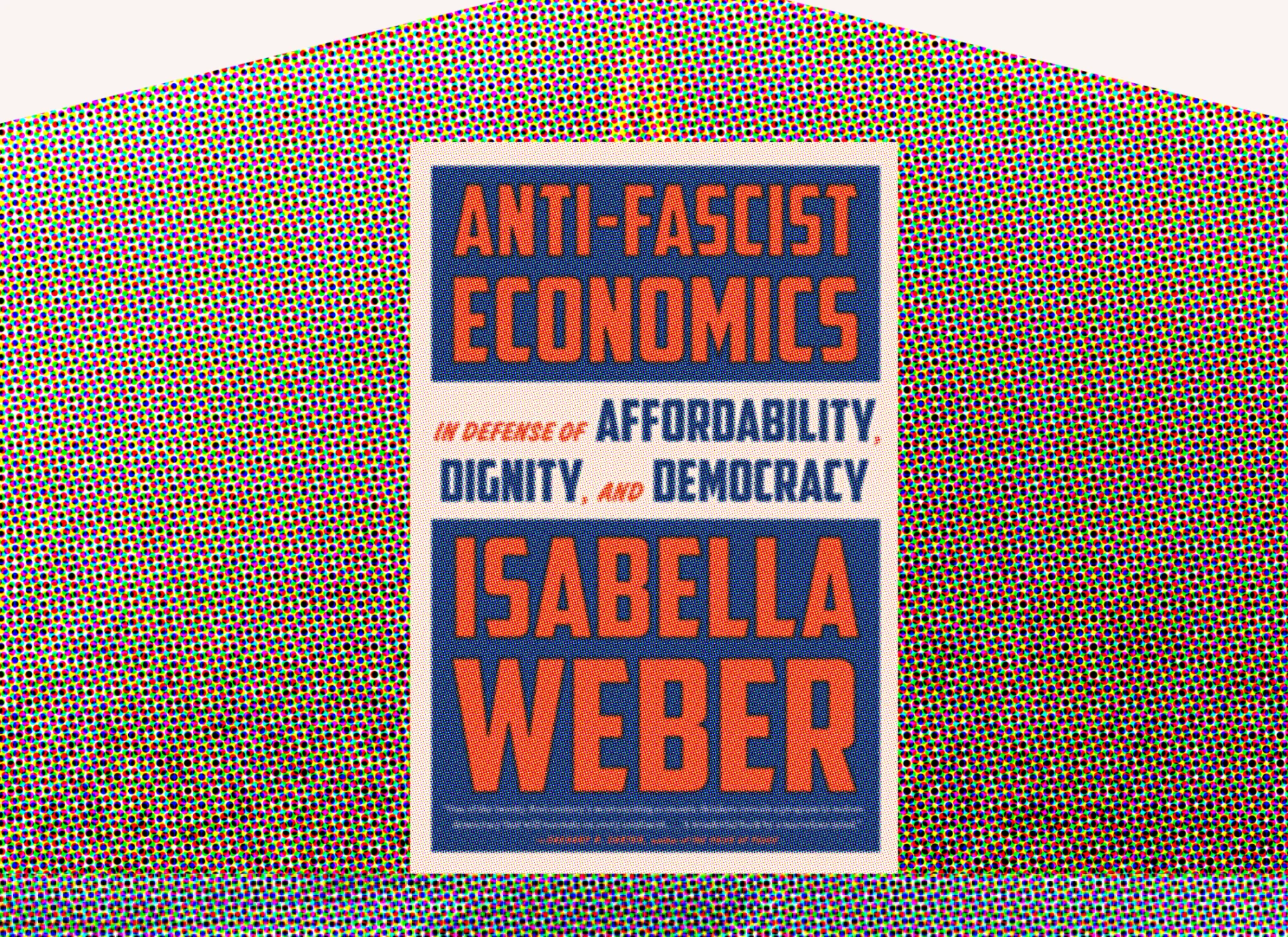
Things have changed. Weber’s underlying economic philosophy, which prioritizes making the necessities of life affordable for every citizen of a democracy, has gained momentum. In Germany, the government instituted a “price break” on natural gas. In the US, New York state legislator Zohran Mamdani handily won the New York City mayoral election on a platform that included free busing, a rent freeze and city-owned grocery stores. This week on Everybody’s Business, Weber joins the podcast to discuss her new book, “Anti-Fascist Economics: In Defense of Affordability, Dignity, and Democracy.”
On the other side of the political spectrum, we also talk to Bloomberg reporter Austin Carr about his new story about Marc Andreessen, the venture capitalist who’s become profoundly influential in Washington on artificial intelligence policy. Carr traces Andreessen’s path from Democratic Party donor to one of the Trump administration’s closest allies and most powerful financial backers, and explores what his power means for debates over AI regulation.
Finally this week, we discuss the rumored merger of Starbucks Corp. and Chipotle Mexican Grill Inc. and propose a few alternative tie-ups.
You can find the full conversation with Weber in this week’s episode, as well as an edited excerpt below.
Why did economists react so negatively to your suggestion about price controls?
Weber: The reaction was as if I had proposed a pornography exhibition in the Vatican. I think the reason that economists are so sensitive to this question is that, at the end of the day, when they think about markets, they think about the supply-demand diagram. In their minds, if you do something about the price, then it’s as if you had killed the market. In reality, markets are much more than prices.
In the age of neoliberalism, we have been telling people that democracy is the greatest of all systems — as it is. And then, in the second sentence, we say, “Unfortunately, when it comes to your basic economic interests, there’s not much that we can do for you.”
You write that the answer to inflation from economists has been to raise interest rates, which also means putting people out of work, as Larry Summers famously argued during the Covid pandemic. You say that should not be the only answer. Why not?
Weber: When you impose interest rates to cool down inflation, the idea is that inflation is demand-driven — that people have too much money in their pockets. Therefore, too much money is chasing too few goods. But if we translate this to what happened in the last round of inflation, an inflation unleashed by supply shocks, that’s really not demand-driven. Those supply shocks were propagated through the economy by firm pricing behavior. Companies protected or even increased their profit margins. Which means if you look at what happened to unit profits in the United States during the pandemic years, you’ll see they jumped in ways they had actually never jumped before.
You had this situation where people kept going to work to do their job but started to wonder whether they had enough money left at the end of the month to pay their bills. And the response from economists is, “Let’s jack up interest rates to increase unemployment.” That is not compatible with a democratic approach. The majority of people would vote against it if asked.
Given what you’re saying, do you think Trump has a point when he has pressured the Fed to lower interest rates?
Weber: In a sense, Trump has been saying what I’ve been saying. But I think he’s saying it for very different reasons.
A question I’m getting a lot of is, “OK, you are in favor of price controls, but fascists use price controls. So aren’t price controls fascist?” What I would say is that price controls are a tool. In the hands of fascists, they serve the goal of keeping people suppressed. If they are used by democratic governments to defend people’s livelihoods against cost shocks amidst a crisis like a pandemic, a climate shock or a war, they are quite a different thing.
What do you say to those who say it’s utopian thinking?
Weber: First, it was common sense after the war to ensure that private power could not reach levels of concentration to challenge the power of the democratic state itself. That’s actually a paraphrase of a Roosevelt quote. And second, “necessitous men are not free men,” which is also a Roosevelt quote. And as far as I’m concerned, it’s common sense that a democracy requires all of its members to be able to make a living.
About the show: every week, hosts Stacey Vanek Smith and Max Chafkin take a look at the week’s business news and break down what you need to know with the help of Bloomberg journalists, experts and the people and businesses trying to navigate the economy every day

 点赞
点赞 收藏
收藏 点踩
点踩 分享
分享