Flag Football’s Boom Is Shaking Up Youth Sports


Businessweek’s Amanda Mull tells us this week us about her deep dive into the fastest growing sport in the US: flag football. Her piece, part of BW’s series on women in sports, is a fun read, but it’s also a telling business story about an emerging industry moving up the adoption curve. We also offer an update on LIV Golf. (Spoiler alert: It’s not good.)
As always, send any feedback, tips or ideas to here. And If you aren’t yet signed up to receive this newsletter, you can do so here.
Sea Change
Hi, it’s Amanda. When my editor proposed a flag football story, I will admit that I was skeptical. Maybe that’s because I’m a lifelong, diehard tackle football fan, or because the phenomenon hides in plain sight if you don’t have school-aged kids.
But I didn’t have to look very hard to realize that the sport is causing a sea change in how American kids participate in athletics. In just five years, high school participation in girls flag football has increased more than 550%, and since 2019, flag is the only team sport that has grown its youth participation in the US at all.
The resulting story is the first in Businessweek’s series on women in sports that will be publishing online over the next week and is the cover package for BW’s November issue.
Flag football is a phenomenon that the NFL, its franchises and its financial partners have spent 20 years and hundreds of millions of dollars to create. An NFL-backed pro league for both men and women is scheduled to launch in 2027, and in 2028, it will make its Olympic debut at the Los Angeles games.
If it works, flag football could be a solution to a number of existential problems for not just the NFL, but for pro sports at large. Youth sports participation, especially in team sports, is in general decline, and kids these days are also less likely to describe themselves as sports fans than previous generations — two phenomena that research suggests are closely linked.
More parents have become reticent to put their sons into football because of concussion concerns, and because there are few opportunities for girls to play tackle football, the NFL is currently shut out of creating something that could rival the surging fan and partnership dollars flowing to the WNBA.
To see flag football’s meteoric rise for myself, I headed to Indiana in July to attend the NFL Flag Championships, where more than 350 teams from across the US and as far away as New Zealand competed for trophies.
I followed several high school girls teams through their brackets because those players find themselves in an especially fascinating position: With more colleges looking to add teams and the pro league and Olympics looming, they’re chasing opportunities that have never existed before and that still don’t exist quite yet.
With the NFL’s cultural and financial might behind it, flag football may be about to change American sports forever. — Amanda Mull
ICYMI
After seeing Formula One have so much success expanding to new markets, Nascar and IndyCar are in talks to add races outside their US home base. Europe’s top professional basketball league has rejected a merger offer from the NBA, dealing a blow to its expansion plans. The Friedkin Group is considering a sale of controlling interest in Everton FC less than two years after acquiring the Premier League club, in a move that will test investor appetite for increasingly costly football assets.Padel’s $300 million British bubble shows signs of bursting.A writer for Bloomberg Pursuits tries to make the case that the success of the Savannah Bananas should be taken very seriously by pro sports and the business world.
LIV on Even Shakier Ground
Star player Jon Rahm left LIV Golf this week, dealing another blow to the league that’s trying to revamp its business model and emerge from bankruptcy.
Rahm’s attorney said the golfer found LIV’s proposal to give players a majority ownership stake in a restructured entity “unacceptable.” The startup league had lured players by signing them to massive multiyear contracts, including Rahm, who reportedly had a deal worth $300 million.
But now LIV wants to offer players equity in what it’s dubbed “LIV 2.0” as a form of compensation because it’s short on cash after Saudi Arabia ended its multibillion-dollar financial support earlier this year.

Rahm’s exit adds to the doubts about LIV’s future, including if it will lead to more players leaving. The league’s ability to attract viewers, sponsors and lucrative broadcasting deals depends in large part on its star-studded roster. Saudi Arabia’s Public Investment Fund invested more than $5 billion into the league since its founding in 2021, with a huge chunk of that money being spent on player acquisitions.
“It was a big coup when (LIV) lured him from the PGA [Tour] to their league,” said Joseph Orbach, a bankruptcy lawyer and partner at Thompson Coburn. “Not having him buy into the concept of LIV 2.0, it brings into question the viability of the league going forward.”
LIV’s bankruptcy situation is somewhat unique in that its players are both its largest unsecured creditors and among its most valuable commercial assets. Rahm, who has won two major tournaments including the 2023 Masters, was owed about $7 million when LIV filed for bankruptcy.
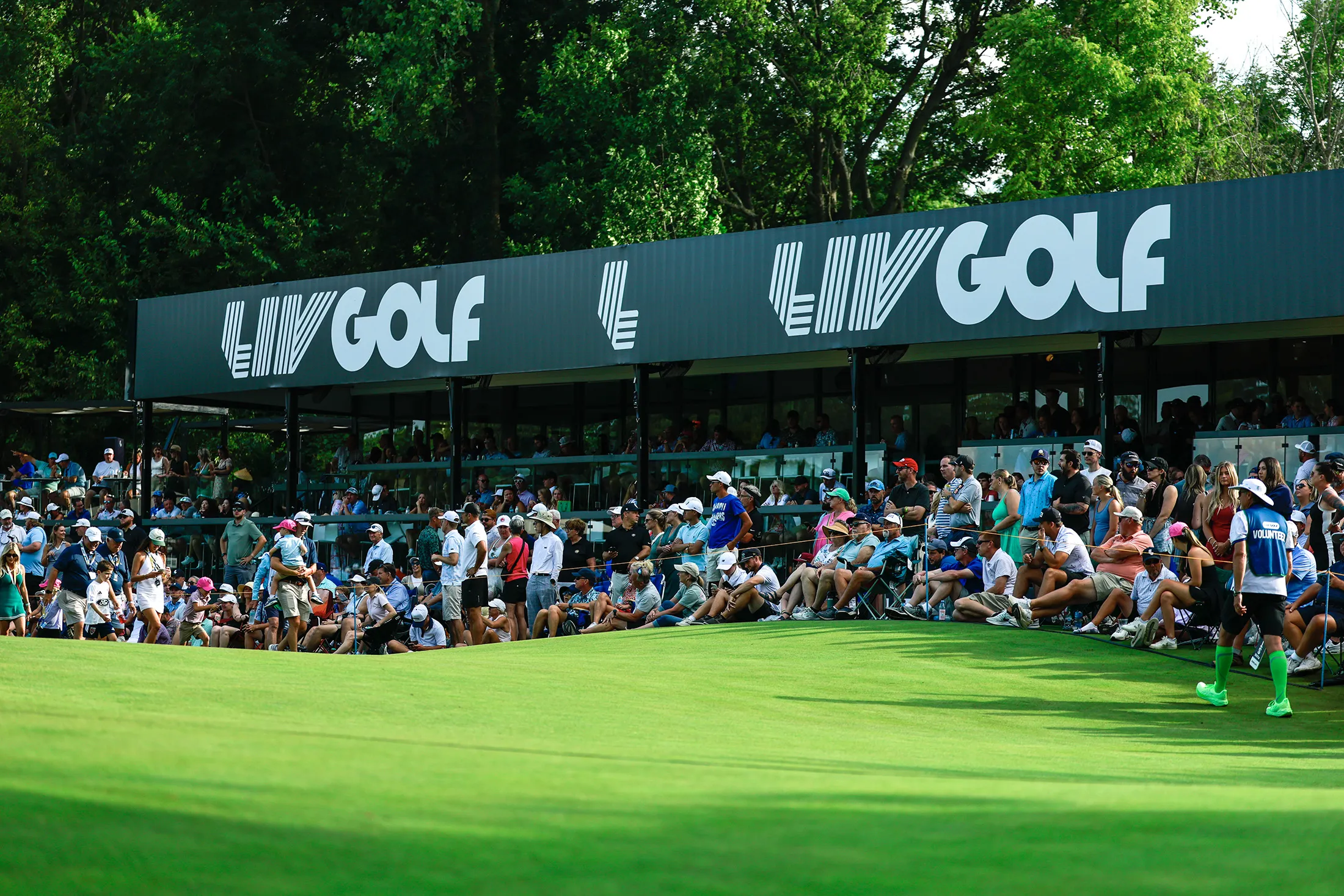
This week LIV secured a financing commitment of as much as $300 million from the credit arm of BC Partners, potentially obtaining the funding needed to launch a 2027 season.
But even with the funding, LIV said its future depends on enough players agreeing to continue competing. If it fails to secure the requisite number of players, it could be forced to wind down operations.
Jodi Balsam, a sports law expert and Brooklyn Law School professor, is skeptical of LIV’s prospects even if it retains enough players.
“Even if they scrap together enough players, it’s unlikely they’ll be the kind that will appeal to fans and sustain the league,” she said. “I see this as being a slow and exhausting death for LIV Golf, in or out of bankruptcy.” — Erika Tulfo
Gabby Thomas on The Deal
The world of track and field is quite unstructured, with each race coordinated by a different entity and paychecks few and far between. A new track and field league called Athlos is trying to change that.
In this week’s episode of The Deal, three-time Olympic gold medalist Gabby Thomas tells Alex Rodriguez and Jason Kelly how she teamed up with entrepreneur and investor Alexis Ohanian to found Athlos.
More From Bloomberg
For more on the intersection of money and sports, subscribe to the Bloomberg Business of Sports podcast. Find it on Apple, Spotify or anywhere you listen.
Get Bloomberg newsletters in your inbox:
Game On for a playthrough of the video game businessOdd Lots for Joe Weisenthal and Tracy Alloway’s newsletter on the newest market crazes
Explore all newsletters at Bloomberg.com.

 点赞
点赞 收藏
收藏 点踩
点踩 分享
分享