How Oct. 7 Changed Israel

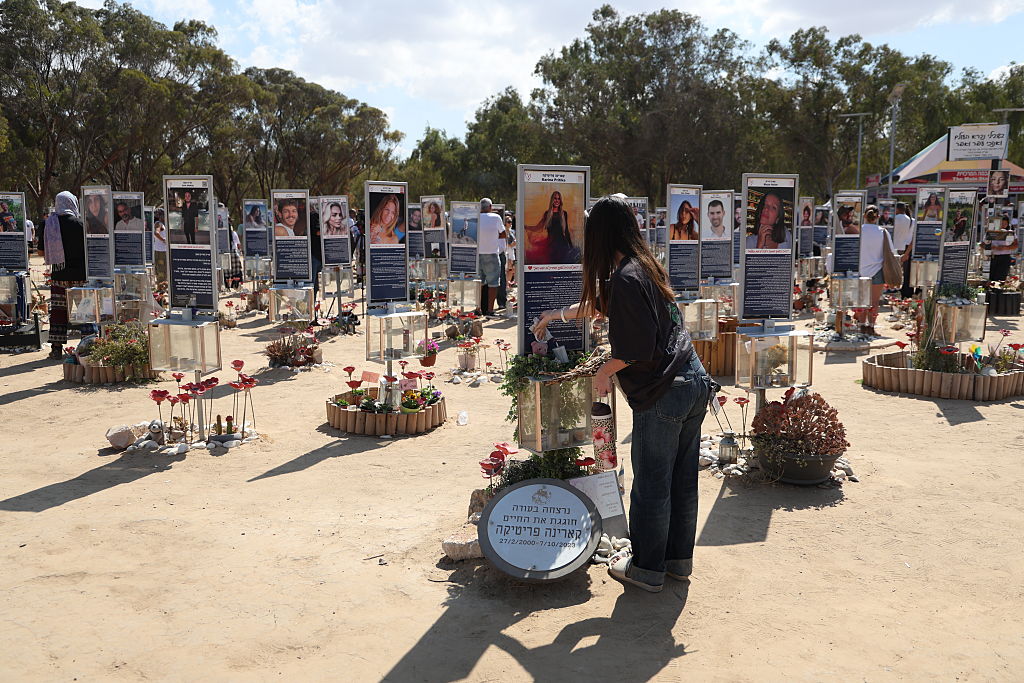
The world changed when Hamas attacked Israelis on Oct. 7, 2023, catalyzing devastating conflict throughout the region. But within Israel, political sentiments have changed surprisingly little.
To some, the attack fulfilled long-term right-wing warnings that Israel’s withdrawal from Gaza would yield disaster; and the attack was incontrovertible proof that Palestinians will never live in peace with Israel.
Israeli left-wingers, for their part, have long held that a festering military rule over Palestinians in the West Bank and Gaza, and failure to reach peace, would inevitably lead to violent conflagration. For them, Oct. 7 only proved that they had been right all along.
The standoff raises crucial questions. In three years since Oct. 7, how has the attack changed Israeli society? And how will the answer affect upcoming elections in Israel?
The world after Oct. 7
To be sure, there have been cataclysmic changes in Israel, and the Middle East at large, since Oct. 7. The war in Gaza that began that day has become Israel’s longest war. A relatively stable ceasefire with Lebanon from 2006 to 2023 ended when Hezbollah, a Shi’a militia group, fired on Israel the day after Hamas’ attack; after multiple escalations since then, the current ceasefire is precarious. Israel and the U.S. have waged two full-blown wars with Iran, and the Middle East is still threatened by spin-off conflicts.
The losses Israelis suffered on Oct. 7 and since then have affected the country collectively and profoundly. For two years, many Israelis went from demonstration to demonstration demanding that their government prioritize a deal with Hamas to release Israeli hostages. Hundreds of thousands have spent the last three years in and out of active reserve duty.
Since 2023, Israel has seen record levels of emigration and growing international isolation. Sixty-one percent of Israelis told pollsters for the Israel Democracy Institute (IDI) that the national mood is poor.
Moreover, the destruction of Palestinian life and society, still ongoing, will one day force a terrible reckoning within Israel.
Attitudes towards a two-state solution
What’s less visible, and more surprising, is what has stayed the same. Israelis’ attitudes towards Palestinians, occupation, and conflict have become more extreme. But I would argue that Israeli public opinion today says much more about how Israel had changed prior to Oct. 7. The change in national attitudes since that fateful day has been moderate and consistent with what came before.
In December 2022, almost a year before Oct. 7, support for peace through a two-state solution hit a historic low. In the joint Palestinian-Israeli survey I conduct together with colleagues at Tel Aviv University and the Palestinian Center for Policy and Survey Research, support stood at 39% of Israelis that year—the lowest since the 1990s. Among Jewish respondents, just 34% supported a two-state solution, and 37% believed Israel should permanently annex the West Bank while Palestinians would have limited rights.
When we conducted the study again in mid-2024, Jews were twice as likely to support a single, Israeli-dominated unequal state as they were to support two states.
Palestinian attitudes in 2022 were similar. Just one-third supported two states. Both sides showed a mirror-image majority who distrusted the other. In surveys by the IDI from that same time, 59% of Jewish Israelis defined themselves as right-wing; just 12% said they were left-wing.
When did sentiments shift?
What changed after Oct. 7? This July, the Tel Aviv University Peace Index survey found that support for two states stood at 31%, an eight-point decline in the four years since 2022. Now, IDI surveys find that just over 60% of Israeli Jews describe themselves as right-wing, just a few points higher than late 2022.
Israel has changed, but this change began years before Oct. 7 2023. In 2010, no fewer than 71% of Israelis supported a two-state solution in the joint surveys. The years that followed were plagued by stagnation and dissipation of any peace process, regular wars with Hamas, and a heavily nationalist government in Israel. It stands to reason that these phenomena pushed Israeli society further to the right. Support for the two-state solution eroded slowly, then rapidly by the end of the decade.
That shift was self-reinforcing: the more right-wing Israelis became (primarily the Jewish population), the more elected leaders took ever-more radical positions such as supporting settlement expansion and de facto annexation in the West Bank. In 2019, Prime Minister Netanyahu began referring to extending sovereignty over parts of the West Bank, or de jure annexation. The current government accelerated those processes drastically.
Study after study shows that Arab citizens of Israel have remained the strongest supporters of peace, before and after the current wars. But with Jewish Israeli and Palestinian attitudes so dismal in the years before Oct. 7, the chances of resurgent violence almost seemed inevitable.
In other words, most Israelis did not radically transform their worldview after Oct. 7. In fact, hardline political trends were among the many factors contributing to the terrible escalation to begin with.
The politics of peace
Another thing that hasn’t changed in Israel during the last three years of war: hopes for peace. The number of Israeli Jews who self-describe as left-wing has barely shifted. In a May survey for the Institute for National Security Studies, about 20% of the total population, Jews and Arabs, define themselves as left-wing, and a similar share typically say they are centrist. These groups embrace a commitment to democracy, liberal values, separation of religion and state, and reject the religious fundamentalism of the current government.
The left remains committed to peace via diplomacy and Palestinian self-determination. In a mid-2025 survey I conducted for a peace organization called A Land for All, where I am also an active member, the large majority of self-defined left-wing Israelis, and nearly half of centrists, supported a basic two-state solution.
Do peace attitudes even matter, when there is no peace process? That may be theoretical for now, but elections aren’t. Israelis will be voting on Oct. 27. Polls show the voters deeply divided, just as they were in the elections held between 2019 and 2022.
Netanyahu’s far-right coalition is not doing well. Nearly all polls show his coalition parties well below their actual result in 2022. And most mainstream polls show a consistent majority for today’s opposition parties.
At first glance, these shifts might seem antithetical. Aren’t these ideological and electoral trends moving in contradictory directions: more right-wing, but a majority against the current government?
It turns out that even the Israeli electoral contradiction is not new. During the five elections from 2019 through 2022, a majority of Israelis were right-wing and voted for right-wing parties. But to form a coalition, some of those parties no longer supported Netanyahu and refused to join a coalition under his leadership. Netanyahu therefore commanded only about half the seats in parliament following four of these cycles. Neither side had a clear or firm coalition majority, and the country was thrown into electoral turmoil five times over.
But if all mainstream polls show the anti-Netanyahu parties winning, including right-wing opposition parties, shouldn’t that mean a decisive outcome against him this time? Not quite: no poll shows Israel’s Jewish, Zionist parties reaching a majority in October.
And in Israel’s right-wing, populist discourse, the main opposition party leaders opposed to Netanyahu now, Naftali Bennett and Avigdor Lieberman, with similar statements from frontrunner Gadi Eisenkot, insist that parties representing Arab citizens must not be part of a coalition after Oct. 7. Together they will likely hold a critical number of parliamentary seats. It’s a view that implicitly (and falsely) connects them with the Hamas attacks.
Those Arab or Palestinian citizens of Israel have been stalwart supporters of peace, and were among the victims of Oct. 7. A large majority, nearly three-quarters of them, want an Arab party to join Israel’s governing coalition, according to polling by the Moshe Dayan Center at Tel Aviv University.
But if Israeli party leaders ultimately prioritize their ideological convictions (or political posturing) against Arabs over their rejection of Netanyahu, their options will be limited since they look unlikely to win a majority of Knesset seats in October.
Netanyahu has much working against him: ongoing corruption trials, the fact that he was the leader who presided over the terrible failures of Israel to prevent Oct. 7, three years of wars, and the unconscionable destruction of Gaza. Yet he could still form the next government if the opposition can’t do it—and lead it.
In that case, the same conditions in place on Oct. 6 2023, such as Israeli annexation of Palestinian areas, now with aspirations for Gaza as well as the West Bank, suppression of Palestinian self-determination, ongoing occupation and wars with no end in sight, will continue.

 点赞
点赞 收藏
收藏 点踩
点踩 分享
分享