India’s Brokers Find New Fuel for Leveraged Trading

Welcome to India Edition, Bloomberg’s daily dive into what’s moving the worlds of business, markets and politics in this dynamic, fast-paced economy. I’m Menaka Doshi. If you didn’t receive this directly in your inbox, you can subscribe here, and share feedback with us here.
Today, I look at how India’s margin boom has found new funding and my colleague Rakesh Sharma analyzes the challenge facing the country’s private fuel retailers.
Remember the China Lesson
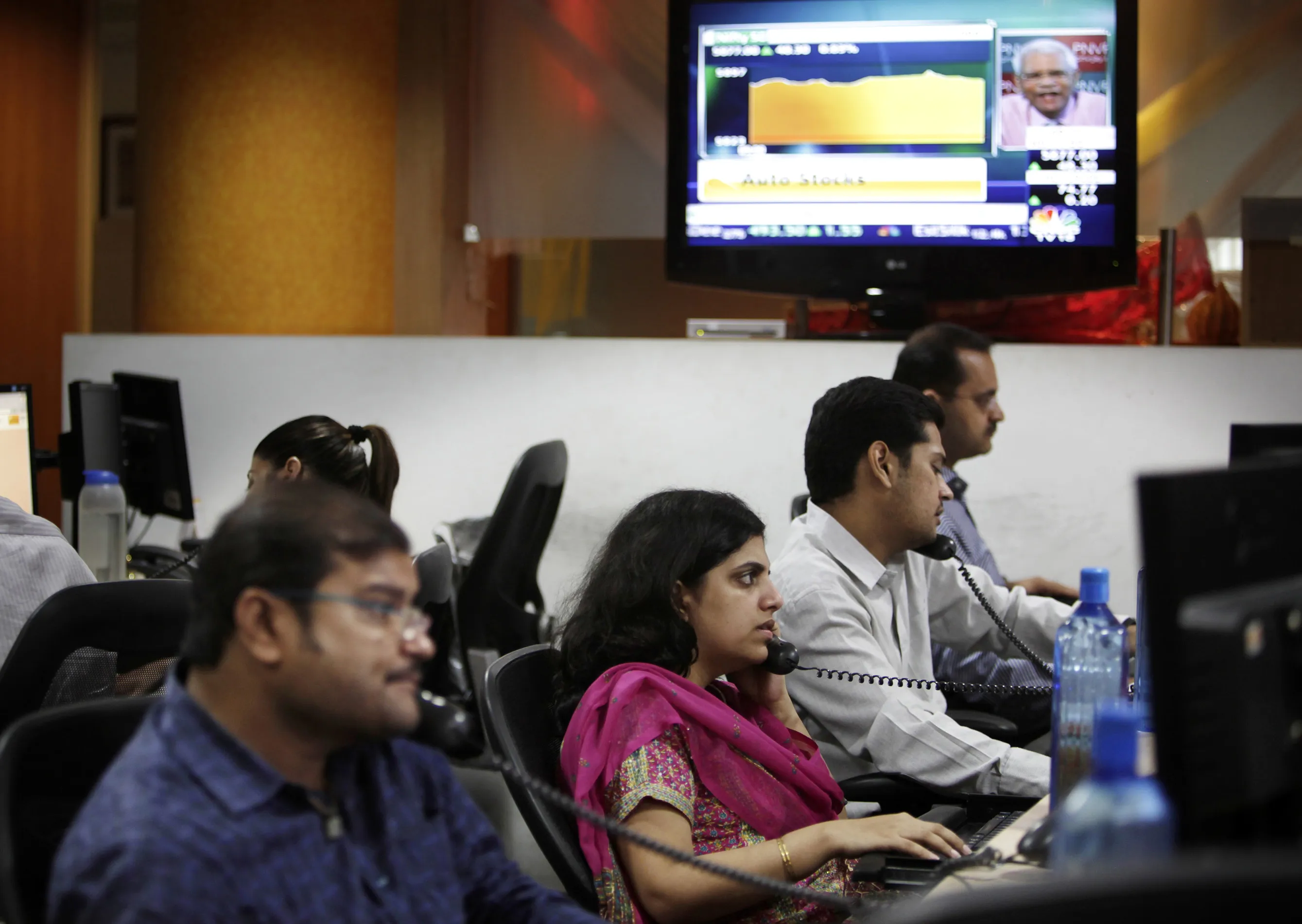
There’s no stopping the rise of leveraged trading in India’s stock markets. The value of leveraged equity positions approached a record 1.6 trillion rupees as of Sept. 30, according to IndiaMTF.com. In leveraged trades, investors buy shares by paying only an initial margin and borrowing the rest from the broker.
Regulatory curbs have at best served as a speed breaker to such transactions. With their access to bank funds now limited, brokers have turned increasingly to the debt market, report my colleagues Divya Patil and Ashutosh Joshi. Prominent brokers have raised about 3.2 trillion rupees ($33 billion) through commercial paper so far this year, according to data from primedatabase.com. Brokers accounted for about 21% of commercial paper issuance, up from just 4% in 2021.
“The size of the industry’s funding book has more than tripled in three years and there remains a huge appetite for leverage trading,” Dharmesh Vala, chief executive officer at Nayan M. Vala Securities, told Bloomberg.
Generally speaking, this rise deserves close scrutiny. In fact, a broker raised the alarm himself in August. “MTF is one area where the business growth is scaring me,” Nithin Kamath, founder and CEO of online discount broker Zerodha, wrote in his annual business update. At the time, Zerodha’s margin-trading facility book had swelled to about 90 billion rupees. Larger brokers such as ICICI Direct and Kotak Securities had books about twice that size.
“Leverage always looks great when markets are doing well, and the risks become obvious only when things go wrong. So this is one area we are keeping a close eye on,” Kamath said then.
To be clear, there is no reason to panic in India. As yet, outstanding MTF positions amount to less than 0.5% of the country’s $4.8 trillion stock market.
But history is littered with examples of how leverage can accelerate a market crash. China witnessed that in 2015. Formal margin financing peaked at 2.2 trillion yuan, about 4% of total market capitalization, while substantial additional borrowing had built up outside regulated brokerage accounts. As stocks fell, forced selling by leveraged investors helped accelerate the rout.
India is nowhere near those levels of leverage and it’s good that the regulators are already watching closely.
Best of Bloomberg
Saudi-backed Yemen forces launched a full-scale military campaign to recapture Houthi-held territory.
Top officials in the US and India signaled that negotiations over a trade deal have reached an impasse.
India is taking a more direct role in efforts to end the conflict between Russia and Ukraine.
Don’t Miss
Extreme Heat Poses Growing Threat to Pregnant Women and Babies, Survey FindsAs Thailand Cracks Down on Foreigners, a Tourist Paradise Reconsiders Its WelcomeLondon Takes a Hit as Super Rich Worth $160 Billion Exit UK
Want more? Sign up for Markets Daily India, a subscriber-only newsletter featuring key insights before the trading day starts. Keep track of the twists and turns — and the global fallout — of the war with Iran here.
Low on Fuel
Hello, I’m Rakesh, Bloomberg’s Asia Oil Trading Reporter in New Delhi.
Diesel prices are surging globally, prompting the Group of Seven and its partners to consider releasing up to 100 million barrels from emergency oil and diesel reserves. In India, however, motorists have barely noticed.
Prime Minister Narendra Modi’s government has kept pump prices at state-owned fuel retailers — which control over 90% of the market — frozen since May 26, effectively insulating consumers from the spike in crude and fuel costs.
The upshot is that both public and private fuel retailers are feeling the strain, though for different reasons.

Reliance Industries and Nayara Energy, two of India’s biggest private fuel retailers, are finding it hard to match subsidized prices at state-owned pumps, without taking heavy losses themselves.
Reliance has restricted diesel sales at some outlets to as little as 150 liters per vehicle, according to Shailendra Gupta, co-founder of Delhi-based Vishwaa Logistics. Gupta’s trucks on the Delhi-Mumbai route need roughly 800 liters for the journey. Because of the fuel rationing, they may now need four refueling stops at Reliance pumps instead of the usual two.
Nayara has taken a different approach. After rationing supplies for a while, it raised diesel prices by three rupees a liter and petrol by five rupees last week. That is likely to send many customers to cheaper state-owned rivals.
The pressure is unlikely to ease soon. Petrol sales rose 7.2% in September from a year earlier and diesel consumption increased 4.9%. Festival-season travel and rising electricity demand are likely to keep consumption strong.
The situation is not much better at state-owned fuel retailers. They are collectively losing about 5.3 billion rupees a day selling gasoline, diesel and cooking gas below market rates, ratings firm ICRA said last month. India’s crude basket averaged $116 a barrel in September, its highest in four years.
Neeraj Mittal, secretary in India’s oil ministry, said on Friday that rationing fuel sales was “not acceptable.”
The problem is that private retailers have few easy options. If they ration supplies, the government objects. If they raise prices, customers can simply shift to cheaper state-owned pumps. Keeping consumers insulated may make political sense, but it does little to remove the underlying cost — it simply shifts the burden elsewhere in the system.
Chai Time: Private Capital, Public Worry
Wall Street’s $10 Billion India Hospital Bet Sparks a Fight Over BillsThe swift expansion of private capital in healthcare has raised concerns that it may be driving up costs and reducing patients’ access to care, with hospital revenue and valuations surging.
This is going to be a busy week with the monetary policy announcement, GST Council meeting, ongoing protests against revision of voter rolls and a Supreme Court hearing on the same. Stay tuned to India Edition for the latest. —MenakaSave the date: Bloomberg New Economy Forum - New Delhi: This October, the Bloomberg New Economy Forum convenes its global community of business and public-sector leaders under the guiding theme, “A World in Play: Defining the New Levers of Power.” This year’s Forum, held Oct. 13-15 in New Delhi, will examine the shifting geopolitical landscape and explore the risks and opportunities reshaping the global economy.
Visit BloombergNewEconomy.com/India to learn more.
AlphadotsThe word puzzle with a plot twistToday's clue is: Hot commodity in a liquid market?Play Alphadots
Enjoying India Edition with Menaka Doshi? You might also like:
AI Today for a chronicle of the disruptions and threats of AI on businesses, workers, governments and economies with analysis from Bloomberg’s global newsroom Next Japan for an inside view of the forces reshaping the economy’s businesses, markets and consumersMarkets Daily India for key news and movers before the trading day startsGreen Daily for the latest in climate science, clean energy, green finance, environmental politics, EVs, zero-emissions tech and sustainable livingSingapore Edition for insights into one of Asia’s most dynamic economiesNext China for dispatches from within the world’s second-largest economy on where China stands now — and where it’s going next Explore all newsletters at Bloomberg.com
Follow Bloomberg India on WhatsApp for exclusive content and analysis on what billionaires, businesses and markets are doing — sign up here. You can also bookmark this page for more of Bloomberg’s India coverage.

 点赞
点赞 收藏
收藏 点踩
点踩 分享
分享