Why India’s Manufacturing Future Isn’t the China Model

This week’s newsletter is written by Senior Editor Menaka Doshi, who has covered business and economic issues in India for more than three decades. Your feedback is welcome, and if you aren’t yet signed up to receive this newsletter, you can do so here.
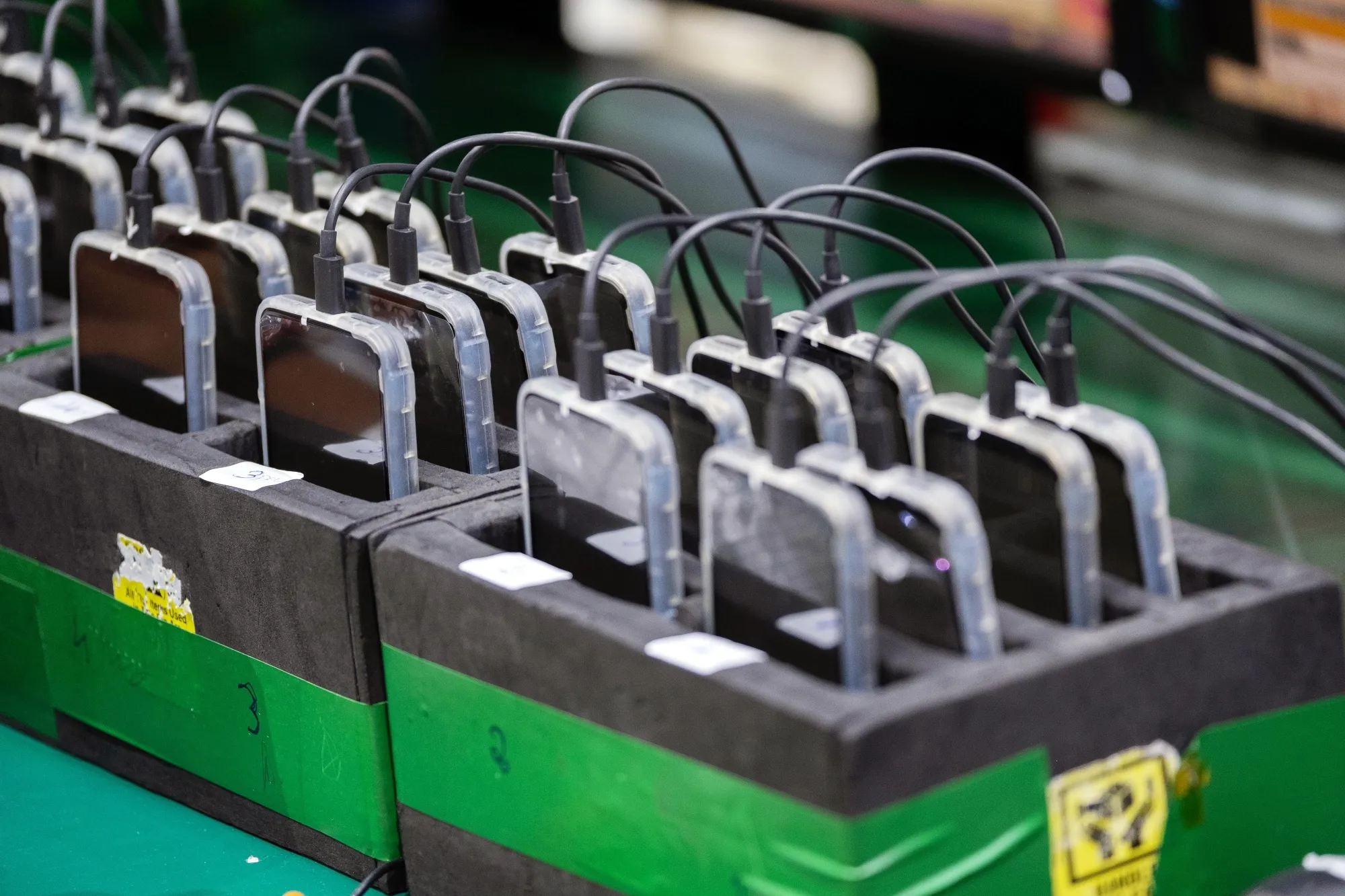
If you’re reading this newsletter on a recently acquired iPhone, there’s a one-in-four chance it was made in India. That’s a massive change from just several years ago, when 98% of the Apple Inc. smartphones were made in China.
But that Indian success is predicated on extensive local government incentives and made-in-China components. That, in a nutshell, is where Indian manufacturing stands today: on borrowed time and borrowed success.
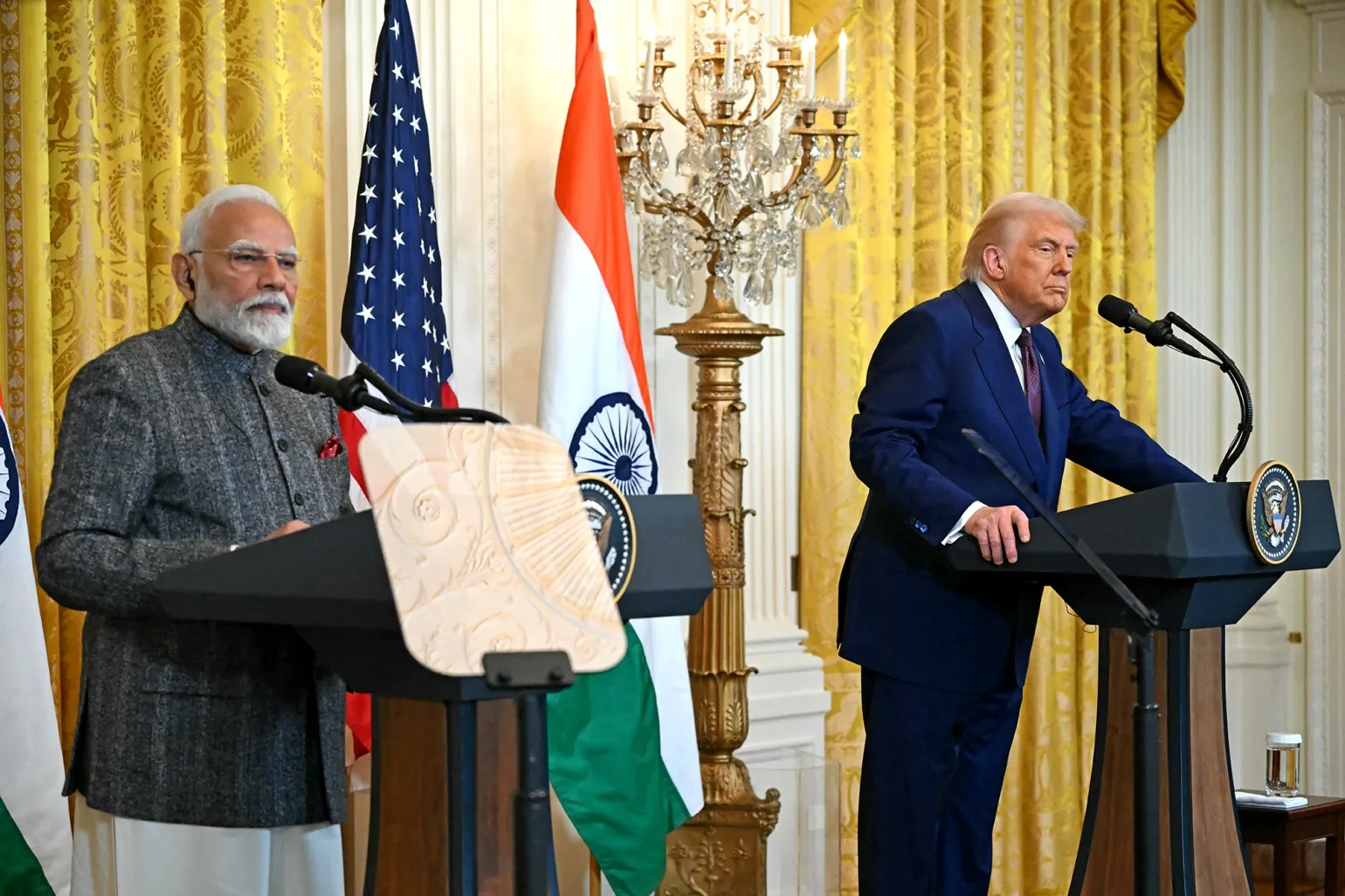
Narendra Modi has made two big bets in his 12 years in power. The first is on religion, to consolidate the majority Hindu vote. That’s worked remarkably well — he’s now the longest continuously serving elected prime minister. The second is on manufacturing, where the outcome is far less clear.
Like Rashomon, the manufacturing narrative changes depending on who you talk to. Or what you read. In just the past few months, I’ve read economic and equity-analysis pieces titled India’s New Industrial Revolution (Jefferies); Indian Manufacturing: Glass Half Empty? (Bank of America); The ‘Missing Middle’ in India’s Exports (HSBC); and The New India — Manufacturing (Morgan Stanley).
So how should one parse this? Most experts agree on one thing: while India has had patches of success in manufacturing, such as in metals and auto components, it’s unlikely to be the next China of manufacturing, even if progress can still be ground out.
This week in the New Economy
Glencore, Peabody and Heeney mull coal deals in Venezuela.Morningstar favors Brazil, Mexico stocks over South Africa.How foreign investment helps fund the US AI investment boom.Bloomberg Explains: Can anything slow China’s export juggernaut?Turkish stocks enter bear market on investment fund turmoil.

The conditions that enabled China’s rise as the world’s factory simply don’t exist in the same form in India, domestically or internationally. It’s why former Indian central bank Governor Raghuram Rajan has long advocated a “brawn-to-brain” mentality shift for policymakers in the world’s fifth-largest economy. In other words, doubling down on value-added services where India already has strengths, like IT and healthcare, rather than from subsidizing manufacturing.
The data have already been shifting in that direction. For more than a decade, manufacturing’s share of India’s economy has stagnated around 15%-17%. The country’s share of global goods exports, at 1.7%, is less than half its share of global services exports. That’s despite tax cuts, tariff protection, production incentives and huge infrastructure investment to lower logistics costs.
Modi’s government is still focused on goods, having doubled down on bilateral trade agreements to boost exports and laid out a national ambition for a 25% manufacturing share of gross domestic product.
To get even close to that, Bank of America economists calculate that —assuming global manufacturing grows around 4% annually and India’s economy grows by around 7% — Indian manufacturing needs to grow at least 10% a year for the next 15 years.
While not quite a “pipe dream,” Modi’s manufacturing ambition poses a challenge, said Ashok Rajani, managing director and partner at BCG India. “The cost of doing business in India, especially if I compare it with China, is quite high,” Rajani said, pointing to land, capital, logistics and electricity.
And the “ease of doing business” — acquiring land, getting licenses and securing utilities — is low, he says. Labor is plentiful but skills are uneven, while private investment in manufacturing R&D remains inadequate.
Scale is another problem. More than a third of Indian manufacturing is accounted for by micro-enterprises, where low productivity is compounded by red tape. A manufacturing firm can face more than 1,400 compliance obligations a year, BofA estimates. Those fixed costs bear disproportionately on smaller firms — precisely the businesses that need to grow into larger suppliers.
Then there are tariffs. Indian exports face higher levies compared with peer nations, particularly in mid-tech goods, HSBC economists calculate. Duties on some imported inputs also drive up costs for some domestic manufacturers. That partially explains why a weaker rupee gives India’s goods exports a much smaller lift than for services, HSBC says.
What’s more, some of India’s most promising manufacturing supply chains rely on China and supply the US — not exactly the world’s two most predictable trading relationships right now.
Critical machinery, components and technology still come from China. And Beijing has tightened controls on some battery-making technology and equipment. It’s also pulled Chinese engineers from Indian electronics operations. At the other end, the US is India’s biggest market for goods exports and has amply demonstrated its willingness to use tariffs — having just achieved scale recently, Indian solar manufacturers were hit this year with preliminary duties of 126%.
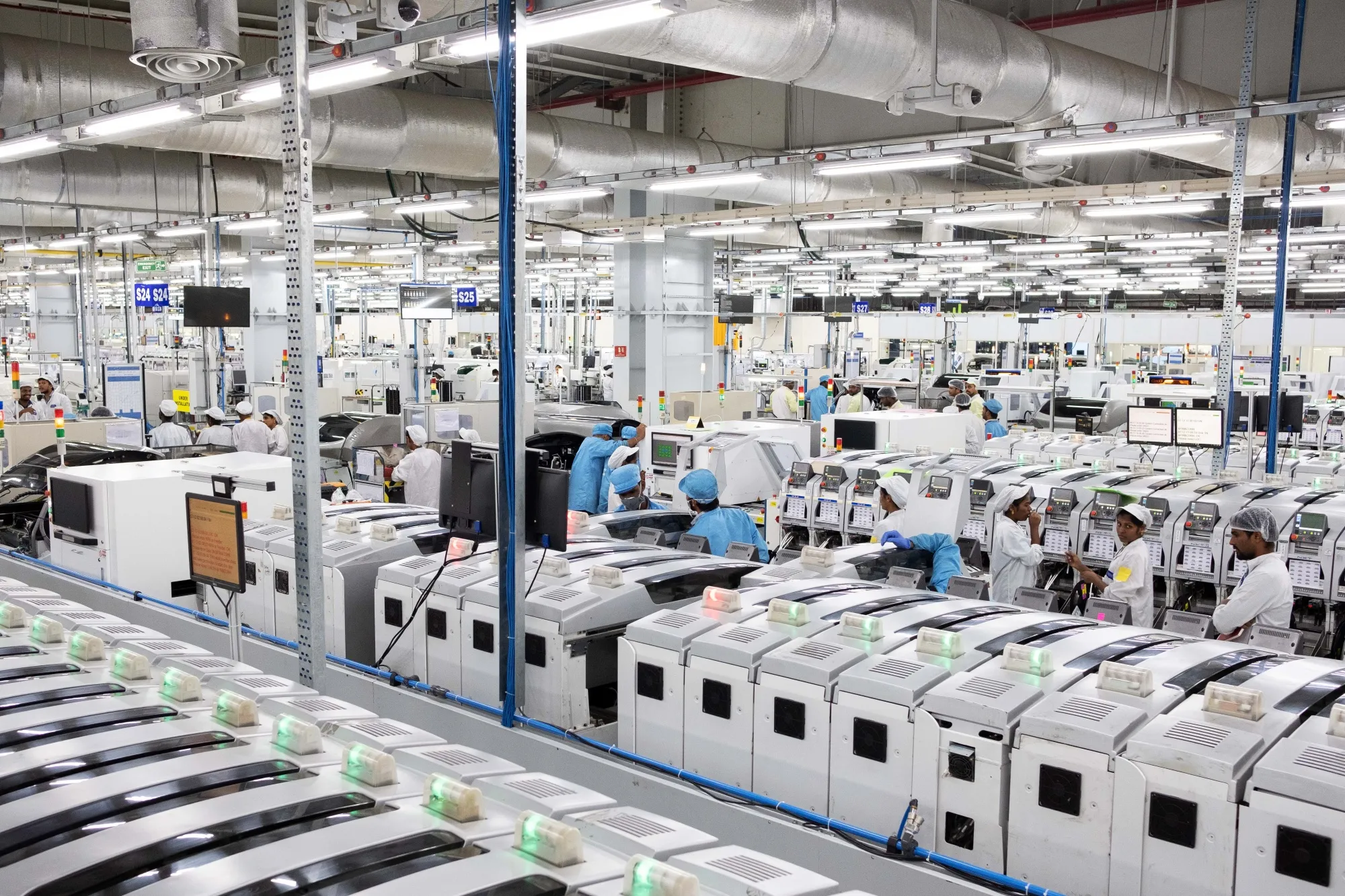
Electronics, India’s standout manufacturing success, embodies almost all of these challenges. Domestic value added is only around 18%.
Still, Sunil Vachani, executive chairman of Dixon Technologies (sometimes described as an Indian Foxconn in the making) said he expects that ratio to reach roughly 40% in the next five years as displays, cameras and other components are manufactured locally.

“First comes scale, then the local component ecosystem and then the design,” he says. Vachani told me last week that government incentives are helping manufacturers build scale and offset the 7%-9% higher cost of manufacturing in India. Many of those schemes run out by 2030, after which “the ball will be completely in the industry’s court,” he said.
Rajani is more selective about where India should place its bets, as government support extends to newer areas like semiconductors. The ambition, he says, should differ by sector — depending on whether the prize is jobs, lower import dependence, greater export competitiveness or national security. “We’ll have to build selectively with different intent,” he said.
Perhaps that is also the best way to read the iPhone in your hand. Not as proof that India’s manufacturing bet has worked, but as proof that it can.

More from Bloomberg
Enjoy New Economy?
Read more economic stories
Plus, here are some newsletters we think you might like
Economics Daily to discover what’s driving the global economy and what it means for policymakers and investors.Fault Lines, Bloomberg Economics’ daily geoeconomics newsletter, delivers a midday check on how geopolitical tectonic shifts are shaping the global economy and markets.Supply Lines for daily insights into supply chains and global tradeBusiness of Food for a weekly look at how the world feeds itself in a changing economy and climate, from farming to supply chains to consumer trendsBalance of Power for the latest in politics from around the globeExplore all newsletters at Bloomberg.com.

 点赞
点赞 收藏
收藏 点踩
点踩 分享
分享