Trump Hits Campaign Trail to Sell Economy to Anxious Voters

This is Washington Edition, the newsletter about money, power and politics in the nation’s capital. Today, Mario Parker, who oversees Bloomberg’s White House, Congress and political coverage as managing editor for the US economy and government, takes a look at Trump’s challenge for the midterms. Sign up here. Email our editors here.
Red-State Warning
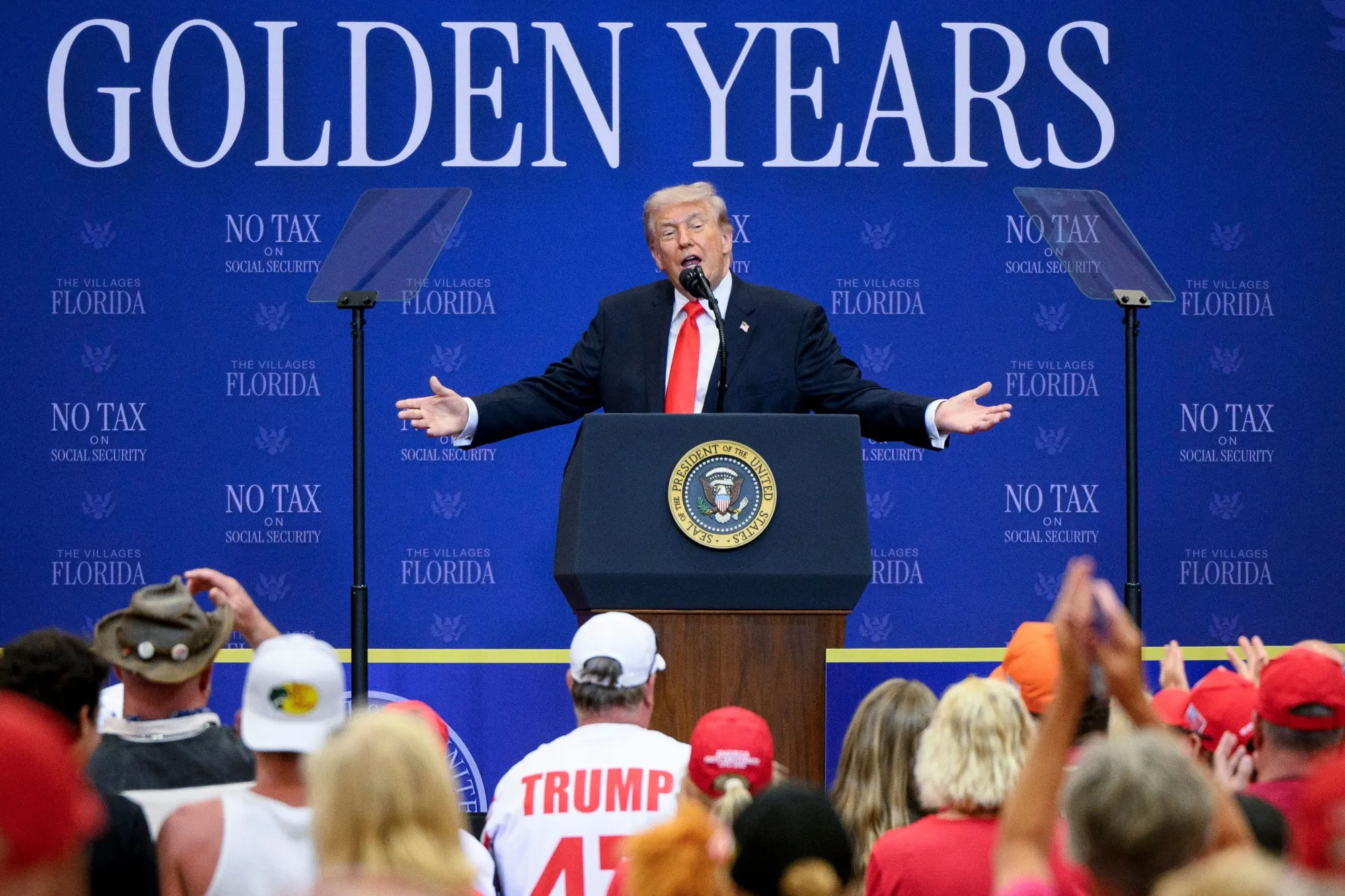
President Donald Trump hits the campaign later this week on defense, with the tall task of convincing voters that their economic plight is better than they feel and pleading with them to extend the current congressional majority through the next two years as his White House tenure sunsets.
His salesmanship received the latest challenge today. Consumer confidence in September fell to the lowest level since 2014 as views about the economy and the labor market deteriorated. The Conference Board’s gauge of confidence decreased 6.7 points to 81.9 after a downward revision to August, my colleague Mark Niquette wrote.
Polls are blinking red when it comes to expectations for Republicans’ November midterm performance. One sign of their dire straits is the president’s scheduled campaign travel to Oklahoma, Alabama and Ohio later this week, states that he’s won in three consecutive presidential elections.
Taking questions from reporters yesterday at the White House, Trump expressed disbelief that voters would punish Republicans over his stewardship of the economy and defended his decision to strike Iran alongside Israel even though it led to a spike in energy prices.
“But we’re doing well. Look, as a country, we’re doing really well,” Trump said.
There are economic indicators that the president can point to: The unemployment rate is historically low, the American consumer is resilient, business activity is resurgent and the stock market — as the president pointed out — has been strong.
Independent voters, though, don’t want to hear rosy data, they want to feel it, one Republican strategist told me. People are saving less, they’re keenly aware that their buying power is weaker than it was years ago and they’re expressing fear in polls. They are terrified of the prospect of heading out for their day and the check engine light flashes on the family minvan or pickup that’s pushing 150,000 miles, the strategist explained.
There was a moment during yesterday’s Oval Office gaggle where the president lamented that his political aides told him that people aren’t concerned about the border anymore — that it’s not politically effective — due to his success in reducing crossings.
“Nobody talks about the border. I can’t even talk about it. My people say, ‘Sir, nobody cares about the border.’ I got elected because of the border, and now, because it’s so good, my — one of my people who’s fantastic said, ‘Sir, the people don’t care about the border anymore,’” Trump said.
By all accounts, voters today don’t just see the economy the way the president does. In October 2018, during Trump’s first term, consumer confidence, in the same metric released today, reached an 18-year high.
“Pessimism kills the majority party in power and not meeting expectations is a killer,” said John Anzalone, a longtime Democratic strategist. “Trump was supposed to be the economy president.”
Today’s Top News
Trump shot down the idea of new federal regulations on artificial intelligence after meeting with top industry executives.
The Supreme Court for now let the Trump administration resume deporting undocumented people to countries other than their own.
One more interest-rate hike this year may be appropriate to help contain inflation, Federal Reserve Bank of New York President John Williams said.
OpenAI aims to raise at least $30 billion from investors in a new round of funding, sources say.
Yields on the US Treasury’s longest-dated bond rose for a sixth straight day, crossing another key threshold amid a deepening selloff across global debt markets.
Defense Secretary Pete Hegseth plans to cut the number of senior positions reserved for generals and admirals by 20%, a Pentagon official said.
North Dakota Senator Kevin Cramer lifted his hold on the nomination of Keith Sonderling to become labor secretary, setting up a vote to advance a key Trump administration nominee this week.
The IRS has delivered a threat to a $23 billion business that helps wealthy investors reshape appreciated stock portfolios without immediately triggering a capital-gains tax bill.
US job openings fell in August, while layoffs remained subdued.
Must Reads From Bloomberg Government
The Trump administration’s bid to cancel congressionally approved funding that expires this week runs afoul of the budget law, a nonpartisan watchdog told lawmakers.
Former Representative Eric Cantor, a GOP leader who lost his Virginia seat in 2014, will take the helm of the drug industry’s top lobbying group.
Market SnapshotUS 10-year Treasury yield5.24%+0.00S&P 5007,670.84-0.2%Brent Crude Futures$102.38-2.8%Market data as of 04:26 PM ET. Data is subject to provider delays.
Watch & Listen
Today on Bloomberg Television’s Balance of Power early edition at 1 p.m., hosts Joe Mathieu and Kailey Leinz interviewed House Oversight Committee Chair James Comer about AI.
On the Big Take podcast, Bloomberg’s David Papadopoulos and Michael Regan join host Sarah Holder to discuss rising bond yields and whether we’re on the brink of a great portfolio reallocation. Listen on iHeart, Apple Podcasts and Spotify.
Chart of the Day
The Senate election battlefield has widened substantially since January, reflecting the political costs of the Iran war, which has lifted fuel prices to the highest in years and reignited inflation. If Democrats take both chambers of Congress, they’d be in a position to exert more control over President Donald Trump’s legislative agenda and personnel. They almost certainly would limit judicial confirmations for the remainder of his term and prevent the filling of any Supreme Court vacancies. Democratic committee chairs would gain subpoena and hearing powers across both chambers, which would provide a prominent platform for 2028 presidential contenders. Still, a Democratic Congress on its own wouldn’t be able to contain Trump’s tariffs or dramatically curtail his foreign policy. Democrats could pass legislation clawing back powers ceded to the executive office, restrict funding or advance war-powers resolutions — but without Republican support, Trump’s veto power would remain an obstacle. — Chris Kennedy (Economist)
What’s Next
Jamieson Greer, the US trade representative, hosts G20 trade ministers in Milwaukee through Thursday.
The Fed’s preferred inflation gauge is released tomorrow.
Initial jobless claims come out Thursday.
More From Bloomberg
Like Washington Edition? Check out these newsletters:
Balance of Power for the latest political news and analysisFault Lines from Bloomberg Economics for daily research on how geoeconomics is reshaping business and marketsCongress Tracker for BGOV clients to stay on top of the action on the HillFOIA Files for Jason Leopold’s weekly newsletter uncovering government documents never seen beforeMorning Briefing Americas for catching up on everything you need to know
Explore all newsletters at Bloomberg.com.

 点赞
点赞 收藏
收藏 点踩
点踩 分享
分享