IBM's Quantum Computer Completes in 19 Seconds What Could Take a Supercomputer a Century

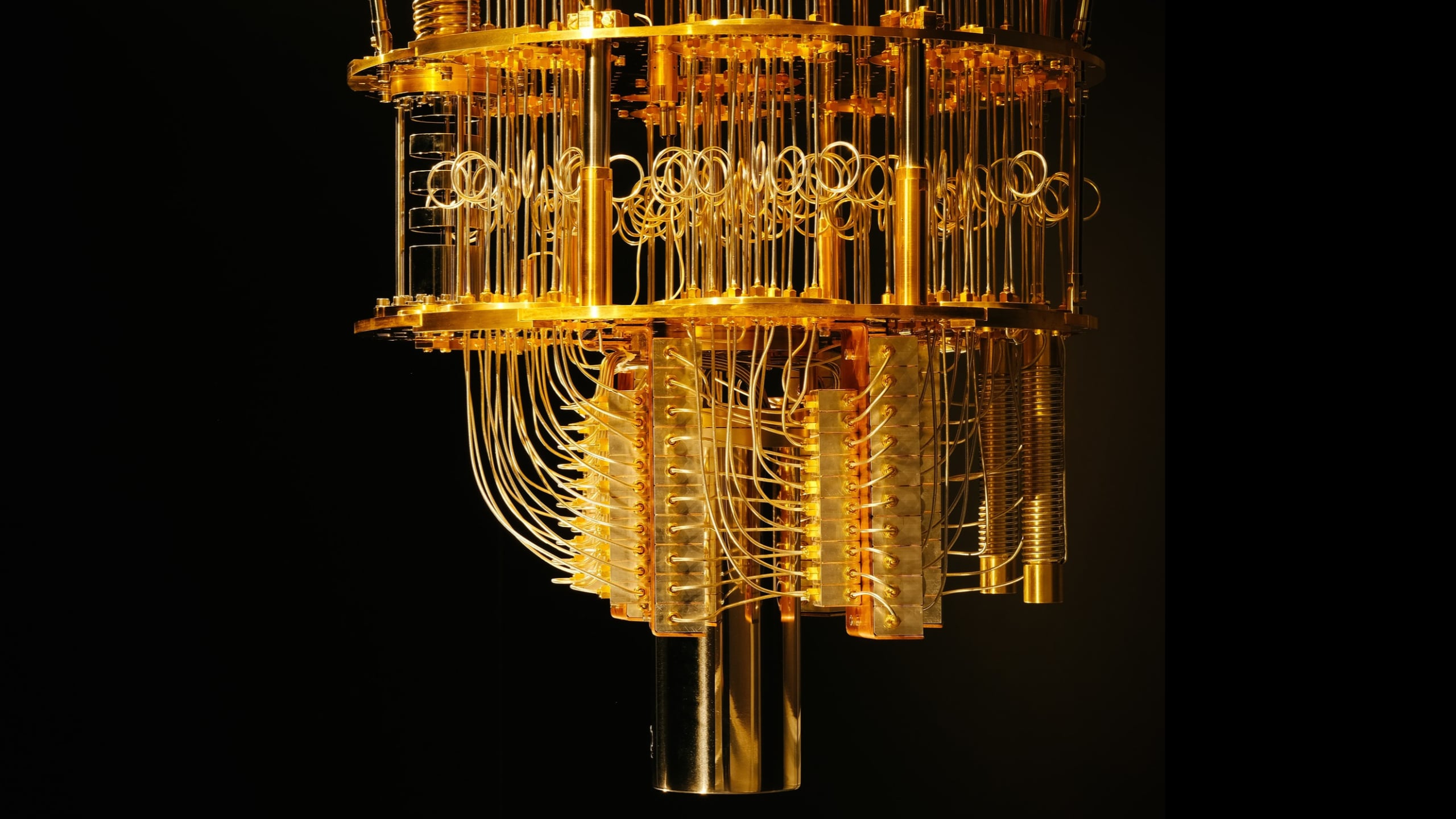
Some computations are so hardcore that it takes a facility of extraordinary power to even think about running them.
These are the supercomputers – massive facilities humming with the corpulence of their GPUs and CPUs, crunching applications that would take a desktop computer hundreds to thousands of years.
A commercially accessible quantum computer has just accomplished a feat that suggests this newer technology could one day leave supercomputers in the dust.
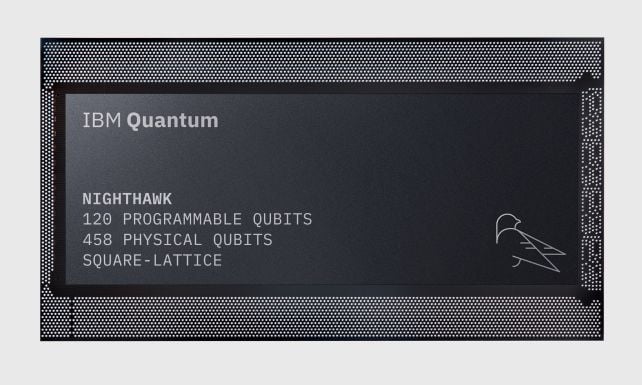
In just 19 seconds, IBM's Nighthawk r2 processor generated a million samples – a task estimated to take a supercomputer around 110 years.
The results of the experiment have been described in a preprint currently available on arXiv.
"To our knowledge," writes first author Tigran Sedrakyan, a theoretical condensed matter physicist at BlueQubit in the US, and colleagues, "this is the first demonstration of quantum advantage for a vanilla random-circuit sampling on a commercially and broadly accessible quantum processor that most non-expert quantum computer users can easily replicate."
The battle for quantum advantage is an arms race between supercomputers and quantum computers that really kicked off back in 2018.
The basic proposition is that there must be a quantum computation that is prohibitively difficult – if not impossible – for a classical computer to perform.
In 2018, researchers at UC Berkeley provided strong theoretical evidence that a leading candidate task would do the job: random circuit sampling, or RCS.
A quantum circuit is a sequence of operations performed on qubits, somewhat analogous to the operations performed on bits in a conventional computer.
In RCS, those operations are chosen largely at random, creating an increasingly complex quantum state. The processor then measures that state over and over again, producing strings of ones and zeroes – the "samples".
Producing the samples is pretty straightforward, but as the number of qubits and operations grows, calculating the probability distribution needed to reproduce the same results on a classical computer becomes Sisyphean.
In 2019, Google famously announced that its 53-qubit Sycamore processor had performed an RCS experiment beyond the practical reach of a classical supercomputer.
But it didn't take long for classical researchers to start finding creative ways to push conventional computers to reproduce those results – and for quantum researchers to push their systems to greater and greater extremes, using the most cutting-edge technology available.
This new result is something else.
Instead of using a specialized experimental quantum processor, Sedrakyan and colleagues ran their experiment on Nighthawk r2, a 120-qubit superconducting quantum processor commercially accessible to users through IBM's cloud platform.
They selected 61 of its qubits and subjected them to random circuits of increasing complexity, up to 40 cycles – repeated rounds of operations in which the 61 qubits are manipulated and entangled.
And, significantly, they did so using the platform's standard cloud workflow – with no special calibration tailored to the experiment.
They found the Goldilocks zone at 36 cycles – where the circuit involved 918 two-qubit gates. Under this condition, Nighthawk r2 conjured 1 million samples in just 19 seconds.
Surprisingly, that is the easy part.
It's far harder to gauge how difficult the task would be for a classical computer.
Because it is supposed to be all but impossible for a supercomputer to perform this task, and because the world's top supercomputers are in high demand, scientists can't just pop the program on a supercomputer and watch what happens.
Luckily, there's a tool they can use – a technique called tensor-network contraction that can estimate the computational cost of simulating a quantum circuit on a classical computer.
Using this approach, Sedrakyan and colleagues calculated that reproducing their million samples would require around 1.2 × 10²⁷ computational operations.
Frontier was the world's first exascale supercomputer and the fastest until 2024, with a peak performance of over a quintillion (1 × 10¹⁸) operations per second. Using a more conservative estimate of its sustained performance, the researchers calculated that Nighthawk r2's feat would translate to around 110 years of computing time.
There are some important caveats. That 110 years isn't a fundamental speed limit for classical computers, but an estimate based on a particular method of reproducing the quantum experiment.
And, as history has already demonstrated, classical computing researchers are very good at finding shortcuts. More efficient algorithms could dramatically reduce the amount of work required.
Sedrakyan and colleagues explicitly acknowledge that possibility. Their claim isn't that no classical computer will ever be able to match Nighthawk r2's performance, but that, by this benchmark, the quantum processor has pulled substantially ahead.
It's another gauntlet thrown down in the quantum advantage arms race – a challenge, not in the spirit of superiority, but a collegial contest that will ultimately push both sides to find better ways to compute.
And, in fact, it's a demonstration of this contest in action – quantum advantage achieved not on bespoke laboratory equipment, but on commercially accessible hardware.
The researchers emphasize that they ran the experiment on a "publicly available QPU accessible through a cloud," using the standard cloud execution stack, and have released the circuits, samples, and analysis code so others can test the result for themselves.
The gauntlet's here. Who wants to come and pick it up?
The findings are yet to be peer-reviewed, but a preprint is available on arXiv.

 点赞
点赞 收藏
收藏 点踩
点踩 分享
分享