A $23 Trillion Market Swayed SoftBank in Hunt for More AI Debt

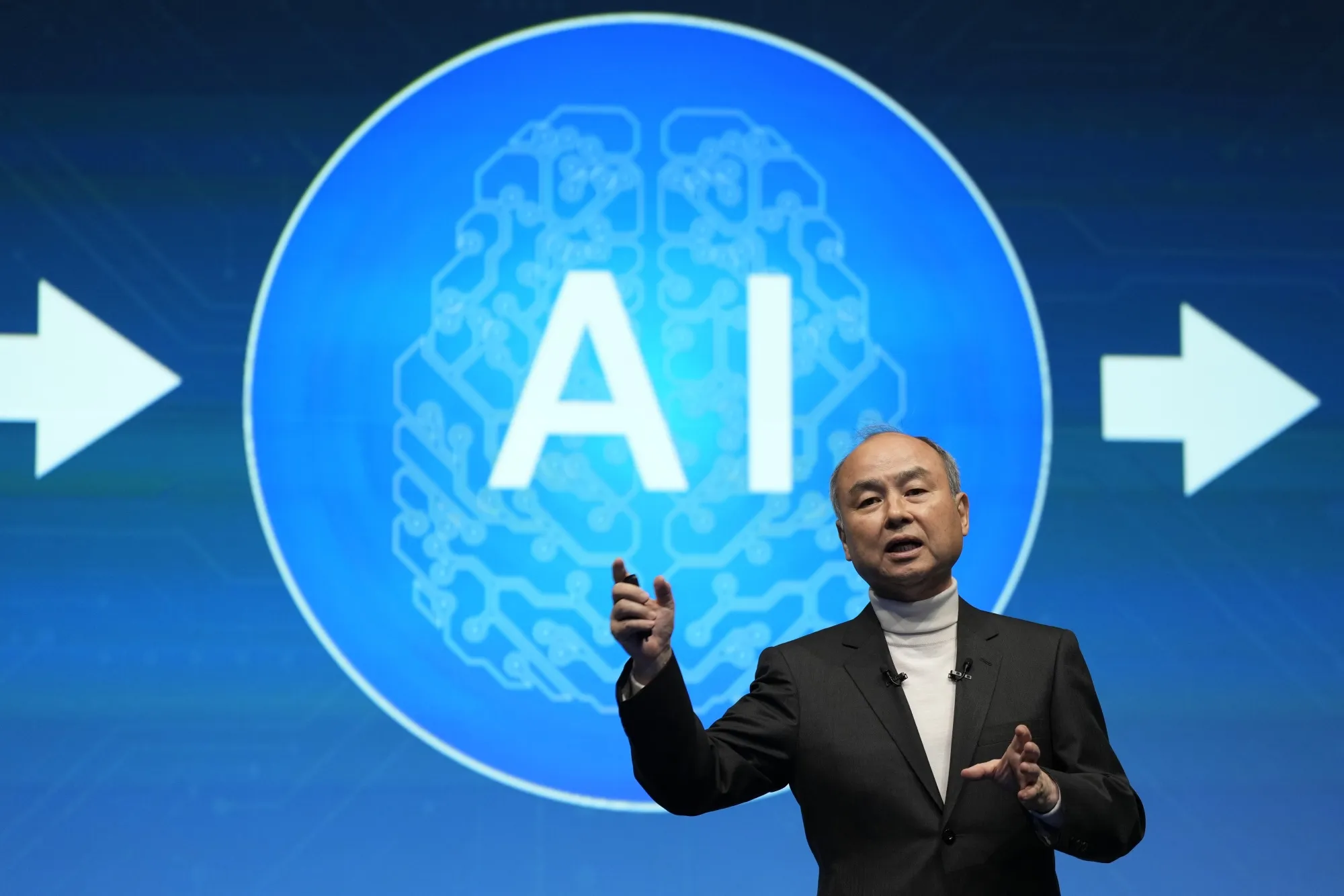
SoftBank Group Corp.’s billionaire founder Masayoshi Son has said he’s “all in” on AI. The conglomerate’s record $11.1 billion junk bond deal last week shows the lengths his executives have been going to help finance that vision.
When confronted with the need to raise such a large amount to help replace a $40 billion bridge loan it signed to finance a huge bet on OpenAI, SoftBank ultimately opted to offer the securities to deep-pocketed institutional investors in the US, despite the extra groundwork needed for its first such offering in over a decade.
To access the $23 trillion market for bonds and other debt securities, the offering needed to meet conditions set by the Securities and Exchange Commission’s Rule 144A. Doing so would involve regulatory considerations separate from the so-called Regulation S borrowings that can be sold only to investors outside the US, which SoftBank has favored over the past decade for smaller deals.
SoftBank spent months working with lawyers to prepare for the offering. That included an analysis of whether it would be considered an investment company under US law, a classification that could have affected its ability to access the US capital markets, people familiar with the matter said. In the end, the conglomerate was not designated as such, despite having shifted to act as a global tech investor about a decade ago.
This account draws from people with knowledge of the deliberations culminating last week in the multi-part issuance that was the biggest ever in corporate high-yield bond markets.
The months of talks, globetrotting and some sleepless nights for bankers involved led to the record deal, one of the most prominent examples yet of how the rush to finance the artificial intelligence boom is reshaping all corners of the credit markets.
SoftBank and banks including Citigroup Inc., Goldman Sachs Group Inc., JPMorgan Chase & Co. and Morgan Stanley started as early as May to ramp up work to tap the 144A market, according to the people.
Under the Investment Company Act of 1940, companies whose investment securities exceed 40% of certain assets may be deemed investment companies, unless they qualify for an exemption. The distinction matters because foreign companies classified as investment firm may need special SEC approval before offering securities to US investors, according to the SEC.
In its bond offering memorandum, SoftBank said it believed investment securities accounted for less than 40% of its unconsolidated assets and described itself as a “strategic holding company focused on technology.”
Ultimately, SoftBank’s categorization was based on tests of the act on its business and assets as a whole, the people said. As for its 86% stake in chip designer Arm Holdings Plc, it was categorized as an operating subsidiary rather than a passive investment security, helping the company remain outside the act’s definition, according to the people.
SoftBank declined to comment.
Arm Holdings’ Boost
The prospect of a jumbo bond deal looked anything but certain for SoftBank just a few months ago, when its stock plummeted nearly 50% from early June to late July. That drop was due in part to a broader downturn in AI related equities on concerns about valuations, and also as some investors became increasingly skittish about SoftBank’s ever-growing commitment to OpenAI.
But the Japanese firm rebounded after that, leaving its stock up about 42% this year. A rally in chip designer Arm Holdings Plc helped, giving SoftBank the boost it needed to test the waters on the bond deal, according to the people.
Masa Son’s Huge OpenAI Bet Sends SoftBank Debt Costs SoaringSoftBank Pays Record Yields to Become Goliath of Junk BondsSoftBank Founder’s Starstruck Bet on OpenAI Raises Concern
SoftBank executives then started making the rounds.
They went to London in early September, where they lunched with some major investors from Europe and networked at Goldman and JPMorgan leveraged-finance conferences. Chief Financial Officer Yoshimitsu Goto and other executives then flew to New York, holding discussions at Citigroup’s offices to sound out interest in a potential junk-bond sale.
The meetings piqued investors’ interest, with many sending IOIs, or indications of interest, shortly after to tell banks they would be potential buyers if a deal materialized, the people familiar with the deal said.
But US investors still had questions concerning the company’s structure, SoftBank’s investment plans and any updates on data center projects, according to the people.
Goldman Sachs declined to comment. There were no immediate responses from Citigroup, JPMorgan and Morgan Stanley to requests for comment.
AI Bubble
The broader market backdrop wasn’t ideal for a mega AI debt deal either. Treasury yields were soaring, and talk of a debt-fueled AI bubble was reaching fever pitch.
On top of that, a chorus of AI leaders had begun warning about safety risks, calling for a slowdown in the development of cutting-edge models. Sam Altman agreed, and said his company wouldn’t go public this year, underscoring the prolonged wait for investors who have long struggled to value OpenAI — the company that Son has tied his fortunes to.
More broadly across markets, the key risk for credit investors in AI-related debt isn’t just a worst-case scenario of outright collapse in the industry boom, according to Hiroki Takei, a strategist at Resona Holdings Inc.
“If the current model of front-loaded investment and delayed monetization persists, massive AI capex could continue to weigh on free cash flow and increase companies’ reliance on external financing and refinancing,” he said. “If AI demand subsequently slows, credit spreads could widen sharply.”
But with many investors taking the view that such scenarios are more for due diligence consideration, rather than planning for any imminent downturn, the global AI debt boom has pushed on.
For the SoftBank junk bond, bankers in Asia and Europe worked through the preceding weekend to advance the deal, the people said. Calls were held across three time zones, with staff in London and Tokyo staying up through the night to speak with investors in the US.
Delayed IPO
Another glitch came midway through the marketing process, when news emerged that SB Energy Inc., a data center provider backed by the Japanese conglomerate, was delaying its IPO.
Banks were inundated with questions about OpenAI’s listing timeline and SB Energy’s delayed IPO, and what it meant for SoftBank’s holdings, the people said. Ultimately, the appeal of the record yields that SoftBank was offering carried the day. The longest-dated tranche, due in 7.5 years, was eventually priced to yield 9.75%.
The company is rated BB+ by S&P Global Ratings and Fitch Ratings, the highest non-investment grade for both firms. SoftBank uses a metric called the loan-to-value ratio — calculated by taking net debt as a share of its equity holdings — to gauge its borrowing. The group has pledged to keep its LTV level below 25% and only allow it to rise to 35% in extraordinary circumstances, and said in its latest update that the ratio was 13% at the end of June.
“We all know the risk of SoftBank, as this is a BB+ name, and a close to 10% yield is like equity returns,” said Satoru Aoyama, senior director, APAC corporate ratings at Fitch Ratings. “But at the same time, the company is not issuing 30-year bonds, and its financial discipline, including the maintenance of low loan-to-value ratios, gives indirect protections.”
While there are debates about the pitfalls of excessive AI debt, demand is clearly growing significantly across the industry, according to Aoyama at Fitch. “The AI boom is extensive and includes issuers across the entire AI value chain,” he said.

 点赞
点赞 收藏
收藏 点踩
点踩 分享
分享