Google DeepMind Exodus Sparks VC Frenzy for AI’s Next Big Thing

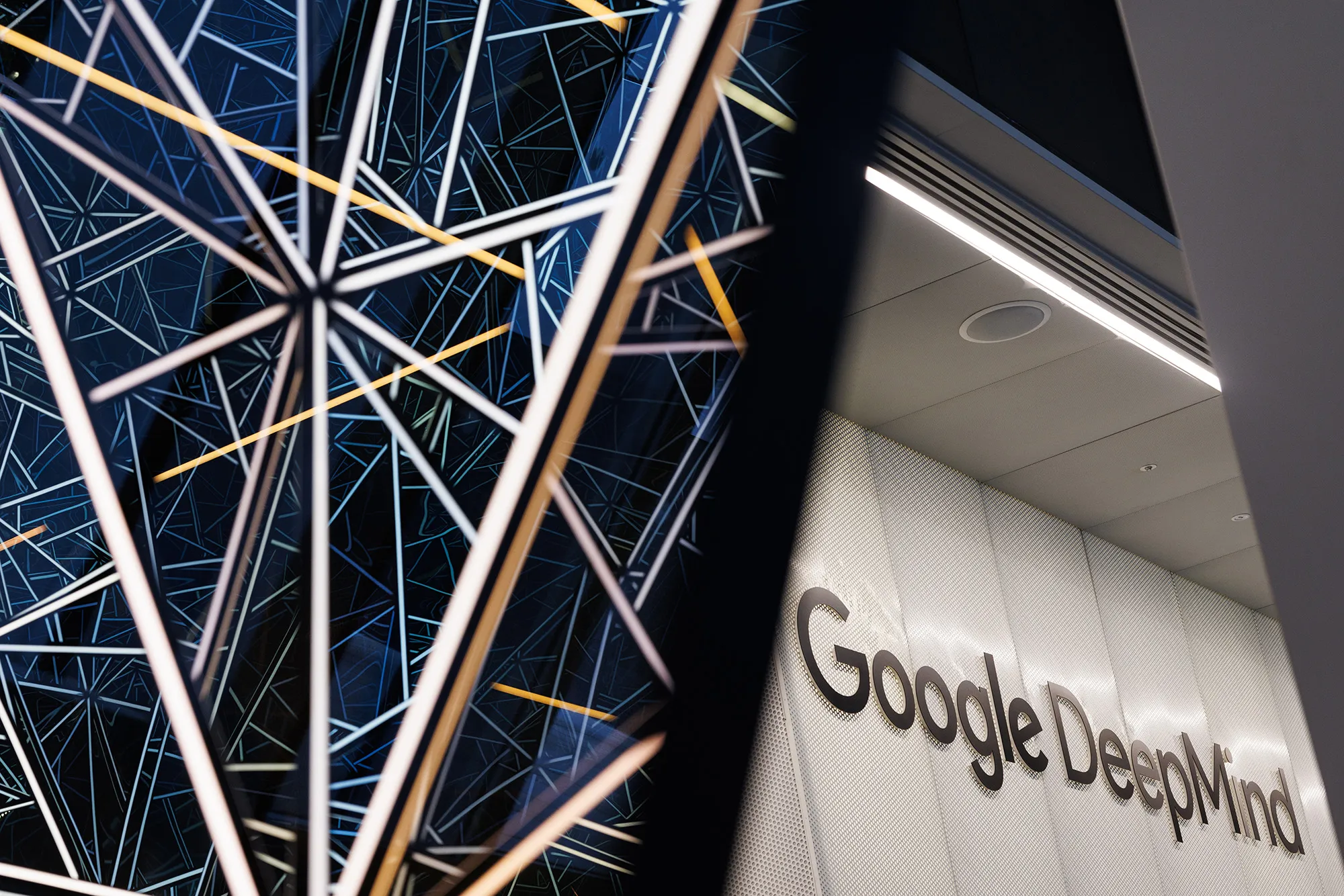
When a group of 15 Google DeepMind employees and alumni met for a breakfast this month in central London, the conversation quickly turned to how to raise money for an artificial intelligence startup.
Over bowls of coconut chia muesli and plates of smashed avocado, served in a five-star hotel across the street from Google’s UK headquarters, they swapped tips about what businesses deep-pocketed investors in Silicon Valley are looking to fund, according to a person who attended.
For years, Alphabet Inc.’s London research lab was a destination of choice for top AI research talent. But the mood is changing as the Mountain View-based company shifts the power center of its AI division from London to California, highlighted by DeepMind co-founder Demis Hassabis stepping down from running Google’s AI and research operations in August.
A number of DeepMind alumni have founded their own companies recently, seeking hundreds of millions of dollars from investors looking for the next big AI breakthrough.
Nando de Freitas, who worked at DeepMind for about a decade before a stint at Microsoft Corp., is in discussions to raise at least $100 million initially for a startup called Revolution Labs, according to multiple people familiar with the plans. Revolution Labs is set to focus on AI diffusion models, an alternative to the transformer technology that underpins large language models, they said, asking not to be identified because the talks are private.
De Freitas, who left DeepMind in 2024, didn’t respond to requests for comment.
He follows other DeepMind scientists, including David Silver, Thore Graepel and Jack Parker-Holder, who have raised or are in talks to raise money for projects as investors back researchers with a track record at the storied AI lab. Google and DeepMind have produced over 40 founders of so-called neolabs — more than OpenAI, Anthropic PBC and Meta Platforms Inc. combined, according to June analysis by Radical Ventures.
Other prominent DeepMind executives in London have jumped to rivals, such as Nobel laureate John Jumper, who took a job at Anthropic. A Google spokesperson declined to comment on the recent departures.
Read More: DeepMind Co-Creator of AlphaGo Seeks Funds for AI Startup
“These people are being aggressively approached by VCs,” said former DeepMind lead scientist Janusz Marecki, now an AI partner at investment firm Ahren Innovation Capital, adding that he meets regularly with DeepMinders “who are looking for an exit.”
Several of these founders contributed to DeepMind’s biggest breakthroughs, including its landmark AlphaGo program, which defeated champion human players of the ancient board game Go, and its protein-structure prediction tool AlphaFold. Of the original 20 authors on the AlphaGo paper, only a handful remain at DeepMind.
Hassabis, who shared the 2024 Nobel Prize in Chemistry for his work on AlphaFold with Jumper, has dismissed concerns of a brain drain. “There’s a lot of talent movement between all the leading labs and we win our fair share of the top talent,” he said at an event in Cannes this year. “We have by far the biggest and broadest research bench of any of the labs out there.”
Hassabis handed day-to-day control of the lab to technology chief Koray Kavukcuoglu in August, and became Alphabet’s chief scientist, a role focused on long-term AGI strategy and scientific uses of AI. Veteran engineer Jeff Dean left the same day to start a Google-backed company, and Gemini co-lead Noam Shazeer has joined OpenAI.
The talent shifts also come as Google, which is rushing to release Gemini 4 by year-end, tries to close a gap with OpenAI and Anthropic.
Read More: Google AI Veterans Depart During Seismic Leadership Shift
Many ex-DeepMind workers aim to pursue AI technology beyond large language models, the in-vogue systems that underpin Google’s Gemini, OpenAI’s ChatGPT and Anthropic’s Claude. The offshoots include startups working on AI that can train itself, reason more effectively than large language models and update its knowledge with new data over time.
Silver, a prominent DeepMind researcher, raised around $1 billion earlier this year for Ineffable Intelligence, a startup developing a new AI learning system. Four other DeepMind alums joined him as co-founders at the startup.
Graepel, a veteran scientist who left DeepMind this summer, is seeking substantial funds for a new startup focused on AI reasoning models called Metis Reasoning, Bloomberg News reported. And Emulate, founded by a trio of former DeepMinders including Parker-Holder, is in discussions to raise $700 million for systems to simulate and predict the real world, Bloomberg reported.
Read More: Google Shifts AI Leadership to California in Race Against Anthropic, OpenAI
Some are chafing at pressure to make Gemini a commercial success, Marecki said.
“There’s a top-down pressure to drop everything you’re working on and focus on large language models,” said Marecki, who is also raising funds for his continuous learning startup FractalBrain. “Then you just leave, there’s no point. These are smart people, smart scientists.”
Not all of the differing approaches will succeed. While startups in the UK historically command smaller premiums, the fervor — for companies that don’t always have products or firm business plans — is making some investors nervous.
“One fatigue is with the valuations,” said Marecki, whose firm has invested in several startups co-founded by former colleagues, including agent startup Phaidra and coding startup Hiverge. “Valuations used to be 10 times revenue,” he added. “Now it’s 200 times, 300 times.”
VC investors, as they compete to back new startups, are trying to remove risk from these investments. Funding rounds in neolabs are increasingly split into multiple tranches, with blue-chip investors coming in early at a lower valuation, sending a signal of confidence in the startup and its team. Other investors see a top-tier fund’s logo on the list of shareholders and come in at a higher price, pushing up the headline valuation.
De Freitas’ startup will likely include multiple tranches with more money, said the people who asked not to be identified because the discussions are private. Venture capital funds including Accel are in talks to lead the financing, they said. Accel declined to comment.
Graepel will also likely raise a more substantial tranche in the hundreds of millions of dollars after an initial smaller round worth tens of millions, separate people said.
Such a rapid exodus is “bittersweet” to see, said Aaron Rosenberg, a partner in London with investment firm Radical Ventures who also worked at DeepMind. Earlier this week, Colin Murdoch, DeepMind’s former chief business officer, joined as an adviser to Rosenberg’s firm, which has backed multiple DeepMind offshoots.
“I’m saddened that the organization is losing such exceptional talent,” Rosenberg said. “At the same time, I’m excited for each of them to pursue their own entrepreneurial endeavors.”

 点赞
点赞 收藏
收藏 点踩
点踩 分享
分享