Early Anthropic Investor Seeks VC Glory With Cash and Compute

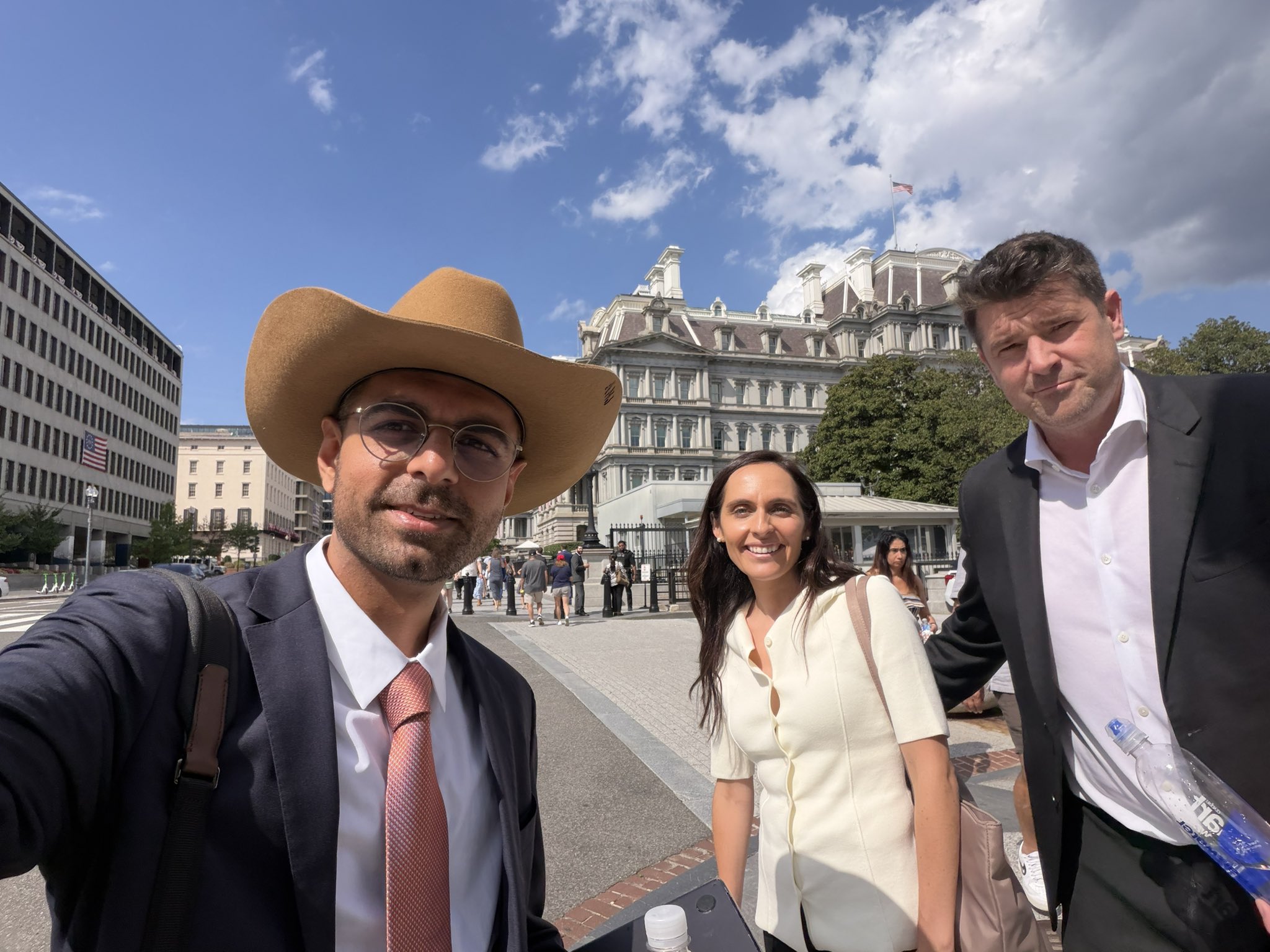
A few months ago, venture capitalist Anjney Midha received a present from his wife while on a trip to Hawaii: a felt, tan-colored Stetson with his name monogrammed on the side. The hat was meant to cover up a brain sensor Midha has been wearing to gather neurological data forone of the many frontier startups he’s invested in.

But it’s since become a wardrobe staple for him, and Midha seldom leaves home without it. He isn’t shy about its meaning to him and how he sees his standing in Silicon Valley. “There’s a new sheriff in town,” he said, flashing a smile.

That sentiment isn’t just bravado. Midha, 34, a computer scientist by training, has chalked up a string of hits as an investor in recent years. His most notable one is Anthropic. He cut the company an early check in 2021 when it was valued at less than $1 billion, usinga substantial portion of his and his wife’s savings. In the company’s approaching IPO, its valuation could extend to as much as $2 trillion.

After Andreessen Horowitz scooped him up and made him a general partner in 2023, he co-led an investment in Mistral AI and led those into Black Forest Labs, a German AI company and Periodic Labs, a startup that is trying to automate scientific discovery. All have seen their on-paper valuations increase at least five times since. He also helped the firmprovide access to more than 20,000 GPUs, which it offered to portfolio companies along with cash in exchange for equity. With Andreessen Horowitz partner Martin Casado, he co-led the firm’s purchase of a 20% stake in OpenRouter, a startup that provides a library of models for developers, at a valuation of about $50 million in 2025. Last month, Stripe agreed to buy the company for $7.5 billion.

Midha has since moved on to running his own venture firm, AMP, which he started earlier this year. AMP has raised $1.3 billion, a large chunk of which he put into Anthropic’s February fundraising round that valued it at $380 billion. His exact plans for AMP are still forming, but he wants it to help AI startups secure compute and cloud services. He has previously described a strategy in which AMP would set up a network resembling an energy grid and then act as an intermediary, matching up AI startups with available compute.Midha said that AMP is incubating a startup that will launch as a national grid of compute in October but declined to give further specifics.

Later this year, Midha plans to launch another venture, the AMP Grid Trust, to further his push to level the playing field for young startups and scientists who want access to in-demand AI servers that would otherwise be hard for them to get.

Midhja plans to seed the AMP Grid Trust with some of his proceeds from the Anthropic IPO. He then hopes to raise several billions of dollars more for it.

Investor Anjney Midha in his new trademark cowboy hat. (Courtesy Anjney Midhey)

“I kind of have to lasso everybody up and say, ‘You should be involved with this,’” he said. Profits earned by the trust would then go toward buying more compute, he said, hopefully creating an ever-growing supply.

“I was thinking about, ‘How do you set up the ecosystem for success over the next hundred years at a time that’s going to be very tumultuous due to AI?’” he said. “Many startups are going to try to innovate in scientific pursuits but not be able to access what they need.”

The Grid Trust was partially inspired by the reading Midha has done about industrialists like John Rockefeller and railroad baron Leland Stanford. He admires how those titans were both instrumental in massive infrastructure projects and also setting up endowments and funds that turned into long-standing institutions, like Stanford University.

Midha says he sees himself first as a scientist, whose success has been powered by an understanding of the technical aspects of the AI ecosystem: chips, power and data.

“If you’re technical, and you do the work to understand the technology, you can manufacture returns,” said Midha.

This kind of work makes Midha, who goes by “Anj,” stand out among investors in the Valley, said Liam Fedus, a former OpenAI researcher and co-founder of Periodic Labs. “Anj is very close to the technical details and has been a believer in these technologies for a while. And it definitely shows,” Fedus said.

Ultimately, Midha sees his success as a parable about the changing of the guard in Silicon Valley as a new technological revolution takes off.

“The VCs were addicted to quick hits of junk food,” he said, referring to how the culture of innovation languished at the end of the social media era, with fads like non-fungible tokens that fizzled out. “This is the revenge of the scientists.”


In July, I went to visit Midha at his house in Presidio Heights, a 1937 home built in the style of a French chateau. We sat in the living room looking out through giant bay windows at the Golden Gate Bridge as the fog poured over the hills. Midha proceeded to break down what he says are the city’s five microclimates in detail.

“If you let me go on, I’ll just keep talking about the fog forever,” he said.

He tells me a bit about the boarding school he went to as a child in India, an alternative-minded place located on a 150-acre bird preserve known more for producing artists and poets than technologists. The education prioritized nature, arts and activities like meditation; computer use was limited to one hour a week.

At the school, Midha said he learned how to think for himself and came to respect the ideas espoused by the institution’s founder, spiritual leader Jiddu Krishnamurti, who was skeptical of dogma and leaders who preached absolute truths.

After four years there, Midha received a scholarship to complete his last two years of high school in Singapore. “Those two years were kind of like a finishing school in how to readjust to society,” he recalled.

Midha landed at Stanford in 2011, studying bioinformatics in a joint bachelor’s and master’s degree program. One of his first classes, Computers and the Open Society, taught by AI pioneer Terry Winograd, sparked a lifelong interest in machine learning. He also took CS183B, Peter Thiel’s seminal computer science class on how to start a startup.

After his third year at Stanford, he got an internship at Kleiner Perkins after an introduction to one of its partners: Bing Gordon, former chief creative officer at Electronic Arts. A few months later, the firm offered him a full-time job, and he stayed on at Kleiner instead of returning to Stanford to complete his master’s. In 2015, he helped Kleiner launch its seed fund, then ran it for two years, focusing it on virtual reality, blockchain, drone and digital health startups.

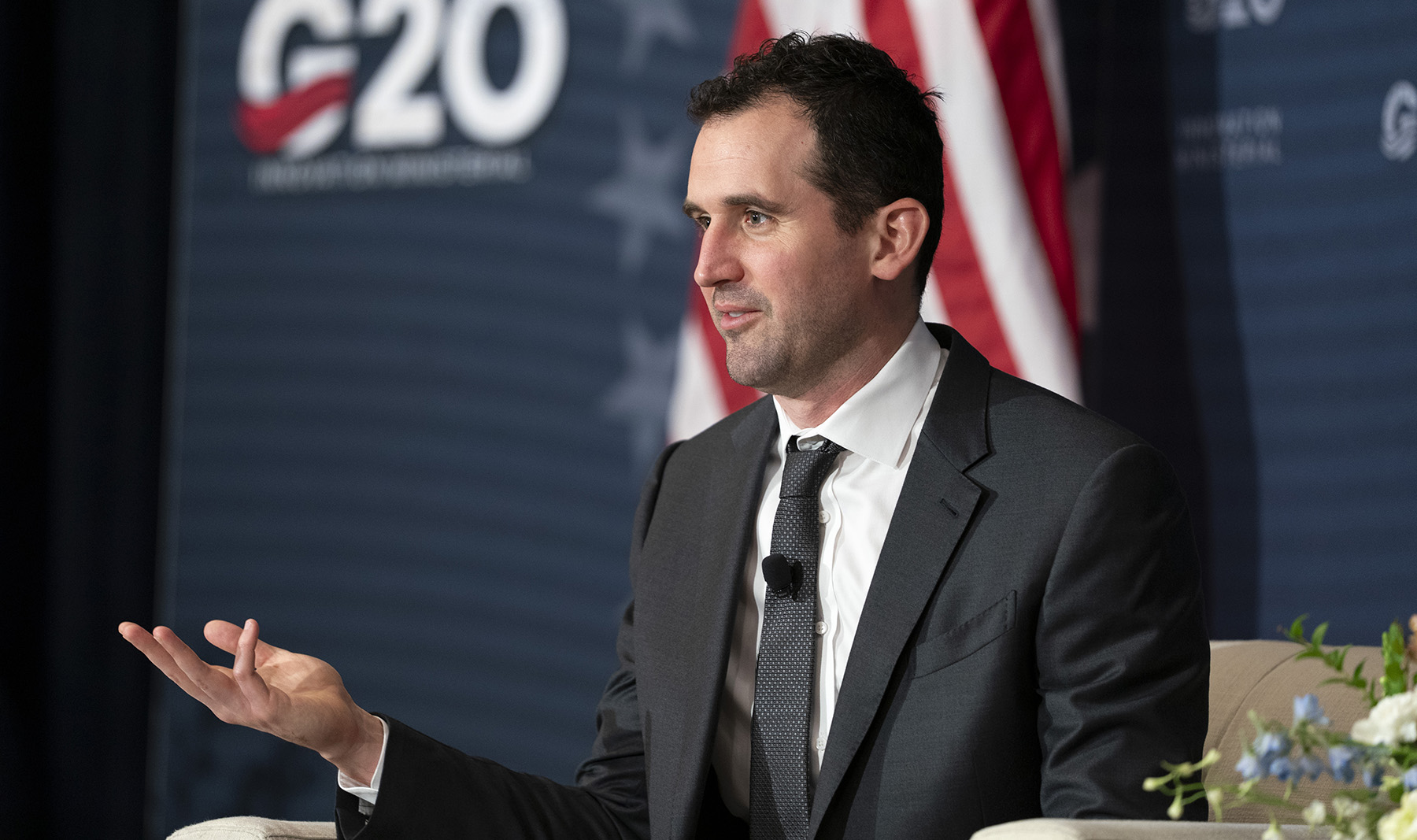
In another well-timed bet, Anjney Midha put Andreessen Horowitz money into Alex Atallah’s (pictured).

Two years later, Midha left to work on a computer-vision startup, Ubiquity6, that he co-founded with a former Stanford roommate, Ankit Kumar. The company raised about $50 million in two rounds of fundraising from firms including Index Ventures, Kleiner and Benchmark, and it grew to around 70 employees in San Francisco and Toronto. But it never found its footing and Discord acquired it in 2021 for an undisclosed sum, with Midha joining that company as its head of platform ecosystems.

Midha looks back on his first foray as a founder as a failure, rattling off a list of errors to me, including hiring too many people and failing to commercialize the technology more quickly. “I was 25, thought I was hot shit, and I just made every mistake in the book,” he said.

Darian Shirazi, a partner at the VC firm Gradient, one of the major investors in Ubiquity6, had a more charitable take.

“It was always obvious that he would be one of the players in the Valley,” said Shirazi. “If it was founded today, Ubiquity6 would be one of the leading world model companies. Anj was just too early.”


While working on Ubiquity6, Midha developed a community of fellow machine-learning obsessives. On the weekends, he and people like David Holz, the Leap Motion founder who would later start his own buzzy AI startup, Midjourney, and Tom Brown, who was then a top OpenAI researcher, would hang out and play Magic: The Gathering and talk about the Singularity, the idea that AI will reach a point where it exceeds human intelligence.

In late 2020, Brown called Midha and told him that he, Dario Amodei and a handful of other researchers from OpenAI were splintering off to start their own AI lab that would focus more on developing AI with the best safeguards,Midha said. Midha offered to advise them informally on nights and weekends and come aboard as one of the startup’s earliest investors. He began meeting weekly with Brown and Amodei in early 2021 to help the group figure out the nuances of fundraising.

“The homework assignment was, ‘OK, we’re scientists. We want to unleash our impact.…But we’re going to need a lot of compute,” Midha said. “They needed a lot of capital.”

Their initial plan aimed to raise $1 billion over the next few years, a large figure at the time. Anthropic’s earliest plans focused primarily on the automation of coding. In fact, the company’s Plan A was to “responsibly commercialize” AI programming, Midha said.

“Everybody is always like, ‘Oh, the whole coding thing came later. It was an accident,’” said Midha. “Most VCs didn’t get it because they’re just not technical.”

The Anthropic team hoped to raise $500 million initially, Midha said, and he counseled the group on how to pitch investors. Still, 21 out of the 22 VC firms Anthropic’s leaders approached declined to invest at the time, he said.

After getting the cold shoulder on Sand Hill Road, the Anthropic team lowered the fundraising target and moved on to individual investors. Among them was Jaan Tallinn, one of Skype’s founding engineers, who agreed to come aboard with a sizable commitment, Midha said, as well as former Google CEO Eric Schmidt and Facebook co-founder Dustin Moskovitz. Just before Memorial Day in 2021, Anthropic announced it had raised $124 million in a Series A.

Anthropic co-founder Tom Brown. (Getty Images)

In 2023, Midha invested in artificial speech startup ElevenLabs in a round that valued it at about $100 million. (Most recently, ElevenLabs has been valued at $11 billion.)And thenhe launched his first fund, AM Engine, that year, with the AI revolution beginning to take frontier labs from fringe to mainstream.

Over the next few years, Midha continued to advise Anthropic on fundraising. He also kept investing in it. He is still in regular touch with Anthropic leadership as the IPO nears. “I definitely ask them to sleep more every time I see them,” he said.

It has not gone unnoticed to him how Silicon Valley finally began taking Anthropic more seriously in the last 12 months, a trend that began as Claude’s coding capabilities became clear late last year. By February, Midha said he was fielding calls from many of the people who had turned the group down initially, who were suddenly hungry to invest.

“I started getting a lot of calls from people who said, ‘You were right,’” Midha said. “And that’s a moment where you go, ‘I tried. I told you to invest every year for the last four years, and you would not get out of your own way.’”

But for now, Midha still has an underdog’s chip on his shoulder.

“My mission in life is how do you get more researchers and scientists who are pushing the frontier of research to become business leaders globally, without the bankers being like, ‘Oh, we’ve got to replace them with a real CEO,’” he said. “Fuck that. We need to get the bankers out of the room.”

添加评论
点赞收藏
点踩分享查看原文
评论
?
参与讨论