Malaysia Eyes Huawei Chips for AI Project Despite US Warning

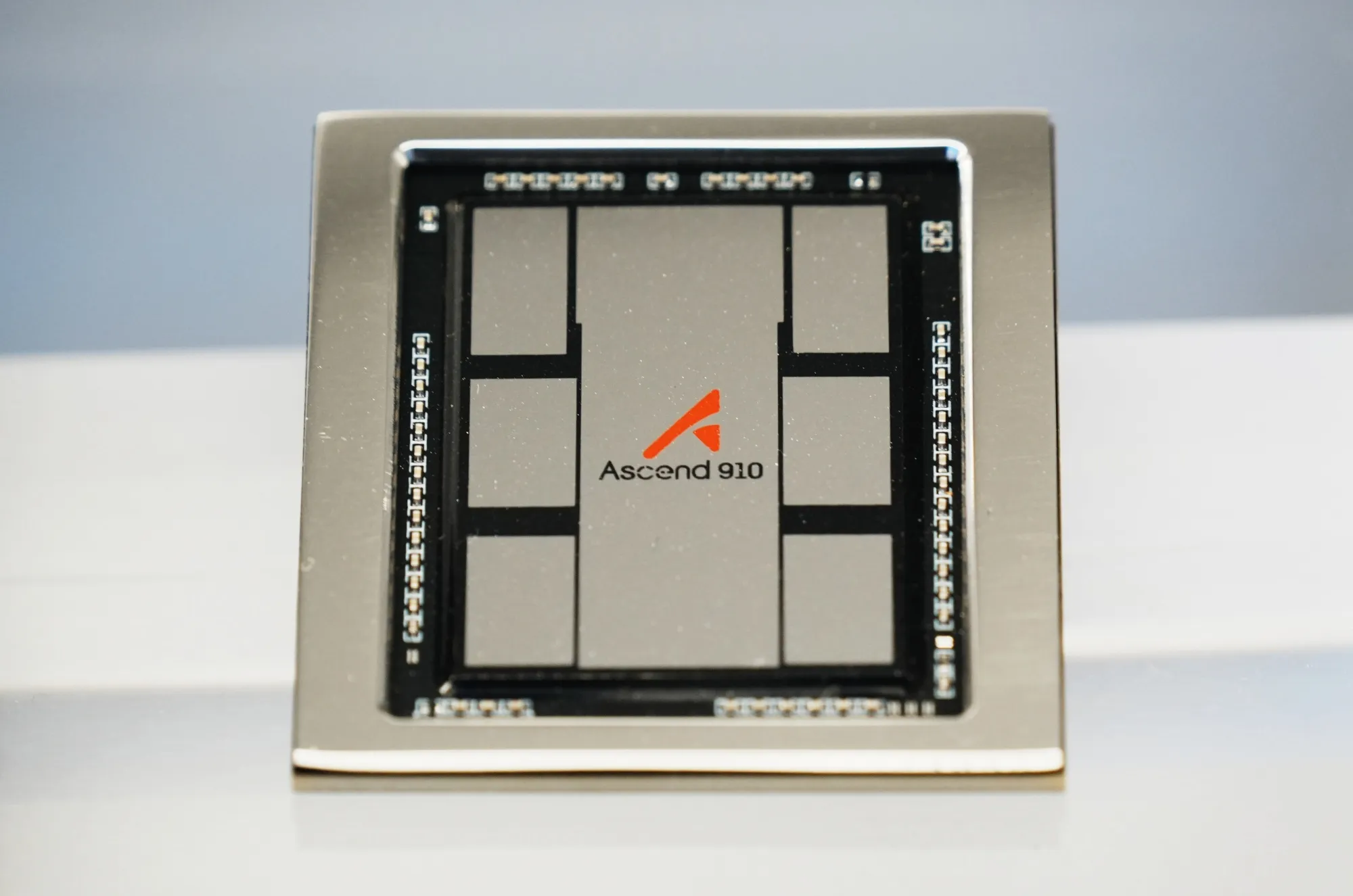
Malaysia is leaning toward relying on Huawei Technologies Co.’s artificial intelligence chips to power its sovereign AI efforts, in what would be a major victory for Chinese AI technology in the face of strong opposition from President Donald Trump’s administration.
The Southeast Asian nation is seriously evaluating using Huawei’s AI hardware as the backbone of a 2 billion ringgit ($494 million) initiative intended to give the country greater control over national data, according to people familiar with the matter. It’s unclear how many chips Malaysia would buy, the people said, asking not to be identified because they’re not authorized to speak publicly.
Huawei has been working to improve the performance of its AI chips in the face of years of US restrictions on access to foreign production tools. Its accelerators still trail Nvidia Corp.’s by a wide margin, but as Huawei’s manufacturing outlook improves, the Shenzhen-based company is seeking a foothold in global data center markets from Southeast Asia to the Middle East.
Malaysian Prime Minister Anwar Ibrahim, meanwhile, has said the Southeast Asian nation doesn’t want to just be a consumer of technology developed overseas. In addition to the physical infrastructure that could come from Huawei, Anwar’s administration is encouraging local telecom companies to propose broader AI frameworks in partnership with foreign firms.
If Malaysia does move forward with Huawei chips, it would mark the first known instance of a foreign government officially opting for Chinese AI accelerators over American ones. Anwar would effectively be defying Washington’s efforts to assert control over global AI infrastructure, despite warnings from Trump officials last year not to buy the exact Huawei hardware in question. Huawei is also vying to build an AI data center for the Egyptian government, prompting Trump’s team to work on a counterbid.
The Prime Minister’s Office, which also helms the national security council, didn’t respond to a request for comment, nor did Malaysia’s Ministry of Digital. Representatives from Huawei also didn’t respond to a request for comment. The Malaysian government regards any decision it makes in this matter as purely commercial, according to one person familiar with conversations in Anwar’s administration.
The chips Malaysia is evaluating are Huawei’s marquee Ascend 910C product, the people familiar said, rather than the more advanced Ascend 950 lineup, which remains in limited production. Trump’s team explicitly warned the world last year that use of Ascend 910C chips could violate US export regulations. Washington broadly has been trying to encourage the use of American AI hardware worldwide so that China doesn’t dominate AI data centers like it did telecommunications.
Huawei AI Data Center Bid in Egypt Spurs US to Mull CounterHuawei Unveils AI Chip Roadmap to Challenge Nvidia’s Lead Huawei Seeks AI Chip Clients in Middle East, Southeast AsiaTrump Rush to Cut AI Gulf Deals Opens Rift With China HawksUS Warns That Using Huawei AI Chip ‘Anywhere’ Breaks Its Rules
That means Malaysia’s sovereign AI efforts could be an early test of how Trump’s administration will handle relations with countries that refuse to fully align with the American camp while still wishing to benefit from US investment. Malaysia has one of the world’s fastest-growing AI data center ecosystems thanks in large part to projects from American firms, making it an important market for the likes of Nvidia, Microsoft Corp. and Oracle Corp.
“Secure technology is the foundation of a prosperous economy,” a State Department spokesperson said. “Malaysia is a growing market and manufacturing hub for technology products” and an important partner to the US, they added, pointing to a 2025 reciprocal trade agreement between the two nations.
Malaysia’s sovereign AI efforts are predicated around data, including highly sensitive government information and military and intelligence material, remaining within Malaysia. Anwar in the past has said US regulations may pose a challenge to that effort, specifically the US Cloud Act, under which American courts can compel US technology companies to hand over electronic data even if it is stored overseas. Trump signed the Cloud Act into law during his first term.
“I do not consider that law reasonable, but how does one argue with President Trump?” Anwar told university students in April.
As such, Malaysia selected a state-linked telecommunications company, Telekom Malaysia Bhd., as the key operator for its sovereign AI project, according to the people familiar with the matter. Telekom Malaysia has an existing partnership with Huawei and uses the Chinese company’s technology in its cloud infrastructure, although its current AI computing service uses Nvidia chips. Telekom Malaysia didn’t respond to a request for comment.
While Telekom Malaysia was selected after a public tender, some on Trump’s team are frustrated that American companies haven’t had enough opportunity to compete for business, the people said. Nvidia and Advanced Micro Devices Inc., the two top American makers of AI chips, didn’t respond to requests for comment.
One US official, asked about the Trump administration’s discussions with Malaysia, said US technology is unmatched globally and that promoting American AI exports is a top priority. Trump’s team is also working on a program to offer packages of AI hardware, software and applications throughout the Global South, with possible US government financing.
Officials in Washington have also told their Malaysian counterparts they’re worried about Huawei hardware handling intelligence material, including sensitive information provided by foreign governments, according to the people.
“Untrusted suppliers can be manipulated, disrupted or controlled by authoritarian regimes that have insufficient regard for privacy and human rights and are all too willing to use economic coercion and force to achieve their aims,” the State Department spokesperson said, without naming China or Huawei. “Suppliers like this pose a potent threat to critical infrastructure, individual privacy, intellectual property and national security.”
Officials from Malaysia’s national security council are set to travel to Washington later this month to discuss the issue, the people familiar said. Anwar’s government is also discussing another tender process that would allow the likes of Nvidia to more directly compete for the sovereign AI contract, they added.
Selecting Huawei’s chips would be a bold move considering the US privately lambasted Malaysia just last year over a similar issue.
In May 2025, Malaysia’s deputy communications minister announced the nation planned to build a national AI system powered by 3,000 Huawei Ascend AI chips — only for her office, when contacted, to quickly retract her remarks without explanation. The nation’s Ministry of Investment, Trade and Industry said separately the project was private and in no way backed by the government.
Read More: Malaysia Downplays Huawei Deal as US Checks China’s AI Reach
The prospect of a Huawei AI chip deployment was especially sensitive then, given that Trump’s team had just issued its global guidance against the use of certain Ascend chips, including the 910C. Some Trump officials viewed Malaysia’s quick attempt to distance itself from Huawei as evidence that the US policy, which relies on a complex extraterritorial authority, was an effective deterrent, the people said.
But Malaysia’s investment ministry said at the time that while it “remains committed to full compliance with all applicable export control laws,” the nation also “reaffirms its sovereign right to formulate its policies in line with national interest.”

 点赞
点赞 收藏
收藏 点踩
点踩 分享
分享