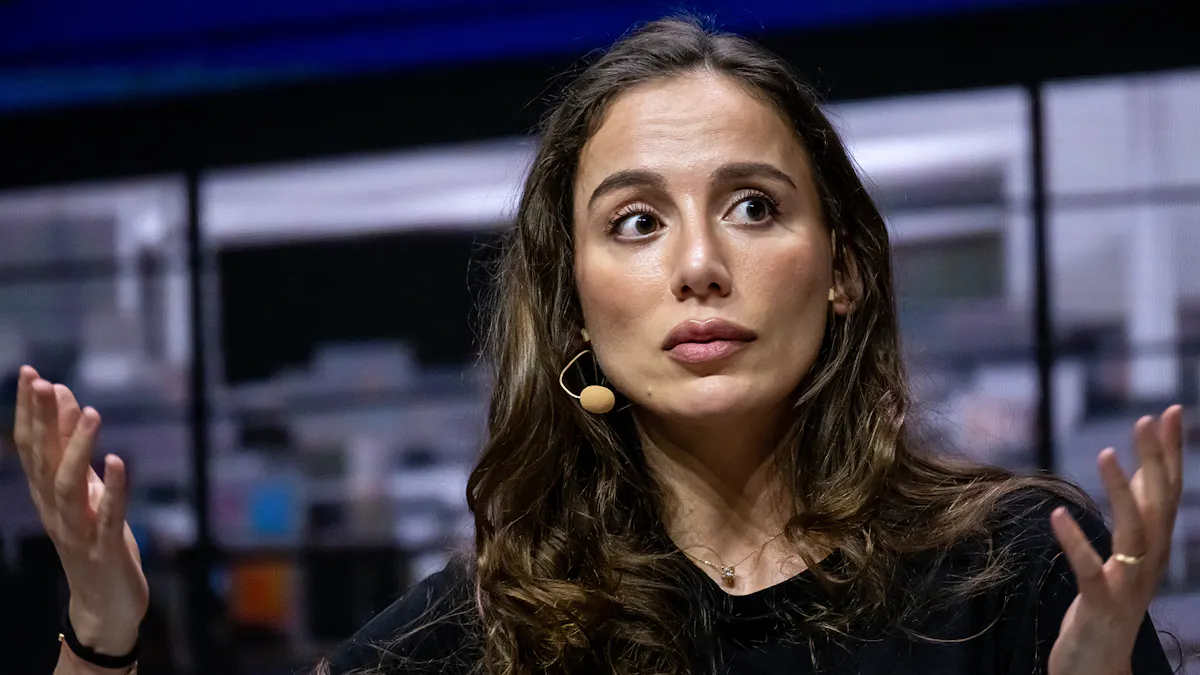
Thinking Machines Lab In Talks to Raise Billions at Roughly $40 Billion Valuation

Thinking Machines Lab, the AI developer led by ex-OpenAI chief technology officer Mira Murati, is in talks to raise at least $1 billion at a valuation of at least $40 billion before the investment, according to a person with knowledge of the fundraise.

Existing investor Accel is in talks to lead the round, which follows the July release of Thinking Machines’ first model, Inkling, according to that person and another. Nvidia has been in talks to participate, according to one of the people. The proposed valuation would be lower than the valuation the company sought late last year, when it discussed raising between $4 billion and $5 billion from investors at a $50 billion-plus valuation.

That’s still a remarkable figure, given that Thinking Machines is less than two years old.

The new round comes six months after Nvidia said it was making a significant but undisclosed investment in the startup and planned to make a “long-term, gigawatt-scale strategic partnership,” which likely refers to helping Thinking Machines get access to Nvidia’s coveted AI server chips.

Thinking Machines Labs’ open-weight Inkling models are available for free, but the startup makes money by selling access to tools companies can use to customize AI models—including but not limited to Inkling—using their own data.

The startup generates at least a few hundred million dollars in annualized revenue, according to a person with knowledge of the figure, which typically refers to the prior month’s revenue multiplied by 12. That would make its $40 billion valuation very high as a multiple of forward revenue, compared to most other startups in the field.

Thinking Machines said in July that its mission is to build AI that “extends human will and judgment,” including releasing its own models, making tools for others to build personalized models and publishing research.

The new fundraise would give the startup, founded in early 2025, more money to train its own models, rent servers and hire staff. The new valuation would be a big leap from its initial fundraise in July 2025, when it raised $2 billion at a $10 billion pre-investment valuation, led by Andreessen Horowitz with participation from Nvidia, GV, Lightspeed Venture Partners, Jane Street and Factorial Funds.

Thinking Machines Lab is one of the most-high profile of a cluster of new AI startups known as neolabs taking on the major model makers. They’ve raised billions of dollars to bankroll the costly process of training foundation models as well as recruit top staff.

TML competes with other open-weight model providers, in terms of trying to gain share among AI app developers that use such models. Rather than trying to compete directly with closed-source developers OpenAI and Anthropic, whose models are more capable than open-source ones, TML essentially competes with cloud providers and so-called inference computing providers to help businesses customize AI models with their data. It also has released AI specialized for voice interactions.

Thinking Machines, like its rivals, has also experienced turnover in its top staff. Earlier this summer, co-founder Lilian Weng said she was rejoining OpenAI. Her exit marked the fourth Thinking Machines cofounder to leave the company in the last year. Murati and John Schulman, who previously co-founded OpenAI, are the two remaining cofounders at Thinking Machines.

Murati has an unusual level of control at the company, which could discourage some investors. As part of Thinking Machines’ earlier fundraise, Murati gained a board vote that holds the same weight as all the other board directors’ votes plus one. That provision ensures that she will control the startup’s board votes, no matter how many other directors vote against her, on major decisions like deciding whether to accept an acquisition offer, firing executives and approving executive compensation.

添加评论
点赞收藏
点踩分享查看原文
评论
?
参与讨论