Deep Sea Scientists Hunting a Shipwreck Accidentally Stumbled Across The Ocean's Own Backrooms

More than 5,000 feet beneath the surface of the Gulf of Mexico, scientists encountered a truly alien landscape that might just haunt your dreams.
It was 2017, and a team of scientists from the US National Oceanic and Atmospheric Administration (NOAA) were on the hunt for what they thought would be a shipwreck, perhaps containing a lost archaeological trove.
The remotely operated dive was part of an expedition aboard the Okeanos Explorer to map and survey the Gulf, led by marine biologist Diva Amon and echinodermologist Charles Messing.
The boat's sonar had picked up on some kind of structure about 1.5 kilometers (0.9 miles) down. It had the hallmarks of a sunken ship: a large structure surrounded by some loose, smaller ones.
"Today is truly a day of exploration as we send the ROV (remotely-operated vehicle) over to this unknown sonar target," one crew member said as the team guided their ROV towards the wreck.
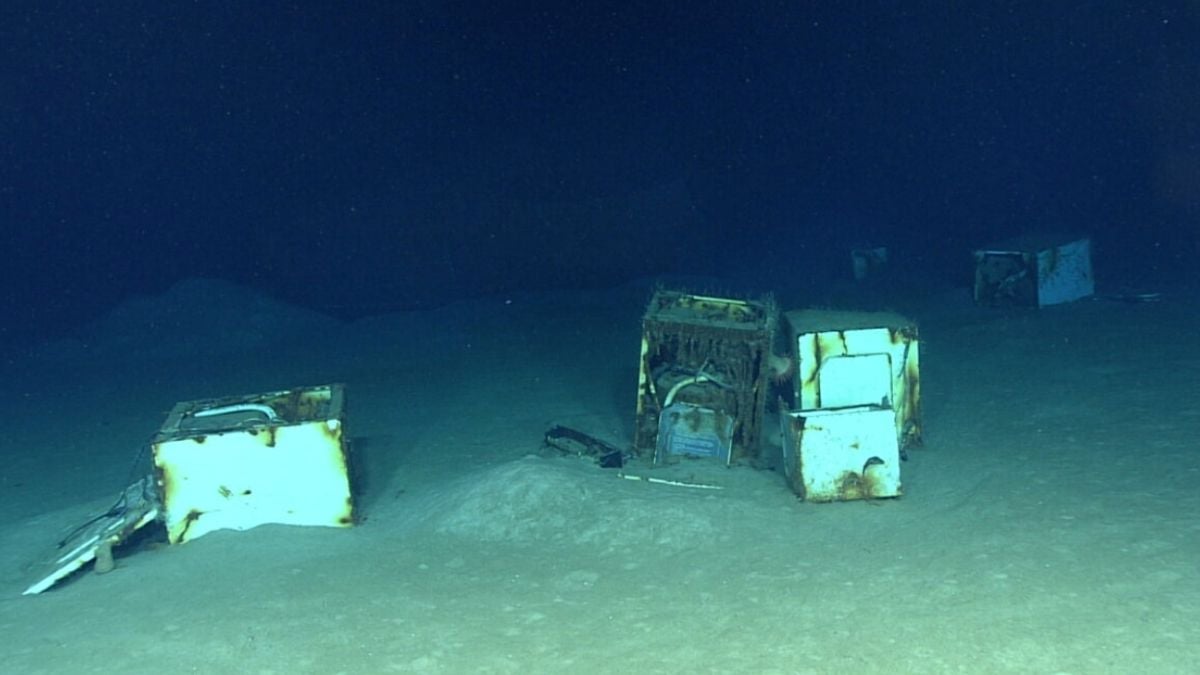
From the shadows of the Gulf's seafloor, an eerie landscape emerged.
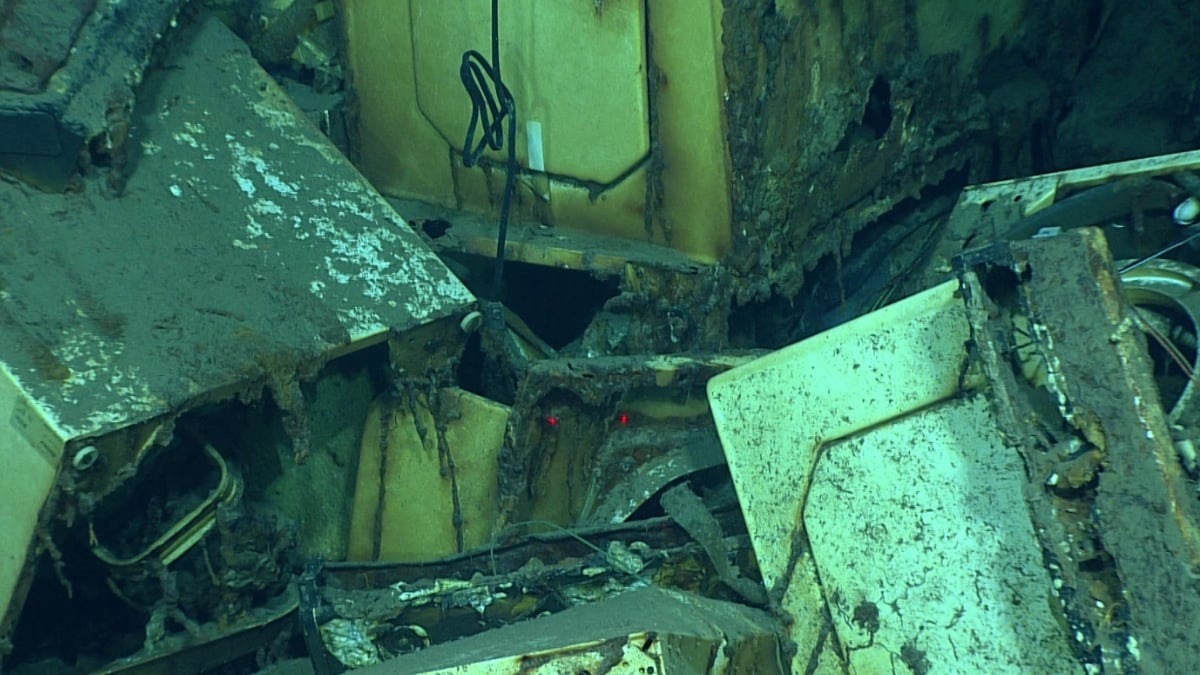
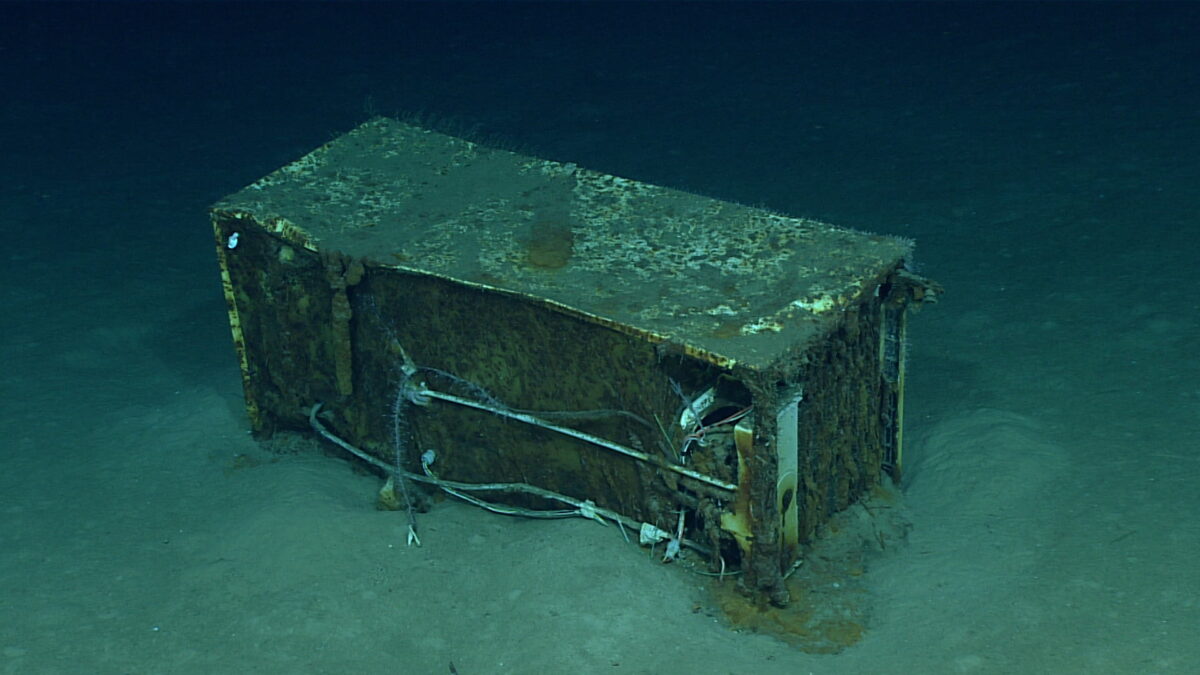
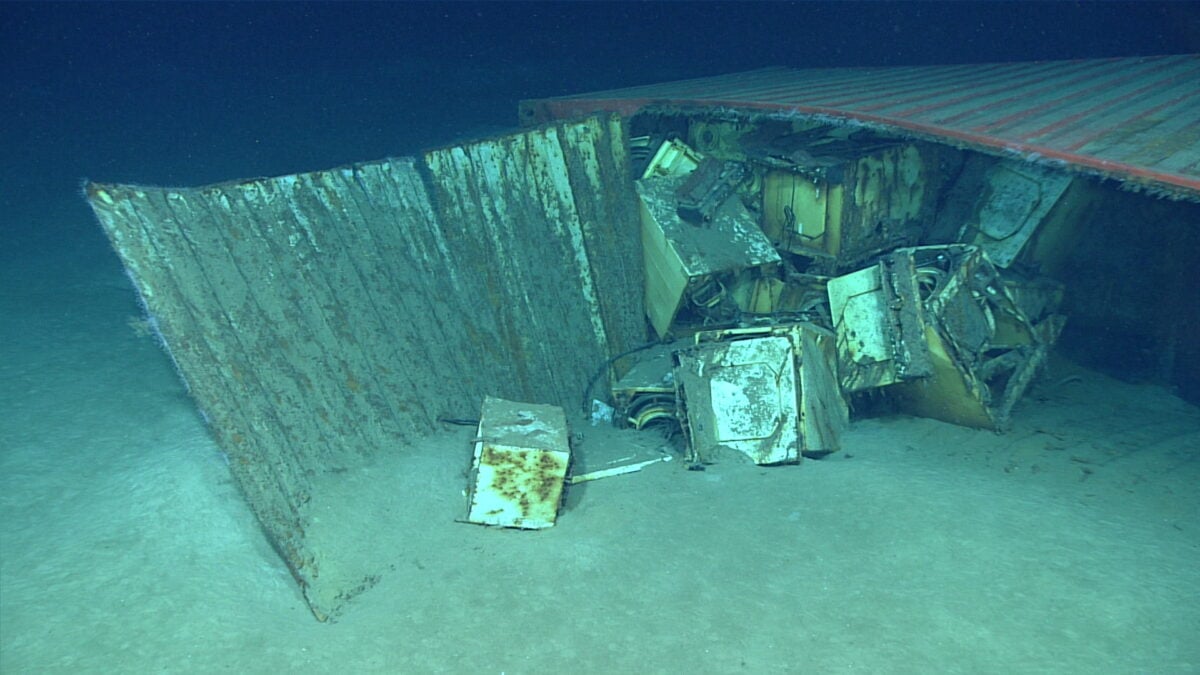
A barren, sandy plain littered with rusted, white cubes – some busted open with the impact of falling, their plastic intestines and copper arteries exposed.
The oddly unsettling imagery feels a little like the ROV has passed through into the deep sea's 'backrooms'.

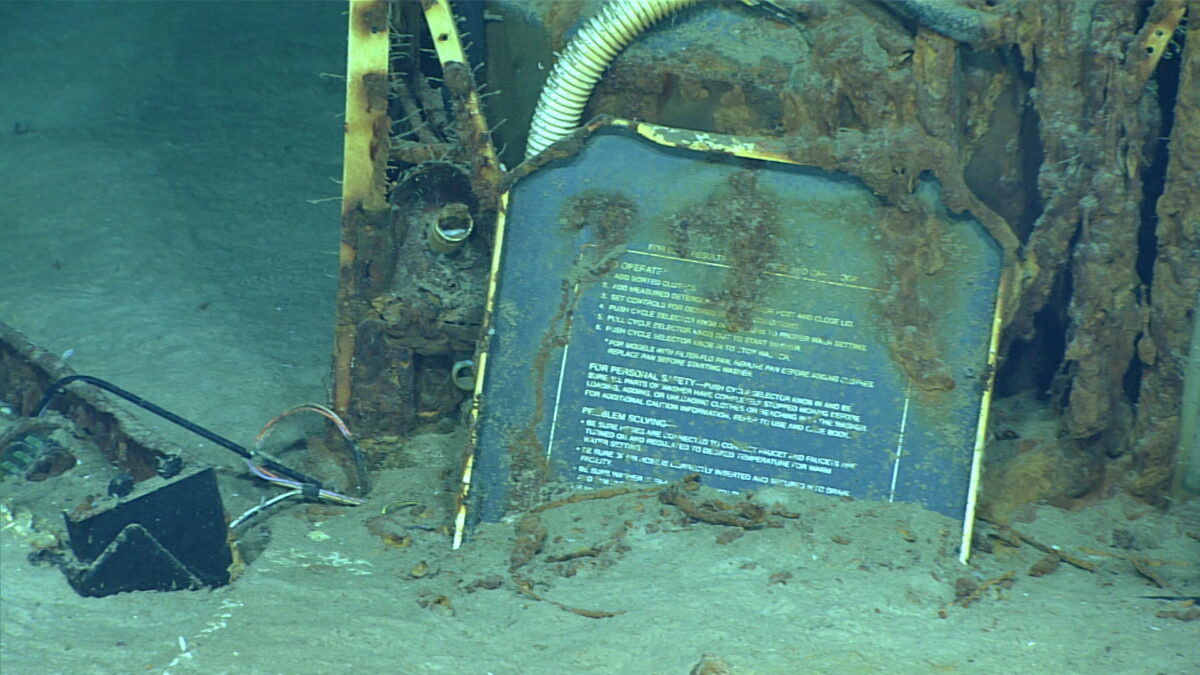
Zooming in on the scene, a metal tablet of text emerged, encrusted with sand and oxidized metal ooze.
Parts of this misplaced script can just be made out: "To Operate"; "For Personal Safety"; "Problem Solving…".
The dot points that follow each heading, however, were mostly illegible.

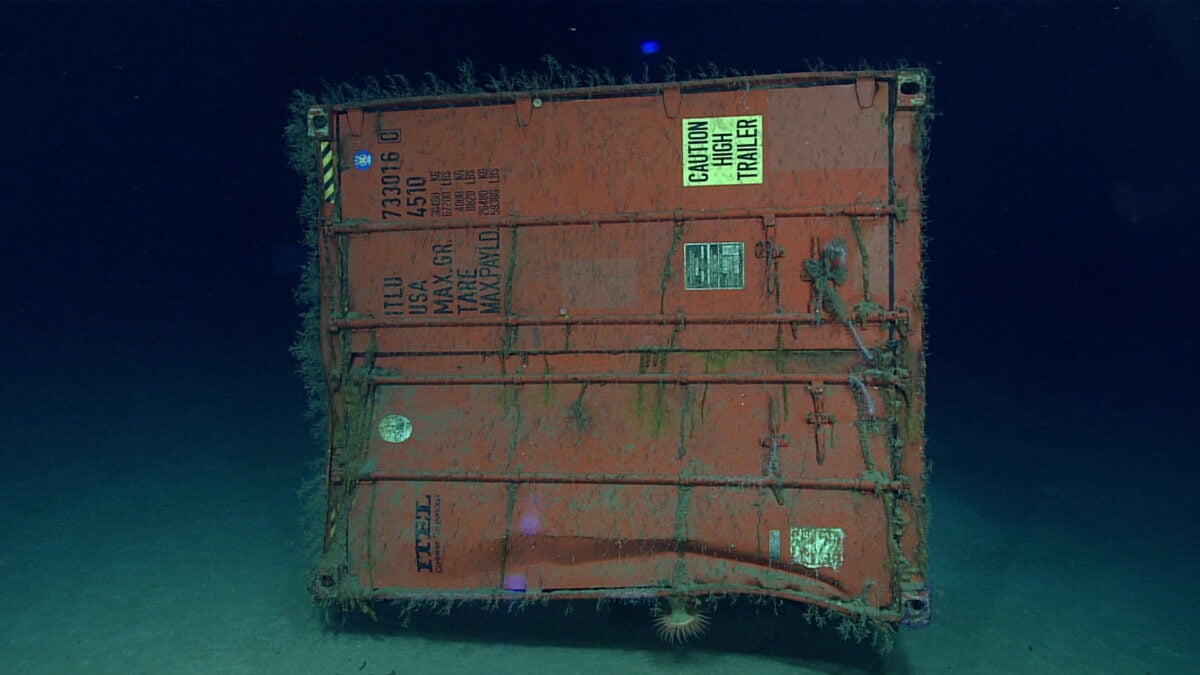
Then, looming out of the deep blue, the crew encountered the mother of all cuboids: a crumpled red shipping container, with a clutch of yet more white cubes spilling from its flayed side.
The cubes were a lost payload of white goods: fridges, freezers, washing machines. The inscribed tablet, a set of instructions for doing the laundry.
"I don't think the spin cycle is going to be working on it," one crew member commented, to an eruption of laughter.

A sticker on one of the appliances suggests it originated at General Electric's Appliance Park in Louisville, Kentucky.
"Other appliances were scattered nearby as well as further afield, forming what we had assumed was a 'debris field'," the official dive notes state.
"The container ID number was ITLU733016 [0], with a series of other identifying markings. The cargo appeared to include a variety of brands (RCA, GE, etc.) and was without packaging, suggesting that the cargo was going to be recycled."
But the container never made it across the waves.

"This is a bit surreal," a crew member mused as the ROV panned across the mod con graveyard.
"We are at 1.5 kilometers… in the deep sea. And here we are, moving through a field of just freezers, fridges and washing machines.
"You think of the deep sea as a fairly untouched place, but this is just a reminder that it really is not. We still do manage to have an impact on this very alien area and ecosystem."
The NOAA team speculated the container could have come off a ship in stormy weather.
According to World Shipping Council data, a few hundred to over 1,000 containers are lost at sea each year, out of approximately 280 million transported.

In a recent report of the 2025 figures, they note that severe weather increases the likelihood that freight boats will drop some cargo as they encounter rougher seas.
Even without storms, warmer-than-usual ocean temperatures can increase wave energy.
"Most people out there probably don't realize how much stuff ends up in the ocean," a NOAA crew member said.
"The research has suggested that lost containers could take hundreds of years to fully degrade in the deep ocean if not more," another crew member added.
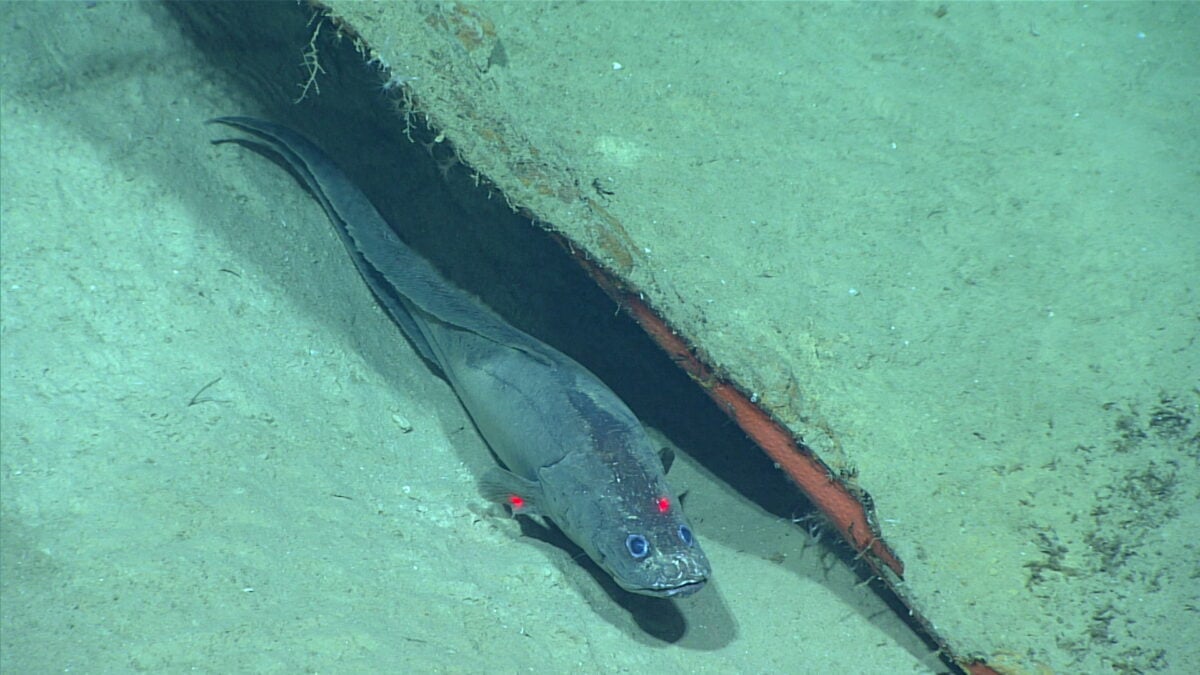
In the meantime, some animals have decided to call these bizarre benthic backrooms their home.
Corals and hydroids cling to the metal structures, their soft bodies rippling in response to the passing ROV.
A large fish even sheltered in the container's shadows.

The NOAA crew nicknamed the wreck 'Deep Clean'.
These kinds of ROV missions are part of NOAA's continuing work to explore the deep ocean.
ROV missions are operated by a crew of scientists and technicians aboard a ship on the water's surface, who remotely guide a submersible robot to the depths.
The ROV is connected to the ship by a long cable, through which commands are sent, and data (like the live video feed) is returned.
This is why we can hear the scientists reacting in real-time: their voices are recorded along with the live feed.
This allows them to take important audio notes on what they are seeing in real-time (although this particular clip was compiled from the raw, live footage, after the expedition).
The live nature of these ROV feeds also offers us a window into the crew's reactions to some of the weird and wonderful things they find while exploring these uncharted waters.