OpenAI Claims Its New Chips Can Outperform Nvidia Processors in Tests

OpenAI said that its new Jalapeno chips performed better than Nvidia Corp.’s current lineup during testing, underscoring the company’s progress developing AI processors in-house.
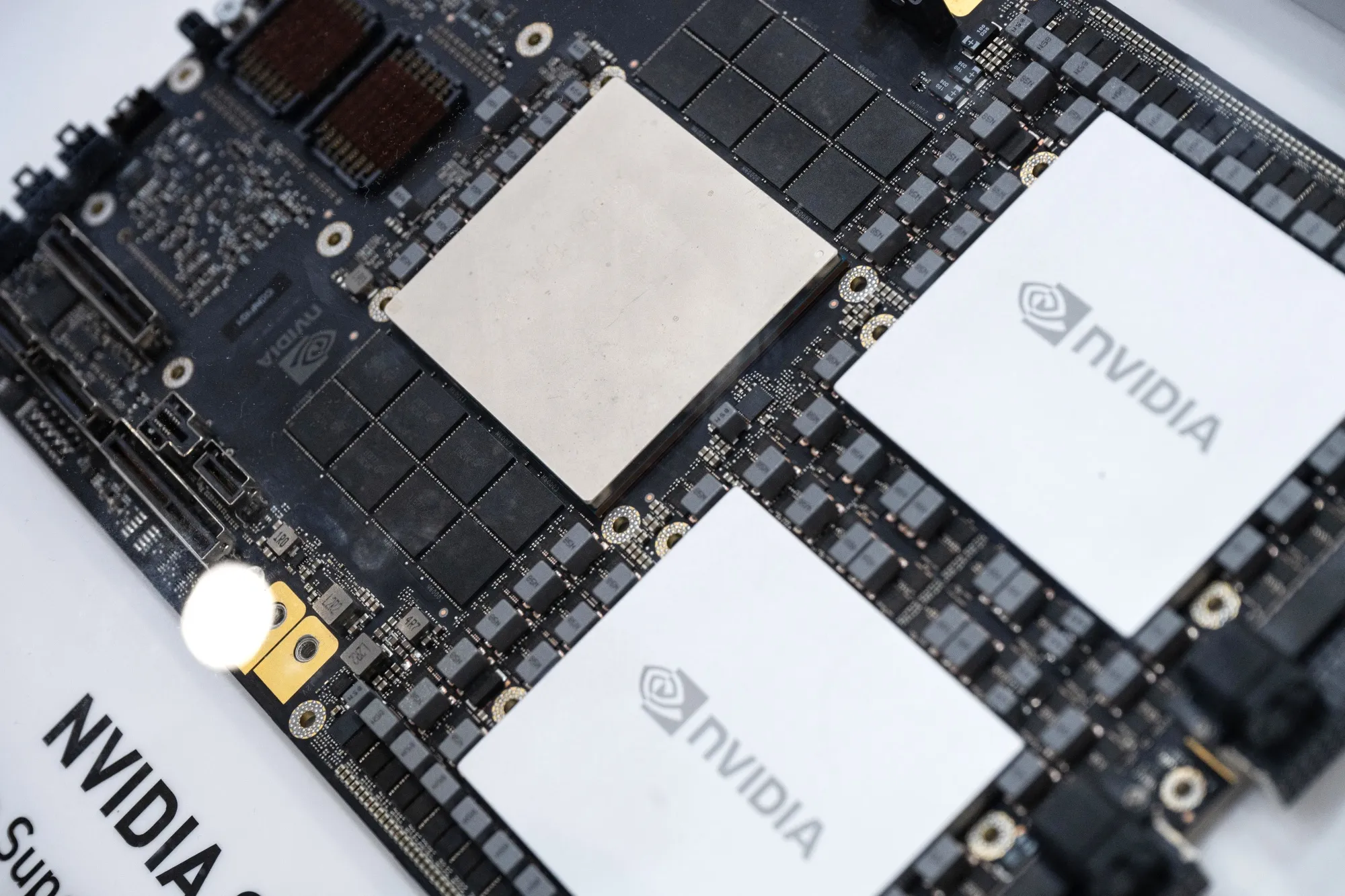
In the tests, the Jalapeno processor led in two categories: the amount of AI work it could handle per unit of power and its speed at returning responses. The semiconductor was measured against Nvidia’s GB300, which was the leading option on the public benchmarking system used in the test, OpenAI chip chief Richard Ho said in an interview.
The maker of ChatGPT plans to start using the new chips to support its artificial intelligence models later this year, part of a broader push to build its own AI infrastructure. It joins a stampede of companies working to develop homegrown AI chips — a field currently dominated by Nvidia.
OpenAI created Jalapeno in a partnership with Broadcom Inc., which makes custom chips for a variety of clients. The two companies, which announced their pact last year, touted the speed at which the processor was developed in June, saying it came together in record time.
Read More: OpenAI, Broadcom Unveil Chip to Run Models Faster, Cheaper
Typically, some chips are more powerful at running AI tasks and others are better at fast responses, but Jalapeno offers both, Ho said. OpenAI will determine which of its AI models will run on Jalapeno, he said, allowing customers to benefit by selecting options that offer either cost savings or better performance.
“In the lab, Jalapeno is showing performance both in the high-throughput domain, meaning it will be able to serve a lot of customers more cheaply, as well as the low-latency domain, meaning that for the customers that care about it, the response time will be really, really fast,” Ho said.
Because the chip is achieving strong results at low voltage — 700 watts — Jalapeno will allow OpenAI to save money when running its data centers, where power is a key cost, he said.
Jalapeno wasn’t tested against the new generation of Nvidia chips, Vera Rubin, which just began shipping. It’s also not designed for training AI models, an area where Nvidia technology excels. Jalapeno is intended for the inference phase of AI — the stage when models have already been trained and can begin responding to prompts and handling tasks.
Jalapeno’s speed benefits are such that OpenAI can achieve results previously only possible with chips that use a different type of memory and design. For example, OpenAI currently relies on Cerebras Systems Inc.’s technology for some of its models. But that kind of chip is best-suited to smaller models, Ho said.
Jalapeno, in contrast, can handle larger ones, he said. Still, OpenAI’s technology won’t replace providers like Cerebras anytime soon, Ho said.
“We have so much need for compute, which is why we signed up so many different providers,” he said. “That’s going to continue for a while.”
Ho will speak Tuesday at the Hot Chips conference at Stanford University. He said OpenAI wants to be public about what it’s done in order to help spur innovation in the AI chip space.
Other startups are working on similar ideas. Etched, which said last week that it raised funds at a $21 billion valuation, is starting to ship a low-voltage chip. And a company called MatX, founded by two alumni of Google’s silicon business, is working on a semiconductor that aims to achieve both high throughput and low latency.
OpenAI publicly tested its new chips using one of its smaller, open-source models, as well as third-party models from DeepSeek and Moonshot AI. Jalapeno delivered wider advantages on the Moonshot’s Kimi model, the largest one OpenAI tried it on. During internal tests, it also performed well running some of OpenAI’s large, advanced models that have yet to be released. That suggests the chip’s design “becomes more valuable as workloads grow larger and more demanding,” the company said in a blog post.
OpenAI said it used its own AI models to more rapidly develop the chip. A second version is already far along in the process. The company expects to tape out the chip — a final stage in design — in the “coming months,” Ho said.
OpenAI is already designing the concepts for the third generation, as the company looks to lower the costs of the vast amounts of AI infrastructure it’s constructing across the globe. “We’re at a cost level and a power level that will bring the infrastructure cost down,” Ho said. “This is step one.”
Even as OpenAI touts its own work and measures it against Nvidia, Ho took pains to note that it still regards that company as a key supplier of chips. “Nvidia is a really good partner, and we continue to need a lot of Nvidia,” he said.
Read More: Nvidia’s Trillion-Dollar Chip Market Has Friends and Foes Closing In

 点赞
点赞 收藏
收藏 点踩
点踩 分享
分享