Centering Humanity in Public Health: Reflections on Healing, Connection, and Care in Chile

Centering Humanity in Public Health: Reflections on Healing, Connection, and Care in Chile
August 19, 2026
Julia Naganuma-Carreras is a Rose Service Learning Fellow and MPH candidate in the Health and Social Behavior field of study.
San Felipe sits in the Aconcagua Valley in central Chile, a quiet town – not too urban, not too rural, and small enough that you can walk almost everywhere. Ringed by snow‑capped mountains, San Felipe is beautiful yet humble, the kind of place you might easily pass through on your way to a more obvious destination.
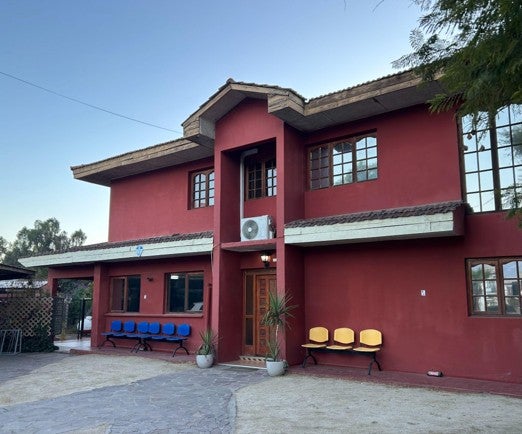
As a public health student, however, San Felipe held a particular draw: Centro de Desarrollo Humano y Bienestar SER (Centro SER), Chile’s only public complementary medicine center. My first visit to Centro SER was during a winter-session travel course at Harvard Chan, where we learned about Chile’s public health system, including recent reforms toward a more preventive, person-centered, community-based model. Among visits to the Ministry of Health, hospitals and primary care clinics, insurance offices, and Congress, Centro SER was where that vision of holistic, community-based care truly came into focus for me.
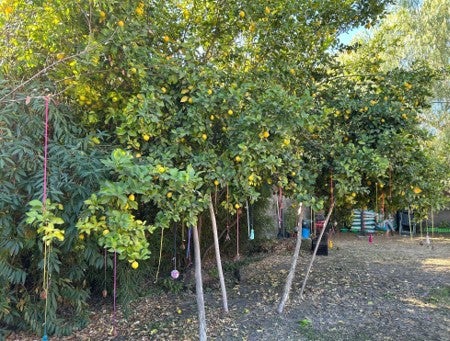
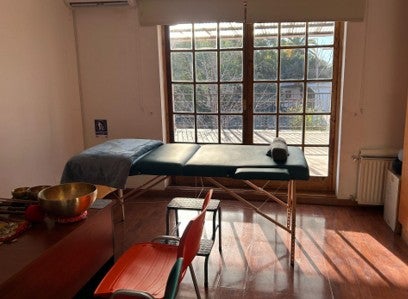
Stepping into Centro SER’s space, the air felt lighter, with a warmth that was new to me in a health care setting. Sunlight illuminated walls covered with art made by patients and staff, and a small garden of lemon trees brightened the backyard. As the staff opened their presentation with five minutes of yoga, I remember feeling a sense of recognition in my body. My mind traveled across the continent to my work with the Mandela Yoga Project, a Boston‑based nonprofit bringing a peer‑led yoga intervention into primary care for patients of color living with chronic illness. In the providers and the work at Centro SER, I recognized a shared commitment to push beyond the boundaries of the dominant medical model. I felt an immediate pull to this shared work and the possibility of learning and collaborating across our contexts.
Over the next several months, the possibility of returning to San Felipe moved from dream to reality, with support to go back as a Rose Service Learning Fellow. Through regular meetings with the Centro SER team, we laid the groundwork of my practicum project on the Estrategia para el Abordaje del Dolor Crónico No Oncológico, Centro SER’s integrative care model for patients with chronic pain. My interest in chronic pain had emerged recently and passionately, sparked by my work with the Mandela Yoga Project and group medical visits for patients with chronic pain at Cambridge Health Alliance. This focus felt like a natural extension of my path, bringing together my background in psychology, research on trauma and post-traumatic stress disorder (PTSD), and experience with mind-body interventions.
As a condition at the intersection of mind and body, chronic pain is deeply shaped by psychological processes, sociocultural context, and structural determinants. At Cambridge Health Alliance, I have seen how these intersections live in patients’ bodies and stories: many face multiple chronic conditions, overlapping mental health challenges, long histories of trauma, and the cumulative weight of social adversity. Yet despite the multidimensionality of their lived experiences, these patients confront a medical system that seldom recognizes the social, emotional, and structural dimensions that shape their pain, offering little more than medication, while the roots of their suffering remain unaddressed, underrecognized, or dismissed.
In Centro SER’s integrative, community-based approach, I sensed the possibility of another way. I prepared for my return to Centro SER set out to answer: What becomes possible for public health when systems value community wisdom, honor lived experience, and treat people’s humanity as central to care?
Back in San Felipe, Centro SER welcomed me with open arms and a deep sense of belonging: the staff embraced me as one of their own and patients invited me into their stories—patients whose lives, in many ways, mirrored those of the people I had come to know in Boston. They shared stories of childhood trauma, economic insecurity, domestic and sexual violence, the invisible labor of motherhood and caregiving, and the isolation of their pain. Many recounted encounters with a strikingly similar biomedical model before coming to Centro SER, describing a deep tiredness: of not being believed, of medications, and of pain itself – and of a slow erosion of trust in health care. At Centro SER, they spoke of newfound visibility and acceptance, shifts in self-perception and self-worth, relational healing, and moments of hope, joy, and rest. They talked about the power of being heard, believed, and understood: “When I come here and share, they listen. Because sometimes at home you are not listened to… You walk through the door with the mentality that you will feel better, and they will help you move forward—it has helped me a lot, emotionally and physically.”
As one provider told me about the work at Centro SER, “We are breaking patterns.” I saw this in patients’ stories of interrupting cycles of generational trauma, patriarchal norms, and internalized narratives. Beyond this, I also saw a broader process: challenging patterns in health care itself, changing how medical care is practiced, and slowly rebuilding trust in institutions among communities where that trust had been broken.
This change is neither easy nor fast. The coordinator of Centro SER spoke openly about structural constraints and pushing against institutional limits. “Despite the scarcity of resources,” she told me, “what we can be most proud of is that we’ve been able to manage them well enough to at least give these people dignified quality of care and not leave them abandoned. Because the people who are here have been abandoned by the system.”
In public health, we talk about “health for all” – about equity and access for those most marginalized, those rendered invisible and left behind when care is underfunded, narrowly biomedical, and not culturally responsive. As we face rising rates of chronic illness, widening inequities, and deepening disconnection, we urgently need more space for connection and dignity in health care.
My time at Centro SER brought this urgency into sharp focus, offering a concrete answer to my prior question: What becomes possible for public health when systems value community wisdom, honor lived experience, and treat people’s humanity as central to care? To that, I have seen that it becomes possible not only to support healing and improve health outcomes, but also to restore visibility, dignity, and trust for those the system has long left behind. In this work, I feel not only that I belong, but that I have found the work I am called to do.
About The Author
Julia Naganuma-Carreras
Rose Service Learning Fellow; MPH Candidate
Last Updated
Related News
-
Phthalates linked with high blood pressure in pregnant women
Environment & Climate Health August 18, 2026 -
August Server and Network Maintenance: Thu., 8/20, 7pm – 1am
August 17, 2026 -
Frontiers in Health & Happiness Season 3 Episode 5 Now Streaming
August 17, 2026
Get the latest public health news
Stay connected with Harvard Chan School
Unleash your potential at Harvard Chan School.
In addition to our degree programs, we offer highly targeted programs through our Advanced Learning Academy, directed and taught by Harvard faculty.

 点赞
点赞 收藏
收藏 点踩
点踩 分享
分享