Paying Attention to Your Body Could Actually Change Your Immune Response

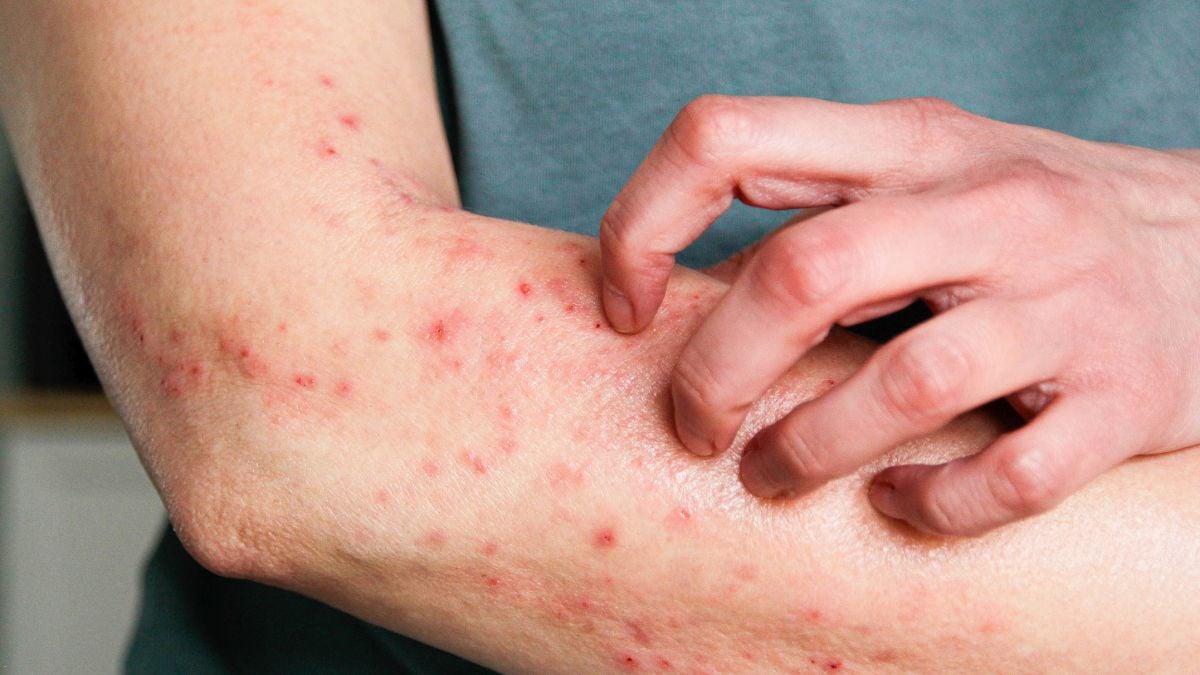
"Mind over matter" is a popular mindset for overcoming hardship.
Tough it out. Ignore the discomfort. Override the pain, and you'll come out the other side stronger than before.
Well, it may surprise you to learn that ignoring discomfort may not always be the best approach to the physical signals sent to you by your own body.
According to a new paper, focusing attention on an inflammatory sensation seems to help the body regulate its immune response – and deliberately focusing attention elsewhere seems to have the opposite effect.
The findings, writes a team led by neuroscientist Liron Rozenkrantz of Bar-Ilan University in Israel, "establish a causal link between attention and immune regulation in vivo, suggesting that processes often considered autonomously regulated, such as inflammatory responses, are influenced by the voluntary allocation of attentional resources."
The paper has been published in Nature Human Behaviour.
Inflammation is often the body's first line of defense against infection or injury. Your immune response kicks into gear, mobilizing around the affected site, producing heat and swelling, and recruiting immune cells to tackle the threat.
At the same time, your nervous system sends signals to your brain, letting you know that something is awry. This can feel like itching or burning.
Previous human studies have shown that directing your attention away from that sensation can reduce how unpleasant it feels on a subjective level.
But nobody had tested whether that redirection had an effect on the immune response itself.
To find out, the researchers turned to the standard histamine skin-prick test used to identify allergies.
Histamine produces a small allergic-type reaction: a raised, swollen area called a wheal, surrounded by redness called a flare. Both can be measured as the reaction develops over about 20 minutes.
In the first experiment, the researchers gave 37 healthy volunteers the prick test on two separate occasions.
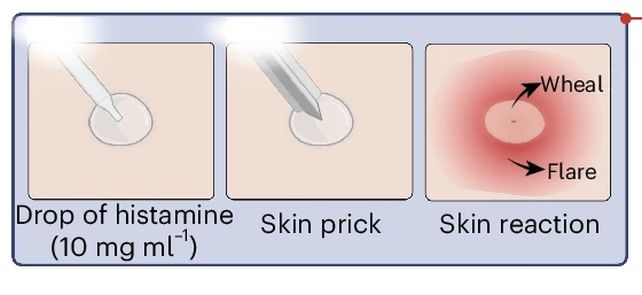
In one session, participants were instructed to pay close attention to the sensations coming from the inflamed patch of skin, and in the other, they were told to direct their attention elsewhere, using engaging videos.
A second experiment involving 20 participants was conducted the same way, but changed the focus – an important variable that allowed the researchers to test whether it was the attention, rather than the specific thing that they were focusing on, that affected the outcome.
Here's where things got really interesting.
The intensity of the discomfort participants experienced was consistent with those earlier studies. Participants reported stronger inflammation-related sensations when they focused on the inflammation than when they were distracted.
But the important part – the actual immune response – appeared to be better regulated when participants focused on the sensation.
In the first experiment, the average size of the wheal in the focus condition was just 3.5 millimeters, compared with 5.0 millimeters for the distraction condition – and the surrounding flare was also smaller, 10.6 millimeters compared to 14.0 millimeters.
Roughly 90 percent of participants showed more inflammation when distracted, and the wheal and flare responses were about 1.5 times larger on average in the distraction condition.
In the focus condition, the wheal also showed signs of settling sooner. After 20 minutes, nearly 90 percent of participants in the focus condition had a wheal that was stable or shrinking, compared to 46 percent in the distraction condition.
Then, in the second experiment, participants were shown abstract shapes. In one session, they were instructed to use the shapes as reminders to focus on the irritated skin. In another, they focused on the shapes themselves, pondering whether they could exist in the real world.

The effects were pretty much the same. Inflammation was about 1.6 times smaller with internal attention, and again, around 90 percent of participants showed the larger inflammatory response during distraction.
So the next question is – why, though?
And that's where the reported differences in discomfort proved useful.
The researchers hypothesized that paying attention to the sensation increases the importance of the signal to your brain, while supplying it with information about the irritation. In turn, this allows the body to regulate the immune response with greater precision.
To test this, the researchers repeated the test while using lidocaine to numb the area – and, indeed, the effect associated with attention became weaker.
However, it didn't disappear entirely. The swelling was larger than when people paid attention with intact sensation, but it was still smaller than when they were distracted.
This suggests something else was going on. After monitoring the autonomic nervous system in the participants, the researchers found no differences in measures including heart rate, skin conductance, and skin temperature. But they did find a difference in heart-rate variability.
Heart-rate variability is an indirect indicator of parasympathetic, or vagal, activity, and the vagal system helps regulate inflammation. Crucially, the increase in heart-rate variability associated with internal attention persisted even when sensation was dulled with lidocaine.
So the researchers think that paying attention does two things. It says to the brain, "Hey! Listen!" But it also may engage some neural pathways involved in inflammation regulation.

Now, this is very far from meaning that we can think our way out of serious illness. The experiment only involved 57 people, and a tiny, relatively insignificant, and temporary immune test.
Related: A Week-Long Meditation Retreat Produced Psychedelic-Like Brain Changes, Study Finds
The researchers don't yet know whether the effect applies to infection, chronic inflammation, autoimmune disease, or anything beyond this particular experimental skin reaction.
But it does suggest something interesting about attention. What we pay attention to may change how we experience the world, but the study suggests that it may also play a hidden role in how the body responds to that sensory information.
And that could be something scientists can work with to understand how the body works, and how to treat its ailments.
"Together," the researchers write, "these findings implicate subjective sensory experience as an active contributor of immune regulation and extend predictive and allostatic models of brain-body interaction to include attention as an active regulatory component."
The findings can be read in Nature Human Behaviour.

 点赞
点赞 收藏
收藏 点踩
点踩 分享
分享