How would a non-zero photon mass alter near-field wavefront metrology fringe spacing?
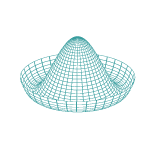
I am looking into the experimental bounds of the Proca Equation regarding a potential non-zero photon rest mass ((m_0 > 0)).Hypothetically, if a photon carries a discrete relativistic mass payload derived from (m = E/c^2), how would this localized energy-mass footprint affect a pre-determined, highly coherent electromagnetic wavefront grid during an intersection?Specifically, would the localized field-coupling distortion cause a mathematically predictable, sub-nanometre spatial displacement (widening or narrowing) of the fringe gaps on a detector screen? Has any near-field scanning metrology experiment attempted to map fringe variance across a strict frequency gradient (from infrared to gamma-ray) to isolate a structural deviation from standard Maxwellian equations?Any insights into the mathematical predictions of wavefront deformations under a Proca framework would be highly appreciated.

 点赞
点赞 收藏
收藏 点踩
点踩 分享
分享