Screening newborns for cancer risk

Screening newborns for cancer risk
Blood samples routinely collected at birth could be used for genetic testing, potentially helping 1,000 children a year, study suggests
Mass General Brigham Communications
August 18, 2026
5 min read
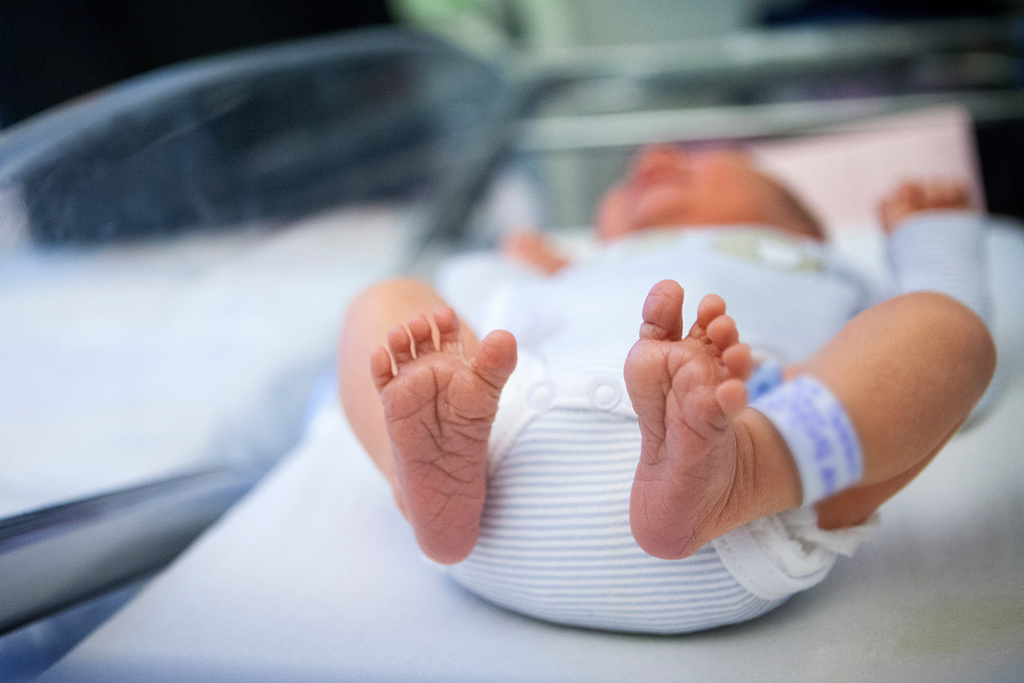
Genetic testing added to routine newborn screening could identify some babies at increased risk of developing cancer before symptoms appear, new research suggests.
The large population-based study led by researchers at Dana-Farber/Boston Children’s Cancer and Blood Disorders Center and Mass General Brigham was published in Nature Communications.
Newborns in the U.S. routinely undergo screening for a group of rare, treatable disorders by applying biochemical tests to a few drops of blood collected from a baby’s heel at about 24 hours after birth. Currently, cancer risk is not included because it would require DNA sequencing. But researchers say it may be possible to use the same blood samples to detect new or inherited mutations that predispose some children to cancer, much as genetic testing can identify adults at high risk for cancers such as breast or colon cancer.
“Genomic newborn screening, the sequencing of DNA extracted from heel-stick samples, provides a platform for identifying children at high risk for early cancer in order to institute vetted surveillance protocols,” said co-senior author Richard B. Parad, Harvard Medical School professor of pediatrics at Brigham and Women’s Hospital and director of the Neonatal Genomic Medicine Program in the Mass General Brigham Department of Pediatrics. “Through the collaboration of newborn screening programs, geneticists, and oncologists, preventive care can be provided to children who would otherwise remain undiagnosed until symptoms of their cancer developed.”
“Genomic newborn screening, the sequencing of DNA extracted from heel-stick samples, provides a platform for identifying children at high risk for early cancer in order to institute vetted surveillance protocols.”Richard B. Parad
“I take care of families who carry genes associated with increased risks of childhood cancer —they have a predisposition syndrome that ‘runs’ in the family,” said Lisa Diller, HMS professor of pediatrics at Dana-Farber Cancer Institute and Dana-Farber Vice Chair of Pediatric Oncology. “When a new baby is born in that family, we test the child. If that child has the familial mutation, my job is to make sure that if that child develops a tumor, or even a pre-tumor, we catch it early, which may allow for less toxic therapies and better outcomes.”
In the study, Diller — in collaboration with Parad and Arindam Bhattacharjee, HMS assistant professor of pediatrics at Brigham and Women’s and expert in newborn screening at Mass General Brigham — analyzed archived newborn dried blood spots from 1,948 children born in Michigan who later developed a solid tumor or brain tumor by age 8. Using a panel of 11 genes linked to pediatric cancer predisposition syndromes, they found pathogenic or likely pathogenic variants in 132 children, nearly 7 percent of the group. The work is among the first and largest population-based studies to assess the feasibility of detecting cancer risk at birth through DNA sequencing based newborn screening. As a public health intervention, implementing such a program could help identify 1,000 children annually in the U.S. who would benefit from early detection and treatment.
The findings suggest that some children with cancer could be identified at birth with a potentially harmful DNA sequence change in a cancer risk gene. If followed with syndrome-specific surveillance protocols aimed at catching cancers earlier, developing tumors may be easier to treat and treatment is less likely to cause lasting harm. Overall, the researchers estimate that about 1 in 27,000 newborns would develop an early onset cancer that could have been predicted through genomic newborn screening, a frequency in the range of some conditions already included in newborn screening programs.
The strongest signals were seen in cancers already known to have clear inherited risk links. All six children in the study who developed medullary thyroid carcinoma had a germline RET mutation. Forty percent of children with retinoblastoma, the most common eye tumor of childhood, had a germline RB1 mutation. Across several other cancers, including choroid plexus carcinoma, adrenocortical carcinoma, pineoblastoma, and medulloblastoma, 11 to 30 percent of cases had a detectable mutation in one of the genes studied. In 130 of the 132 children with a mutation, the gene was known to be associated with the type of tumor they later developed.
Children with these cancer-predisposing mutations tended to develop cancer much earlier than other children in the study. The median age at diagnosis was 14 months for children with a detected mutation, compared with 32 months for children without one, underscoring how quickly these cancers can appear and how valuable advance warning could be.
Retinoblastoma offers a particularly clear example of how this information might change care. The researchers identified RB1 mutations in 69 children, 68 of whom later developed retinoblastoma. Among children with retinoblastoma, those with an RB1 mutation were diagnosed at a median age of 9 months, compared with 23 months for those without a detected germline RB1 mutation. If these children had been identified at birth, they could have undergone regular eye exams to detect tumors earlier, potentially improving vision outcomes and reducing the need for intensive treatments such as eye removal, chemotherapy, or radiation.
“I have seen this happen,” Diller added. “Finding an early tumor or pre-tumor saves that child from a more difficult-to-treat and sometimes fatal diagnosis.”
These findings provide strong evidence that selected pediatric cancer-risk genes could be valuable additions to expanded newborn screening, particularly when early detection can lead to closer surveillance, earlier diagnosis, and less toxic treatment. The Mass General Brigham team continues to work toward how to implement cancer risk gene DNA sequencing workflow in public health newborn screening in order to channel identified newborns into clinical surveillance protocols at Dana-Farber.
Funding for this study was provided by a “Traditional Bridge Grant” from the Bridge Project, a partnership between the Koch Institute for Integrative Cancer Research at Massachusetts Institute of Technology and the Dana-Farber/Harvard Cancer Center. Initial support also came from Harvard Radcliffe Institute programs.

 点赞
点赞 收藏
收藏 点踩
点踩 分享
分享