Tesla Nears Unveiling of Radical New ‘Flying’ Roadster

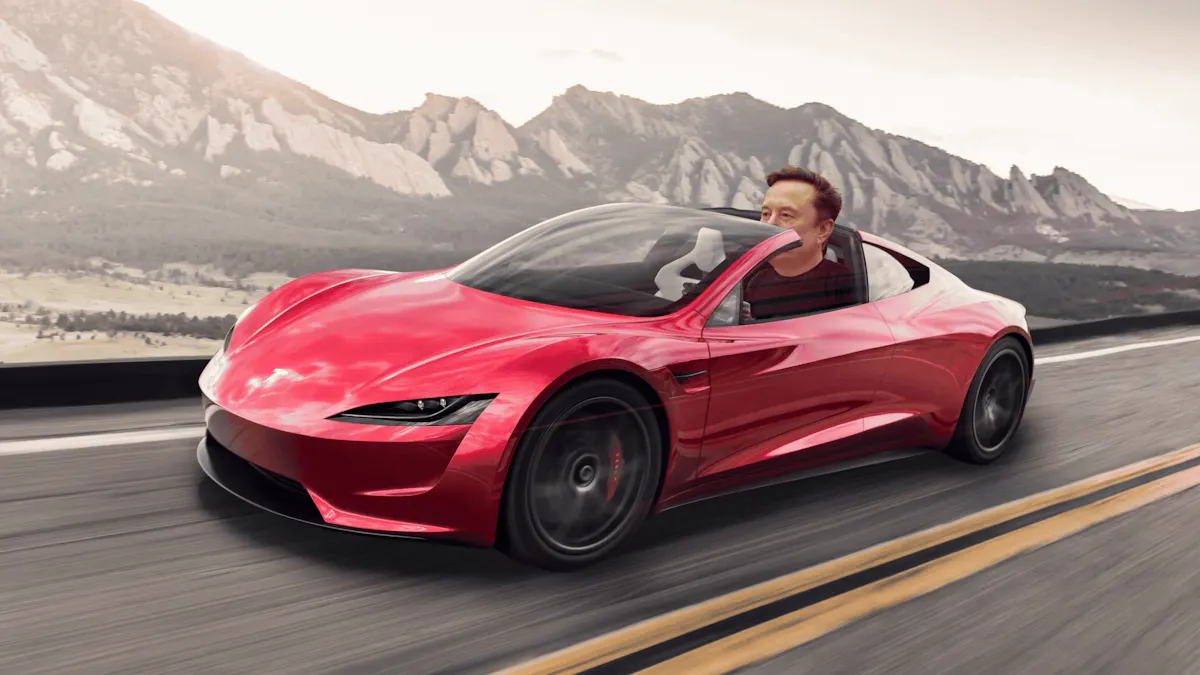
Between Elon Musk’s promises of supernimble robots and interstellar colonization, the billionaire has spent plenty of time over the last decade hyping up another ambitious effort: the next version of the Roadster, the sporty electric vehicle that first put Tesla on the map. At first, he said he wanted the vehicle to be the fastest production car in the world. Then he said he wanted it to be “crazier than” every fictional James Bond car combined. And he wanted the car to be able to fly.
Musk’s shifting directives sent Tesla designers down a rabbit hole that lasted years, delaying the car’s release. The company first showed a prototype design of the vehicle and began accepting reservations for it in 2017. Since then, it has chucked that design completely and come up with a new one, which it hasn’t publicly revealed. That could change soon.
Tesla is currently planning an unveiling of the new design, which could happen as early as this month, three people familiar with the matter said. That event will include an elaborate stunt showing off the flying capabilities of a limited edition version of the Roadster, the result of a collaboration between Tesla and SpaceX, Musk’s rocket company. The demonstration is expected to take place at SpaceX’s testing site in McGregor, Texas.
As recently as a few months ago, Tesla’s plans for the demonstration were like something out of a science fiction movie. They involved showing the vehicle racing onto a magnetized roller-coaster–like ramp and driving upside down before righting itself and hovering in the air, three people said. Previously, Musk has said the vehicle’s ability to fly would come from cold gas thrusters, developed with SpaceX.
Still, there’s uncertainty about what Tesla will actually show at the event. Tesla previously pushed back the Roadster demonstration after previewing it to Musk and has since scaled back some elements, one person said. Musk told some Tesla staffers in recent weeks that the demonstration will be difficult to pull off and could go awry, but it will be entertaining regardless, according to one person.
It couldn’t be learned whether Tesla will show the event live or share recorded footage. All spectators at the event will be stationed several hundred yards away from the vehicle because of potential damage to their eardrums, the three people said. Cold gas thrusters generate high-pressure gas that can create significant noise and vibrations, according to Jae Wook Kim, a professor of aerodynamics and aeroacoustics at the University of Southampton. As a result, the car will be remotely operated without anyone inside the vehicle, the three people said.
Tesla could use some reinvigoration at the moment. Its stock has lost nearly a quarter of its value this year, weighed down by the company’s other initiatives in robotics and self-driving taxis, while the Nasdaq has risen 15%. As Tesla’s first vehicle, the Roadster holds a special place in the hearts of many superfans.
But the new versions of the vehicle are unlikely to contribute meaningfully to Tesla’s business. The limited edition version of the car Tesla is planning to demonstrate in Texas won’t be street legal and will likely cost hundreds of thousands of dollars, if not millions, making it a distinctly niche product. The standard version is also likely to be very expensive (the original Roadster sold for around $100,000).
Tesla has internally discussed allowing some Tesla superfans to purchase the version from the demonstration, which will have SpaceX branding, through a program similar to Ferrari’s XX Programme, which allows owners of track-only vehicles to drive the race cars under supervision, one person said.
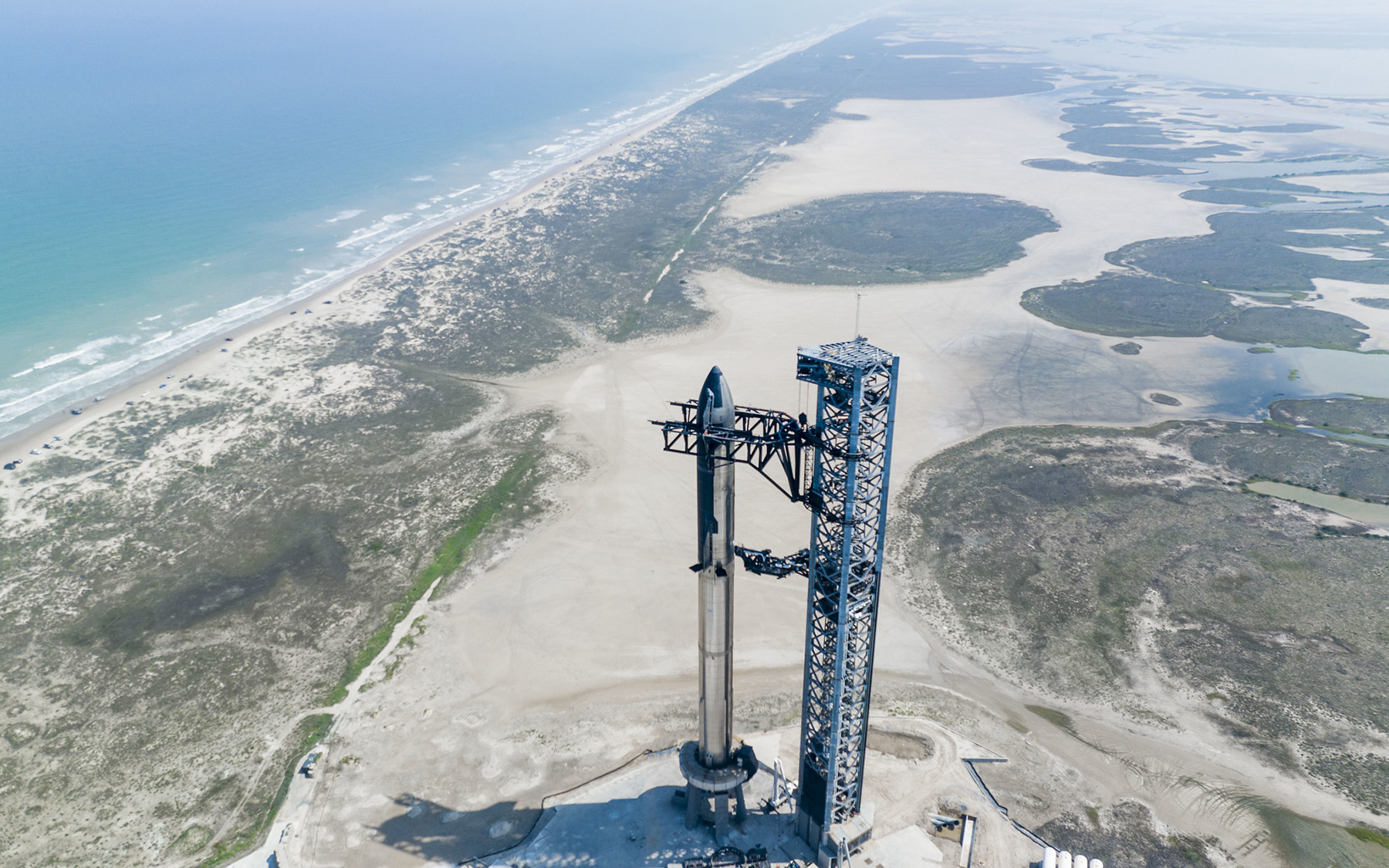
Still, the Roadster could serve as a symbolic bridge between two parts of Musk’s empire, Tesla and SpaceX. A formal merger between the two companies seems like a growing possibility as the companies have become increasingly intertwined, with both companies collaborating closely across AI and robotics. On an earnings call last month, Musk seemed to half-heartedly resist questions from Wall Street analysts about when such a deal could happen, saying such an event would require the “appropriate process.” The two companies are also collaborating on the construction of Terafab, a chipmaking facility that also involves Intel—a reflection of how both Tesla and SpaceX have come to prioritize the development of AI.
There’s still no official date for when someone who has reserved one of the new Roadsters can expect to take delivery of it. But finally rolling out the vehicle would give Musk an opportunity to show that Tesla still cares about its legacy—selling cars to people—even as he goes all in on AI and the other projects he hopes will define its future.
Little has been known publicly about the Roadster program since the company unveiled a prototype in 2017 and missed its 2020 deadline for deliveries. Tesla has since delayed the Roadster’s timeline at least eight times. Conversations with 10 people connected to the development of the vehicle in recent years show how the concept for it has steadily morphed from a conventional sports car into a vehicle Musk wants to be able to fly.
In the annals of Tesla and Musk, the Roadster is foundational to the reputation of both. Musk’s desire to personally own an all-electric sports car is partly what drove him to invest in Tesla.
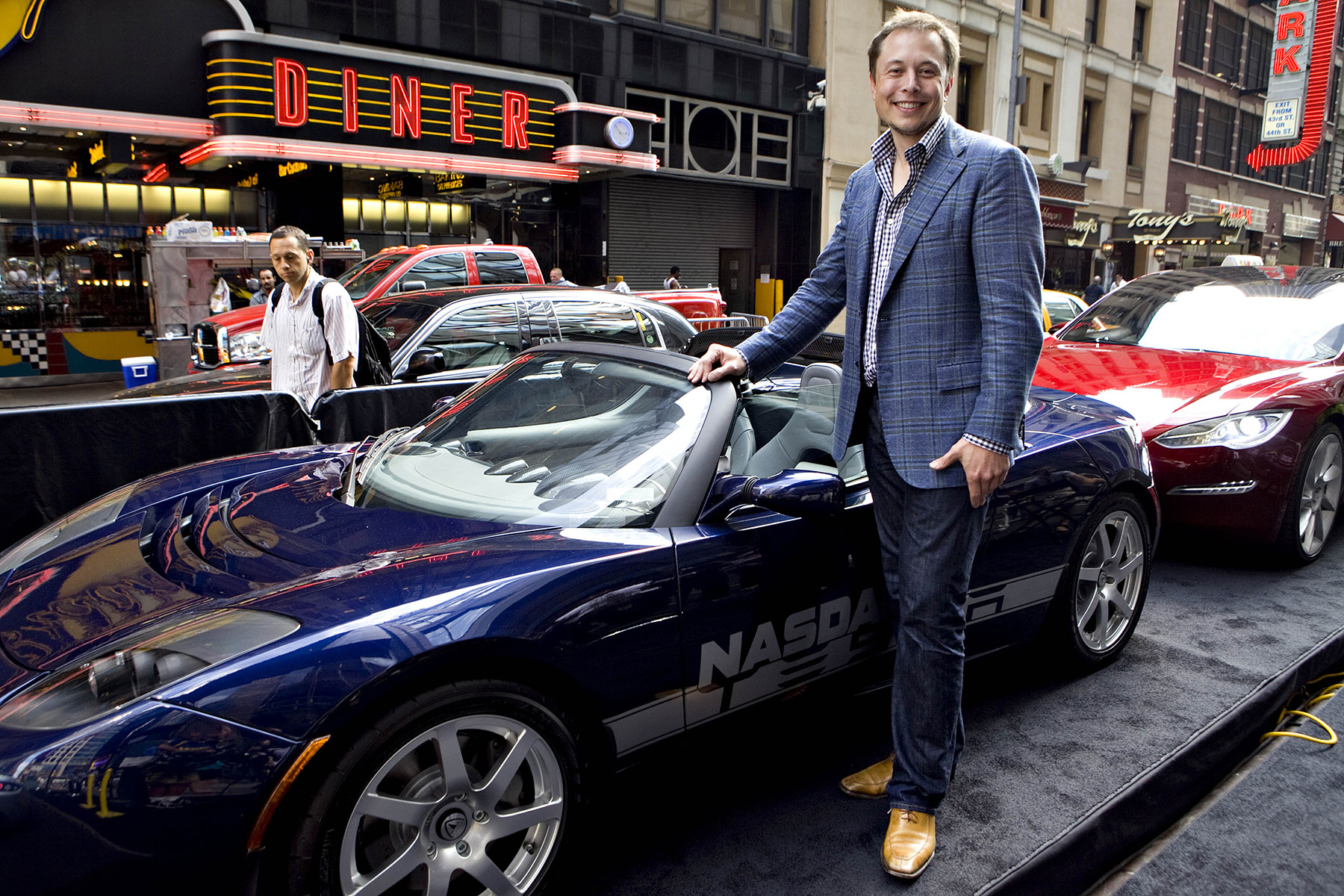
He became CEO of the company a year after it unveiled the hot rod, built on the chassis of a Lotus Elise capable of going from 0 to 60 miles per hour in 4 seconds. Tesla began deliveries of the car in 2008 and continued to produce it for four years before shifting its focus to the Model S sedan.
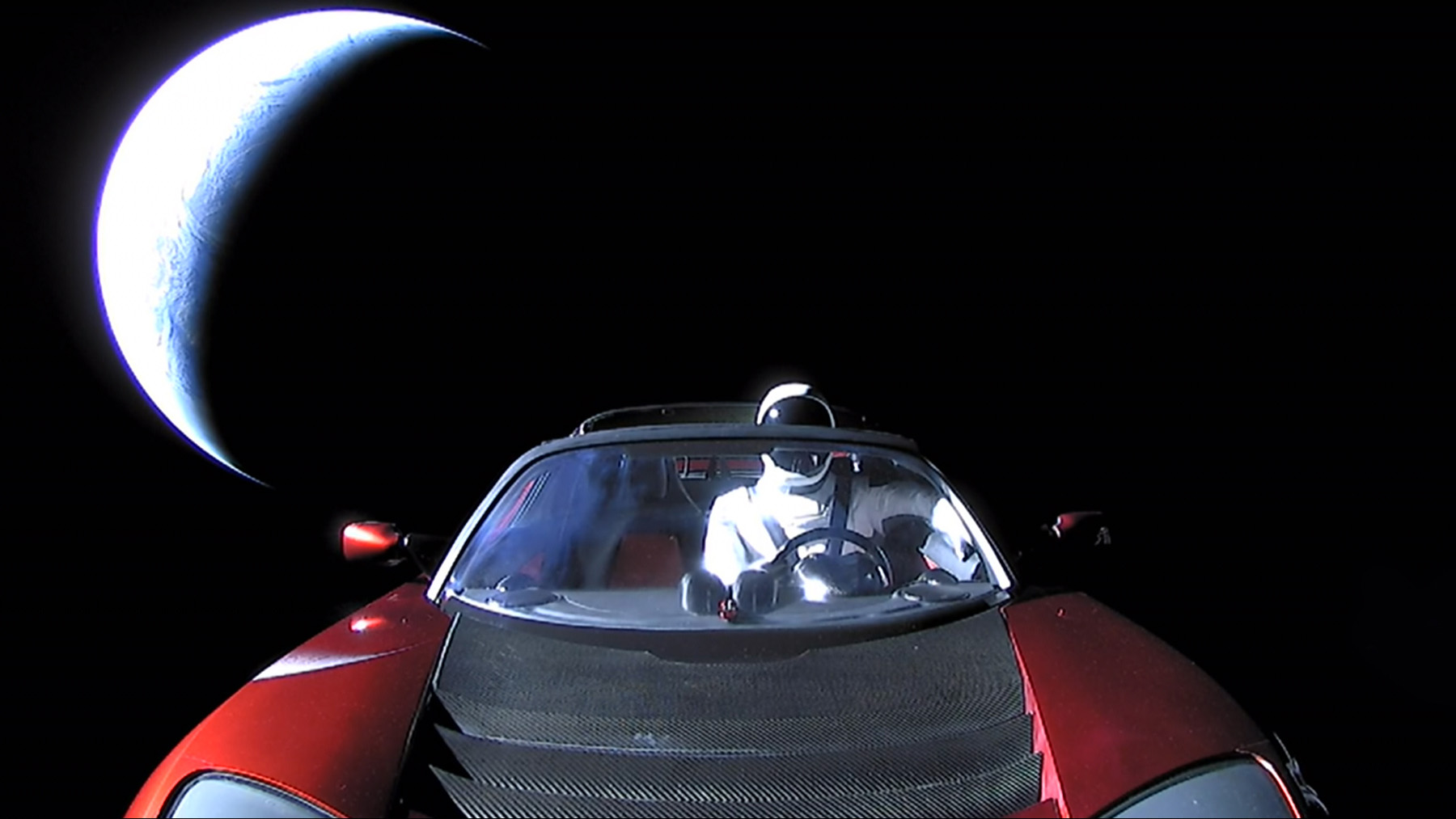
The original Roadster put Tesla on the map, drawing comparisons to the Batmobile and earning a place on Time magazine’s Best Inventions of the Year in 2006 and 2008. And while Tesla sold only a few thousand models, they helped pave the way for the company’s 2010 initial public offering, and the Roadster had a special place in Musk’s own heart. In 2018, Musk strapped his own cherry-red model onto a SpaceX rocket and launched it into orbit around the sun.
In the years to come, Tesla released increasingly mass-market cars, including its $35,000 Model 3. But behind the scenes, it began designing a new version of the Roadster a few years after it stopped production of the sports car under Andy Caponetti, the company’s senior manager of mechanical design and new programs.
In November of 2017, Tesla surprised fans at an event for its upcoming semitruck when Franz von Holzhausen, the company’s design chief, sped onto the set in a completely revamped Roadster. The sleek sports car had two full-size front seats and two smaller seats tucked behind them, a removable glass roof, and a low-slung, aerodynamic body designed for extreme performance. At the time, Musk said the next-generation Roadster would be the fastest production car ever made and would be available for deliveries in three years.
Even very early versions of the vehicle boasted ambitious plans. Ahead of the 2017 demo, Musk told engineers he wanted every body panel to adjust independently to increase aerodynamics and customize the car to each driver, one person said.
After the company blew past the 2020 delivery deadline—a delay partly attributable to the Covid-19 pandemic—Tesla made the project a lower priority so it could focus on products more essential to its revenue, two people familiar with the matter said. Musk has said the project had to come after the “things that have a more serious impact on the good of the world.” And ever since, the Tesla team dedicated to the Roadster has been a small one, working with relatively limited resources, two people said. In 2021, Tesla released the Model S Plaid, which broke speed records at the legendary Nürburgring Nordschleife racetrack and gave Tesla fans a high-performance alternative to the Roadster.
In 2022, the Roadster project came back into focus. Two groups within Tesla’s design team began investigating very different versions of the vehicle, the two people said. One group was tasked with imagining what the vehicle could look like if it was built on top of the four-seater Model S Plaid’s structure and components—creating essentially a stretched-out version of the 2017 Roadster. The group tore apart a Model S to study intimately how its structure could incorporate the 2017 Roadster design and produced some early visualizations.
Another group worked on designing the car from scratch, aiming for a more ambitious reimagining. Instead of centering it on a traditional metal frame, they created visualizations based on an ultralightweight carbon fiber tub, similar to models for top-of-the-line performance vehicles and professional race cars.
“There was a group in the studio that really wanted it to live. We had some of the best engineers just trying to build a really compelling product,” one person said. “We had limited resources and we were fighting this fight of: How do we justify this to get exec-level resources?”
When presented with the two options, Musk picked the carbon fiber tub version and told staff to “do it correctly or not at all,” according to one person familiar with his comments. Musk’s choice meant abandoning the idea of building the Roadster on the underlying structure and components of existing Tesla cars and instead developing an all-new hypercar, requiring expertise the company largely lacked at the time.
To assist with the effort, Tesla brought on several engineers from Italy who had worked at luxury car companies, including Stefan Nothdurfter, a former head of engineering at Lamborghini.
At several points in the Roadster program, Musk met with the team on a monthly and at times weekly basis to review designs, five people said. As the plans for the Roadster became more ambitious, Musk gave the team working on it a new directive: He wanted it to be able to fly.
“He said it needed to be way crazier,” one person who worked on the project recalled. “We were looking at each other like, ‘How the fuck will we make this thing fly?’”
Another person with knowledge of the program said the team’s definition of what it means to have the vehicle fly evolved over time.
“The first question between engineers was, ‘What does flying really mean?’” the person said. “The bar was always very high, of course, but our idea of what that would look like became more conservative over time. We started off thinking we were almost making an aircraft and ended up with something closer to hovering.”
Tesla decided to incorporate cold gas thrusters, a technology commonly used with rocket ships, to propel the vehicle into the air. In 2024, Tesla staff began working closely with some engineers on SpaceX’s Starship propulsion team, including the vice president of Starship engineering, Bill Riley, a Ford and General Motors veteran, two people familiar with the matter said.
Within SpaceX, the Roadster project was something a handful of engineers worked on in addition to their primary work, one person that worked on the project said. SpaceX had experience building cold gas thrusters, but the larger engineering burden of that aspect of the Roadster fell on the Tesla team. One of their big challenges was figuring out how to make a car designed to drive on the ground stable enough to lift off and maneuver through the air, they said.
At one point, Tesla explored designs for the vehicle inspired by one of Holzhausen’s favorite vehicles, the Lamborghini Countach. Later, Tesla design chief Holzhausen told staff he wanted the vehicle to be reminiscent of a Lockheed SR-71 Blackbird, a high-speed spy plane used during the Cold War, one person said. The Roadster project has since been given the internal code name A-71 after the SR-71 aircraft, three people said. The design chief’s idea led the team to explore some radical architectures and unconventional designs intended to copy the aircraft’s angular form and creases, one person said.
By 2025, the final Roadster design had morphed into something more conservative-looking that borrowed elements of the Countach-inspired design, one person said.
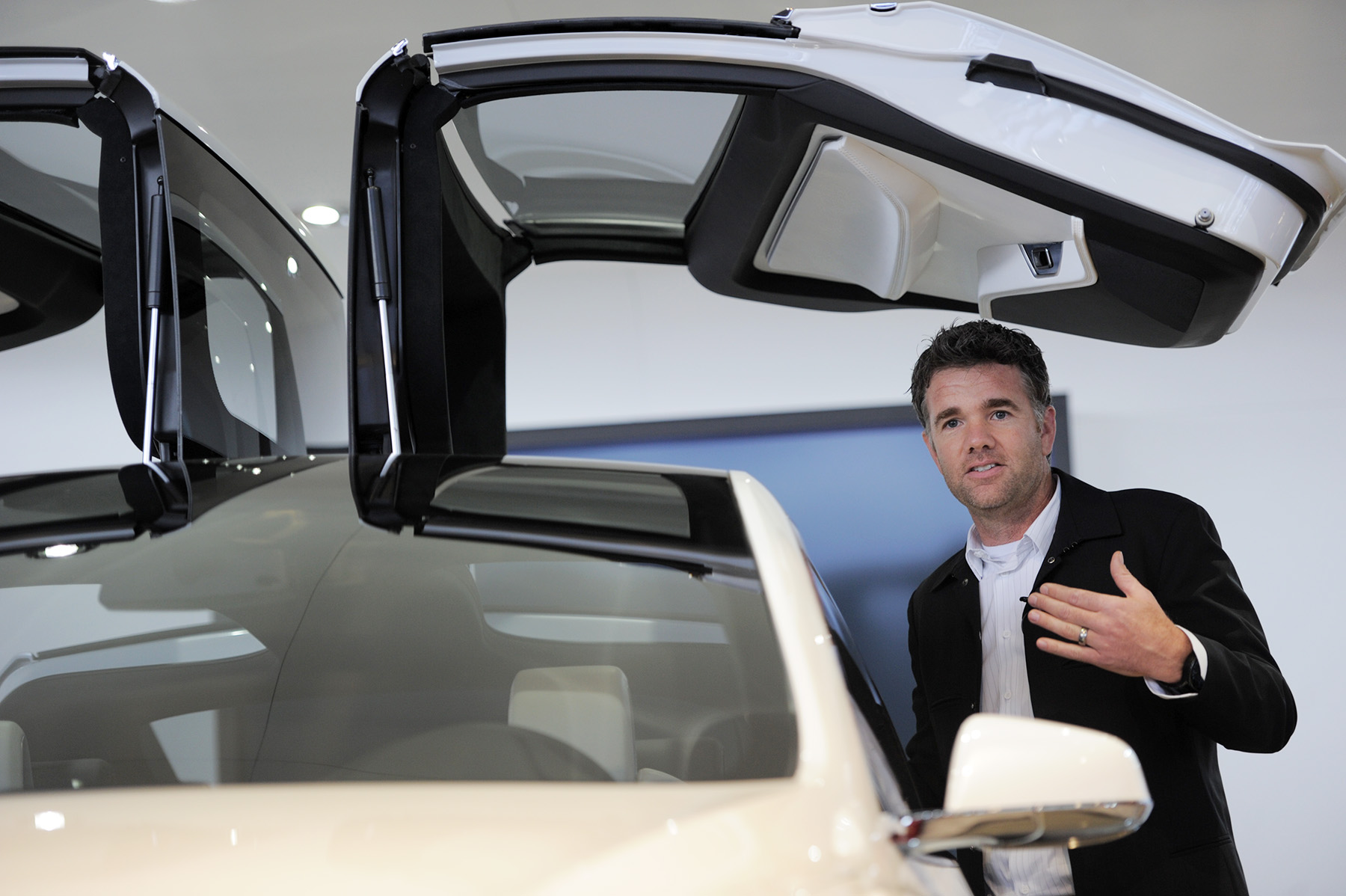
The standard and limited edition version are expected to resemble each other. Late last year, Tesla built a working prototype that was a two-seater with butterfly doors, three people familiar with the matter said. Despite exploring many different design visualizations and some clay models, the company only turned two of the distinct designs into full-blown test vehicles, two people said.
Around the same time, the company also toyed around with the idea of making the limited edition Roadster a single-seater with a cold gas thruster in place of a passenger seat, two people familiar with the matter said. (As it is currently designed, a person most likely will not be able to drive the limited edition Roadster while its thrusters are operating due to the noise).
Meanwhile, customers who reserved Roadsters have spent years waiting for their vehicles. When Tesla unveiled the 2017 version of the Roadster, the company took $50,000 reservations for the standard version and $250,000 reservations for a limited edition called the Tesla Roadster Founder’s Series.
Some high-profile reservation holders, including YouTuber Marques Brownlee and OpenAI CEO Sam Altman, have since said on social media that they canceled their orders. At events with shareholders, Musk has repeatedly joked about the company’s “long-suffering” Roadster reservation holders.
Rick Bhowmick, who works at an investment firm based in New York City and owns a Tesla Model Y and Model X, reserved the new Roadster vehicle in 2021. He had owned Tesla’s original Roadster but sold the vehicle when he moved to New York in 2015. Bhowmick said Tesla’s 2017 Roadster demo impressed him, and he accepted that it would take time for Tesla to deliver it.
Ultimately, Bhowmick said he’s holding on to his hopes that the company will deliver the vehicle within the next few years. If not, he wants Tesla to end the mystery.
“I’m pretty skeptical about this thing panning out because of the economics of it,” he said. “My hope is either this thing pans out and I get my dream car, or they cancel the program and refund everyone.”

 点赞
点赞 收藏
收藏 点踩
点踩 分享
分享