Intellectual Property Was Built for a Physical World. AI Doesn’t Live There

Copyright, patents, and trademarks were built to track a human hand. AI leaves no fingerprints, and the law is only beginning to catch up
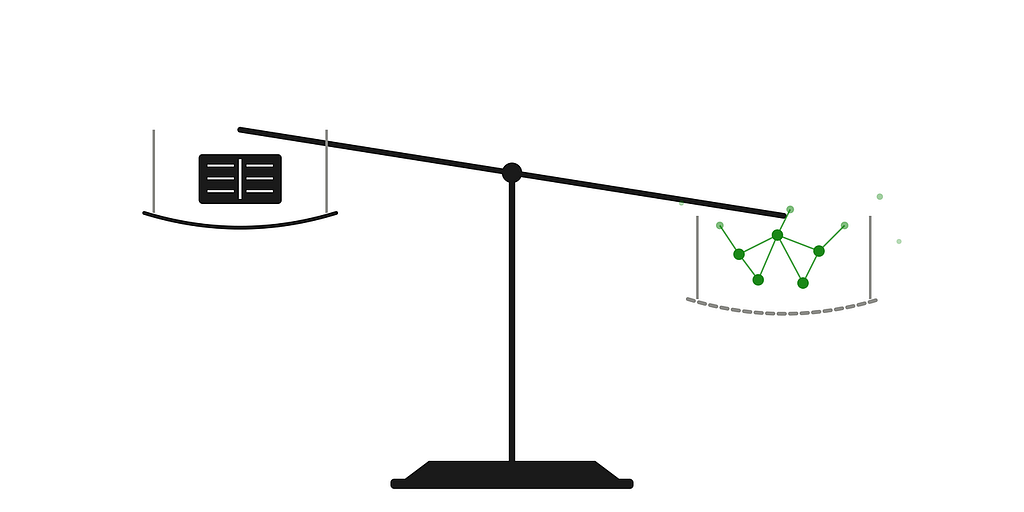
Our current Intellectual Property Rights (IPR) laws are stilltrapped inside a 20th-century physical lens, attempting to regulate a 21st-century digital ether. When international frameworks like the WTO’s TRIPS Agreement were drafted in 1994, the global economy was tangible. Innovation meant a physical medicine, a manufactured machine, or a book printed on paper. Copyright, for instance, requires a “spark of human creativity”. Contrast this with the internet, cloud computing, and decentralized AI models, where a single AI output might be trained on data from 50 countries, processed on a server in Iceland, and deployed by a user in India.
Story So Far (If-then logic)
Governments realized that if inventors kept secrets, progress would stall. Linear logic solved this: If you explicitly publish exactly how your invention works (disclosure), then the state will legally protect your monopoly for a fixed number of years.
This was followed by Categorization — If it’s a mechanical utility, it goes into the Patent bucket. If it’s an artistic expression, it goes into the Copyright bucket. If it’s a brand identity, it enters the Trademark bucket and if it is proprietary data, a formula that has to be hidden from competitors, it goes into the Trade Secret bucket.
Where the Linear Foundation Fractures
Till now, linear thinking gave IPR its stability, but modern technology is pushing this foundation to its absolute limits. The biggest challenge today lies in Software and Artificial Intelligence. When generative AI trains on millions of pieces of copyrighted art to output something entirely new, the linear chain of tracing “who copied what” breaks down entirely. The law is currently scrambling to draw new lines where old, step-by-step logic no longer fits.
Artificial Intelligence isn’t just bending the rules of Intellectual Property Rights (IPR), it is entirely vaporizing the underlying assumptions that linear thinking used to build them.
The foundations of IPR assume three things: a clear beginning (a human creator), a distinct process (step-by-step creation), and a definitive end product (a discrete object or text). AI breaks all three.
Here is exactly how AI is rendering the linear foundations of copyright, patent, and trademark laws archaic.
1. The Discarded Input: The Destruction of “Prior Art” & Tracing
Linear copyright law relies on the concept of a chain of custody. If you copy a song, a judge can linearly compare the notes to prove infringement.
The AI Reality: AI models do not store or copy files. They ingest millions of images, books, and code repositories, compressing them into abstract mathematical weights and probability distributions and massive publishers are currently fighting tech giants in courts over “data scraping”. The legal system is paralyzed because the input (the copyrighted text) does not match the output.
2. The Formless Output: The Collapse of “Discrete Creation”
Linear property law is built for boundaries. A patent has clear textual “claims” that draw a fence around a physical device. A copyright applies to a static book or a specific software version.
The AI Reality: Generative AI creates dynamic, shifting, fluid ecosystems. If a user prompts an LLM to write a custom piece of software, who is the creator? The user who typed the prompt? The AI that weighed the vectors? Or the thousands of engineers whose open-source code informed the model’s weights?
This challenges IPR laws which require a “natural person” to be the inventor. Patent offices worldwide refuse to grant patents where an AI is listed as the sole inventor. Yet, AI systems are now discovering new materials and molecular structures autonomously. Because the law insists on a linear human-to-product relationship, these massive, world-changing scientific breakthroughs risk falling into a legal grey area because a machine did the heavy lifting.
3. The Infinite Supply Machine
Ultimately, IPR laws were created to manage scarcity. They grant a temporary monopoly so creators can charge a premium, ensuring they get paid for the massive linear time and effort they invested.
AI introduces infinite scale at zero marginal cost. When a system can generate a million unique logos, legal documents, or background tracks in minutes, the value of the legal protection itself plummets. We are trying to apply a 19th-century legal framework built for printing presses and mechanical factories to a digital reality that operates at the speed of computation.
How Chaotic Things Have Become:
- Copyright law is facing its biggest shakeup since the internet. In courtrooms right now, the war is being fought on two fronts: inputs and outputs.
The Input Battle (Fair Use): Major tech companies train LLMs by scraping billions of words and images from the web. Authors, artists, and record labels have filed massive class-action lawsuits, arguing this is mass piracy. AI companies defend themselves using the “Fair Use” doctrine, arguing that transforming books and images into abstract mathematical weights is highly “transformative”.
The Output Battle (Human Authorship): The law remains incredibly strict about *who* can hold a copyright. The U.S. Copyright Office and courts have ruled that purely AI-generated art, text, or music without meaningful human authorship cannot be copyrighted, though work combining human creativity with AI assistance can still qualify for protection on the human-authored portions.
2. Patent Law (Can a Machine Be an Inventor?)
The foundational rules of patent law are being pushed to their breaking point by AI systems that can independently discover new chemical compounds or mechanical designs.
In the landmark case Thaler v. Vidal, an inventor tried to list his AI system (named DABUS) as the inventor on a patent application. The U.S. Federal Circuit rejected it, ruling that according to the Patent Act, an “inventor” must be a natural person (a human being). The Supreme Court later declined to hear an appeal, leaving that ruling in place.
3. Trademark Law (Deepfakes & Brand Dilution)
AI makes it incredibly easy to clone voices, replicate faces, and mimic distinct brand aesthetics at zero cost.
Trademark law remains crucial to prevent AI image generators from accidentally embedding protected corporate logos (like a blurry but recognizable Adidas stripe or a Nike swoosh) onto commercial images.
4. Trade Secrets (The Ultimate Shield for AI Tech)
Because copyright and patent laws are highly uncertain right now when it comes to AI, tech giants are leaning heavily into Trade Secrets as their primary defense mechanism.
Rather than patenting the exact architecture of an LLM — which would force them to publish the design to the public and allow competitors to see how it works — companies like OpenAI, Google, and Anthropic keep their exact training data sets, reinforcement learning techniques (RLHF), and system prompts locked down tightly as trade secrets.
The linear legal system is evolving into an algorithmic one. We should not be trying to force AI back into the old linear boxes; it is about building a completely new legal and economic architecture designed for an exponential, data-fluid world.
The new foundation for managing IPR and innovation shall have to shift from “Human Authorship” to “Human Curation”.
https://www.wipo.int/en/web/frontier-technologies/frontier_conversation
Intellectual Property Was Built for a Physical World. AI Doesn’t Live There was originally published in Bootcamp on Medium, where people are continuing the conversation by highlighting and responding to this story.

 点赞
点赞 收藏
收藏 点踩
点踩 分享
分享