How A GM Military Concept Could Become A Serious Jeep And Bronco Fighter

Fifty years ago, absolutely no one could have imagined that the traditional Jeep and Ford Bronco would one day be bought by anyone other than park rangers, a few sportsmen or survivalists, and niche fans. Oh, there was also Daisy Duke back then, but that’s about it. How can we forget Daisy? [Ed note: Don’t sleep on David Soul hunting the vampires of Salem’s Lot in his CJ-5 – Pete]
Well, today many stylish ladies of any age group seem to choose a loud, lifted Wrangler over a luxury sedan or sports car, and families by the thousands are buying heavy-duty Broncos as their daily driver. Conspicuously absent from the choices is an offering from General Motors. Not since the old K5 Blazer of the seventies with a lift-off roof has The General even tried to play in this sandbox, so there’s not a lot of precedent for them to do so. However, I recently saw some concepts of theirs that might make cool alternatives to the entries from Ford and Stellantis. Like the current Willys-style Wrangler, the inspiration comes from the last place you’d expect for a suburban street vehicle.
Humvee, You Are One Ugly Mother…
I’m not a big follower of military vehicles, but I get why companies clamor for the opportunity to build one. A contract from the government means millions if not billions in sales that have nothing to do with the hassle of selling through dealerships and competing with umpteen other brands; just make a few thousand of some army green thing and it’s sold before it even leaves the factory. It’s no surprise then that car companies will pitch battle-ready vehicle concepts to defense departments the world over. Few of them actually get produced, and some of the rejected ones are way cooler than the Jeeps and Humvees that actually did get built in large numbers.

One famous example was called the “Cheetah,” developed by an American company called Mobility Technology International (MTI) and supercar-builder Lamborghini in 1977. With a steel chassis and fiberglass body, the Cheetah featured a Chrysler 360 V8 in the back, which supposedly resulted in poor handling. The Cheetah was demonstrated to the U.S. military, but they never tested it, much less purchased any of them.

Lamborghini instead attempted to market the idea as a product for oil exploration companies. The struggling firm’s financial problems put paid to the project, but they later revived it with the engine in the front to create the vaunted Countach V-12-powered LM002. A total of 301 civilian examples were built of this “Rambo Lambo”, the only sport utility ever made by the Sant’Agata firm if you don’t count the gussied-up Volkswagen Touareg they sell now.
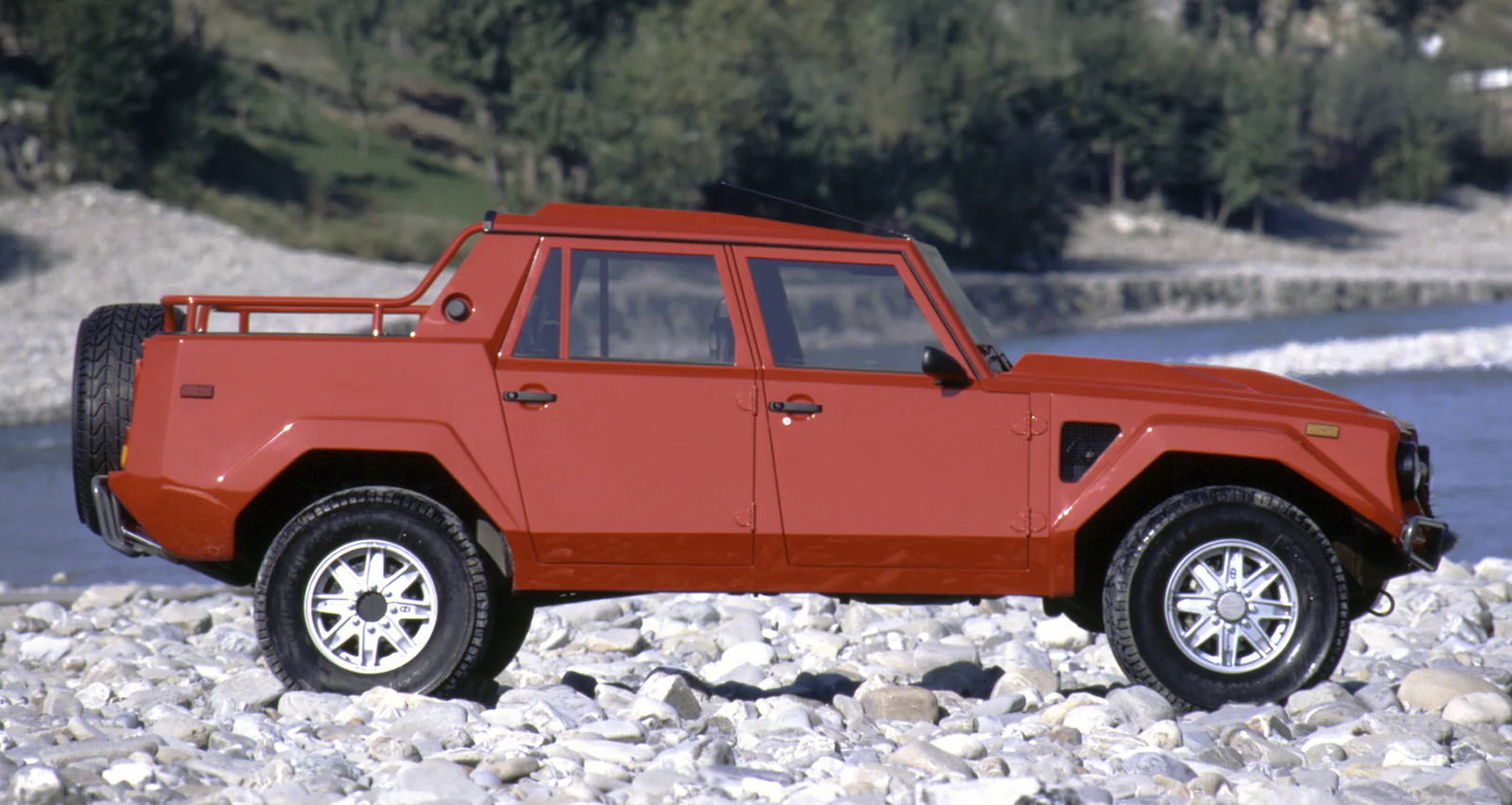
The contract that Lamborghini didn’t get for this new style of military Jeep ended up going to a division of the company that made the original Jeep. AM General actually began as the commercial/military products division of the ill-fated American Motors Corporation in 1971, and this always-innovative company started work on what was called the High Mobility Multipurpose Wheeled Vehicle (HMMWV or Humvee) in 1979. However, by the time the multi-billion dollar production contract was issued in 1983, AM General was no longer part of AMC. The purchase of a majority stake in the company by a French firm (Renault) meant that American Motors had to dump AM General from their portfolio. I feel the need to mention that any time AMC had a great and potentially profitable product, they got rewarded with a swift kick in the ass. Every. Single. Time.
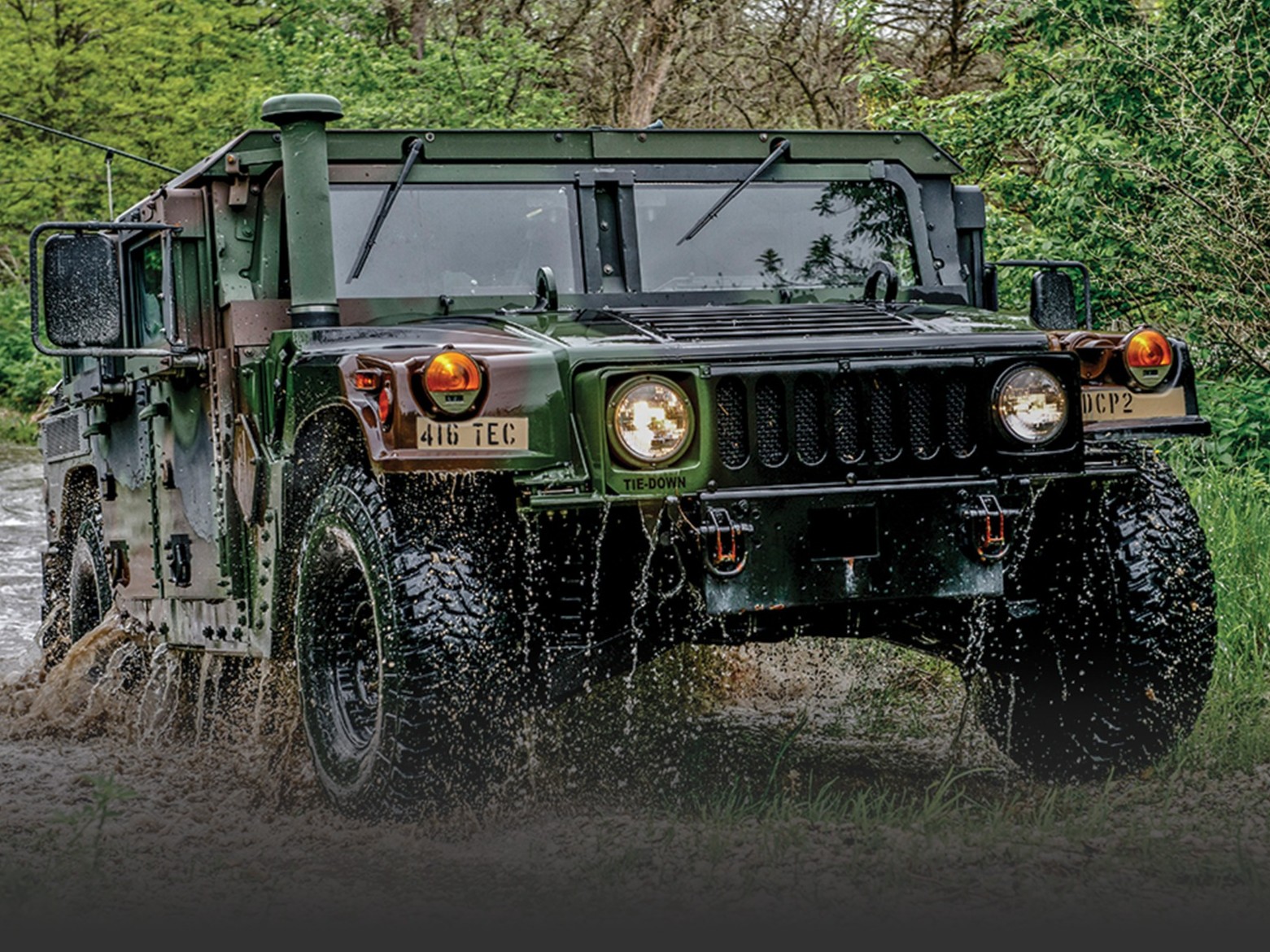
Now an LLC and goaded on by the man who said “eef eet bleeds, vee can keel eet”, AM General began making civilian versions of the Humvee under the “Hummer” brand name in 1992. By now, SUVs were a fire-hot commodity, so General Motors purchased the rights to the Hummer name in 1999 (but never had anything to do with the military versions). GM sold the original Hummer as the H1; later they expanded the lineup to include the GMC pickup-based H2 in 2002 (built at the AM General factory).

The smaller H3 debuted for 2005, built at the factory that made the Chevy Colorado on which its chassis was based.

Sales of such conspicuously consuming products suffered in the late-2000s Financiapocolypse; with GM’s bankruptcy, Hummer was one of the victims of the great Purge Of Brands and ceased to exist after 2010. A decade on, the Hummer name returned under the GMC brand with the tough look of the earlier H-series, but now as an environmentally friendly luxury EV.

Yeah, I know; it’s not the same thing as the battle-ready examples of the vehicle that it shares its name with. It’s more like an adult-sized Power Wheel interpretation of the original models than anything resembling a “real” Hummer. Still, a bigger regret to me is that no Hummer or Humvee of any kind over the life of the brand came close to matching something like the Jeep Wrangler or new Bronco in terms of being an open-topped, manageable-sized off-road fun machine that made sense for road use. I think I see a way to make that happen.
General Motors For General Infantry
Just because they didn’t build Army Humvees doesn’t mean that General Motors didn’t want government contract business. In fact, GM has an entire division called “GM Defense” that has the sole purpose of creating military products. In recent years, they displayed a number of rather cool-looking products like the “Next Gen” Tactical vehicle.

Here’s what the GM Defense website says about it:
Based on the Chevrolet Silverado 3500HD ZR2 truck, the rugged and durable Next Gen combines GM’s 2.8L Duramax® turbo-diesel engine with a 12-module battery pack, in addition to drive motors for the front and rear axles that enable Silent Drive and Silent Watch, technologies that make the vehicles harder to detect.
It’s very industrial-looking, but the detailing makes it look very much like a designer had a hand in the development.

GM Defense also came up with an electric military vehicle concept, or the EMCV:
The EMCV is presented with the same chassis and powertrain as the Hummer EV, which is powered by the giant 200 kWh battery pack. Planned to have a slightly lower range than the current 329 miles of the Hummer EV at 300 miles, the vehicle is also coming equipped with a diesel range extender if needed. The EMCV has the capability of 800-volt DC fast-charging up to 350kW, enabling up to nearly 100 miles of driving range in about 12 minutes. The military vehicle offers 329 miles of combined driving range, according to GM Defense, with a 0-60 mph acceleration time of 3 seconds.;
It’s essentially a tactical interpretation of the current GMC Hummer EV; the chassis and powertrain are the same.

Range is supposedly less than the street version, so figure around 300 miles, but GM admits that the diesel range extender could be added. The design language works quite well, and it almost comes across as a giant side-by-side more than a luxury truck that spawned it. I don’t know how far either of these proposals got with the Army, though I can say with virtual certainty that a battery-powered war machine sounds like a non-starter in anyone’s book. They claim that “fast charging” could give it 100 miles of range in ten minutes, but exactly how this is going to happen in, say, an Iraqi desert is not known. This idea is likely never going to see the light of day.
Regardless of the feasibility, I love the appearance of these things; any design that starts out as a combat vehicle has some cred as a heavy-duty vehicle. It’d be a shame for either one to end up as a never-was, so let’s use them to make that GM Jeep/Bronco competitor they’ve kept from us.
Declaring War On Stellantis And Ford
First, we need to figure out what mechanicals General Motors even has to make a Bronco/Wrangler competitor. Since Ford’s Jeep fighter Bronco uses a chassis heavily based on the mid-sized Ranger pickup, I have to believe that Chevy Colorado underpinnings would be perfect if chopped down to the wheelbase of a Wrangler. This body-on-frame with a live rear axle and four-wheel drive should at least be the equal of the Bronco; a fact that’s important for credibility if not for real-life use. Let’s face it: about 95 percent of Bronco and/or Jeep owners are as likely to go rock crawling as they are to drive on the surface of Mars itself.

I’ll put a new body onto this chopped-wheelbase pickup chassis for what I’ll call the Kodiak, reviving the name of GM’s long-dead series of heavy-duty trucks. The styling ends up being a mishmash of the two military proposals I’ve shown above, with the EV unit’s center body capped off in front with the Silverado version’s nose. The one shown below in matte green would be the hard-core example, but I would imagine a more mall-parking-lot-friendly version as well. Naturally, to compete with Jeep and Bronco, the doors could be taken off and stashed in back. A drop-down windshield would have to be part of the package as well.
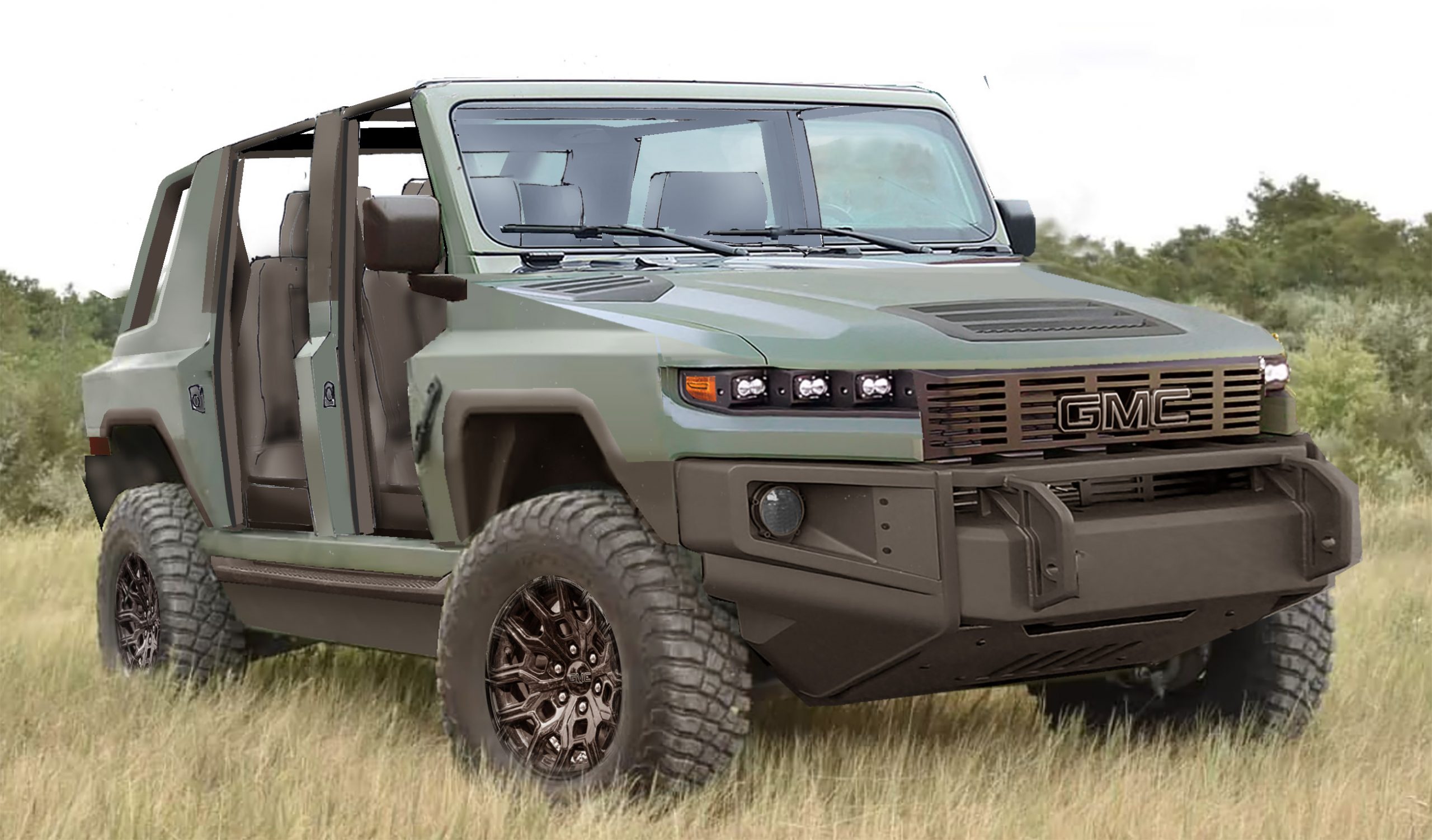
A thick body-colored C pillar that wraps over the top is not unlike the current GMC Hummer EV, but the whole thing is much more industrial and aggressive than that luxury behemoth (it looks more like an old Isuzu Rodeo, which I love). Doors feature roll-down frameless glass windows, and the roll cage body can be covered in fabric or rigid roof panels. Rear quarter windows can also be removed.

What I like about it is that it looks modern, or even retro-futuristic, without trying to recall the appearance of some sixty- or eighty-year-old vehicle as with the Ford and Jeep entries. Here’s an animation to show how the military vehicle concept translates into the consumer version:
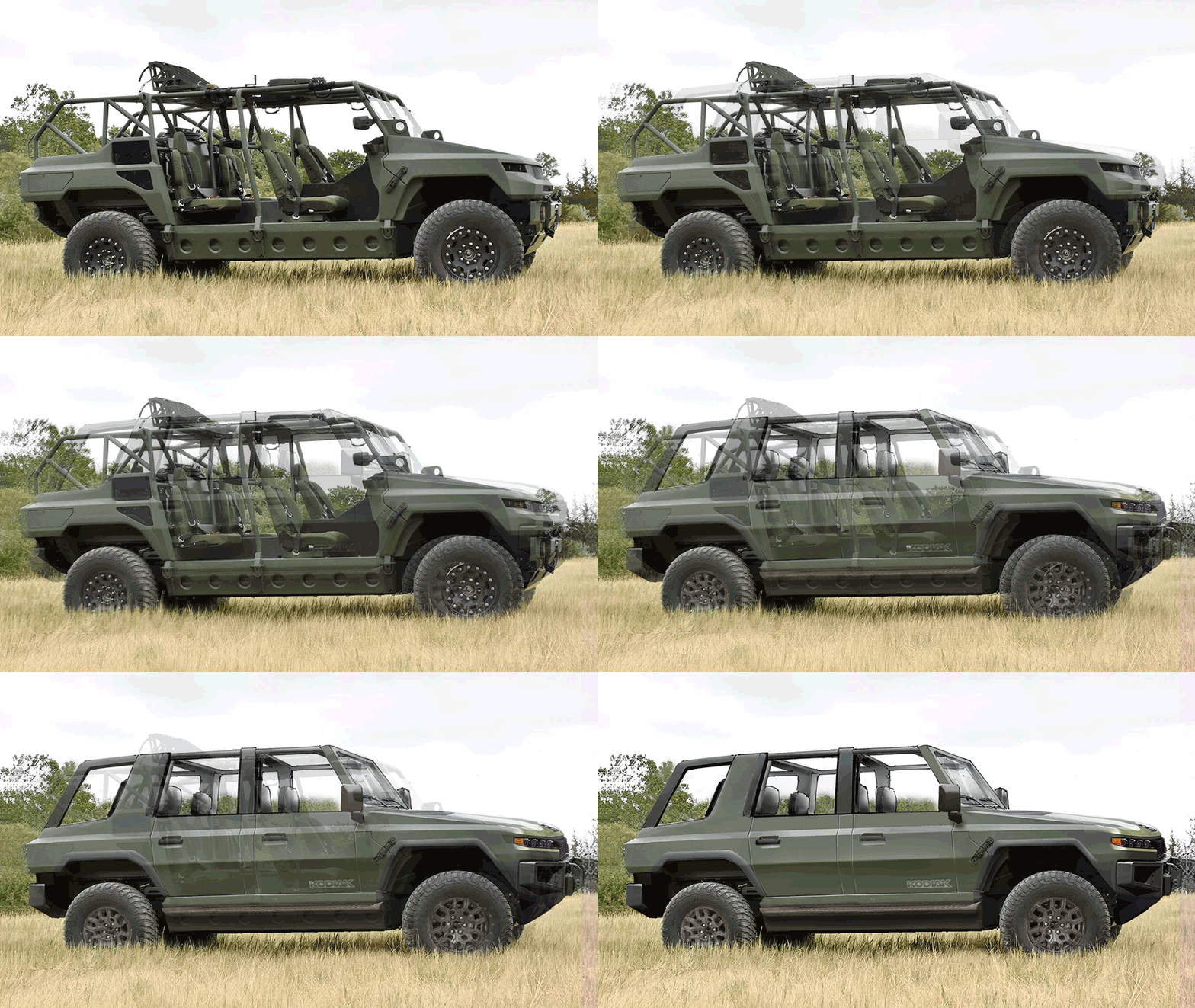
In back, the tailgate has simulated “box taillights” as on the original Hummers (and on earlier Jeeps before they went and got all stylistic with them); wraparound smoked-out light units below the tailgate have turn signals, rear fog lamps and repeater lights for when the gate is down.

Inside, the interior of the original Hummer was almost as iconic as the outside, with a massive, almost pyramid-shaped monolith of plastic dominating the design.

I’d like to pick up on that shape with the new GMC Kodiak’s dash. Exposed fasteners abound, with round military-radio-style knobs and buttons including a set of controls for the differentials and drive modes. A row of switches for things like seat heaters is done in tactical style to add some purposeful-looking fun. I’ve even copied the old Hummer’s odd power window switch placement on the sides of the center console, for better or worse (it keeps them off of the removable doors, at least).

Whether you like the idea of Army Jeep-style vehicles is beside the point; a lot of people seem to want them, even though they’re a bit like using a samurai sword to cut celery. A GM entry based on a competent mid-sized truck with the attitude of some real military proposals could assist the Bronco in making things even more difficult for Stellantis.
Top graphic base image: GM Defense
The post How A GM Military Concept Could Become A Serious Jeep And Bronco Fighter appeared first on The Autopian.

 点赞
点赞 收藏
收藏 点踩
点踩 分享
分享