‘The Fast And The Furious’ Is Secretly A Movie About The Strength Of The US Dollar


I found myself in a situation last week where I was able to say, accurately, that we needed to “overnight parts from Japan.” You’ll see the fruit of that request in about two weeks, but the immediate payoff was that everyone involved got to give a knowing chuckle at my very obvious and not-that-clever reference to the original Fast and the Furious film, which debuted 25 years ago.
Maybe it was more of a groan than a chuckle. Either way, I was momentarily pleased with myself and didn’t think about it much more until I saw a report in the Japanese business publication Nikkei Asia this morning with the headline “Japan carries out yen-buying intervention as US executes rate check.” This was done to support the Japanese yen, which was falling relative to the US dollar.
If you read the article, it probably made you think about the larger Japanese macroeconomic picture, Prime Minister Takaichi’s economic plans, or maybe just the currency markets in general. It made me immediately ponder importing Japanese cars cheaply if the yen drops, which connected the dots in my head to a long-simmering thought I’ve had that The Fast and the Furious can only exist because of a massive swap in value between Japanese and American currencies in the 1990s and early 2000s.
What I’m saying is: If Die Hard is a Christmas movie, and The Wizard of Oz is an allegory for the 1896 Presidential Election, then The Fast and The Furious is a movie about free trade and currency.
The Film Was Originally Inspired By An Article Almost Everyone Forgot About
Image: Vibe
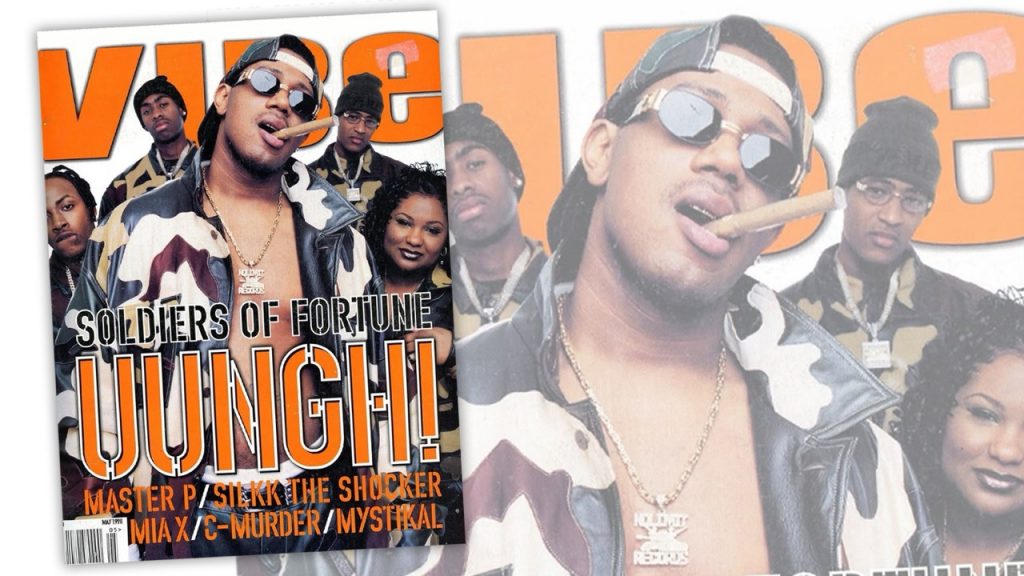
The idea for the 2001 film came about because of the article “Racer X,” which appeared in the May 1998 issue of Vibe magazine written by Kenneth Li. This was the issue with Master P and his No Limit soldiers on the cover (yes, I know I talk about Master P too much).
In the article, Li follows various racers in the burgeoning import racing scene, which was then transitioning from entirely underground to slightly more legitimate. At the center is Rafael Estevez, a 30-year-old from Washington Heights driving a heavily modified 300ZX.
Young men have been fascinated with tweaking and tuning big block Chevys and Mustangs since the days of Rebel Without a Cause. But the new guys wouldn’t be caught dead driving the gaudy muscular beasts of yesteryear. Instead, they’re tricking out low-buck Japanese imports like Honda Civics and Acura Integras and tattooing them like skateboards with Neuspeed and Greddy car parts stickers. By stroking the engine, adding a supercharger, and hitting the “juice” (nitrous oxide: a gaseous liquid once used to boost bomber planes in WWII), they can smoke the herb in the Iroc at the stoplight. And to do it with a puny four-cylinder rice burner that your moms would drive is downright arrogant.
While Vibe was not the first to report on this trend–the premiere issue of Sport Compact Car was published in 1989–you can see the proto-characters that would birth many of the film’s cast and ideas:
“The excitement of going fast is like nothing else,” says Javier Ortega, a Columbian-American who screeches his blue Honda Civic to a halt in front of the store. “Another group gets excitement from doing drugs or whatever. Speed excites us.” Few know that excitement like Estevez. Six feet tall with stooped shoulders and a healthy gut, he writes his own rules. Forget about valor, compassion, honor; in his book, that’s all synonymous with second place. “People say I cheat all the time,” explains Estevez, a Huck Finn grin spreading across his face. “They say I jump the line, I do this, I do that. Drag racing is war. If you bring a knife, and I bring a machine gun, you’re dead. That’s it.”
You can almost hear Vin Diesel saying that, right? At the time, most of the cars being driven were not imported Japanese cars, but American cars (Honda Civics, Acura Integras, Toyota Supras) heavily modified with Japanese-sourced parts.
In his history of the film franchise, Welcome to the Family: The Explosive Story Behind Fast & Furious, the Blockbusters that Supercharged the World, author Barry Hertz brings up an event early in the research for the first movie that has informed the whole series:
[D]irector Rob Cohen and screenwriter David Ayer began poking around LA’s street-racing underground. Together with automotive consultants R. J. de Vera and Craig Lieberman, the filmmakers discovered NOS, which would soon become their movie’s version of a warp-speed button. “It was small scale—I heard about it when I was hanging around tuners who were on the phone with Japanese brokers trying to get engines smuggled out of Tokyo,” says Ayer. “Very under the radar.”
That little bit about “engines smuggled out of Tokyo” is key. Both the fictionalized world of The Fast and the Furious and the real one the film’s creators were recreating relied on a huge flow of cars and parts–often illegally–from East to West.
How did this flow begin? A lot of it has to do with an appreciation of the superiority of design and engineering that coincided with a booming economy… just maybe not the way you’re imagining. Specifically, it began with a red hot economy in Japan and a small group of enthusiasts who badly wanted fulls-size American vans.
It Didn’t Start With Americans Wanted Japanese Cars, It Started With Japanese Enthusiasts Buying Our Old Vans
Photo: Sam Smith
It’s difficult to express how enormous the Japanese economy became in the late ’80s due to climbing valuations (and, in retrospect, overvaluations) of that country’s assets. The easiest way to understand this is to explain that, in 1988, the value of all the land in Japan was 400% higher than the value of all the land in the United States, even though the United States is a much larger country with more natural resources.
From a currency perspective, Japanese consumers saw their buying power increase dramatically in just 15 years. According to the Federal Reserve, a dollar in April of 1971 would get you 357 yen. This was great for Japanese exporters, who built cars cheaply in yen and brought back American dollars (eventually leading to protectionist measures like the Chicken Tax). As the Japanese economy grew, the yen started to improve relative to the dollar, and by April of 1995 a dollar only got you about 84 yen.
Flush with cash, Japanese car enthusiasts did what every car enthusiast with a jingle in their pocket does: they buy something they’re not supposed to have. For Japan, which had rebuilt its car industry after the war by becoming a producer of small and efficient cars, this meant buying the opposite of that. It turns out the opposite of that is a full-sized American van.
I am not well-equipped to explain exactly why vans, and not tri-five Chevys or ’64 Impalas (though some of those were also exported to Japan). When it comes to cross-cultural appreciation, it’s best to ask the appreciator and not the appreciated, because I’d be loath to find out from a Japanese person why they think I and my friends are obsessed with the eschatological anime series Neon Genesis Evangelion.
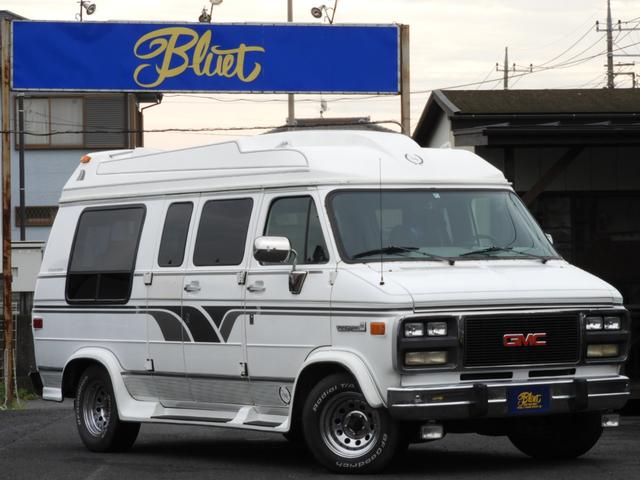
Initially, a lot of these vans were conversion jobs like the Econoline and especially the GMC Vandura/Savannah. In fact, there are currently more than 60 GMCs for sale on Japanese website Goo-Net, including this sweet high roof 1994 GMC Vandura. Leftovers from a different age.
Photo: Goo-Net
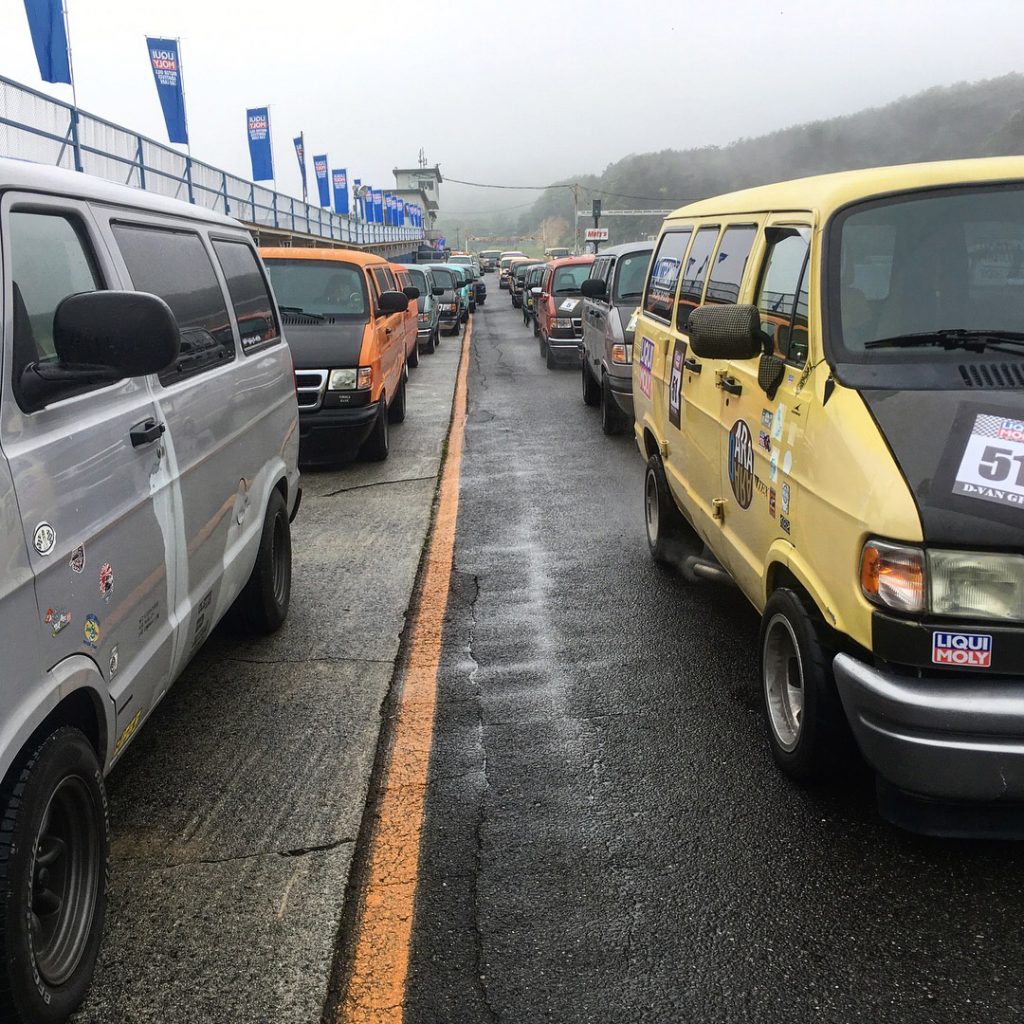
Eventually, this resulted in an entire culture, called Dajiban, around the Dodge that was probably the least popular of the van offerings in America. The great Sam Smith went to Japan to find out why those vans for this seminal article for Road & Track about the trend and about its early adopter Abe Takuro who, not coincidentally, worked as an importer in the 1990s.
“Chevy Astro vans,” Takahiro said, “are really popular here. But it’s a V-6. Ford Econolines and some other U.S. vans have a V-8, but the body and wheelbase are too big for Japan—the short Dodge is just small enough.” In America, I offered, these things are known for being…