Big Think’s 5 favorite nonfiction books of 2026 (so far)

Big Think’s 5 favorite nonfiction books of 2026 (so far) 图片 1
Big Think’s 5 favorite nonfiction books of 2026 (so far) 图片 2
Big Think’s 5 favorite nonfiction books of 2026 (so far) 图片 3

We’re only halfway through 2026, and already, the year has been filled to bursting with amazing books on any subject you’d care to learn about. Our book coverage alone has run the gamut, touching on subjects as diverse as mental health, dinosaurs, social connections, chaos theory, love, Greek myths, science fiction, and economies. And then there were the many histories about things like war, colors, soccer, medical myths, information technology, and politics (so much politics).

As we enter the publishing industry’s summer lull, and before the September influx of new titles kills all of my free time, I thought it would be nice to look back and celebrate some of the standout nonfiction books released this year. In order of release date, not preference, here are my favorite books of 2026 (so far).

Credit: Penguin Press

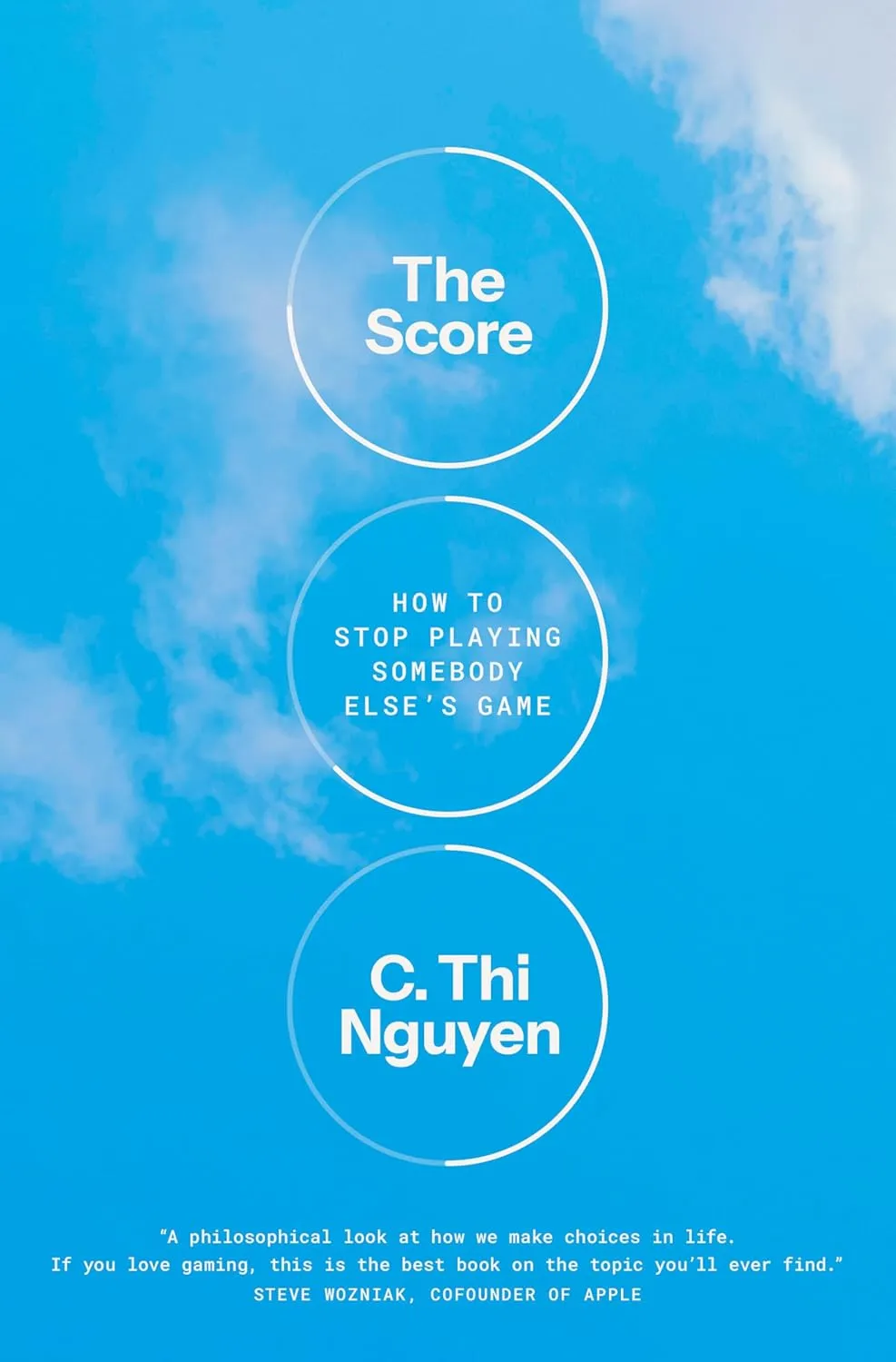
1) The Score by C. Thi Nguyen

Even before reading this one, I was already looking askance at the scoring systems in my life. The drive to increase numbers — whether article views at work or calories burned during my workout — drove my daily activities and choices. But did they ultimately add up to a more fulfilling life? Not necessarily.

In The Score, Nguyen lays out the philosophical case for why metrics create a gap between what we do and the values that truly serve our interests. They manage this by ignoring qualitative experiences in favor of oversimplified, “inflexible external standards” that can be easily understood by any app, organization, or bureaucracy. The result is “value capture,” where we no longer do the hard work of living but simply let the numbers dictate what to strive for.

As Nguyen writes, “In value capture, you’re outsourcing your values. You’re letting an external metric or ranking set what’s important for you. You’re outsourcing the process of figuring out your own sense of meaning.”

The book’s argument isn’t so blunt as numbers are bad, though. Metrics can be useful, but Nguyen demonstrates their pitfalls by contrasting them with games, which also use scoring systems to direct action and evaluate success. The difference? Games use scores to give us a sense of self-efficacy and reveal a diversity of meanings available in our lives. Probably why most people prefer Catan to KPIs.

“We can approach scoring systems with two very different attitudes,” Nguyen writes. “We can approach them playfully — bending ourselves in and out of them, dancing between them, changing them, modifying them. Or we can be captured by them — we can let scoring systems dictate our goals and targets to us, even when those goals fit poorly with our lives.”

Several times while reading The Score, I let out an audible, Keanu-worthy “whoa.” I saw the world and my life differently afterward, and that’s the highest compliment I can pay to a book in this field.

Credit: MIT Press

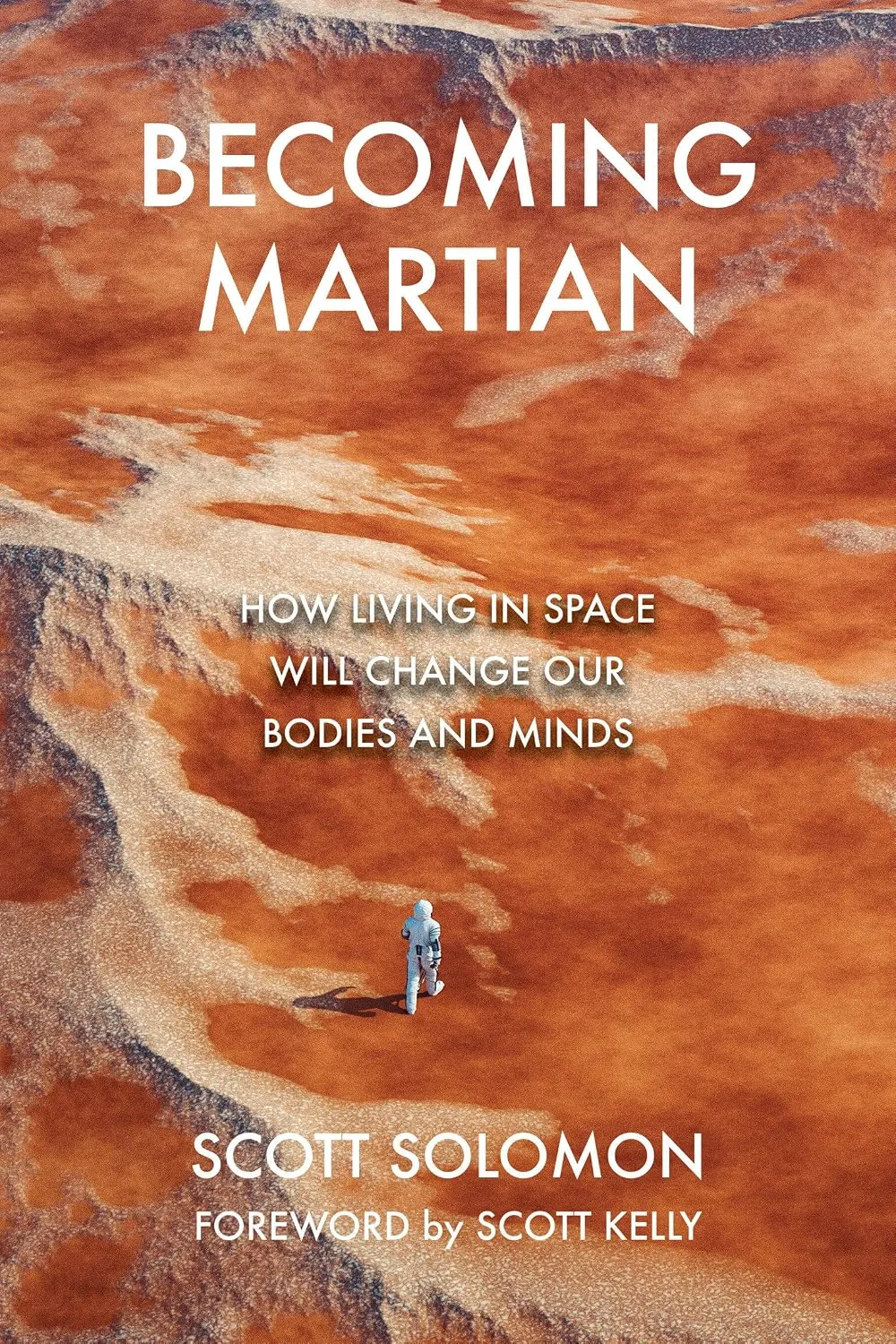
2) Becoming Martian by Scott Solomon

I have no doubt that humans will walk on Mars one day. Maybe within my lifetime. But after reading Becoming Martian, I’ve come to realize that the hard part is what comes next.

Solomon opens his book by exploring what we know about how living off-planet affects the human mind and body. These early pages also double as a fascinating history of space travel, and the news is promising: While space exploration is challenging, we have proven remarkably adaptable and innovative.

But most of those lessons were learned aboard the International Space Station, orbiting a mere 250 miles above our heads. When it comes to establishing a long-term settlement 140 million miles away, there’s much we don’t know. The rest of Solomon’s book investigates those questions: How do we grow food and build shelters on Mars’ barren, irradiated landscape; how will low gravity affect birth and child development; and if we can settle our red neighbor, how might we evolve to adapt to its environment?

“I see the developments in rocket technology, orbital space stations, and Martian rovers as incredibly exciting. But we must also keep studying ourselves to get more insights into our genetics, our brains, our microbiome, and other aspects of our biology that are still so mysterious,” Solomon writes.

Far from an exercise in naysayism, Solomon doesn’t argue that these challenges are insurmountable; much of the book celebrates the scientists and researchers trying to solve them. Rather, his message is that not all problems can be solved with a new app or gadget. The biological laws of nature and the realities of our evolutionary heritage must also be deliberated on with care and curiosity if we are to succeed. It’s a lesson I think we’d do well to remember in many different contexts this year.

Solomon continues, “ At the same time, we need to keep learning as much as we can about our home planet. The better we understand it, the better equipped we will be to ensure our long-term survival — both here and out among the stars.”

Credit: Simon & Schuster

3) Love Thy Stranger by Bart Ehrman

While writing this article, Venezuela was hit by a massive earthquake. To help Venezuelans in their time of need, countries around the world provided much-needed supplies and deployed rescue teams, while ordinary citizens donated to charities. This outpouring of humanitarian aid was comforting to see in the face of such a tragedy.

But what’s truly remarkable is how unremarkable the response was. This is just how the modern world operates. Why? In his latest, Ehrman argues that while some form of kindness may be coded into our DNA or a type of moral common sense, such expansive altruism is not. It began with the radical commandments of Christianity.

“[T]he impulse to help strangers in need is embedded in our Western moral conscience because of the teachings of Jesus,” Ehrman writes. “As Christianity spread throughout the ancient world, it revolutionized the understanding of ethical obligation, leading to a fundamental transformation in the moral conscience of the West.”

No, Ehrman isn’t trying to convert anyone. His book is historic, not religious, and it begins by showing how the altruism we take for granted today didn’t exist in ancient Greek and Roman cultures. To the extent that these societies offered charity and forgiveness, it was more limited, often based around class hierarchy or familial affiliation.

The spread of Christian teachings — in particular, “love thy neighbor as thyself” — repositioned the ethical and philosophical currents of the West. After the religion’s widespread adoption, we begin to see the development of formal charitable institutions, such as orphanages, poorhouses, and government assistance programs in the historical record.

“[T]he vast majority of later converts to the Christian faith came from radically different cultures [than Jesus] and held very different beliefs about the world,” Ehrman writes. “These necessarily affected their understanding of how to live in it. And so Jesus’s ethics came to be transformed into softer versions. But even in altered forms, they would transform the moral sensibilities of the West and, in the end, simply become common sense.”

No doubt other historical elements also helped catalyze the West’s expanding circles of empathy and altruism, among them economic and technological advances. Ehrman’s point is that Christian ethics proved a vital part of that change. Bold and perhaps controversial, the book is a wonderful testament to the power of ideas to change the world.

Credit: Viking

4) Why We Talk Funny by Valerie Fridland

As a military brat, I sometimes lived in places where barely anyone spoke like me. Other times, my friends were the odd ones “owt.” I quickly intuited that these differences could make me sound like an outsider, a whiz kid, an average joe, a snob, or a yokel — depending on who was listening.

Little wonder I gravitated to Fridland’s new book, which is all about accents. It explores the science of how we develop our speech patterns and the psychology of how we respond to something as simple as a dropped G…

添加评论
点赞收藏
点踩分享查看原文
评论
?
参与讨论