China creates world's largest magnet that weighs 582 tonnes to help build an artificial sun

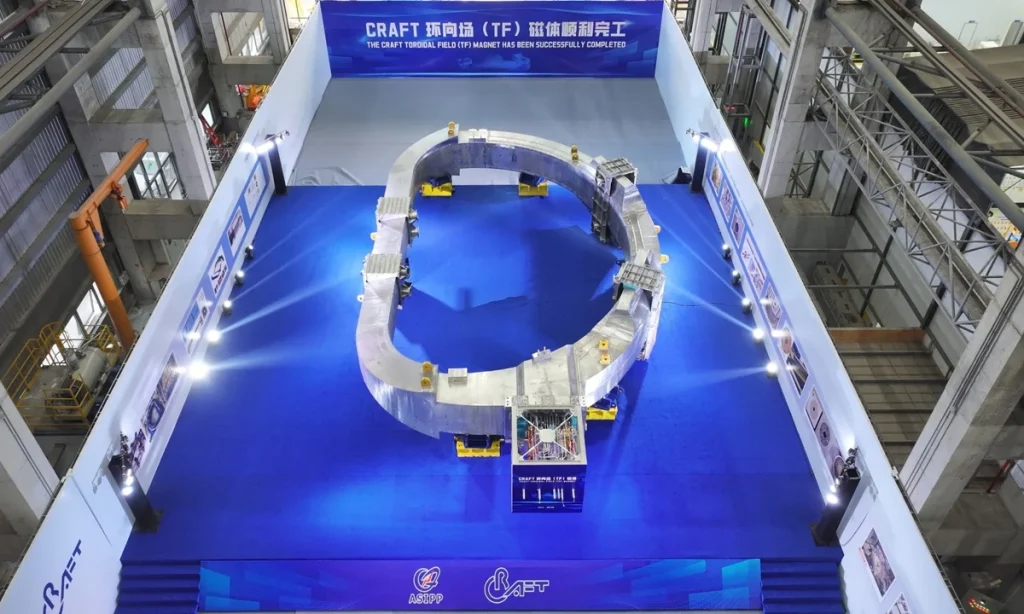
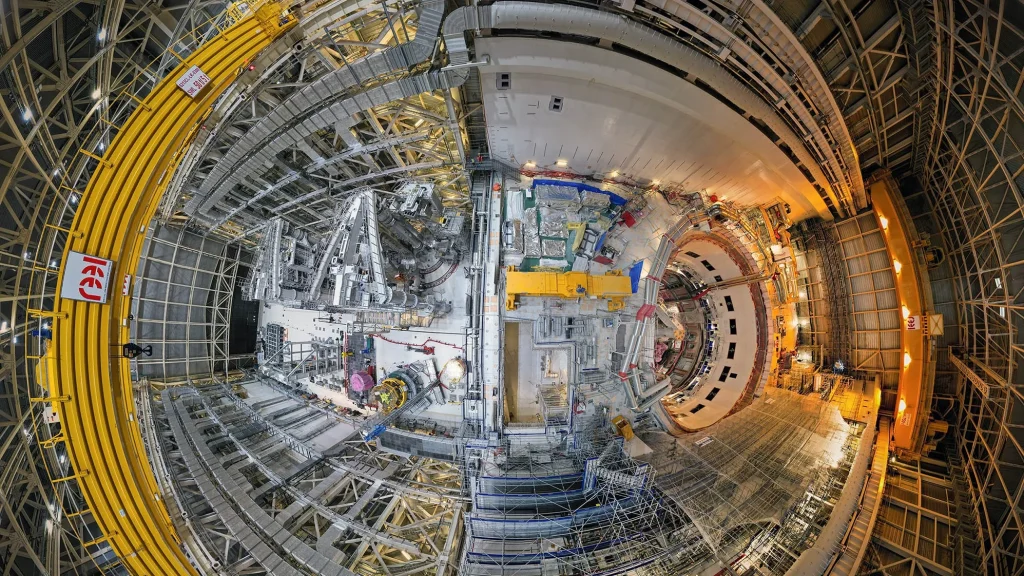
China has made history by creating the world’s largest magnet, and boy is it large, it weighs 582 tonnes and was designed to help build an artificial sun.
The gigantic piece of technology has just passed a major round of testing, bringing China’s ambitious fusion energy plans one step closer to reality.
While it might look like an oversized metal ring, its job is to contain material that’s hotter than the sun itself without letting it touch the reactor walls.
If everything goes to plan, it could help power a next-generation reactor that’s aiming to demonstrate fusion energy before the end of the decade.
How the world’s largest magnet is helping build an artificial sun
When it comes to building record-breaking futuristic technology, China has gone big, massive even.
Scientists have successfully tested what is now the world’s largest fusion magnet – an enormous superconducting toroidal field magnet that weighs an eye-watering 582 tonnes.
The magnet recently completed full-parameter testing at the Institute of Plasma Physics in Hefei, clearing one of the biggest hurdles before it can be installed inside China’s next-generation fusion reactor.
And its size isn’t the only thing that’s impressive.
Institute of Plasma Physics, Chinese Academy of Sciences
The colossal magnet can reportedly store almost three times as much magnetic energy as the toroidal field magnets being used in ITER, the huge international fusion project involving 35 countries that’s currently under construction in France.
Eventually, 16 of these massive coils will be arranged in a ring to generate a magnetic field, all using technology developed in China.
That’s because this isn’t an ordinary world’s largest magnet; it’s designed to keep something very, very hot under control.
Why the magnet is needed for the artificial sun
Inside a fusion reactor, scientists heat hydrogen fuel into plasma at temperatures of more than 100 million degrees Celsius – even hotter than the core of the Sun.
At those…

 点赞
点赞 收藏
收藏 点踩
点踩 分享
分享