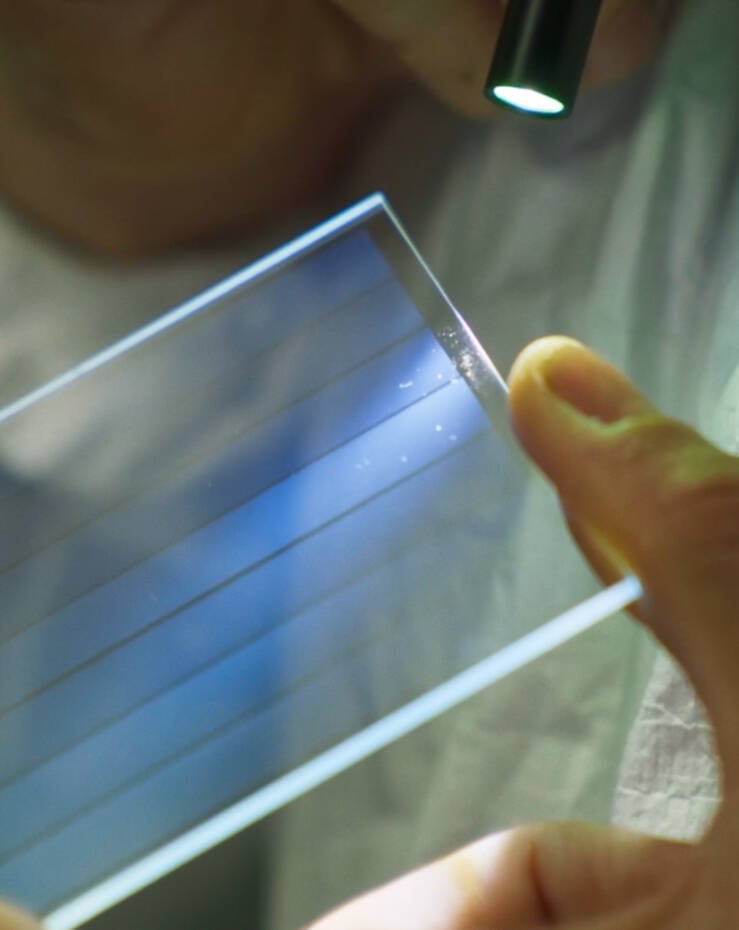
Microsoft's Project Silica

| Exabytes | Revenue | $/GB | |
|---|---|---|---|
| Flash | 598 | $68.6B | $0.115 |
| Hard Disk | 1418 | $28.0B | $0.020 |
| LTO Tape | 59.2 | $0.51B | $0.003 |
Archival Media: Not a Good Business. Whatever your choice of technology, the economics are brutal. This is a version of the table in that post, updated to 2021 and again based upon IBM data. Note that archival media shiped 4% as many bytes as hard disk and generated 1.8% or the revenue. It remains a tiny market.
I have written several times about Microsoft Research's Project Silica, most recently in last year's Archival Storage:
I'm skeptical of "commoditizing the technology". Archival systems are a niche in the IT market, and one on which companies are loath to spend money. Realistically, there aren't going to be a vast number of Silica write heads. The only customers for systems like Silica are the large cloud providers, who will be reluctant to commit their archives to technology owned by a competitor. Unless a mass-market application for femtosecond lasers emerges, the scope for cost reduction is limited.
But the more I think about this technology, which is still in the lab, the more I think it probably has the best chance of impacting the market among all the rival archival storage technologies. Not great, but better than its competitors:
I followed this with a list of eight major reasons for my opinion.
Below the fold an update on the project and an assessment.
Project Silica tabletLibrary of Congress' Designing Storage Architectures meeting Richard Black of Microsoft Research gave a presentation on their Project Silica. He announced that the "research phase is complete", and pointed to three significant papers laying out their achievements:
- Project Silica: Towards Sustainable Cloud Archival Storage in Glass 23rd October 2023.
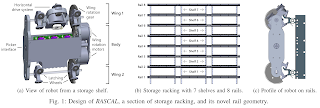
- RASCAL: A Scalable, High-redundancy Robot for Automated Storage and Retrieval Systems, 8th August 2024.
- Laser writing in glass for dense, fast and efficient archival data storage 17th February 2026.
The team agreed…

 点赞
点赞 收藏
收藏 点踩
点踩 分享
分享