How AI Adoption Deepens in an Engineering Org

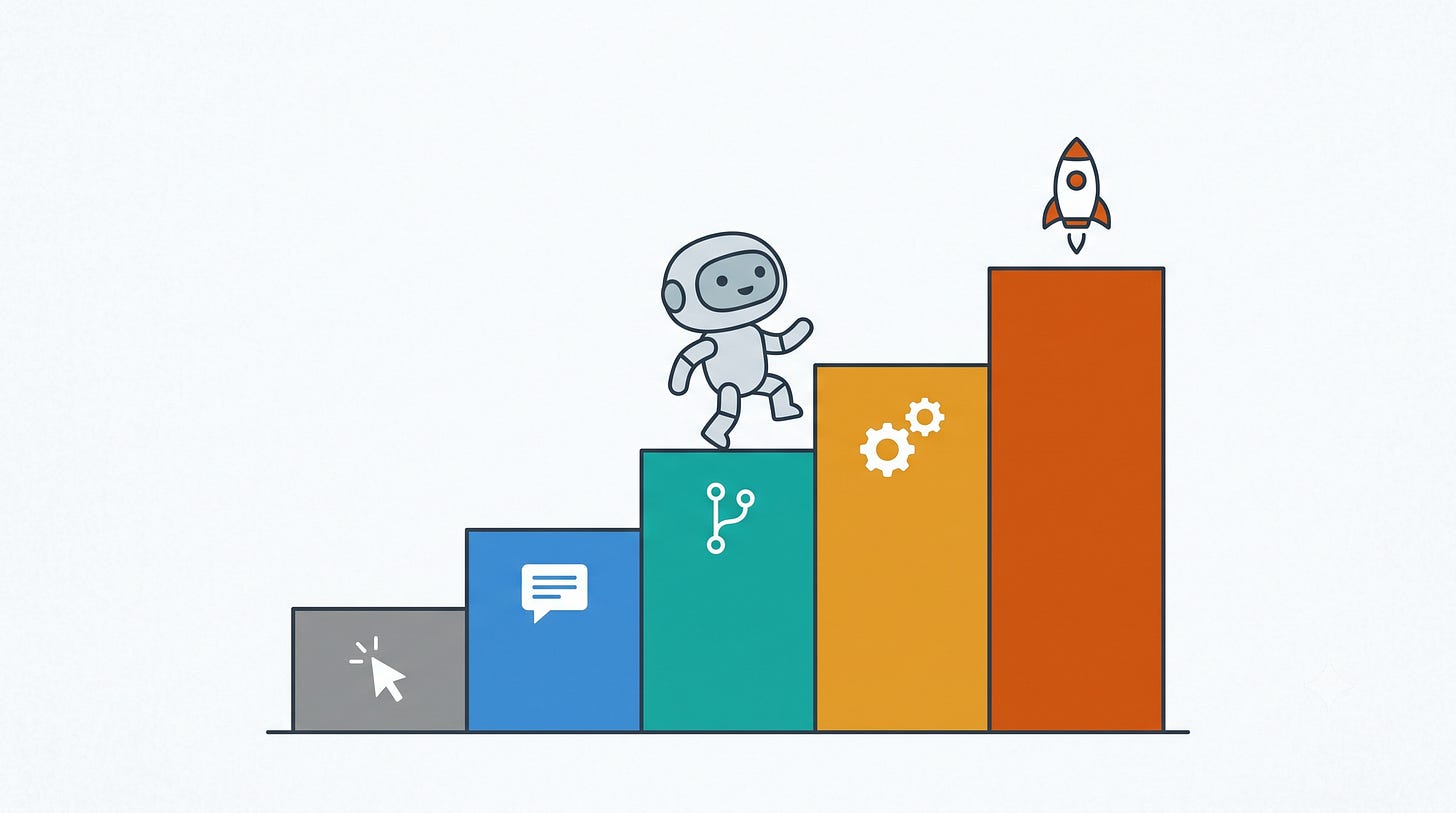
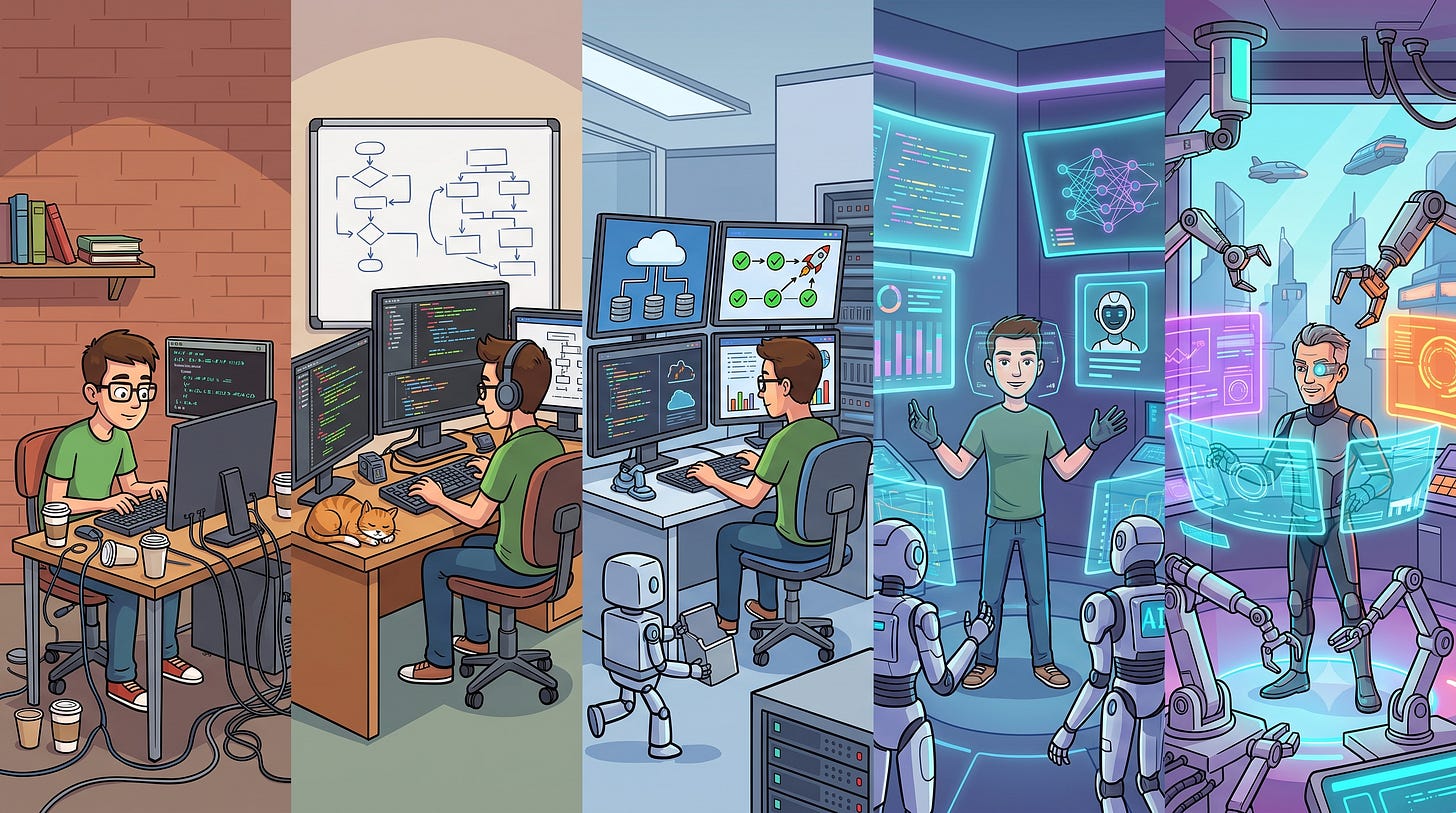
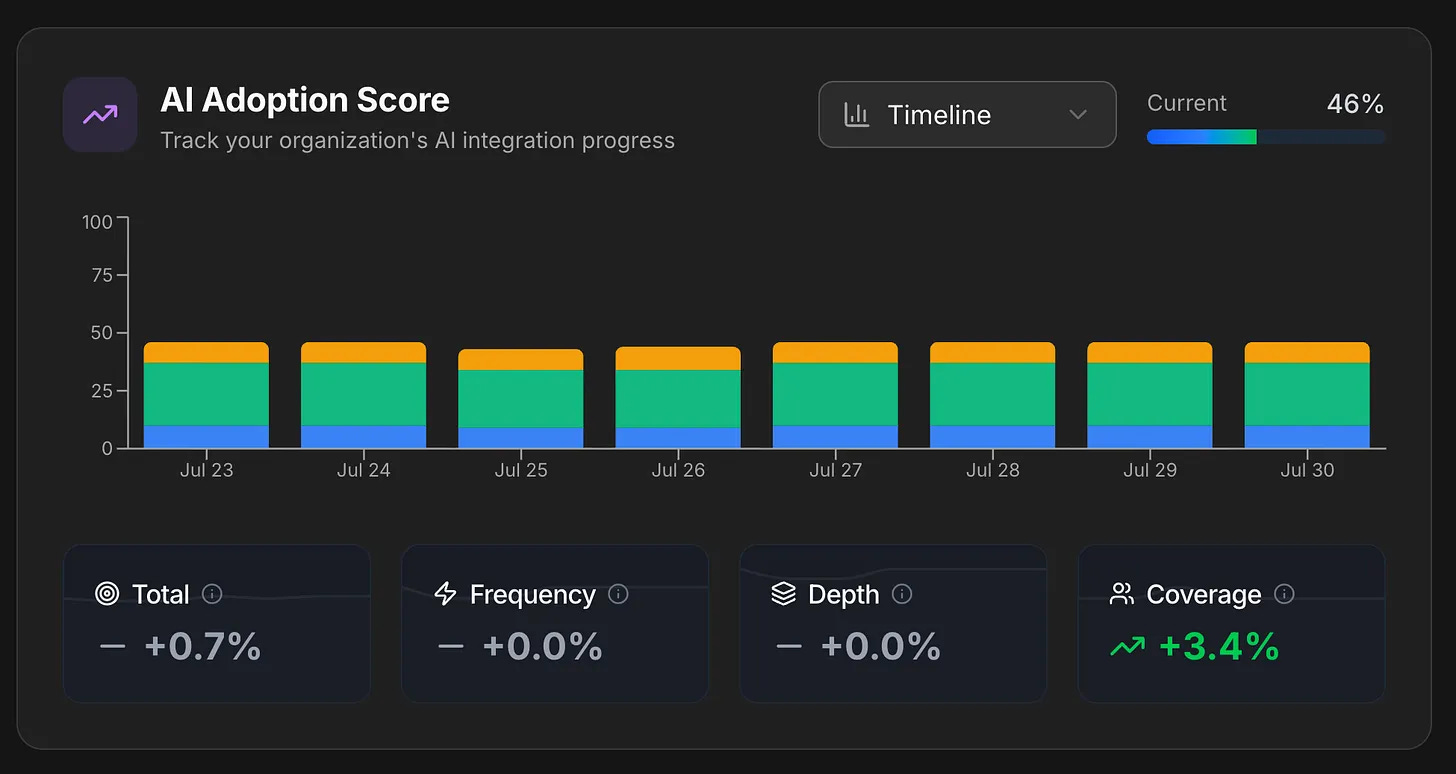
AI adoption is something most engineering orgs are still figuring out, and it’s only legible if you look at the right things. Watch which features people reach for and in what order, and you get a usable picture of how far the tooling has gotten into the work. The sequence is consistent across teams, which means you can locate your median engineer on it and know what the next step is going to require from you.
Kilo is available across the IDE, the CLI, and the web - and it’s model-agnostic, so our telemetry covers roughly 3 million developers and more than 40 trillion tokens without being shaped by one vendor’s product surface.
The pattern below is what shows up in that data, and it maps onto what teams tell us about their rollouts.
Five stages
Inline completion is stage one. Autocomplete lands immediately in every org because it asks nothing of the developer and changes no habits. Numbers here are high everywhere, so they mostly tell you the install worked.
Stage two is single-file agentic editing, where somebody describes a change and reviews a diff instead of typing it out. This is where a lot of orgs settle in for a long time. Usage looks healthy, developers like the tool, and the pipeline runs the way it always did.
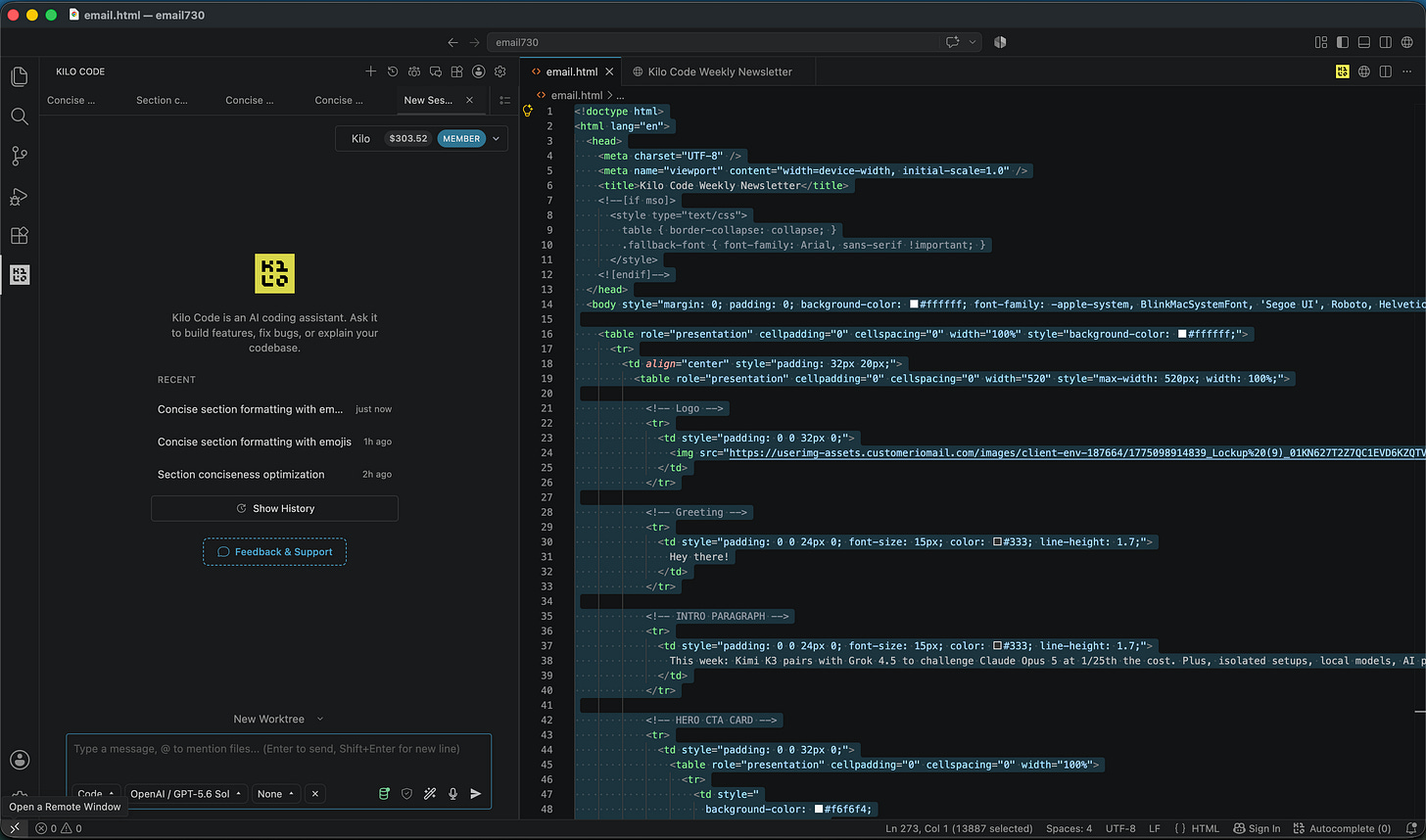
Stage three is multi-file work with a plan in front of it, the point where a developer hands over something they can’t hold entirely in their head. This one depends on context infrastructure more than on enthusiasm. Codebase Indexing gives semantic search across the repo using cloud-hosted embeddings, and Plan Mode outlines architectural decisions in the project instead of the prompt, so nobody needs to re-explain the same service boundaries during a session. With those in place, stage three sticks. Without them, attempts fail often enough that people quietly go back to stage two.
Stage four is concurrency: parallel agents in the IDE and CLI, Cloud Agents running from the web dashboard with no local machine involved, and Sessions that persist across…

 点赞
点赞 收藏
收藏 点踩
点踩 分享
分享