Settling for less

Maybe, we need to go back to a time when our digital devices are good at one thing, and one thing only.
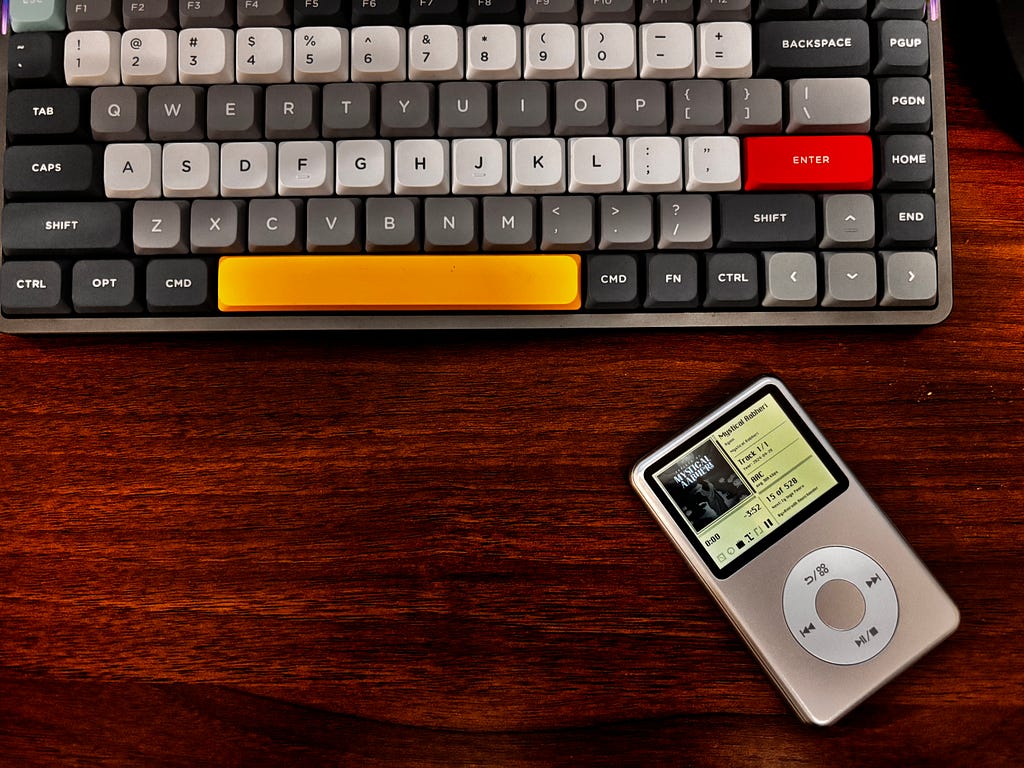
The device in question: an Innioasis Y1 running RockBox
I went back in time to circa 2006, to a time before the iPhone’s existence. Metaphorically, anyway.
I know that analog lifestyles are all the rage now, and people all over the internet are spending their hard-earned cash in this cash (and job) strapped economy on fads as some sweet retail therapy, and I am sometimes guilty of this too. Have I bought myself things I didn’t strictly need? Of course, I’m 25 and I live alone. Of course I did.
This is not one of those times though. Trust me, this is no vinyl-guy aesthetic post. I’ve been agonising over whether I should invest in an MP3 player, if I needed one, or if I am just following the herd, purchasing yet another thing that’ll end up in a drawer. Deliberating like this was a life-or-death call, for over a year now. Poring over Reddit threads trying to find the best choices, watching YouTube videos, endless hours scouring through eBay and FaceBook Marketplace listings for used iPods, and reading blogs from fellow digital de-addiction fans.
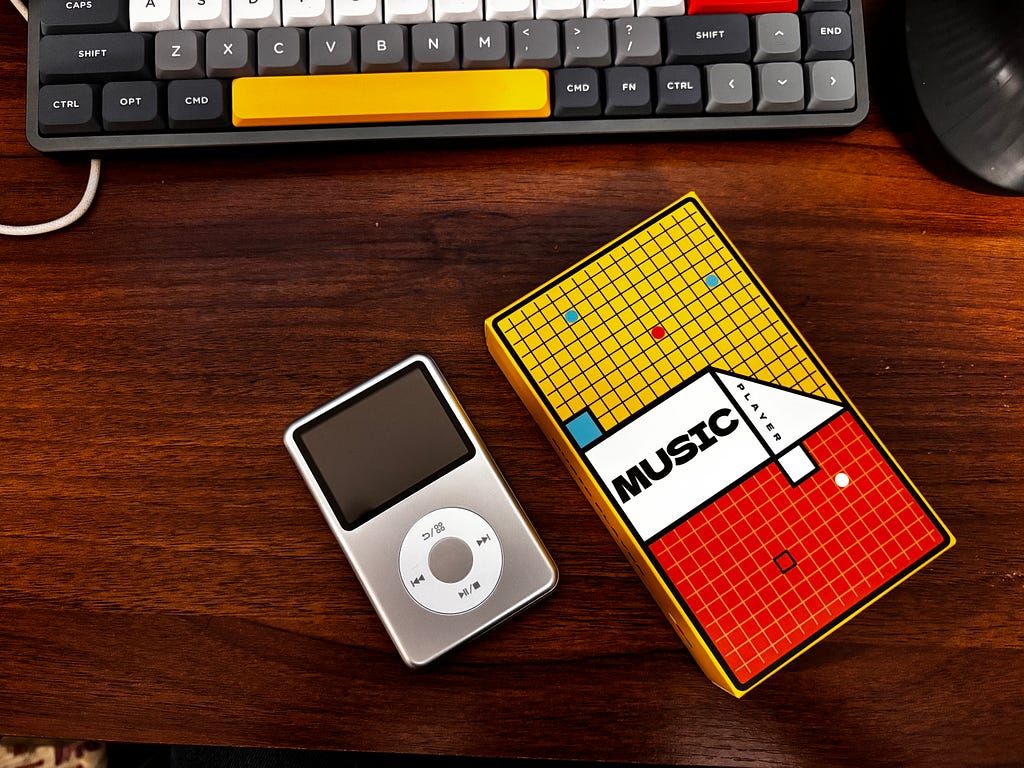
At the end though, I (randomly, as one often does) ended up on AliExpress and bought myself a 50 quid knock-off iPod. A week of frequently checking the AliExpress Orders page and a DPD parcel tracker, and a nondescript box with the words ‘Music Player’ was on my desk. I had it! Over a decade after I last used a dedicated music machine (iPod Shuffle), I’m back on the MP3 player bandwagon.
Delightfully nondescript box, that
Having used it for the past few days, I’m glad I pulled the trigger on this!
…Why?
As terrible as Spotify is for the music industry and creators, I don’t have much complaints with it as a consumer. Is it a bit annoying? Yes. The algorithm determines what I listen to, the autoplay tends to base itself a bit too much on what I’ve been listening to for the past few days instead of cycling through all my tastes, requiring some tuning every now and then to rid itself of this behaviour. It’s definitely not the worst thing. I can download songs for approx £12 per year using Spotify Family, listen on almost any device with an internet connection through the audio output of my choice.
However, I needed a device that did less, not more.
Evolution in tech has always been about doing more. More features, more (and targeted) notifications, more integration, more comfort-of-life features that slowly erode away my autonomy and blunt my choice making abilities. More reasons to whip out my phone.
Harkening back to 2007, to a time when the rectangles in our pockets didn’t dictate our lives, to that time when Steve Jobs’ announcement changed the world as we know it. ‘An iPod, a phone, and an internet communicator (are you getting it? … This is one device)’. The day that humanity decided to glue itself to screens everywhere. In the kitchen, on public transit, in the shower (waterproof capacitive covers exist!), at the movies, nowhere can you walk in now hoping to not find one. Restaurants have to put up signs warning customers not to use their phones at the table. My gym felt the need to hang a huge noticeboard with crossed out logos of popular social media apps.
I find that annoying.
Subtraction as a design decision
You can’t open the music app on your phone without your attention getting taxed on the way in and out. Apps beckon, they demand your attention, and more often than not, I find myself giving in and switching apps after I make my music choices, unintentionally spending more time on the device. As someone who doesn’t scroll, I still find the amount of time I spend on a phone annoying.
A dedicated player removes the doorway, not just the distraction. While I’m out, my phone now lives in my backpack and what’s on my person is the music player. I still get to interact with my music, I get to choose what I listen to, and curate my albums to be exactly what I want them to be, and be more intentional about my music choices. The aim is to engage with my music, not just passively consume, something very important to me as an amateur singer.
(Read more here: The art of subtraction in a world of infinite features)
Just use your phone and don’t look at other apps
I am one guy trying to avoid my phone fighting a losing battle against corporations that invest billions every year into R&D to keep me engaged on the device. My willpower doesn’t scale. I want a product that respects my boundaries instead of luring me into sketchy vans with promises of chocolates.
(Read more here: It wasn’t a lack of willpower: it was the design)
So,
This £50 device (Innioasis Y1, for the curious) has done what no amount of screen time monitoring tools ever managed to. It gave me autonomy over my music choices, and it gave me back the walk t’shops without a screen in my face. The music player doesn’t respect my boundaries because it’s virtuous — it respects them because it can’t do anything else. Easiest way to win this fight, don’t show up for it :)
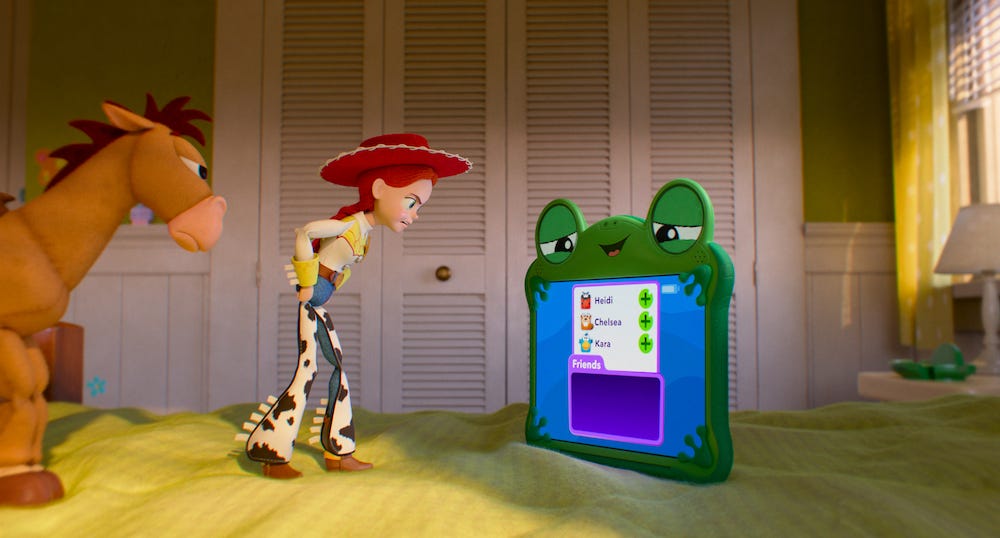
Unfortunately, not all devices are as self-aware and empathetic as Lilypad (eventually) turned out to be
Settling for less was originally published in Bootcamp on Medium, where people are continuing the conversation by highlighting and responding to this story.

 点赞
点赞 收藏
收藏 点踩
点踩 分享
分享