How Trump’s “America First” Administration Could Shut U.S. Scientists Out of the Next Nobel-Worthy Discovery

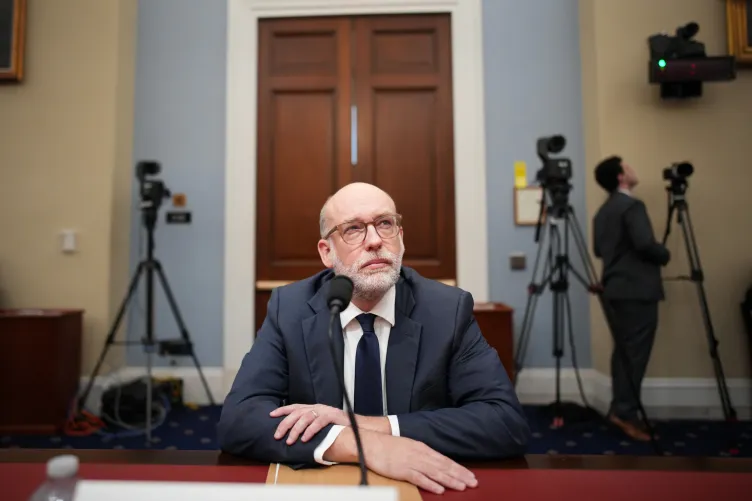
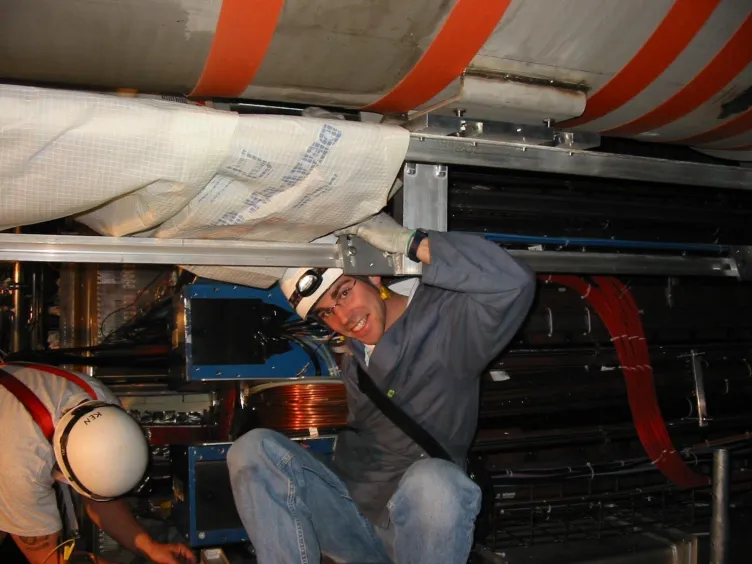
Collage by Alex Bandoni. Source images: Universal History Archive/Universal Images Group via Getty Images.
For decades, physicists wrestled with a fundamental mystery of the universe.
They wanted to know why certain particles — like the protons in atoms — have mass, while particles of light do not. Whatever the reason was, it was crucial to understanding the origins of planets, galaxies and life itself.
The leading theory stated that particles got their mass from interacting with an invisible field, later dubbed the Higgs field, but no one had ever been able to prove it existed.
Doing so would require one of the most ambitious international collaborations in scientific history. Starting decades ago, thousands of scientists from dozens of countries worked side by side, even though some of their nations considered one another adversaries. The United States contributed a quarter of the workforce and hundreds of millions of taxpayer dollars.
The investment paid off in 2012, when the team detected the so-called “God particle” or Higgs boson, confirming the half-century-old Higgs field theory. The achievement was so significant that two of the physicists behind the theory won the Nobel Prize.
Under a new rule proposed by the Trump administration, American scientists might be forced to watch similar discoveries from the sidelines. The proposal would restrict international collaboration and give political appointees the ability to decide the most important research to fund, and the power to pull the plug at any time, for any reason.
As soon as he learned about the proposal, one of the U.S. scientists who took part in the landmark project rushed to file his objection with the federal government.
“These experiments take decades to build and require sustained, cooperative international investment,” University of Chicago physics professor David W. Miller wrote in a public comment. “The experiments will continue, without American leadership. … The United States will not just…

 点赞
点赞 收藏
收藏 点踩
点踩 分享
分享