Production Line Monitoring With Camera AI

SUMMARY
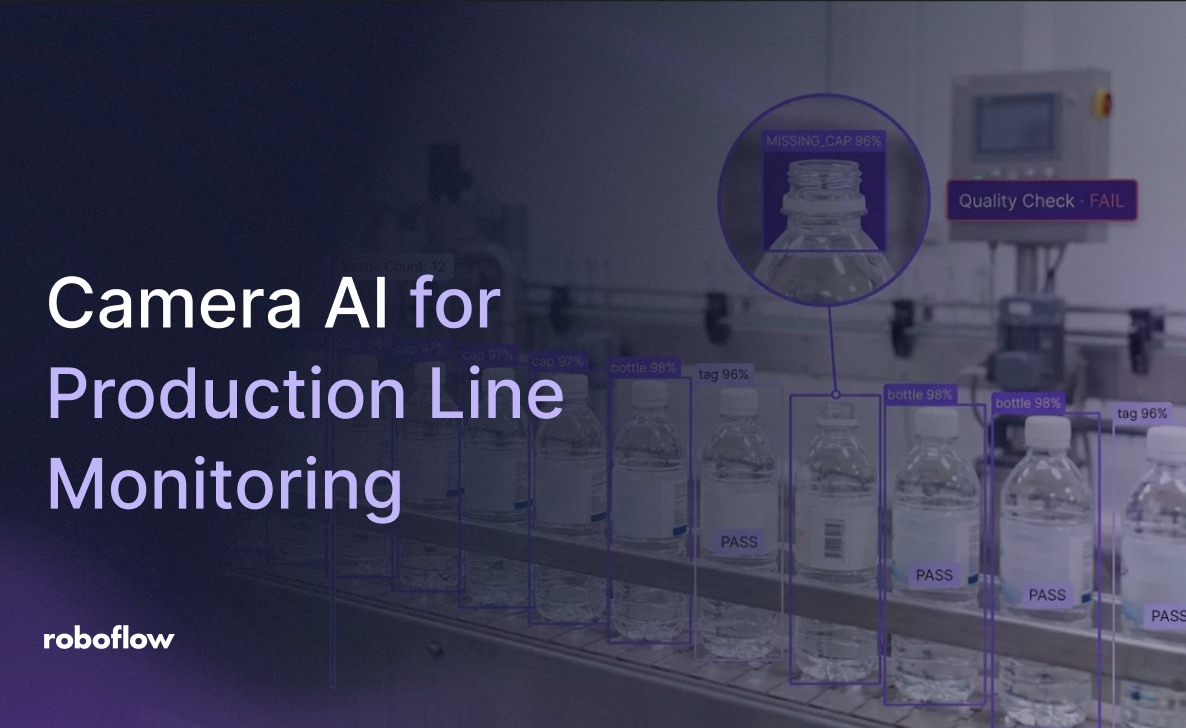
You can turn a production line camera into a real-time inspection system by training an RF-DETR detection model, connecting it to a Roboflow Workflow, and running inference at the edge on Roboflow's AI1 Camera. This guide builds a complete bottle inspection pipeline that tracks and counts products, flags bottles missing a cap or label with a model that hit 99.9% mAP@50, and logs every defect as a Vision Event operators can act on.
Walk into any modern factory, and you will see cameras monitoring different stages of the production process. However, most cameras are only collecting footage. They can show what happened, but they cannot understand what is happening, detect issues, or help operators make decisions in real time.
What if a single camera could detect defects, count products, identify anomalies, and trigger actions the moment something goes wrong?
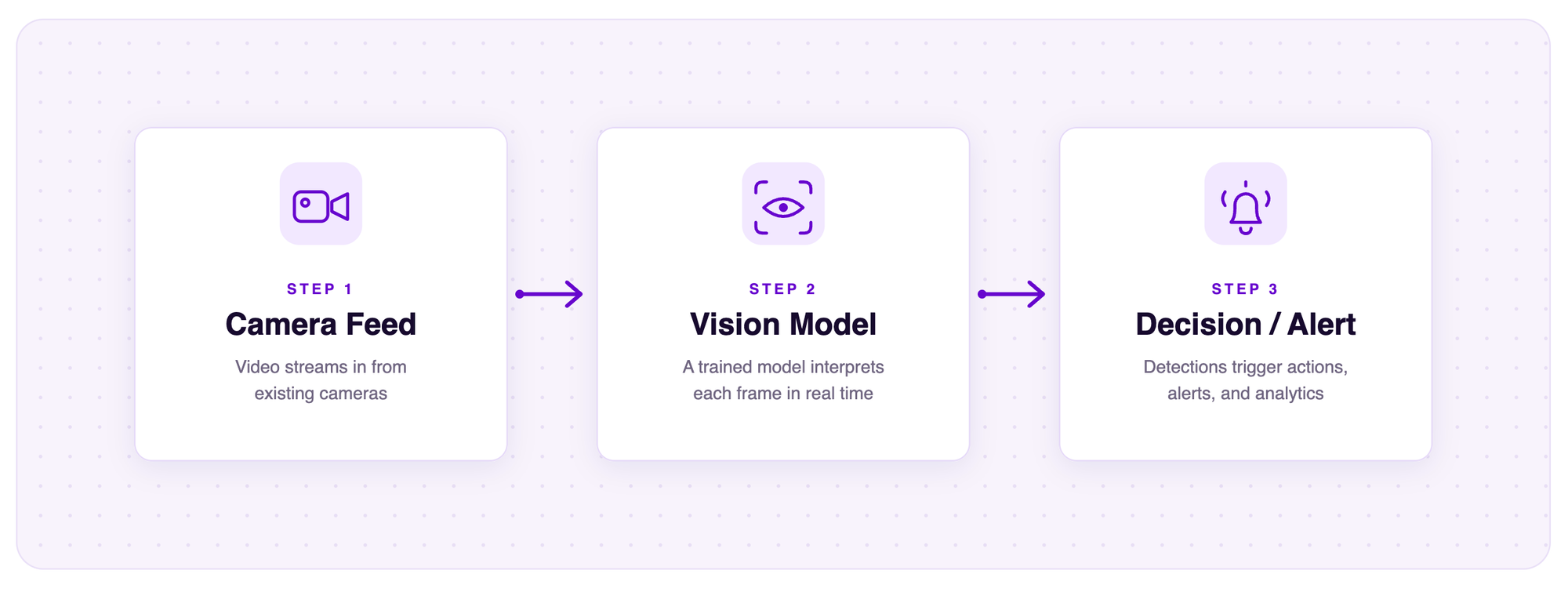
This is where production line monitoring with Camera AI comes in. Roboflow’s AI1 Camera allows manufacturers to transform live camera feeds into intelligent vision systems by combining cameras, computer vision models, and automated workflows. Instead of relying on manual inspections or reviewing footage after an issue occurs, AI1 enables teams to monitor production lines and respond to events as they happen.
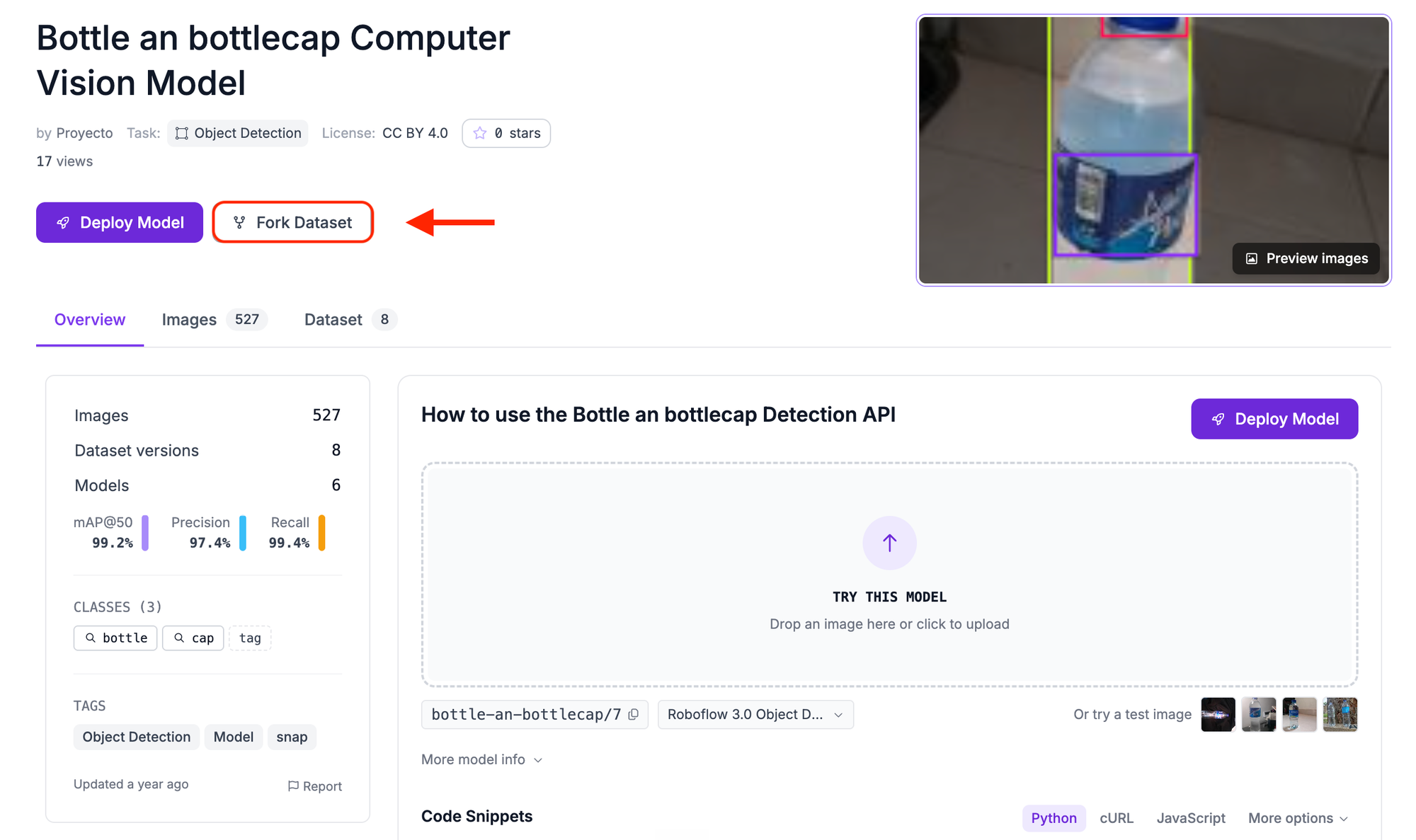
In this article, we will explore how production line monitoring with Camera AI works, the problems it can solve in manufacturing, and how to build a similar system using Roboflow’s vision platform. We will cover the complete workflow, from collecting data and training a custom model with RF-DETR to creating automated logic with Roboflow Workflows and turning detections into actionable alerts. As an example, we'll build a bottle inspection system that detects bottles moving along a conveyor belt, counts production output, and identifies bottles that are missing a cap, label, or both.

 点赞
点赞 收藏
收藏 点踩
点踩 分享
分享